Category Archives: Uncategorized

Belgium – Recall of Cora Product: tray of 2 organic chicken fillets from the Nature Bio brand. Problem: presence of the salmonella typhimurium bacteria.

AFSCA

As part of a control carried out by our supplier, the presence of salmonella typhimurium was detected in:

TRAY OF 2 ORGANIC CHICKEN FILLETS
Brand
 : NATURE BIO
Batch number : 2020035938
Expiration date ( BBD ) : 06/08/2020

The product was distributed via the Cora of La Louvière, Chatelineau, Hornu, Woluwé, Anderlecht.

CORA has decided, in agreement with the AFSCA (Federal Agency for the Safety of the Food Chain), to withdraw these products from sale.

Customers who have purchased this product are requested not to consume them and return them to the point of sale, where they will be refunded.

People who have consumed the above-mentioned product and who have gastrointestinal disturbances, diarrhea, vomiting or abdominal pain are invited to consult their doctor, notifying him of this consumption. The incubation period can range from 6 to 72 hours.

The risk of infection is higher in the elderly, children, pregnant women and people with weakened immune systems.

In the meantime, the product has been removed from the shelves of our wind points and a ‘Customer reminder’ poster is displayed in them.

We sincerely apologize to our customers for this inconvenience and assure them of taking the most effective measures to avoid this type of incident.

Any customer wishing for additional information can contact our Quality Department and contact the number 071.69.95.24 or by email at the address: ALERTES-RETRAITS@CORA.BE .

CORA Quality Department

Netherlands – Important safety warning Albert Heijn French free-range chicken products – Salmonella

NVWA

Albert Heijn has decided to bring back the AH French Free-range chicken, AH French free-range chicken fillet, AH French free-range chicken fillet cubes, AH French free-range chicken fillet fillets and AH French free-range chicken thigh fillet. Salmonella has been found in the 5 free-range chicken products. 

It is: 

  • AH French free-range chicken THT 07-08-2020 and 08-08-2020
  • AH French free-range chicken fillet THT 06-08-2020 and 07-08-2020
  • AH French free-range chicken fillet cubes THT 30-07-2020 and 01-08-2020
  • AH French free-range chicken fillets THT 07-08-2020
  • AH French free-range chicken thigh fillet THT 28-07-2020, 30-07-2020, 03-08-2020 and 04-08-2020

Consuming free-range chicken products with these expiry dates can be a health hazard if not heated properly, especially for young children, the elderly, people with a weakened immune system and pregnant women. 

Customers are requested not to eat the AH French free-range chicken products and to return them to an Albert Heijn store, where they will be reimbursed the purchase price when the product is returned. 

For more information, customers can visit www.ah.nl or contact Albert Heijn Customer Service 0800 – 03 05. 

Download “Important safety warning Albert Heijn French free range chicken products”

PDF document | 1 page | 144 KB

Warning | 07/31/2020

Pre-packed chicken

© Albert Heijn

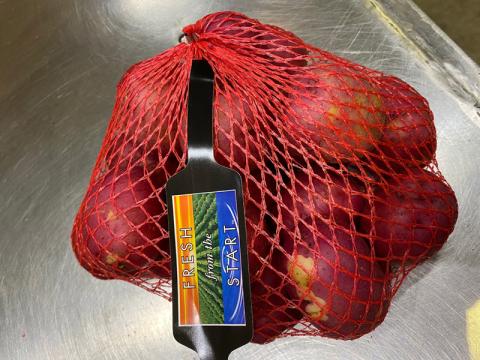
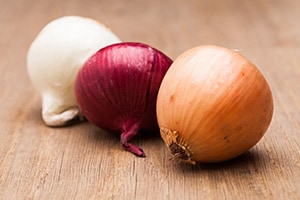
Canada – Food Recall Warning – Red onions imported from the USA by Sysco in Western Canada recalled due to Salmonella

CFIA

Recall date:
July 31, 2020
Reason for recall:
Microbiological – Salmonella
Hazard classification:
Class 1
Company / Firm:
Sysco
Distribution:
Alberta, British Columbia, Manitoba, Ontario, Saskatchewan
Extent of the distribution:
Consumer

Recall details

Ottawa, July 31, 2020 – Sysco is recalling red onions imported from the USA from the marketplace due to possible Salmonella contamination. Consumers should not consume the recalled products described below or foods containing these raw red onions. Food service establishments, institutions, retailers, distributors and manufacturers should not serve, use, or sell the recalled products described below. These may also have been purchased from Sysco on-line or through various restaurant locations.

Sysco is recalling red onions in Western Canada through the following Sysco locations: Victoria, Vancouver, Kelowna, Calgary, Edmonton, Winnipeg and Regina. The Canadian Food Inspection Agency (CFIA) will continue its investigation into other possible importers and additional recalls may follow.

Recalled products

Brand Product Size Codes Additional information
IMPERIAL FRESH Red Onions – Jumbo 10 lb. Product code 8399925 All products imported since May 24, 2020
IMPERIAL FRESH Red Onions – Jumbo 25 lb. Product code 8313967 All products imported since May 24, 2020

What you should do

If you think you became sick from consuming a recalled product, call your doctor.

Check to see if you have the recalled products in your home, restaurant or institution. Recalled products should be thrown out or returned to the store where they were purchased. If you are unsure of the identity of red onions in your possession, check with your place of purchase.

Food contaminated with Salmonella may not look or smell spoiled but can still make you sick. Young children, pregnant women, the elderly and people with weakened immune systems may contract serious and sometimes deadly infections. Healthy people may experience short-term symptoms such as fever, headache, vomiting, nausea, abdominal cramps and diarrhea. Long-term complications may include severe arthritis.

Background

This recall was triggered by findings by the CFIA during its investigation into a foodborne illness outbreak. The CFIA is conducting a food safety investigation, which may lead to the recall of other products. If other high-risk products are recalled, the CFIA will notify the public through updated Food Recall Warnings.

The CFIA is verifying that industry is removing the recalled products from the marketplace.

Illnesses

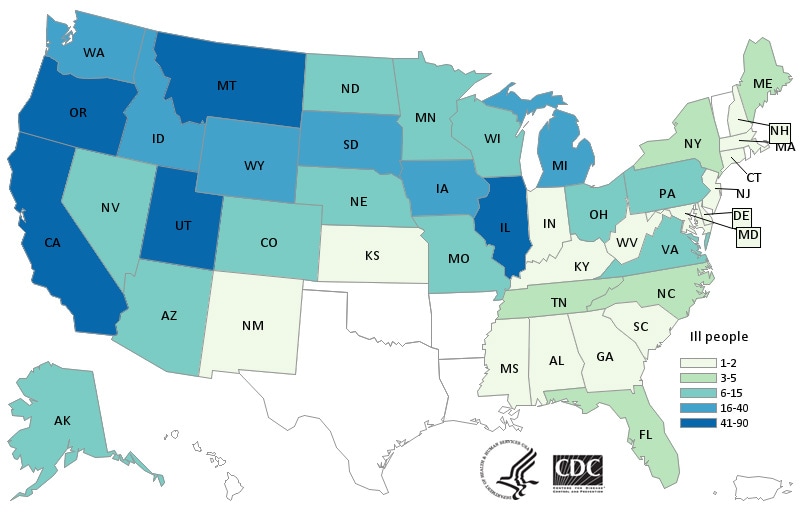
The Public Health Agency of Canada is investigating an outbreak of human illness. Please refer to the Public Health Notice (https://www.canada.ca/en/public-health/services/public-health-notices/2020/outbreak-salmonella-infections-under-investigation.html) for further details on this active outbreak investigation.

Public enquiries and media

Public enquiries
Toll-free: 1-800-442-2342 (Canada and U.S.)
Telephone: 1-613-773-2342 (local or international)
Email: cfia.enquiries-demandederenseignements.acia@canada.ca
Media relations
Telephone: 613-773-6600
Email: cfia.media.acia@canada.ca

Jordan – One child dead, 700 sick due to mass food poisoning in Jordan restaurant

Alarabiya

A five-year-old child is dead and 700 other people have been hospitalized in Jordan with mass food poisoning after eating shawarma at a restaurant in the town of Ain al-Basha, north of the capital Amman, the Ministry of Health announced on Wednesday.

Investigations revealed that the meat and chicken shawarma had been prepared without using a refrigeration unit in an “unhealthy environment and without adhering to the health requirements and the minimum levels of general safety,” the official Jordan News Agency reported citing a ministry press release.

Laboratory tests also found that bacteria in meat and poultry products at the restaurant, according to the ministry’s statement.

UK – Report into international foodborne disease rates published

FSA

report published by the FSA has found it is not possible to compare foodborne disease rates effectively between countries. This is due to the hugely different methodologies and recording systems employed.

Researchers compared the ways different countries estimate how many people suffer from food poisoning each year, in an effort to determine whether these rates can be reliably compared.

The study, commissioned by the FSA and carried out by Public Health England, uncovered three broad approaches used globally:

  1. Prospective cohort studies – a sample population is recruited in advance, then report weekly on any symptoms of illness and may also submit samples so specific causes can be determined.
  2. Surveillance pyramid studies – an estimation of the number of cases missed through under-diagnosis and under-reporting, by using multipliers to extrapolate from laboratory confirmed illnesses.
  3. Retrospective cross-sectional surveys – a representative sample of the population is contacted and asked about their symptoms in the recent past.

Countries need to calculate foodborne disease estimates due to under-reporting, as not everyone who suffers from infectious intestinal disease (IID) will seek medical help and those who do will not always get a confirmed diagnosis. The data can then inform a country’s own food policy and prioritisation of resources.

Researchers concluded that the UK is using the most accurate approach available (prospective cohort studies).

FSA Head of science, evidence and research, Rick Mumford, said:

“The report concludes that attempting to accurately compare different countries’ foodborne disease rates is an almost impossible task. The only way you could attempt this would be for different countries to have the same type of study with the exact same study specifications, over the same time period. Even then, differences in underlying surveillance data available in each country could cause issues, particularly in terms of determining what proportion of IID cases are due to food.

“We have a much greater understanding of the different approaches taken across the globe and will continue to look and learn from this.”

Read the full report here.

FSA EXPLAINS

Rick Mumford, Head of Science, Evidence & Research Directorate, has provided an analysis of the report and what it means for comparing international food standards (Opens in a new window).

RASFF Alert – Bacillus cereus – Spicy Smoked Paprika Powder

RASFF-Logo

RASFF – Bacillus cereus (up to 23000 CFU/g) in spicy smoked paprika powder from Spain in Austria

RASFF Alert – Norovirus – Razor Clams

RASFF-Logo

RASFF – norovirus (presence /25g) in frozen razor clams (Solen spp) from the Netherlands in Spain

RASFF Alert – Microcystins – Klamath Algae Powder

RASFF-Logo

RASFF – microcystins (4084.99 µg/kg – ppb) in organic klamath algae powder from Belgium, with raw material from the United States, via France in Belgium

RASFF Alerts – Moulds – Pit Bread – Dream Cake

RASFF-Logo

RASFF – pita bread from Greece infested with moulds in Denmark

RASFF – dream cake from Denmark infested with moulds in Denmark

RASFF Alert -Foodborne Outbreak -Listeria monocytogenes – Chilled Mozzarella

RASFF-Logo

RASFF –  foodborne outbreak suspected to be caused by Listeria monocytogenes in chilled mozzarella in block from Italy in Malta