
shigatoxin-producing Escherichia coli (stx1+ /25g) in frozen beef from Brazil in the Netherlands
shigatoxin-producing Escherichia coli (stx2+ /25g) in frozen beef tenderloins from Brazil in the Netherlands

shigatoxin-producing Escherichia coli (stx1+ /25g) in frozen beef from Brazil in the Netherlands
shigatoxin-producing Escherichia coli (stx2+ /25g) in frozen beef tenderloins from Brazil in the Netherlands
Posted in food contamination, Food Hazard, Food Hygiene, Food Inspections, Food Micro Blog, Food Microbiology, Food Microbiology Blog, Food Microbiology Testing, Food Pathogen, Food Poisoning, food recall, Food Safety, Food Safety Alert, Food Testing, Food Toxin, RASFF, STEC, STEC E.coli, STX 1, STX 2
Posted in eae, food contamination, Food Hazard, Food Hygiene, Food Inspections, Food Micro Blog, Food Microbiology, Food Microbiology Blog, Food Microbiology Testing, Food Pathogen, Food Poisoning, food recall, Food Safety, Food Safety Alert, Food Testing, Food Toxin, RASFF, STEC, STEC E.coli, STX 1, STX 2
shigatoxin-producing Escherichia coli ( stx1+ stx2+ /25g) in vacuum-packed beef salami from Slovenia in Slovenia
Posted in Bacteria, bacterial contamination, eae, food contamination, Food Hygiene, Food Inspections, Food Micro Blog, Food Microbiology, Food Microbiology Blog, Food Microbiology Testing, Food Pathogen, Food Poisoning, food recall, Food Safety, Food Safety Alert, Food Testing, Food Toxin, RASFF, STEC, STEC E.coli, STX 1, STX 2
Following two O121 STEC outbreaks linked to wheat flour, this study was conducted to gain baseline information on the occurrence of bacterial pathogens and levels of indicator organisms in wheat flour in Canada. A total of 347 pre-packaged wheat flour samples were analyzed for Salmonella spp., Shiga Toxin-Producing Escherichia coli (STEC), Listeria monocytogenes ( L. monocytogenes ) , aerobic colony count (ACC), total coliforms, and generic Escherichia coli ( E. coli ) . Salmonella spp. and O157 STEC were not detected in any of the samples. L. monocytogenes was identified in two samples (0.6%) at levels below the limit of detection (<0.7 log CFU/g). Non-O157 STEC were isolated from six samples (1.7%) and were characterized for the presence of STEC virulence genes: stx 1, stx 2 and subtypes, eae , hlyA, and aggR . One O103:H25 STEC isolate carried virulence genes ( stx 1 a + eae ) that are known to be capable of causing diarrhea and/or bloody diarrhea in humans. Of the five remaining non-O157 STEC isolates, four carried single stx 2a or stx 2c genes and were considered to have the potential of causing diarrhea. The remaining non-O157 STEC isolate ( stx 2 ), while not a priority non-O157 STEC was not available for sequencing and thus its potential to cause illness is unknown. ACC, total coliforms, and generic E. coli were detected in 98.8%, 72.6% and 0.6% of the flour samples. The mean counts of ACC were greater in whole-wheat flour as compared to the other flour types tested ( p <0.001). The results of this study suggest that the occurrence of O157 STEC and Salmonella is low, but the occurrence of non-O157 STEC in wheat flour with the potential to cause human illness of diarrhea is relatively common. Therefore, the consumption of raw flour could increase the likelihood of STEC infections. Further research is merited for potential risk mitigation strategies within the food production system and with consumers.
shigatoxin-producing Escherichia coli (stx1 positive, stx2 negative /25g) in Brie cheese from France in Germany
shigatoxin-producing Escherichia coli (stx1- stx2+ /25g) in fontina from Italy in Italy
shigatoxin-producing Escherichia coli in raw cheese from France in Germany
shigatoxin-producing Escherichia coli (stx2+, eae+ /25g) in frozen beef burgers from Lithuania in Latvia
shigatoxin-producing Escherichia coli in frozen boneless bovine meat from Brazil in Italy
Posted in Bacteria, bacterial contamination, eae, food contamination, Food Hygiene, Food Inspections, Food Micro Blog, Food Microbiology, Food Microbiology Blog, Food Microbiology Testing, Food Pathogen, Food Poisoning, food recall, Food Safety, Food Safety Alert, Food Testing, Food Toxin, RASFF, STEC, STEC E.coli, STX 1, STX 2
A total of 482 veal cutlet, 555 ground veal, and 540 ground beef samples were purchased from retail establishments in the Mid-Atlantic region of the U.S. over a non-contiguous, two-year period between 2014 and 2017. Samples (325 g each) were individually enriched and screened via real-time PCR for all seven regulated serogroups of Shiga toxin-producing Escherichia coli (STEC). Presumptive STEC positive samples were subjected to serogroup-specific immunomagnetic separation and plated onto selective media. Up to five isolates typical for STEC from each sample were analyzed via multiplex PCR for both the virulence genes (i.e., eae , stx 1 and/or stx 2 , and ehxA ) and serogroup-specific gene(s) for the seven regulated STEC serogroups. The recovery rates of non-O157 STEC from veal cutlets (3.94%, 19 of 482 samples) and ground veal (7.03%, 39 of 555 samples) were significantly higher (P < 0.05) than that from ground beef (0.93%, 5 of 540 samples). In contrast, only a single isolate of STEC O157:H7 was recovered; this isolate originated from one (0.18%) of 555 samples of ground veal. Recovery rates for STEC were not associated with state, season, packaging type, or store type (P > 0.05), but were associated with brand and fat content (P < 0.05). Pulsed-field subtyping of the 270 viable/confirmed STEC isolates from the 64 total samples testing positive revealed 78 pulsotypes (50 to 80% similarity) belonging to 39 pulsogroups, with ≥90% similarity among pulsotypes within pulsogroups. Also, multiple isolates from the same sample displayed an indistinguishable pulsotype for 43 of 64 (67.7%) samples testing positive. These findings support related data from regulatory sampling exercises over the past decade and confirm that recovery rates for the regulated STEC serogroups are appreciably higher for raw veal compared to raw beef samples as was also observed herein for meat purchased at food retailers in the Mid-Atlantic region of the U.S.
Posted in Bacteria, bacterial contamination, Bacterial Toxin, E.coli, E.coli O157, E.coli O157:H7, Food Micro Blog, Food Microbiology, Food Microbiology Blog, Food Microbiology Research, Food Microbiology Testing, Food Pathogen, Food Poisoning, Food Testing, Food Toxin, microbial contamination, Microbiology, STEC, STEC E.coli, STX 1, STX 2
Food
02.10.2020
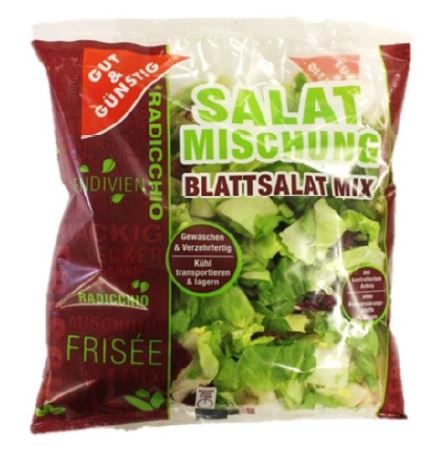
Good & cheap salad mix leaf salad mix
GARTENFRISCH Jung GmbH
E. Coli producing shiga toxin
150 g pack
05/10/2020
Reference is made to the attached press release from the food business operator.
poststelle@mlr.bwl.de
poststelle@lgl.bayern.de
Schnellwarnung@rpda.hessen.de
poststelle@ml.niedersachsen.de
poststelle@sms.sachsen.de
LM-Ueberektiven@tlv.thueringen.de
| Press releases and information | |
|---|---|
| title | Attachment or web link |
|
Press release
|
|
Posted in Bacteria, bacterial contamination, E.coli, food contamination, Food Hygiene, Food Inspections, Food Micro Blog, Food Microbiology, Food Microbiology Blog, Food Microbiology Testing, Food Pathogen, Food Poisoning, food recall, Food Safety, Food Safety Alert, Food Testing, Food Toxin, microbial contamination, Microbiology, STEC, STEC E.coli, STX 1, STX 2, Toxin
Shiga toxin–producing Escherichia coli (STEC) cause substantial and costly illnesses. Leafy greens are the second most common source of foodborne STEC O157 outbreaks. We examined STEC outbreaks linked to leafy greens during 2009–2018 in the United States and Canada. We identified 40 outbreaks, 1,212 illnesses, 77 cases of hemolytic uremic syndrome, and 8 deaths. More outbreaks were linked to romaine lettuce (54%) than to any other type of leafy green. More outbreaks occurred in the fall (45%) and spring (28%) than in other seasons. Barriers in epidemiologic and traceback investigations complicated identification of the ultimate outbreak source. Research on the seasonality of leafy green outbreaks and vulnerability to STEC contamination and bacterial survival dynamics by leafy green type are warranted. Improvements in traceability of leafy greens are also needed. Federal and state health partners, researchers, the leafy green industry, and retailers can work together on interventions to reduce STEC contamination.

Signs and symptoms of Shiga toxin–producing Escherichia coli (STEC) serogroup O157:H7 infection range from mild gastrointestinal to bloody diarrhea and hemolytic uremic syndrome (HUS). We assessed the association between Shiga toxin gene (stx) subtype and disease severity for »3,000 patients with STEC O157:H7 in England during 2009–2019. Odds of bloody diarrhea, HUS, or both, were significantly higher for patients infected with STEC O157:H7 possessing stx2a only or stx2a combined with other stx subtypes. Odds of severe signs/symptoms were significantly higher for isolates encoding stx2a only and belonging to sublineage Ic and lineage I/II than for those encoding stx2a only and belonging to sublineage IIb, indicating that stx2a is not the only driver causing HUS. Strains of STEC O157:H7 that had stx1a were also significantly more associated with severe disease than strains with stx2c only. This finding confounds public health risk assessment algorithms based on detection of stx2 as a predictor of severe disease.
Posted in Bacteria, bacterial contamination, Bacterial Infections, Bacterial Toxin, E.coli, E.coli O157, E.coli O157:H7, eae, Food Micro Blog, Food Microbiology Blog, Food Microbiology Research, Food Microbiology Testing, Food Pathogen, Food Poisoning, Food Poisoning Death, Food Safety, Food Testing, Food Toxin, microbial contamination, Microbiology, Pathogen, pathogenic, Shigatoxin, STEC, STEC E.coli, STX 1, STX 2

 FoodWorld