Category Archives: STEC E.coli

RASFF Alert – STEC E.coli – Chilled Beef Rump Tails

European Food Alerts

RASFF

shigatoxin-producing Escherichia coli (O26 stx+ eae+ /25g) in chilled beef rump tails from Argentina in Germany

Canada -CBC – B.C. boy permanently brain damaged after eating lettuce contaminated with E. coli – STEC

CBC

E. coli outbreaks used to mainly be linked to hamburgers, but the last decade has seen recall after recall of tainted romaine lettuce coming into Canada from the United States. At least seven people have died, and hundreds have been sickened or hospitalized in both countries.

Toddler Lucas Parker was one of them.

In the fall of 2018, his parents, Nathan Parker and Karla Terry of Richmond, B.C., took Lucas and his siblings to Disneyland, their first trip outside Canada. But what they couldn’t know at the time was that a few bites of romaine salad Lucas ate one night at a small California roadside restaurant would change their lives forever.

Soon after that dinner, an outbreak of E. coli O157: H7 contamination spread across both Canada and the United States — eventually leaving 35 people hospitalized.

Like most people who get sick from this strain of E. coli, Lucas, then two years old, didn’t show symptoms right away. When he started feeling unwell, the family headed out for the long drive home. By the time he was in a Canadian hospital, the E. coli had shut down one of his kidneys and led to two brain injuries. There are no current treatments for E. coli that can help alleviate infections or prevent complications.

Lucas can no longer walk, talk or see.

Research – Investigation of On-Farm Transmission Routes for Contamination of Dairy Cows with Top 7 Escherichia coli O-Serogroups

Springer

Shiga toxin-producing Escherichia coli (STEC) are foodborne bacterial pathogens, with cattle a significant reservoir for human infection. This study evaluated environmental reservoirs, intermediate hosts and key pathways that could drive the presence of Top 7 STEC (O157:H7, O26, O45, O103, O111, O121 and O145) on pasture-based dairy herds, using molecular and culture-based methods. A total of 235 composite environmental samples (including soil, bedding, pasture, stock drinking water, bird droppings and flies and faecal samples of dairy animals) were collected from two dairy farms, with four sampling events on each farm. Molecular detection revealed O26, O45, O103 and O121 as the most common O-serogroups, with the greatest occurrence in dairy animal faeces (> 91%), environments freshly contaminated with faeces (> 73%) and birds and flies (> 71%). STEC (79 isolates) were a minor population within the target O-serogroups in all sample types but were widespread in the farm environment in the summer samplings. Phylogenetic analysis of whole genome sequence data targeting single nucleotide polymorphisms revealed the presence of several clonal strains on a farm; a single STEC clonal strain could be found in several sample types concurrently, indicating the existence of more than one possible route for transmission to dairy animals and a high rate of transmission of STEC between dairy animals and wildlife. Overall, the findings improved the understanding of the ecology of the Top 7 STEC in open farm environments, which is required to develop on-farm intervention strategies controlling these zoonoses.

RASFF Alerts – STEC E.coli – Soft Cheese – Chilled Boneless Beef

European Food Alerts

RASFF

shigatoxin-producing Escherichia coli (stx2+ /25g) in soft cheese from France in Germany

RASFF

shigatoxin-producing Escherichia coli (O185:H7, stx2+ /25g) in chilled boneless beef from Argentina in Germany

Italy – LA BATTUTA DI FASSONE PIEMONTESE / BATTUTA BOVADPMT CLASSICA G200 SKIN – STEC E.coli

Salute

Brand : CASCINA LA MARCHESA – FACCIA FRATELLI

Name : LA BATTUTA DI FASSONE PIEMONTESE / BATTUTA BOVADPMT CLASSICA G200 SKIN

Reason for reporting : Recall due to microbiological risk

Publication date : 16 March 2021

Documentation

Documentation

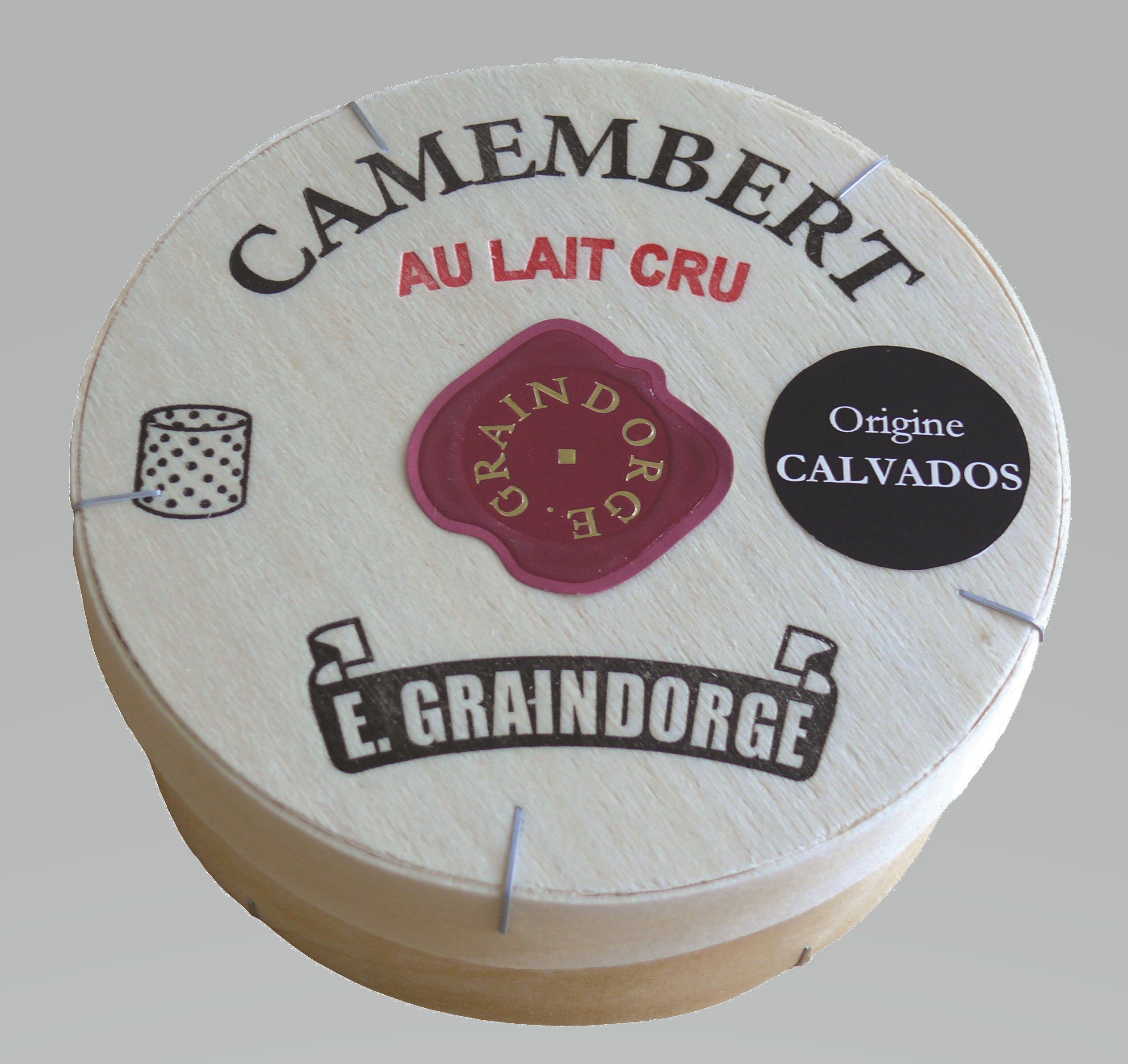
Germany – CAMEMBERT GRAINDORGE – STEC E.coli

steLMW

Warning type:Food
Date of first publication:03/13/2021
Product name:CAMEMBERT GRAINDORGE
Product pictures:

4813_Camembert LC_1.jpg
Manufacturer (distributor):MUNICH fromage GmbH & Co. KG
Reason for warning:

Detection of verotoxin-producing E. coli

Packaging Unit:250 g
Durability:04/07/2021
Lot identification:270121LI13
Further information:For more information, please refer to the attached press release.
Contact to the responsible authorities:

Baden-Württemberg:poststelle@mlr.bwl.de

Bavaria:poststelle@lgl.bayern.de
Hamburg:poststelle@justiz.hamburg.de
Hesse:Schnellwarnung@rpda.hessen.de
Lower Saxony:poststelle@ml.niedersachsen.de
North Rhine-Westphalia:poststelle@mulnv.nrw.de
Press releases and information
title Attachment or web link
Press release MÜNNICH fromage GmbH & Co. KG

Research – Efficacy of Bacteriophage Cocktail to Control E. coli O157:H7 Contamination on Baby Spinach Leaves in the Presence or Absence of Organic Load

MDPI

Fruits and vegetables are high in nutrients that are essential for a healthy lifestyle. However, they also harbor an extensive array of microorganisms such as bacteria, which can be beneficial, neutral, or pathogenic. Foodborne pathogens can contaminate produce at any stage from the farm to the consumer’s table. Appropriate washing techniques using sanitizers can reduce the risk of pathogen contamination. Issues related to maintaining concentration, efficacy, and other problems have been a challenge for the food industry and, when left unresolved, have led to different outbreaks of foodborne illnesses. In this study, the efficacy of a lytic bacteriophage cocktail was examined for its ability to infect and reduce the contamination of Escherichia coli O157:H7 (E. coli O157:H7), in media with a high organic load, using a microplate technique. The study was conducted for 3 h to determine if the bacteriophage cocktail could reduce the pathogen in the presence of a high organic load. A significant (p < 0.05) reduction in the population of E. coli O157:H7 was observed, representing a 99.99% pathogen reduction at the end of 3 h. Fresh spinach leaves were washed in sterile potable or organic water (~9000 ppm organic load) containing E. coli O157:H7 and a bacteriophage cocktail to study the effectiveness of bacteriophages against the foodborne pathogen. Results indicated that the bacteriophage significantly (p < 0.05) reduced the contamination of E. coli O157:H7 in both situations. The study also demonstrated the bacteriophages’ ability to infect and reduce the pathogen in an organic-rich environment. This characteristic differs from commercially available sanitizers that have demonstrated a tendency to bind with the available organic load. Thus, these studies highlight the advantage of employing bacteriophages during produce wash to eliminate foodborne pathogen contamination on fruits and vegetables. View Full-Text

USA – FSIS Issues Public Health Alert for Raw Ground Beef Product Due to Possible E. Coli O157:H7 Contamination

FSIS USDA

The U.S. Department of Agriculture’s Food Safety and Inspection Service (FSIS) is issuing a public health alert because raw beef product produced by Greater Omaha Packing Co. Inc., an Omaha, Neb. establishment, may be contaminated with E. coli. O157:H7. A recall was not requested because the affected product is no longer available for purchase.

FSIS is concerned that some ground beef products may be in consumers’ refrigerators or freezers. Consumers who have purchased these products should not consume them. These products should be thrown away or returned to the place of purchase.

The raw beef item was produced by Greater Omaha Packing Co. Inc. on January 14, 2021, further processed into ground beef and sold by Art’s Food Market located in Sandwich, Illinois. The following product is subject to the public health alert:

  • 2-lb (approximately) trays containing raw ground beef labeled with a retail label with “PACKED” dates ranging from JAN 28 2021 through JAN 31 2021.

This item was sold by the single retail location in Sandwich, Illinois.

The problem was discovered when Greater Omaha Packing Co. Inc. determined that they inadvertently distributed product associated with a sample that was positive for E. coli O157:H7. The company then notified FSIS about the affected product.

There have been no confirmed reports of adverse reactions due to consumption of these products. Anyone concerned about an injury or illness should contact a healthcare provider.

E. coli O157:H7 is a potentially deadly bacterium that can cause dehydration, bloody diarrhea and abdominal cramps 2–8 days (3–4 days, on average) after exposure the organism. While most people recover within a week, some develop a type of kidney failure called hemolytic uremic syndrome (HUS). This condition can occur among persons of any age but is most common in children under 5-years old and older adults. It is marked by easy bruising, pallor, and decreased urine output. Persons who experience these symptoms should seek emergency medical care immediately.

FSIS advises all consumers to safely prepare their raw meat products, including fresh and frozen, and only consume raw ground beef product that has been cooked to a temperature of 160°F. The only way to confirm that raw ground beef products are cooked to a temperature high enough to kill harmful bacteria is to use a food thermometer that measures internal temperature, https://www.fsis.usda.gov/safetempchart.

Consumers and members of the media with questions about the public health alert can contact Angel Besta, VP of Technical Resources, Greater Omaha Packing Co. Inc. at abesta@greateromahs.com.

Canada – Notice not to consume minced meat sold by Supermarché Perrier et Martel inc. (Metro Plus) – STEC E.coli

MAPAQ

MAPAQ, in collaboration with Supermarché Perrier et Martel inc. (Metro Plus), located at 6155, boulevard Arthur-Sauvé, in Laval , is warning the population not to consume the products indicated in the table below, as these foods are likely to contain the bacterium E. coli which produces shigatoxins .

Product name Formats Targeted lot
“Lean ground grain veal. “
Variable weight
All formats

Units sold bearing the following packaging date: 2021FE15

“Lean ax pork”
“Minced beef / pork / veal”

The products that are the subject of this advisory were only offered for sale on February 15, 2021 , and only at the location identified above. They were placed on a polystyrene tray and covered with plastic wrap. They were sold refrigerated.

The operator is voluntarily recalling the products in question. He agreed with MAPAQ to disseminate this warning as a precautionary measure. People who have any of these products in their possession are advised not to consume it. They must return it to the establishment where they bought it or throw it away.

It should be noted that proper cooking of meat destroys the E. coli bacteria in all cases. Preparing ready-made meals, such as spaghetti sauce, shepherd’s pie, or meat pie, requires a fairly long cooking time and a temperature high enough to destroy the bacteria.

It should be noted that no case of illness associated with the consumption of these foods has been reported to MAPAQ so far.

Food contaminated with the shigatoxin- producing E. coli bacteria may not look or smell spoiled, but eating these foods can cause serious illness or death. They are manifested by diarrhea and abdominal pain, often accompanied by blood in the stool. These symptoms usually appear two to ten days after eating a contaminated food. Nausea, vomiting and sometimes fever can be associated with it. When these symptoms appear, it is strongly recommended to consult a doctor without delay. Most symptoms go away within five to ten days.

Additional information

Media relations
Communications
Department Ministry of Agriculture, Fisheries
and Food
Tel. : 418 380-2100, extension 3512
www.mapaq.gouv.qc.ca

Product labels

Austria – Investigators still looking for source of outbreak of E. coli infections in Austria

Food Safety News

Austrian authorities are investigating an outbreak of Shiga toxin-producing E. coli (STEC) infections that has affected a handful of people.

Between September and December 2020, six people fell ill with infections from E. coli O146:H28. Those sick live in five federal states. Two people needed hospital treatment.

As yet, there is no indication as to the source of the outbreak, according to the Austrian Agency for Health and Food Safety (AGES). It is understood other countries in Europe have not reported related infections.