Category Archives: Staphylococcus aureus

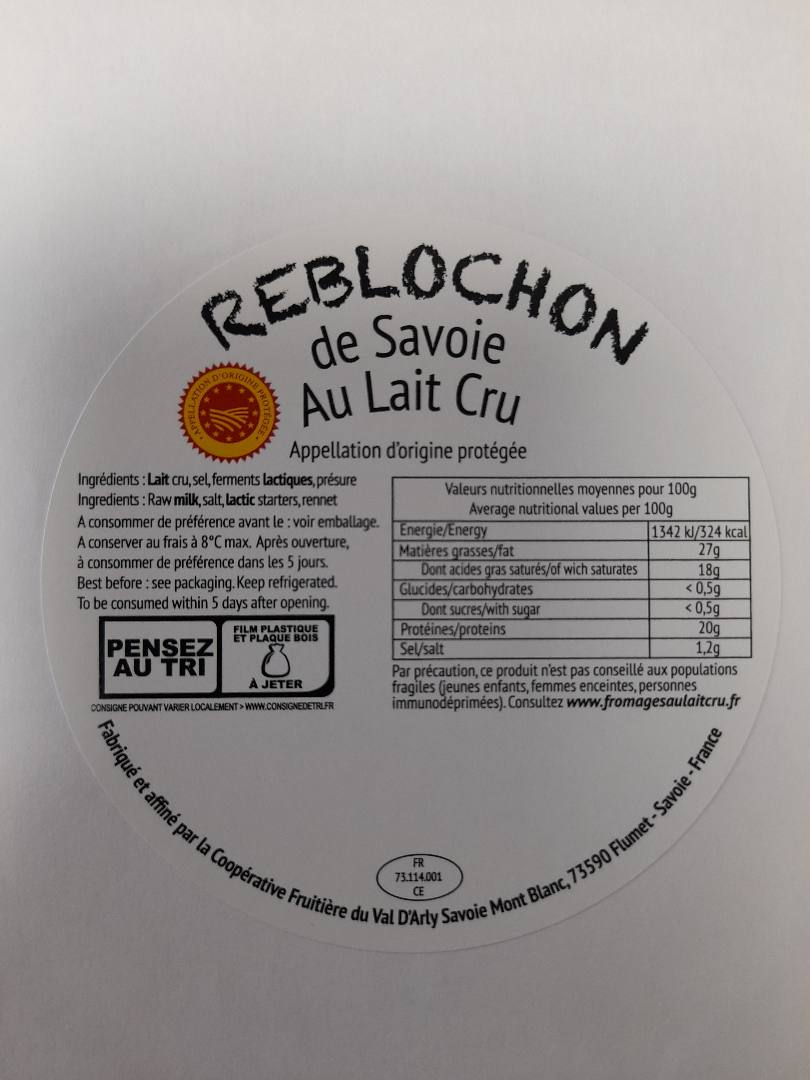
RASFF Alert – Staphylococcus aureus – Reblochon cheese

RASFF

Coagulase-positive staphylococcus in Reblochon cheese from France in Belgium

France – Reblochon de Savoie PDO – Staphylococcus aureus

Gov france

Identification information of the recalled product

  • Product category Feed
  • Product subcategory Milk and dairy products
  • Product brand name Val d’Arly cooperative
  • Model names or references Val d’Arly cooperative
  • Identification of products
    Batch Date
    331128 Date of minimum durability 01/04/2023
  • Packaging FILM PAPER
  • Marketing start/end date From 01/02/2023 to 06/02/2023
  • Storage temperature Product to be stored in the refrigerator
  • Health mark FR 73 114 001 CE
  • Geographic area of ​​sale Departments: BOUCHES-DU-RHONE (13), ILLE-ET-VILAINE (35), RHONE (69), HAUTE-SAVOIE (74), ESSONNE (91), VAL-D’OISE (95)
  • Distributors Wholesalers for catering professionals

Practical information regarding the recall

  • Reason for recall Possible presence of Staphylococci (precautionary principle)
  • Risks incurred by the consumer Staphylococcus aureus (causative agent of staphylococcal poisoning)

Research – Microbiological Quality and Safety of Fresh Turkey Meat at Retail Level, Including the Presence of ESBL-Producing Enterobacteriaceae and Methicillin-Resistant S. aureus

MDPI

Abstract

The aim of this work was to study the microbiological safety and quality of marketed fresh turkey meat, with special emphasis on methicillin-resistant S. aureus, ESBL-producing E. coli, and K. pneumoniae. A total of 51 fresh turkey meat samples were collected at retail level in Spain. Mesophile, Pseudomonas spp., enterococci, Enterobacteriaceae, and staphylococci counts were 5.10 ± 1.36, 3.17 ± 0.87, 2.03 ± 0.58, 3.18 ± 1.00, and 2.52 ± 0.96 log CFU/g, respectively. Neither Campylobacter spp. nor Clostridium perfringens was detected in any sample. ESBL-producing K. pneumoniae and E. coli were detected in 22 (43.14%), and three (5.88%) samples, respectively, all of which were multi-resistant. Resistance to antimicrobials of category A (monobactams, and glycilcyclines) and category B (cephalosporins of third or fourth generation, polymixins, and quinolones), according to the European Medicine Agency classification, was found among the Enterobacteriaceae isolates. S. aureus and methicillin-resistant S. aureus were detected in nine (17.65%) and four samples (7.84%), respectively. Resistance to antimicrobials of category A (mupirocin, linezolid, rifampicin, and vancomycin) and category B (cephalosporins of third- or fourth generation) was found among S. aureus, coagulase-negative staphylococci, and M. caseolyticus isolates.

RASFF Alert -Coagulase-Positive Staphylococci – Frozen Vegetable Dumplings

RASFF

Coagulase-positive staphylococci in frozen vegetable dumplings from Bulgaria in Germany

Switzerland – Swiss checks find microbially contaminated fruit salads

Food Safety News

Listeria and coagulase-positive Staphylococci have been found during inspections of fruit salads in Switzerland, according to the Swiss Association of Cantonal Chemists (ACCS).

Cantonal chemists analyzed the microbiological quality of fruit salads by taking 205 samples.

During the control, organized from May to September 2022, the samples of fruit salads were taken throughout Switzerland and Liechtenstein to check the microbial quality and for the presence of bacteria that could pose a health risk.

Food control is done by cantons, which carry out inspections and laboratory analyses with the help of cantonal chemists. Switzerland is made up of 26 regions called cantons.

Fruit salads can represent a health risk, particularly if storage temperatures and times are not adequate and products are intended for vulnerable people in retirement homes, nursing homes, or hospitals.

Targeted sampling looked at types of fruit more likely to be contaminated by bacteria such as low-acid fruits like melon or watermelon and followed criteria set in food legislation.

Research – Evaluation of antibiotic efficacy of Ocimum gratissimum L. essential oil against Staphylococcus aureus and Pseudomonas aeruginosa

Academic Journals

Abstract

Ocimum gratissimum essential oil (EOGT) has been evaluated for its antibacterial efficacy, and its combinational therapy with antibiotics may enhance the therapeutic efficiency against infection-causing bacteria. Herein, we evaluated the chemical composition of EOGT and its antibiotic efficacy against Staphylococcus aureus and Pseudomonas aeruginosa. GC-MS and GC-FID analyzed EOGT. The antibiotic efficacy was determined by the agar diffusion method, microdilution, minimum inhibitory concentration (MIC), and fractional inhibitory concentration index (FICI). Eugenol (74.2%) was the main component of OGT. Using the agar diffusion method, the action of rifampicin, ciprofloxacin, and tetracycline was evaluated against S. aureus, while the action of cefepime and ciprofloxacin was evaluated against P. aeruginosa. FICI showed a reduced MIC of ciprofloxacin and tetracycline associated with EOGT. In the presence of EOGT, MIC of ciprofloxacin reduced from 0.6 to 0.0006 μg/mL and of tetracycline decreased from 0.028 to 0.0018 μg/mL against S. aureus and from 4 to 0.12 μg/mL against P. aeruginosa. EOGT enhanced the antibacterial efficacy of the antibiotics suggesting a synergistic effect, thereby enhancing the efficacy in treating infection against S. aureus and P. aeruginosa.

Research – Antimicrobial Effect of Moringa oleifera Leaves Extract on Foodborne Pathogens in Ground Beef

MDPI

Abstract

Consumers nowadays are becoming more aware of the importance of using only meat products containing safe and natural additives. Hence, using natural food additives for extending the shelf life of meat along with delaying microbial growth has become an urgent issue. Given the increasingly popular view of Moringa oleifera leaves as a traditional remedy and also the scarcity of published data concerning its antimicrobial effect against foodborne pathogens in meat and meat products, we designed the present study to investigate the antimicrobial effect of Moringa oleifera leaves aqueous extract (0.5%, 1%, and 2%) on ground beef during refrigerated storage at 4 °C for 18 days. MLE revealed potent antimicrobial properties against spoilage bacteria, such as aerobic plate count and Enterobacteriaceae count. MLE 2% showed a significant (p < 0.01) reduction in the counts of E. coli O157:H7, Salmonella enterica serovar Typhimurium, and Staphylococcus aureus artificially inoculated to ground beef by 6.54, 5.35, and 5.40 log10 CFU/g, respectively, compared to control, by the 18th day of storage. Moringa leaves extract (MLE) had no adverse effect on the overall acceptability and other sensory attributes; moreover, it induced a slight improvement in the tenderness and juiciness of treated ground beef, compared to the control. Therefore, MLE can be used as a healthy, natural, and safe preservative to increase meat products’ safety, quality, and shelf stability during cold storage. A promising approach for using natural food additives rather than chemical preservatives could begin new frontiers in the food industry, as they are more safe and do not constitute health risks to consumers.

Research – Listeria monocytogenes, Escherichia coli and Coagulase Positive Staphylococci in Cured Raw Milk Cheese from Alentejo Region, Portugal

MDPI

Listeria monocytogenesEscherichia coli and Coagulase Positive Staphylococci in Cured Raw Milk Cheese from Alentejo Region, Portugal

Abstract

Traditional cheeses are part of the Portuguese gastronomic identity, and raw milk of autochthonous species is a common primary ingredient. Here, we investigated the presence of Listeria monocytogenes, Coagulase Positive Staphylococci (CPS) and pathogenic Escherichia coli, as well as of indicator microorganisms (E. coli and other Listeria spp.) in 96 cured raw milk cheeses from the Alentejo region. Whole genome sequencing (WGS) of pathogenic E. coli and Listeria spp. as well as antimicrobial resistance (AMR) screening of E. coli isolates was also performed. L. monocytogenes, CPS > 10cfu/g and Extra intestinal E. coli were detected in 15.6%, 16.9% and 10.1% of the samples, respectively. Moreover, L. monocytogenes > 102 cfu/g and Staphylococcal enterotoxins were detected in 4.2% and 2.2% of the samples, respectively. AMR was observed in 27.3% of the E. coli isolates, six of which were multidrug resistant. WGS analysis unveiled clusters of high closely related isolates for both L. monocytogenes and L. innocua (often correlating with the cheese producer). This study can indicate poor hygiene practices during milk collection/preservation or during cheese-making procedures and handling, and highlights the need of more effective prevention and control measures and of multi-sectoral WGS data integration, in order to prevent and detect foodborne bacterial outbreaks.

Research – Microbiological safety of aged meat

EFSA

Abstract

The impact of dry‐ageing of beef and wet‐ageing of beef, pork and lamb on microbiological hazards and spoilage bacteria was examined and current practices are described. As ‘standard fresh’ and wet‐aged meat use similar processes these were differentiated based on duration. In addition to a description of the different stages, data were collated on key parameters (time, temperature, pH and aw) using a literature survey and questionnaires. The microbiological hazards that may be present in all aged meats included Shiga toxin‐producing Escherichia coli (STEC), Salmonella spp., Staphylococcus aureus, Listeria monocytogenes, enterotoxigenic Yersinia spp., Campylobacter spp. and Clostridium spp. Moulds, such as Aspergillus spp. and Penicillium spp., may produce mycotoxins when conditions are favourable but may be prevented by ensuring a meat surface temperature of −0.5 to 3.0°C, with a relative humidity (RH) of 75–85% and an airflow of 0.2–0.5 m/s for up to 35 days. The main meat spoilage bacteria include Pseudomonas spp., Lactobacillus spp. Enterococcus spp., Weissella spp., Brochothrix spp., Leuconostoc spp., Lactobacillus spp., Shewanella spp. and Clostridium spp. Under current practices, the ageing of meat may have an impact on the load of microbiological hazards and spoilage bacteria as compared to standard fresh meat preparation. Ageing under defined and controlled conditions can achieve the same or lower loads of microbiological hazards and spoilage bacteria than the variable log10 increases predicted during standard fresh meat preparation. An approach was used to establish the conditions of time and temperature that would achieve similar or lower levels of L. monocytogenes and Yersinia enterocolitica (pork only) and lactic acid bacteria (representing spoilage bacteria) as compared to standard fresh meat. Finally, additional control activities were identified that would further assure the microbial safety of dry‐aged beef, based on recommended best practice and the outputs of the equivalence assessment.

PDF

RASFF Alert- Staphylococcus aureus – Pasta

RASFF

Staphylococcus aureus in pasta from Italy in Germany