Category Archives: Staphylococcal Toxin

Research – Microbiological Risk Assessment in Foods: Background and Tools, with a Focus on Risk Ranger

MDPI

Risk assessment is an important phase of the food production path; it is strictly related to the processing chain as a necessary step for safe foods. This paper represents a contribution to understanding what is and how risk assessment could be conducted; it aims to provide some information on the structure of risk assessment, the tools for its identification and measurement and the importance of risk assessment for correct communication. In this context, after a focus on the background and on some commonly used tools (Risk Ranger, FDA-iRisk, decision tree, among others), the paper describes how to perform risk assessment through three case studies: lettuce (for Listeria monocytogenes), chicken salad (for Escherichia coli), and fresh egg pasta (for Staphylococcus aureus) in the first step, and then a comparison of risk for chicken salad contaminated by different pathogens (E. coli O157:H7, Campylobacter spp. and Salmonella sp.). As a final step, a critical evaluation of Risk Ranger was carried out, pointing out its pros and cons.
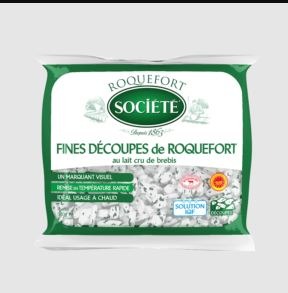
France – Thin cuts of Roquefort made from frozen raw sheep’s milk – Staphylococcal Toxins

Gov france

Identification information of the recalled product

  • Product category Feed
  • Product subcategory Milk and dairy products
  • Product brand name ROQUEFORT COMPANY
  • Model names or references fine cuts of Roquefort made from frozen raw sheep’s milk – ROQUEFORT SOCIETE
  • Identification of products
    GTIN Batch Date
    3023260030232 L61821 Date of minimum durability 30/08/2023
  • Packaging 500g bag
  • Marketing start/end date From 08/11/2022 to 03/28/2023
  • Storage temperature Product to keep in the freezer
  • Health mark FR 12-203-011 EC
  • Geographic area of ​​sale Whole France
  • Distributors Restaurants and wholesalers

Practical information regarding the recall

  • Reason for recall Detection of staphylococcal enterotoxins
  • Risks incurred by the consumer Staphylococcus aureus (causative agent of staphylococcal poisoning)

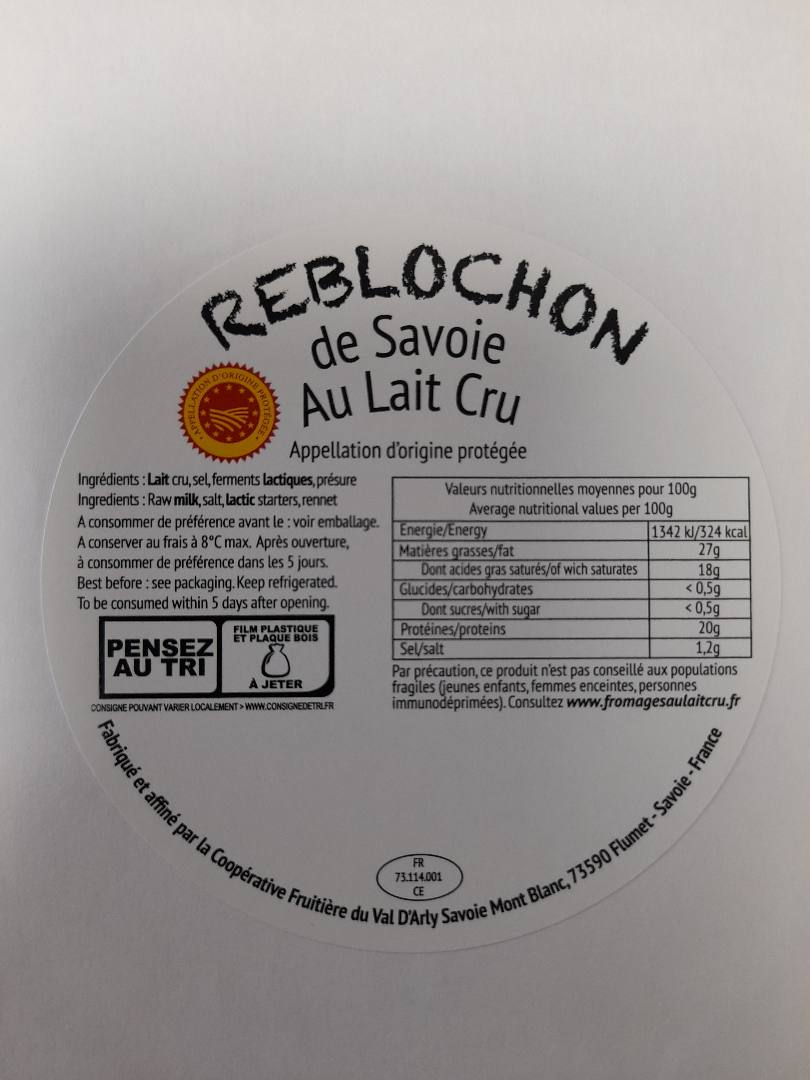
France – Reblochon de Savoie PDO – Staphylococcus aureus

Gov france

Identification information of the recalled product

  • Product category Feed
  • Product subcategory Milk and dairy products
  • Product brand name Val d’Arly cooperative
  • Model names or references Val d’Arly cooperative
  • Identification of products
    Batch Date
    331128 Date of minimum durability 01/04/2023
  • Packaging FILM PAPER
  • Marketing start/end date From 01/02/2023 to 06/02/2023
  • Storage temperature Product to be stored in the refrigerator
  • Health mark FR 73 114 001 CE
  • Geographic area of ​​sale Departments: BOUCHES-DU-RHONE (13), ILLE-ET-VILAINE (35), RHONE (69), HAUTE-SAVOIE (74), ESSONNE (91), VAL-D’OISE (95)
  • Distributors Wholesalers for catering professionals

Practical information regarding the recall

  • Reason for recall Possible presence of Staphylococci (precautionary principle)
  • Risks incurred by the consumer Staphylococcus aureus (causative agent of staphylococcal poisoning)

Research – Microbiological Quality and Safety of Fresh Turkey Meat at Retail Level, Including the Presence of ESBL-Producing Enterobacteriaceae and Methicillin-Resistant S. aureus

MDPI

Abstract

The aim of this work was to study the microbiological safety and quality of marketed fresh turkey meat, with special emphasis on methicillin-resistant S. aureus, ESBL-producing E. coli, and K. pneumoniae. A total of 51 fresh turkey meat samples were collected at retail level in Spain. Mesophile, Pseudomonas spp., enterococci, Enterobacteriaceae, and staphylococci counts were 5.10 ± 1.36, 3.17 ± 0.87, 2.03 ± 0.58, 3.18 ± 1.00, and 2.52 ± 0.96 log CFU/g, respectively. Neither Campylobacter spp. nor Clostridium perfringens was detected in any sample. ESBL-producing K. pneumoniae and E. coli were detected in 22 (43.14%), and three (5.88%) samples, respectively, all of which were multi-resistant. Resistance to antimicrobials of category A (monobactams, and glycilcyclines) and category B (cephalosporins of third or fourth generation, polymixins, and quinolones), according to the European Medicine Agency classification, was found among the Enterobacteriaceae isolates. S. aureus and methicillin-resistant S. aureus were detected in nine (17.65%) and four samples (7.84%), respectively. Resistance to antimicrobials of category A (mupirocin, linezolid, rifampicin, and vancomycin) and category B (cephalosporins of third- or fourth generation) was found among S. aureus, coagulase-negative staphylococci, and M. caseolyticus isolates.

RASFF Alert -Coagulase-Positive Staphylococci – Frozen Vegetable Dumplings

RASFF

Coagulase-positive staphylococci in frozen vegetable dumplings from Bulgaria in Germany

Switzerland – Swiss checks find microbially contaminated fruit salads

Food Safety News

Listeria and coagulase-positive Staphylococci have been found during inspections of fruit salads in Switzerland, according to the Swiss Association of Cantonal Chemists (ACCS).

Cantonal chemists analyzed the microbiological quality of fruit salads by taking 205 samples.

During the control, organized from May to September 2022, the samples of fruit salads were taken throughout Switzerland and Liechtenstein to check the microbial quality and for the presence of bacteria that could pose a health risk.

Food control is done by cantons, which carry out inspections and laboratory analyses with the help of cantonal chemists. Switzerland is made up of 26 regions called cantons.

Fruit salads can represent a health risk, particularly if storage temperatures and times are not adequate and products are intended for vulnerable people in retirement homes, nursing homes, or hospitals.

Targeted sampling looked at types of fruit more likely to be contaminated by bacteria such as low-acid fruits like melon or watermelon and followed criteria set in food legislation.

Research – Microbiological safety of aged meat

EFSA

Abstract

The impact of dry‐ageing of beef and wet‐ageing of beef, pork and lamb on microbiological hazards and spoilage bacteria was examined and current practices are described. As ‘standard fresh’ and wet‐aged meat use similar processes these were differentiated based on duration. In addition to a description of the different stages, data were collated on key parameters (time, temperature, pH and aw) using a literature survey and questionnaires. The microbiological hazards that may be present in all aged meats included Shiga toxin‐producing Escherichia coli (STEC), Salmonella spp., Staphylococcus aureus, Listeria monocytogenes, enterotoxigenic Yersinia spp., Campylobacter spp. and Clostridium spp. Moulds, such as Aspergillus spp. and Penicillium spp., may produce mycotoxins when conditions are favourable but may be prevented by ensuring a meat surface temperature of −0.5 to 3.0°C, with a relative humidity (RH) of 75–85% and an airflow of 0.2–0.5 m/s for up to 35 days. The main meat spoilage bacteria include Pseudomonas spp., Lactobacillus spp. Enterococcus spp., Weissella spp., Brochothrix spp., Leuconostoc spp., Lactobacillus spp., Shewanella spp. and Clostridium spp. Under current practices, the ageing of meat may have an impact on the load of microbiological hazards and spoilage bacteria as compared to standard fresh meat preparation. Ageing under defined and controlled conditions can achieve the same or lower loads of microbiological hazards and spoilage bacteria than the variable log10 increases predicted during standard fresh meat preparation. An approach was used to establish the conditions of time and temperature that would achieve similar or lower levels of L. monocytogenes and Yersinia enterocolitica (pork only) and lactic acid bacteria (representing spoilage bacteria) as compared to standard fresh meat. Finally, additional control activities were identified that would further assure the microbial safety of dry‐aged beef, based on recommended best practice and the outputs of the equivalence assessment.

PDF

RASFF Alert- Staphylococcus aureus – Pasta

RASFF

Staphylococcus aureus in pasta from Italy in Germany

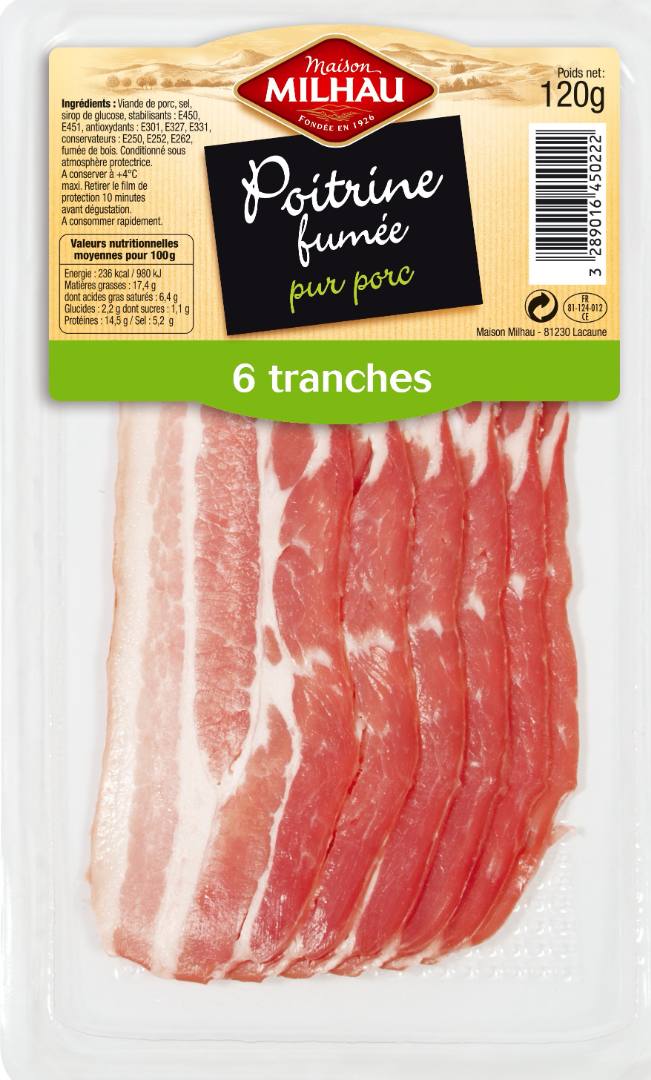
France – Smoked Pork Bacon pack 6 slices 100g – Staphylococcal Enterotoxin

Gov france

Identification information of the recalled product

  • Product category Feed
  • Product subcategory Meats
  • Product brand name MILHAU HOUSE
  • Model names or references Smoked breast pack 6 slices 100g
  • Identification of products
    GTIN Batch Date
    3289010003974 336206 Use-by date 01/26/2023
  • Packaging Under protective atmosphere
  • Marketing start/end date From 07/12/2022 to 15/12/2022
  • Storage temperature Product to be stored in the refrigerator
  • Health mark EN 81.124.012 EC
  • Geographic area of ​​sale Departments: AUDE (11), CHARENTE (16), CHARENTE-MARITIME (17), DORDOGNE (24), GARD (30), HERAULT (34), LANDES (40), LOT (46), HAUTES-PYRENEES (65) , PYRENEES-ORIENTALES (66), TARN (81), TARN-ET-GARONNE (82)
  • Distributors Leclerc, Carrefour, Intermarché, Super U, U Express
  • List of points of saleTraça_ventes_Lot_336206_-_Pack_Poitrine_smoked_6_Tr_100g.pdf

Practical information regarding the recall

  • Reason for recall Presence of staphylococcal enterotoxin

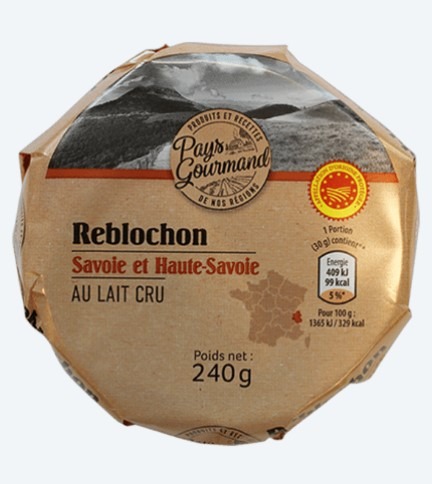
France – REBLOCHON 240G – Staphylococcus aureus

Gov france

Identification information of the recalled product

  • Product category Feed
  • Product subcategory Milk and dairy products
  • Product brand name GOURMET COUNTRY
  • Model names or references REBLOCHON 240G
  • Identification of products
    GTIN Lot Date
    26065076 225395124 Use-by date 01/24/2023
  • Packaging 240G
  • Marketing start/end date From 20/12/2022 to 13/01/2023
  • Storage temperature Product to be stored in the refrigerator
  • Health mark FR74116050CE
  • Geographic area of ​​sale Whole France
  • Distributors ALDI

Practical information regarding the recall

  • Reason for recall Potential exceedance of the limit of coagulase-positive staphylococci