Category Archives: Shigatoxin

Research – STEC infection – Annual Epidemiological Report for 2021

ECDC

For 2021, 6 534 confirmed cases of STEC infection were reported by 30 EU/EEA countries (Table 1). Twenty-seven countries reported at least two confirmed cases, and three countries reported no cases. The EU/EEA notification rate was 2.2 cases per 100 000 population, representing a 37.5% increase compared with the previous year.

Click to access AER%20STEC%20-%202021.pdf

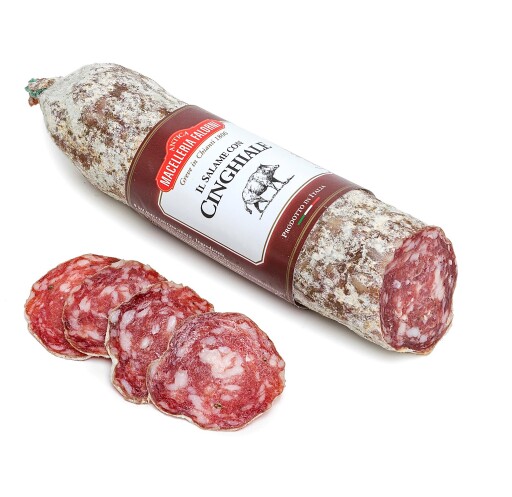
Ireland – Recall of a batch of Anitca Macelleria Falorni il Salame Con Cinghiale due to the presence of Shiga toxin producing E. coli

FSAI

il Salame Con Cinghiale

Summary
Category 1:

For Action

Alert Notification:

2022.71

Product:

Anitca Macelleria Falorni il Salame Con Cinghiale wild boar salami; pack size: approx. 350g (weights may vary); approval number: IT 1524S CE

Batch Code:

22259; best before date: 13/02/2023  

Country Of Origin:

Italy

Message:

The above batch of Anitca Macelleria Falorni il Salame Con Cinghiale wild boar salami is being recalled due to the presence of Shiga toxin producing E. coli.

Recall notices will be displayed at point-of-sale.

Nature Of Danger:

Shiga toxin producing E. coli (STEC) also known as Verocytotoxigenic E. coli (VTEC) may cause severe bloody diarrhoea and abdominal cramps, although sometimes the infection causes non-bloody diarrhoea or no symptoms. In some groups, particularly children under 5 years of age and the elderly, the infection can also cause a complication called haemolytic uraemic syndrome (HUS), in which the red blood cells are destroyed and the kidneys fail.

Action Required:

Manufacturers, wholesalers, distributors, caterers & retailers:

Retailers are requested to remove the implicated batch from sale and display recall notices at point of sale. 

Caterers should not use the implicated batch.

Consumers:

Consumers are advised not to eat the implicated batch.

Austria – Salame con cinghiale, salami with wild boar, approx. 350g – STEC E.coli

AGES

AGES informs about a recall of the company Interfood Lebensmittelgrosshandel Ges.mbH. The company recalled the product Salame con cinghiale, salami with wild boar, approx. 350g on November 28th, 2022:
© APA/Jody Mattioli
recall reason
Possible contamination with verotoxin-producing E.coli (EHEC)
Marketed by
Interfood food wholesale Ges.mbH
Manufacturer
Antica Macelleria Falorni srl
Expiry Date
02/13/2023
Batch number
22259

Interfood Lebensmittelgrosshandel is recalling the following product for reasons of consumer protection: “Salame con cinghiale, salami with wild boar, approx. 350g” with a best-before date (MHD) of February 13, 2023 and batch number 22259.

The batch number is on the back of the banderole, the best before date on the side. The producer of the product is “Antica Macelleria Falorni srl, Piazza G. Matteotti 71, IT-50022 Greve in Chianti (IT)”.

The affected product with the batch mentioned should no longer be consumed, as it could possibly be contaminated with verotoxin-forming E. coli (EHEC) .

The symptoms of a possible illness with EHEC can be watery diarrhea or nausea, vomiting and/or abdominal pain, in rare cases also fever and bloody diarrhea. The incubation period after consumption is usually one to three days, rarely up to ten days. Babies and children up to preschool age are more likely to become ill. This group, as well as older people or people with a weak immune system, are particularly at risk of developing severe courses and complications (up to and including acute kidney failure).

If consumers experience the symptoms mentioned, they should consult a doctor immediately and the suspicion of EHEC should be pointed out.

Consumers can return the affected batch of this product to the respective points of sale.

Other batches of the same product and other products from the manufacturer are not affected by this recall. This warning does not mean that the hazard was caused by Interfood.

Questions & contact:

Interfood Lebensmittelgrosshandel GmbH
Tel.: 05223 / 56808
Email: office@interfood.at

original recall

Research – Use of a Non-Destructive Surface Sampling Device to Sample Domestic Beef Manufacturing Trimmings and Bench Trim

FSIS USDA

Summary

On February 1, 2023, FSIS intends to stop using the N60 excision sampling method to sample domestic beef manufacturing trimmings and bench trim for adulterant Shiga toxin-producing Escherichia coli (E. coli) (STEC) and Salmonella. FSIS intends to replace the N60 excision sampling method with a non-destructive surface sampling method that uses a cloth manual sampling device. FSIS has found that the cloth sampling method is as effective as the N60 excision sampling method at recovering organisms in beef manufacturing trimmings. Additionally, the cloth sampling method is faster and safer for FSIS inspection program personnel (IPP) to use because it does not require IPP to use hooks or knives to collect samples. Moreover, the cloth sampling method allows FSIS to sample without destroying product, which reduces food waste.

Dates

FSIS will implement the cloth sampling on February 1, 2023, unless the Agency receives substantive comments that warrant further review. Submit comments on or before January 23, 2023.

Research – EU and UK record travel-related Shigella infections

Food Safety News

A multi-country Shigella outbreak in Europe has been linked to stays at some hotels in Cape Verde.

Confirmed Shigella sonnei cases have been reported in the Netherlands, Denmark, France, Germany, Portugal, and the United Kingdom.

The European Centre for Disease Prevention and Control (ECDC) said there is no information about the source of infection but given the increase in travel during the coming holiday season, new cases are likely.

However, Holiday Claims Bureau and Hudgell Solicitors in the UK have noted complaints of illness and poor hygiene standards from holidaymakers, suggesting the source could be contaminated food or water. Holiday Claims Bureau said it had been informed of sick people testing positive for Shigella.

Travelers have described symptoms such as diarrhea, vomiting, stomach cramps, and pains, which in some cases lasted until they returned home.

Anne ThomsonHudgell Solicitors’ travel litigation executive, said people can suffer as a result of a change in diet and climate.

“However, when we are alerted to situations where a number of holiday guests are affected by similar symptoms, particularly when they are not part of the same traveling group, we feel an investigation is needed to contain any wider outbreak and prevent future problems,” she said.

“Holidaymakers becoming ill having only ever eaten at the specific hotel they are staying at, and concerns raised by guests over standards of hygiene and cleanliness throughout premises, and not just in dining areas, are often red flags to potential underlying problems.”

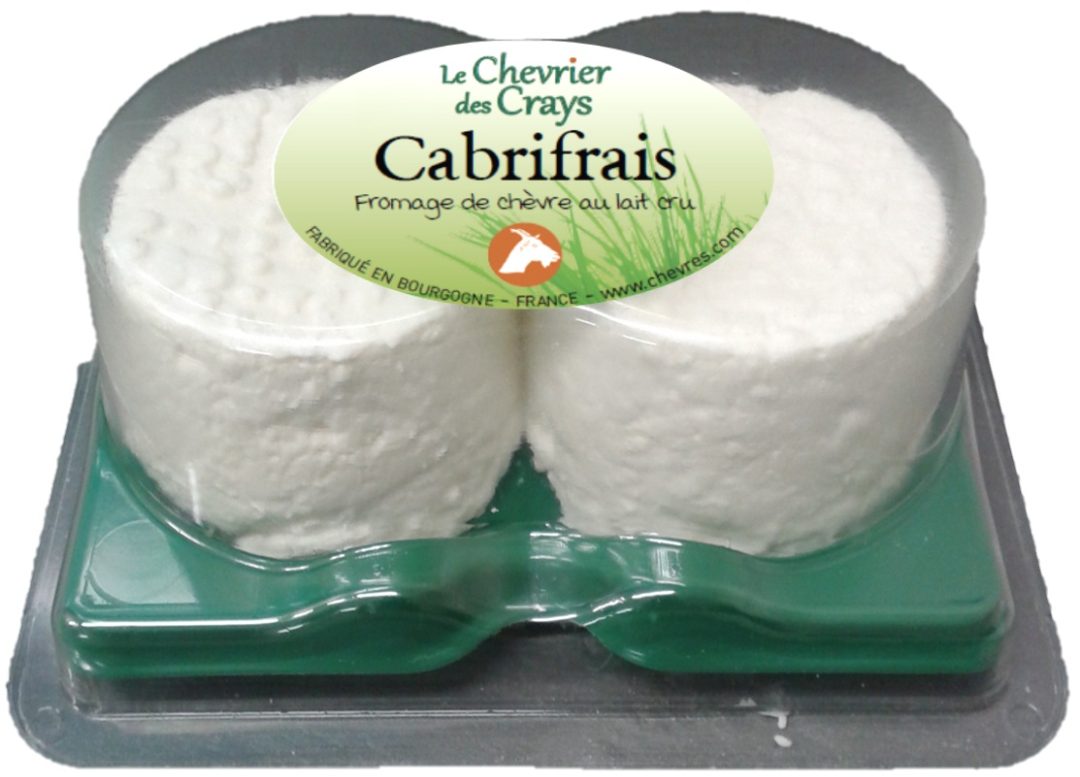
France – CABRIFRAIS Cheese – STEC E.coli O103

Gov france

Identification information of the recalled product

  • Product category Feed
  • Product subcategory Milk and dairy products
  • Product brand name Crays goatherd
  • Model names or references CABRIFRAIS with raw milk
  • Identification of products
    GTIN Batch Date
    3503961317004 255 Date of minimum durability 11/10/2022
    3503961315062 255 – 258 Date of minimum durability 11/10/2022
    3503965317024 256 Date of minimum durability 11/10/2022
    3503961317028 255 Date of minimum durability 11/10/2022
    3503961314126 255 – 259 Date of minimum durability between 10/11/2022 and 10/18/2022
    3503961321124 255 – 256 Date of minimum durability 11/10/2022
  • Marketing start/end date From 09/12/2022 to 09/20/2022
  • Storage temperature Product to be stored in the refrigerator
  • Health markEN.71235001.CE
  • Geographic area of ​​sale Regions: Auvergne-Rhône-Alpes, , Burgundy-Franche-Comté, , Grand-Est
  • Distributors Auchan, Carrefour, Intermarché, System U, Leclerc, Colruyt

Practical information regarding the recall

  • Reason for recall Presence of Escherichia coli O103:H2
  • Risks incurred by the consumer Toxigenic Shiga Escherichia coli (STEC)

France – Goat cheese with raw milk 12% fat 4 X 100 g EP – STEC E.coli O103

Gov france

Identification information of the recalled product

  • Product category Feed
  • Product subcategory Milk and dairy products
  • Product brand name The goatherd of Crays
  • Model names or references Goat cheese with raw milk
  • Identification of products
    GTIN Batch Date
    3503961310043 255 Use-by date 11/10/2022
  • Products ListPA.2022.446_-__poster_Rappel_Faisselle_de_chèvre_lait_raw_-_221020.pdfAttachment
  • Packaging4 x 100g
  • Storage temperature Product to be stored in the refrigerator
  • Health mark EN 71.235.001 EC
  • Geographic area of ​​sale Regions: Grand-Est
  • Distributors U Teaches

Practical information regarding the recall

  • Reason for recall Presence of Escherichia coli O103:H2
  • Risks incurred by the consumer Toxigenic Shiga Escherichia coli (STEC)

Research – Europe sees large drop in E. coli infections in 2020

Food Safety News

There was a big fall in the number of Shiga toxin-producing E. coli (STEC) infections in Europe in 2020, according to recently published data.

In 2020, 4,824 confirmed STEC infections were reported. This is down from 8,339 in 2019. STEC infection is mainly acquired through consumption of contaminated food or water and contact with animals or their feces.

Data on STEC infections were reported by 29 countries. Notification is voluntary in Belgium, France, Luxembourg, and Spain or based on another type of system in Italy.

Germany with 1,409 and Ireland with 734 had the most infections, accounting for 44 percent of all cases. The highest country-specific notification rates were in Ireland, Malta, Denmark, and Norway.

Research – Collective food poisoning (TIAC) ​​with E. coli O157 producing Shiga toxins, associated with the consumption of raw cucumbers

Sante Publique

On September 9, 2021, the Regional Health Agency (ARS) of Hauts-de-France was informed of a suspicion of collective food poisoning (TIAC) ​​affecting half-board students, educated in several schools in a municipality. of the Lille metropolis. On September 13, 2021, two cases of hemolytic and uremic syndrome (HUS) were diagnosed in two hospitalized children attending school in this town. Public Health France Hauts-de-France was asked by the Hauts-de-France ARS to provide support for the investigations and management of this TIAC. A total of 35 cases of gastroenteritis, with bloody diarrhea and fever (>38°C) in half of the cases, were identified. Ten cases were hospitalized and two children developed HUS. The cases identified were half-board students in four school groups (29 cases), a parent of a student and elderly people benefiting from the municipality’s home meal delivery service (5 cases). The case canteens were all supplied by the central municipal kitchen. The shape of the epidemic curve was in favor of a common and point source of contamination during meals on September 2 or 3, 2021. The case-control survey, carried out in schools, concluded that only the consumption of cucumbers in salad, served with the meal on September 2, was statistically and significantly associated with the occurrence of the disease. A strain of E. highly pathogenic Shiga toxin-producing (STEC) O157 coli was isolated from the stool cultures of eight cases, including the two children who developed HUS and in the offending cucumber salad. Genomic analysis of the strains confirmed the genetic clustering of clinical and food strains that belonged to the same genomic cluster. The veterinary investigation revealed that a failure in the decontamination process, associated with incomplete peeling of the contaminated cucumbers, contributed to the occurrence of this TIAC. The cucumbers in question came from Belgium and the Belgian health authorities were informed via the dedicated European alert circuits. No other episodes of clusters of STEC infection related to this TIAC have been reported to the ARS over the period while cucumbers from the same batch had been widely distributed in communities and commercial catering services in the Hauts-de-France region. The food vehicle, incriminated in this TIAC, is part of the plants at risk because of its raw mode of consumption. It is important to remind vulnerable populations and collective catering services that preventing the risk of STEC infection, linked to the consumption of raw vegetables, requires washing, disinfection and peeling.

Kenya – How Safe Is That Plate Of Meat You Consume?

Kenya News

A significant portion of beef, goat meat and other meat products sold in butcheries and eateries in Nakuru is contaminated with a toxic cocktail of bacteria, a new report by researchers based at Egerton University has revealed.

The study which evaluated microbiological safety of meat and ready-to-eat (RTE) meat products in urban and peri-urban parts of the county, indicates that the presence of Staphylococcus aureusEscherichia coli (abbreviated as E. coli) salmonella spp and Shigella bacteria is worrying and efforts have to be put in place to cut on their levels.

Staphylococcus aureus was the most isolated negative bacteria in 87 beef and goat meat and other meat products samples, with a prevalence of 100 per cent, followed by Shigella spp in 81 samples (93 percent).

Staphylococcus aureus is a pathogen known to cause bloodstream infections, pneumonia, bone and joint infections and soft tissue infections, while infection with some strains of Shigella spp can result in diarrhea (sometimes bloody), fever, and stomach cramps.

The report compiled by lead investigators Dr. Hillary Odeckh Indago, Prof. Joseph Wafula Matofari and Dr. John Masani Nduko further notes that all the 15 samples of water randomly collected from the butcheries and eateries tested positive for E. colisalmonella spp and Shigella bacteria.