Category Archives: Shigatoxin

Research – Shiga toxin-producing Escherichia coli (STEC) in meat and leafy greens available in the Swedish retail market – Occurrence and diversity of stx subtypes and serotypes

Science Direct

Abstract

Shiga toxin-producing Escherichia coli (STEC) is a major cause of foodborne illness, ranging from mild diarrhea to permanent kidney failure. This study summarizes the results of four surveys performed at different time periods, which investigated the occurrence and characteristics of STEC in beef, lamb and leafy greens available in the Swedish retail market. Such data is required when assessing the public health risk of varying types of STEC in different foods, and for establishing risk management measures. Samples from domestic and imported products were collected based on their availability in the retail market. The occurrence of STEC was investigated in 477 samples of beef, 330 samples of lamb and 630 samples of leafy greens. The detection of virulence genes (stx1stx2eae) was performed using real-time PCR followed by the isolation of bacteria from stx-positive enriched samples using immunomagnetic separation or an immunoblotting method. All STEC isolated from the food samples was further characterised in terms of stx subtyping and serotyping through whole genome sequencing. STEC was isolated from 2 to 14 % of beef samples and 20 to 61 % of lamb samples, depending on the region of origin. STEC was not isolated from samples of leafy greens, although stx genes were detected in 11 (2 %) of the samples tested. In total, 5 of the 151 sequenced STEC isolates from meat contained stx2 and eae, of which 4 such combinations had the stx2a subtype. The stx2 gene, stx2a in particular, is strongly associated with serious disease in humans, especially in combination with the eae gene. The isolates belonged to 20 different serotypes. Two isolates from beef and one from lamb belonged to the serotype O157:H7 and contained genes for stx2 and eae. Overall, several combinations of stx subtypes were found in isolates from beef, whereas stx1c, either alone or together with stx2b, was the dominant combination found in STEC from lamb. In conclusion, STEC was rare in whole meat samples of domestic beef in the Swedish retail market, whereas such bacteria were frequently found in minced meat and whole meat samples of imported beef and domestic and imported lamb. Although the number of isolates containing genes linked to an increased risk of severe disease was low, beef and lamb in the Swedish retail market is a common source of human exposure to potentially pathogenic STEC.
EFSA – Story map on Shiga toxin-producing Escherichia coli

EFSA

Shiga toxin-producing Escherichia coli (STEC) are strains of the bacterium Escherichia coli that produce  cytotoxins  known as Shiga toxins and that can be transmitted from animals to humans. Shiga toxins are proteins that have a cytotoxic effect, meaning they can harm cells. These toxins exist in two primary forms: Stx1 and Stx2. Each form can be neutralized by different antibodies. Further, these toxin types are subdivided into multiple subtypes based on small genetic variations. For example, Stx1 includes subtypes such as stx1a, stx1c, and stx1d. Similarly, Stx2 has several subtypes, more than ten described up to now, including stx2a, stx2b, and so on. ( Scheutz et al., 2012 ;  Bai et al., 2021 ).

RASFF Alerts – STEC E.coli – Salad Vegetable Mix – Goat Cheese

RASFF

Shigatoxin-producing Escherichia coli in salad vegetable mix from the Netherlands in Germany

RASFF

Shigatoxin-producing Escherichia coli (STEC) in goat cheese from France in Germany and Italy

Research – Shiga Toxin–Producing Escherichia coli and the Hemolytic–Uremic Syndrome

The New England Journal of Medicine

You need to create a free account to read this document.

USA – Shigella hits Yakima County

Food Poison Journal

According to a media release sent by the Yakima Health District, there is currently a Shigella outbreak in Yakima County.

According to YHD, 72 cases have been reported from January 1, 2023 to October 16, 2023.

The 72 cases is compared to the 10 reported last year during that time.

According to YHD, Shigella is a bacteria that can easier spread between humans. Shigella causes illness.

You can become infected with Shigella by touching surfaces contaminated with the bacteria or by coming into contact with someone who is currently infected.

Belgian officials search for source of Shigella infections

Food Safety News

Belgian authorities have temporarily closed an events venue linked to more than 50 Shigella infections.

The Federal Agency for the Safety of the Food Chain (FASFC) and the Flemish Departement Zorg reported that over recent weekends, people had been infected with Shigella after attending the Zandberghoeve venue in Beernem. The source of contamination may be an infected person or a contaminated food or object.

Earlier this year, Zorg en Gezondheid (The Flemish Care and Health Agency) merged with another body to form Departement Zorg.

Quebec – Notice not to consume lean ground meat (beef or veal) prepared and sold by Boucherie du Terroir in Montreal – STEC E.coli

Quebec

The Ministry of Agriculture, Fisheries and Food (MAPAQ), in collaboration with the Food Inspection Division of the City of Montreal and the company Boucherie du Terroir, located at 2625, boulevard Rosemont , in Montreal, warns the public not to consume the products indicated in the table below, because these foods are likely to contain the bacterium E. coli producing shigatoxins.

Product name

Format

State

Batch

“LEAN GROUND BEEF”

Variable

Refrigerated

Packed: August 10, 2023


Best before: August 17, 2023

“LEAN GROUND VEAL”

The products that are the subject of this warning have been offered for sale only at 2625, boulevard Rosemont , in Montreal (Valmont grocery store). They were vacuum-packed in a transparent plastic wrapper. The label of the products included, in addition to their name, the words “Boucherie Valmont”.

The operator is voluntarily recalling the products in question. It has agreed with MAPAQ and the Food Inspection Division of the City of Montreal to distribute this warning as a precautionary measure. Also, people who have any of these products in their possession are advised not to consume it. They must return it to the establishment where they bought it or throw it away.

It should be noted that proper cooking of meat destroys the  E. coli  bacteria in all cases. The preparation of ready meals, such as spaghetti sauce, shepherd’s pie or meat pie, requires a long enough cooking time and a high enough temperature to destroy the bacteria.

Foods contaminated with the E. coli bacterium that produces shigatoxins do not necessarily show any visible spoilage or suspicious smell, but the consumption of these foods can cause serious and even fatal illnesses. They are manifested by diarrhea and abdominal pain, often accompanied by blood in the stool. These symptoms usually appear two to ten days after eating contaminated food. Nausea, vomiting and sometimes fever may also occur. When these symptoms appear, it is strongly recommended to consult a doctor without delay. Most symptoms disappear within five to ten days.

It should be noted that no case of illness associated with the consumption of these foods has been reported to MAPAQ to date.

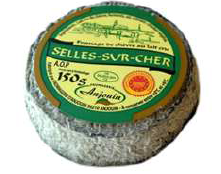
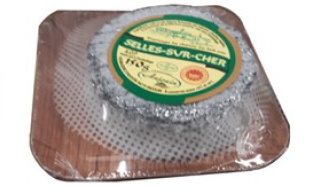
Luxembourg – Selles-sur-Cher AOP from the Fromagerie d’Anjouin brand – STEC E.coli O26/O103

SAP

The following products are recalled in Luxembourg: 

Name Selles-sur-Cher AOP
Brand Anjouin cheese dairy
Conditioning The cutting
Unit 150g
bar code 3301170007002
Date of minimum durability (MDD) 10/10/2023
Batch S222T2
Sale period from 08/23/2023 to 08/26/2023
Name Selles-sur-Cher AOP
Brand Anjouin cheese dairy
Conditioning tray
Unit 150g
bar code 3301170070105
Date of minimum durability (MDD) 10/10/2023
Batch S222T2
Sale period from 08/23/2023 to 08/26/2023

Danger  : Presence of E. coli STEC O103 and O26 – Escherichia coli likely to produce toxins (shiga toxins)

Escherichia coli STEC O103:H2 and O26:H11 can cause, in the week following consumption, possibly hemorrhagic gastroenteritis, accompanied or not by fever, and which can be followed by severe renal complications in young children. People who have consumed the products mentioned above and who present this type of symptom are invited to consult a doctor and report this consumption to him.

Sale confirmed in Luxembourg by: Auchan.

A sale by other operators cannot be excluded.

Information Source: Recall Notification

Research – Risk Factors for Non-O157 Shiga Toxin–Producing Escherichia coli Infections, United States

CDC

Abstract

Shiga toxin–producing Escherichia coli (STEC) causes acute diarrheal illness. To determine risk factors for non-O157 STEC infection, we enrolled 939 patients and 2,464 healthy controls in a case–control study conducted in 10 US sites. The highest population-attributable fractions for domestically acquired infections were for eating lettuce (39%), tomatoes (21%), or at a fast-food restaurant (23%). Exposures with 10%–19% population attributable fractions included eating at a table service restaurant, eating watermelon, eating chicken, pork, beef, or iceberg lettuce prepared in a restaurant, eating exotic fruit, taking acid-reducing medication, and living or working on or visiting a farm. Significant exposures with high individual-level risk (odds ratio >10) among those >1 year of age who did not travel internationally were all from farm animal environments. To markedly decrease the number of STEC-related illnesses, prevention measures should focus on decreasing contamination of produce and improving the safety of foods prepared in restaurants.

Research – Whole-Genome Sequencing of Shiga Toxin-Producing Escherichia coli for Characterization and Outbreak Investigation

MDPI

Abstract

Shiga toxin-producing Escherichia coli (STEC) causes high frequencies of foodborne infections worldwide and has been linked to numerous outbreaks each year. Pulsed-field gel electrophoresis (PFGE) has been the gold standard for surveillance until the recent transition to whole-genome sequencing (WGS). To further understand the genetic diversity and relatedness of outbreak isolates, a retrospective analysis of 510 clinical STEC isolates was conducted. Among the 34 STEC serogroups represented, most (59.6%) belonged to the predominant six non-O157 serogroups. Core genome single nucleotide polymorphism (SNP) analysis differentiated clusters of isolates with similar PFGE patterns and multilocus sequence types (STs). One serogroup O26 outbreak strain and another non-typeable (NT) strain, for instance, were identical by PFGE and clustered together by MLST; however, both were distantly related in the SNP analysis. In contrast, six outbreak-associated serogroup O5 strains clustered with five ST-175 serogroup O5 isolates, which were not part of the same outbreak as determined by PFGE. The use of high-quality SNP analyses enhanced the discrimination of these O5 outbreak strains into a single cluster. In all, this study demonstrates how public health laboratories can more rapidly use WGS and phylogenetics to identify related strains during outbreak investigations while simultaneously uncovering important genetic attributes that can inform treatment practices.