Category Archives: Salmonella

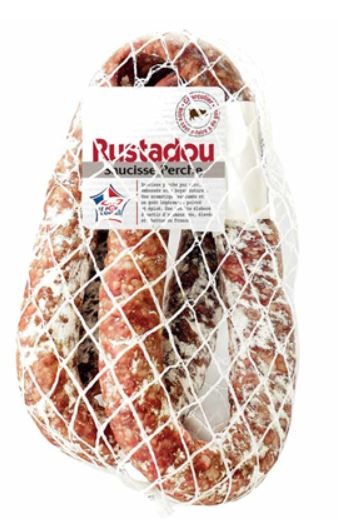
France – 1/2 RUSTADOU pure pork perch sausage – Salmonella

Gov France

Product Category
Food
Product subcategory
Meats
Product brand name
RUSTADOU
Model names or references
1/2 RUSTADOU pure pork perch sausage
Product identification
GTIN Batch Date
3439496302539 42200002 Minimum durability date 12/27/2024
Packaging
Approximately 3kg
Start/End of marketing date
From 10/30/2024 to 11/05/2024
Storage temperature
Product to be kept in the refrigerator
Health mark
FR 07 338 001 CE
Geographic area of ​​sale
Whole France
Distributors
METRO FRANCE

Italy – Salame nostrano aglio/senza garlic – Salmonella and Listeria monocytogenes

Salute

Brand : TRENTIN

Name : Salame nostrano aglio/senza garlic

Reason for reporting : Recall due to microbiological risk

Publication date : 5 November 2024

Documentation

Documentation

Research – Estimating Underdetection of Foodborne Disease Outbreaks

CDC

To the Editor: In the February issue, Ford et al. used the power law to estimate underdetection of foodborne disease outbreaks in the United States (1). Two of their main conclusions are entirely reasonable: small outbreaks are more likely to go undetected than large outbreaks, and the use of whole-genome sequencing (WGS) has improved the detection of small outbreaks caused by pathogens for which WGS is used. However, their conclusion on the usefulness of the power law itself needs further consideration.

Ford et al. analyzed the size of all foodborne outbreaks reported to the national Foodborne Disease Outbreak Surveillance System during 1998–2019. They defined outbreak size as the number of laboratory-confirmed cases. However, laboratory-confirmed cases are only good estimators for the size of outbreaks detected through pathogen-specific surveillance, such as for Salmonella, where outbreak detection follows the accumulation of confirmed cases. For outbreaks associated with events or establishments, identification might rely on reports from consumers, many of whom do not seek healthcare; thus, stool specimens might only be collected from a few cases to confirm the etiology. Consumer complaints are the primary means for identifying foodborne outbreaks caused by norovirus. The Council to Improve Foodborne Outbreak Response recommends collecting clinical specimens from >5 members from the ill group in such settings (2). Thus, the number of confirmed cases in an outbreak is dependent on how the outbreak is detected. Outbreaks detected by complaint generally have few confirmed cases, even though they can involve large numbers of illnesses.

To provide a fair evaluation for the usefulness of the power law, it may be better to restrict analyses to outbreaks with common detection pathways. For outbreaks detected by pathogen-specific surveillance, counting confirmed cases seems appropriate. For outbreaks detected through consumer complaints, analyses should include all outbreak-associated illnesses.

Research – UK food microbiology lab reports updates on recent work

Food Safety News

The main food microbiology lab in the United Kingdom has shared highlights of its recent activity in an annual report.

The report covers work of the UK’s national reference laboratory (NRL) for food microbiology between April 2023 and March 2024.

The UK Health Security Agency (UKHSA) provides the service for the Food Standards Agency (FSA) and Food Standards Scotland (FSS). It covers Listeria monocytogenes, coagulase-positive staphylococci, E. coli, Campylobacter, Salmonella, and antimicrobial resistance.

Research – Effects of Combined Cold Plasma and Organic Acid-Based Sanitizer Treatments Against Salmonella enterica on Tomato Surfaces

Wiley Online

ABSTRACT

Incidence of foodborne illness due to bacterial contamination of fresh produce continue to exist despite continuous research on processing interventions to mitigate the problem. In this study, we combined atmospheric cold plasma treatments with an antimicrobial solution containing specific organic acids generally recognized as safe (GRAS) by the FDA and tested its antimicrobial efficacy against Salmonella enterica inoculated on tomato surfaces. Tomato surfaces were inoculated with at 5.6 log CFU/g of Salmonella by spotting 0.1 mL of 7 log CFU/ml Salmonella onto the tomato stem scars, and by dipping whole tomatoes into a solution of 7 log CFU/ml Salmonella for 3 min to achieve 4.1 log CFU/g. Antimicrobial efficacy of the organic acid-based sanitizer + cold plasma treatments for 30, 60, 120, 180, and 360 s, were investigated, and significant bacterial inactivation was achieved above 120 s treatments. At 120 s, surviving populations of aerobic mesophilic bacteria recovered on the tomatoes surfaces averaged < 2 logs/g while yeast and mold survival averaged < 1 CFU/g. Treatment combination with this organic acid-based sanitizer + cold plasma for 120 s resulted in a 4.9 log reduction of Salmonella on the stem scar area and a 3.9 log reduction on the smooth peel surface. Similarly, populations of aerobic mesophilic bacteria recovered on treated tomato surfaces averaged < 0.3 log CFU/g. The results of this study indicate that combining an organic acid-based sanitizer with cold plasma treatments for ≥ 120 s can inactivates significant populations of Salmonella to enhance the microbial safety of tomato surfaces designated for fresh-cut salad.

RASFF Alerts – Salmonella – Polish Poultry Products – Chicken Neck Skins – Minced Beef – Rucola – Red Cabbage – Chicken Wings – Salami – Pasteurised Egg Products – Rocket Salad – Sesame Paste – Broiler Chickens

RASFF

Salmonella Typhimurium detected in minced beef from Sweden in Poland

RASFF

Salmonella Enteritidis in egg white crystals from the Netherlands in Belgium

RASFF

Salmonella spp. from group “C” in poultry meat from Poland in Lithuania and France

RASFF

Salmonella agona in turkey meat from Poland in Italy

RASFF

Salmonella on neck skins from France in Luxembourg

RASFF

The presence of Salmonella spp. bacteria was found in 3 out of 5 samples tested in 25 g of the product called Chicken kebab. Whole chicken (raw deep-frozen meat product) originating from Poland in the Czech Republic

RASFF

Salmonella spp. in turkey medallions from Poland in the Czech Republic

RASFF

Salmonella enterica subsp. Livingstone in rucola from Italy in Slovenia

RASFF

Salmonella Enteritidis in fresh fillets of broiler chickens from Poland in Lithuania

RASFF

Salmonella Infantis in fresh wings of broiler chickens from Poland in Lithuania

RASFF

Presence of Salmonella spp. in sprouts of Brassica oleracea (red cabbage) from Spain, with raw material from Italy

RASFF

Detected Salmonella in rucola from Italy in Sweden

RASFF

Salmonella Typhimurium in chilled turkey meat from Poland in the Czech Republic

RASFF

Salmonella Infantis in chicken wings from Austria in Germany

RASFF

Salmonella Typhimurium in neck skins from France in Belgium, Latvia and Luxembourg

RASFF

Salmonella Coeln in frozen fillets of broiler chickens from Ukraine in Lithuania and Denmark

RASFF

Recall of Duck Products in Iceland Due to Salmonella from Poland in Iceland and Denmark

RASFF

Salmonella spp in Salami/meat product from Italy in Netherlands and Austria

RASFF

Salmonella spp in pasteurized egg products from Spain in Portugal

RASFF

Salmonella enteritides in poultry meat from Poland in Netherlands and Germany

RASFF

Salmonella spp. in rocket salad from Italy from Italy in Germany

RASFF

Salmonella Colindale in sesame paste from Türkiye in Germany, Netherlands and UK

Spain – Possible presence of Salmonella spp in sprouts from Spain, with raw material from Italy (Ref. ES2023/584)

ACSA

Different brands of sprouts

Mix of sprouts

The possible presence of Salmonella is reported in the products Sprouted collard greens and mixed sprouts, of the BROT D’OR brand, the sprouted collard greens and sprouted mezclum products, of the VERITAS brand, and the product mix of 4 sprouts, from the VEGETALIA brand, from Spain.

The data of the products involved are:

  • Product name: Sprouted cabbage sprouts // Sprouted cabbage sprouts
  • Brand: BROT D’OR
  • Other mentions on the label: Bio
  • Batch number: 0401-42-04-24
  • Expiry date: 12/11/2024
  • Unit weight: 70g
  • Temperature: Refrigeration
  • Product name: Sprouts mix // Sprouts mix
  • Brand: BROT D’OR
  • Other mentions on the label: Alfalfa, Lombardy cabbage, broccoli and leek
  • Batch number: 0401-42-04-24
  • Expiry date: 12/11/2024
  • Unit weight: 70g
  • Temperature: Refrigeration
  • Product name: Lombard cabbage sprouts
  • Brand: VERITAS
  • Other mentions on the label: Ecológicos
  • Batch number: 0401-42-04-24
  • Expiry date: 12/11/2024
  • Unit weight: 50g
  • Temperature: Refrigeration
  • Product name: Germinados de mezclum
  • Brand: VERITAS
  • Other mentions on the label: Ecológicos
  • Batch number: 0401-42-04-24
  • Expiry date: 12/11/2024
  • Unit weight: 50g
  • Temperature: Refrigeration
  • Product name: Mix of 4 sprouts
  • Brand: VEGETALIA
  • Other mentions on the label: Organic farming
  • Batch number: 0401-42-04-24
  • Expiry date: 12/11/2024
  • Unit weight: 70g
  • Temperature: Refrigeration

According to the information available, the products have been distributed in the autonomous communities of Catalonia and the Valencian Community. 

The Public Health Agency of Catalonia has communicated this information to the Spanish Food Safety and Nutrition Agency through the  European Food Alert Network .

The withdrawal of the affected product from the marketing channels is being monitored by the competent authorities.

As a precautionary measure,  people who may have the above-mentioned product in their homes are advised to refrain from consuming it.

If you have consumed any of the products from the affected batch and present symptoms compatible with Salmonella (mainly diarrhea and/or vomiting accompanied by fever and headache) it is recommended to go to a health center. 

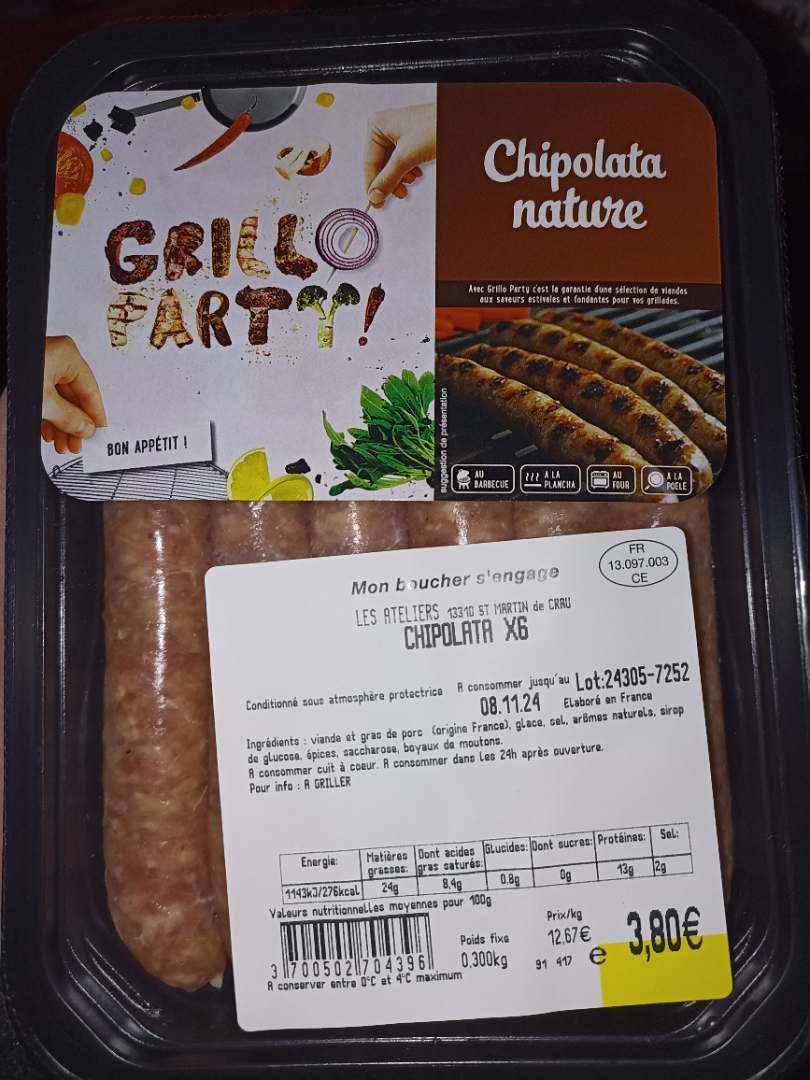
France – CHIPOLATA X6 – Salmonella

Gov France

Product Category
Food
Product subcategory
Meats
Product brand name
GRILLO PARTY
Model names or references
CHIPOLATA X6 CHIPOLATA X12 CHIPOLATA PANACHE TRAY
Product identification
GTIN Batch Date
3700502704396 24299-5748 CHIPOLATA X6 Expiry date 02/11/2024
2672032049661 24299-5739 CHIPOLATA Expiry date 02/11/2024
3700502705508 24299-5816 PANACHE TRAY Expiry date 02/11/2024
3700502704402 24299-5724 CHIPOLATA X12 Expiry date 02/11/2024
Packaging
plastic tray
Start/End of marketing date
From 10/25/2024 to 10/30/2024
Storage temperature
Product to be kept in the refrigerator
Health mark
FR 13 097 003 CE
Additional information
The commercial label of the chipolata X12 product is the same as that of the chipolata X6 product.
Geographic area of ​​sale
Whole France
Distributors
CARNIVOR O CIRCUS O VERTITUDE NEWFRUIT

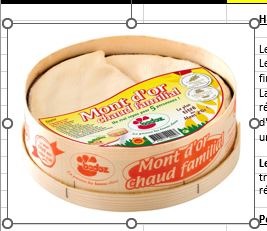
France – Mont d’Or AOP Badoz Family hot – Salmonella

Gov France

Product Category
Food
Product subcategory
Milk and dairy products
Product brand name
Badoz
Model names or references
Mont d’Or AOP Badoz Family hot
Product identification
Batch Date
4279AF Expiry date 14/12/2024
Start/End of marketing date
From 10/28/2024 to 10/29/2024
Storage temperature
Product to be kept in the refrigerator
Health mark
FR-25-462-002-CE
Geographic area of ​​sale
Whole France
Distributors
Carrefour, Auchan, Scapalsace, Cora, CSD, Leclerc, Intermarché, Promocash, Relais Dis, Super U, France Frais, Dupont kaasimport, Schiever, Valserine, Salad2fruit

USA – FDA – Core Investigation Table

FDA

What’s New

  • A new outbreak E. coli O26:H11 (ref #1272) linked to a not yet identified product has been added to the table.
  • For the outbreak of E. coli O157:H7 (ref #1270) the advisory has been updated to provide investigational updates and include more cases. A specific ingredient has not yet been confirmed as the source of the outbreak, but most sick people report eating McDonald’s Quarter Pounder burgers. Taylor Farms has initiated a voluntary recall of some onions sent to food service customers. FDA is working to determine if the slivered onions on Quarter Pounder burgers are the likely source of contamination. FDA has initiated an onsite inspection and sample collection.
  • For the outbreak of Listeria monocytogenes (ref #1268) linked to a not yet identified product, the case count has increased from three to four cases.
  • For the outbreak of Salmonella Thompson (ref #1262) linked to a not yet identified product, the case count has increased from 25 to 27 cases.