Category Archives: Salmonella

UK – Salmonella in Livestock Production in GB 2020 September 2021 in Livestock Production in GB

Gov

This publication presents data on Salmonella reports from livestock species in Great Britain (England, Wales and Scotland) collected and collated by the Animal and Plant Health Agency (APHA) during 2020 and also provides data from previous years for comparative purposes. The data in the first eleven chapters cover reports of Salmonella in livestock, with separate chapters for the main species, reports of Salmonella in wildlife and reports of Salmonella in animal feeding stuffs. The twelfth chapter covers antimicrobial resistance data for Salmonella(England and Wales only).Since 1993, the date of a Salmonella incident has been recorded as the date it was reported to an Officer of the Minister. Under the present system, any Salmonella reports that are confirmed or identified after the publication of the annual report will be incorporated into the revised tables that appear in the following year’s publication. This may result in the number of incidents and/ or isolations differing from that previously given for a particular year. The most recent version of the report should therefore always be used when comparing data from year to year. Revisions in the way that data have been compiled and presented since 1993 mean that, with the exception of the tables on Salmonella in animal feeding stuffs, data in this report cannot be compared directly with information published prior to 1993. A more detailed comparison can be generated, if required, for any Salmonella serovar, or phage type in the case of S. Enteritidis and S. Typhimurium. Requests for such data should be made to the Department of Epidemiological Sciences, APHA Weybridge who will be happy to assist with requests (Foodbornezoonoses@apha.gov.uk). Care should be taken when comparing data from one year to another as an increase or decrease in the number of isolations and incidents does not necessarily indicate a similar change in prevalence. This is because the total number of samples examined and their distribution are often not known.

USA- Decreased Incidence of Infections Caused by Pathogens Transmitted Commonly Through Food During the COVID-19 Pandemic — Foodborne Diseases Active Surveillance Network, 10 U.S. Sites, 2017–2020

CDC

Summary

What is already known about this topic?

Before 2020, the incidence of infections transmitted commonly by food had not declined for many years.

What is added by this report?

During 2020, FoodNet identified 26% fewer infections compared with the average annual number during 2017–2019, including decreased infections associated with international travel.

What are the implications for public health practice?

The pandemic and resulting public health response present challenges to explaining changes in observed foodborne illness incidences. Continued surveillance might help elucidate the impact of the COVID-19 pandemic on foodborne illness and identify strategies to decrease illnesses. Concerted efforts are needed to reduce the incidence of these infections from farm to processing plant to restaurants and homes. Consumers can reduce their risk of foodborne illness by following safe food-handling and preparation recommendations.

Foodborne illnesses are a substantial and largely preventable public health problem; before 2020 the incidence of most infections transmitted commonly through food had not declined for many years. To evaluate progress toward prevention of foodborne illnesses in the United States, the Foodborne Diseases Active Surveillance Network (FoodNet) of CDC’s Emerging Infections Program monitors the incidence of laboratory-diagnosed infections caused by eight pathogens transmitted commonly through food reported by 10 U.S. sites.* FoodNet is a collaboration among CDC, 10 state health departments, the U.S. Department of Agriculture’s Food Safety and Inspection Service (USDA-FSIS), and the Food and Drug Administration. This report summarizes preliminary 2020 data and describes changes in incidence with those during 2017–2019. During 2020, observed incidences of infections caused by enteric pathogens decreased 26% compared with 2017–2019; infections associated with international travel decreased markedly. The extent to which these reductions reflect actual decreases in illness or decreases in case detection is unknown. On March 13, 2020, the United States declared a national emergency in response to the COVID-19 pandemic. After the declaration, state and local officials implemented stay-at-home orders, restaurant closures, school and child care center closures, and other public health interventions to slow the spread of SARS-CoV-2, the virus that causes COVID-19 (1). Federal travel restrictions were declared (1). These widespread interventions as well as other changes to daily life and hygiene behaviors, including increased handwashing, have likely changed exposures to foodborne pathogens. Other factors, such as changes in health care delivery, health care–seeking behaviors, and laboratory testing practices, might have decreased the detection of enteric infections. As the pandemic continues, surveillance of illness combined with data from other sources might help to elucidate the factors that led to the large changes in 2020; this understanding could lead to improved strategies to prevent illness. To reduce the incidence of these infections concerted efforts are needed, from farm to processing plant to restaurants and homes. Consumers can reduce their risk of foodborne illness by following safe food-handling and preparation recommendations.

FoodNet conducts active, population-based surveillance of laboratory-diagnosed infections caused by Campylobacter, Cyclospora, Listeria, Salmonella, Shiga toxin-producing Escherichia coli (STEC), Shigella, Vibrio, and Yersinia reported from 10 sites covering approximately 15% of the U.S. population (approximately 50 million persons per U.S. Census Bureau estimates in 2019). Bacterial infections are defined as isolation of bacteria from a clinical specimen by culture or detection of pathogen antigen, nucleic acid sequence, or, for STEC, Shiga toxin or Shiga toxin genes by a culture-independent diagnostic test (CIDT).§ Listeria infections are defined as isolation of L. monocytogenes or detection of its nucleic acid sequences from a normally sterile site, or from placental or fetal tissue in the instance of miscarriage or stillbirth. Cyclospora infections are defined as detection of the parasite using ultraviolet fluorescence microscopy, specific stains, or polymerase chain reaction.

In this analysis, patients with no history of international travel or unknown travel were considered to have domestically acquired infection. Death was attributed to infection when it occurred during hospitalization or within 7 days after specimen collection for non-hospitalized patients. Incidence (cases per 100,000 population) was calculated by dividing the number of infections in 2020 by the U.S. Census estimates of the surveillance area population for 2019. Incidence measures included all laboratory-diagnosed infections. A negative binomial model with 95% confidence intervals (CIs) was used to estimate change in incidence during 2020 compared with those during 2017–2019, adjusting for changes in the population over time.

Surveillance for physician-diagnosed post-diarrheal hemolytic uremic syndrome (HUS), a complication of STEC infection characterized by renal failure, thrombocytopenia, and microangiopathic anemia, was conducted through a network of nephrologists and infection preventionists and by hospital discharge data review. This report includes HUS data for children aged <18 years for 2019, the most recent year for which data are available. FoodNet surveillance activities were reviewed by CDC and were conducted consistent with applicable federal law and CDC policy.**

During 2020, FoodNet identified 18,462 cases of infection, 4,788 hospitalizations, and 118 deaths (Table). The overall incidence was highest for Campylobacter (14.4 per 100,000 population), followed by Salmonella (13.3), STEC (3.6), Shigella (3.1), Yersinia (0.9), Vibrio (0.7), Cyclospora (0.6), and Listeria (0.2). During 2020, 26% fewer infections were reported compared with the average annual number reported during 2017–2019; the incidence in 2020 was significantly lower for all pathogens except Yersinia and Cyclospora. The percentage of infections resulting in hospitalization increased 2% compared with 2017–2019 (Figure 1). During 2020, 5% (958) of infections were associated with international travel compared with 14% during 2017–2019. In 2020, most (798; 83%) of these infections occurred during January–March.

Overall, 59% of bacterial infections were diagnosed using a CIDT (range = 14% [Listeria] to 100% [STEC]); this was a 2% increase from 2017−2019. The percentage diagnosed using only a CIDT (i.e., including specimens with negative cultures and those not cultured) was 1% higher during 2020 than the percentage during 2017−2019. Among specimens with a positive CIDT result during 2020, a reflex culture†† was performed for 73%, which was 2% lower than during 2017–2019. Reflex cultures decreased for Vibrio (by 15%), Yersinia (7%), Campylobacter (5%), and STEC (2%); increased for Salmonella (2%), and Shigella (2%); and did not change for Listeria.

Among 5,336 (91%) fully serotyped Salmonella isolates in 2020, the seven most common serotypes were Enteritidis (1.6 per 100,000 population), Newport (1.5), Javiana (1.0), Typhimurium (0.9), I 4,[5],12:i:- (0.5), Hadar (0.4), and Infantis (0.3). Compared with 2017–2019, incidence during 2020 was significantly lower for I 4,[5],12:i:- (48% lower), Typhimurium (37% lower), Enteritidis (36% lower), and Javiana (31% lower). Incidence was significantly higher for Hadar (617% higher; 95% CI = 382–967) and did not change significantly for Newport or Infantis. Most (73%) of the 631 outbreak-associated Salmonella infections during 2020 were caused by three serotypes: Newport (220; 35%), Hadar (135; 21%), and Enteritidis (108; 17%). All outbreak-associated Hadar infections were from one multistate outbreak linked to contact with backyard poultry; 47 (35%) illnesses resulted in hospitalization. Four serogroups accounted for 63% of the 955 culture-positive STEC isolates. Serogroup O157 was most common (264; 28%), followed by O26 (148; 15%), O103 (115; 12%), and O111 (78; 8%).

FoodNet identified 63 cases of post-diarrheal HUS in children aged <18 years (0.6 cases per 100,000 population) during 2019; 55 (87%) had evidence of STEC infection and 41 (65%) were in children aged <5 years (1.4 per 100,000 population). These rates were similar to those during 2016–2018.

USA – Illinois La Mex and El Sombrero restaurants likely linked to nationwide Salmonella outbreak

Food Poison Journal

As of September 21, 2021 the CDC reported (revised later to 279)  infected with the outbreak strain of Salmonella Oranienburg reported from 29 states. Illnesses started on dates ranging from August 3, 2021 to September 13, 2021.

Of note, Illinois has 28 illnesses reported and the following two health departments produced interim reports on seemingly separate Salmonella outbreaks that now are likely linked to the multi-state Salmonella Oranienburg outbreak that appears linked to cilantro consumption.

On September 9th, the Grundy County Health Department identified at least eight Salmonella cases in Grundy County that appear to be linked to the La Mex restaurant located 115 E. Jackson Street in Morris Illinois. Illnesses appeared linked to food consumed at La Mex restaurant between 8/31/2021 and 9/7/2021.

On September 4th,  the McHenry County Department of Health reported a foodborne illness outbreak of a gastrointestinal illness caused by Salmonella.  The illnesses were linked to El Sombrero restaurant at 314 Lincoln Ave, Fox River Grove. Those who ate at the food establishment from August 23 to September 3, regardless of if they develop symptoms or remain well, were asked to assist MCDH in collecting data to conduct a comprehensive investigation of this illness outbreak to eliminate the public health risk.

USA – Salmonella Outbreak with Unknown Food Source

CDC

A specific food item has not yet been identified as the source of this fast-growing outbreak. If you have symptoms of a Salmonella infection, talk to your healthcare provider and report your illness to your health department to help investigators solve this outbreak.

Fast Facts
  • Illnesses: 279  (152 new)
  • Hospitalizations: 26  (8 new)
  • Deaths: 0
  • States: 29  (4 new)
  • Recall: No
  • Investigation status: Active

USA – Cilantro May Be the Source in Mystery Multistate Salmonella Outbreak

Food Poisoning Bulletin

Salmonellaa

Cilantro may be the source in the mystery multistate Salmonella Oranienburg outbreak, according to a dendrogram on the National Center for Biotechnology Information site, part of the National Institutes of Health. According to that information, cilantro has tested positive for Salmonella Oranienburg, the bacteria that has caused this outbreak.

RASFF Alerts – Salmonella – Polish Chicken Products !!!

RASFF

Salmonella Infantis in chicken neck skins from Poland in Hungary

RASFF

Salmonella Enteritidis in frozen chicken fillets from Poland in Poland, France, Netherlands, Germany, UK and Romania

RASFF

Salmonella Enteritidis in fresh chicken breast fillet, frozen from Poland in Germany

RASFF

Salmonella Enteritidis and salmonella group C1 in chilled and frozen chicken meat from Poland in Belgium, Lithuania, Netherlands, Poland, Ukraine

RASFF

The presence of Salmonella Newport in 5 out of 5 samples collected from neck skin samples from poultry carcasses from Poland in Gabon, Germany, Lithuania, 

RASFF

Salmonella Newport in Fresh chicken fillet from Poland in Romania

RASFF

Salmonella Enteritidis in chicken from Poland in Hong Kong, Albania and Poland

RASFF

Presence of Salmonella Newport in neck skins from poultry carcasses from Poland in Latvia and Romania

RASFF

Viande fraîche de poulet/Fresh chicken meat – Salmonella Typhimurium from France in Luxmebourg

RASFF Alerts – Animal Feed -Salmonella – Fish Meal- Soya Bean Meal – Rapeseed Meal

RASFF

Salmonella spp. in fish meal from USA in Denmark

RASFF

Salmonella in salmon-feed from the UK in Denmark and Norway

RASFF

Salmonella spp. in fishmeal from USA in Denmark

RASFF

Salmonella Mbandaka in soybean meal, used in feed for poultry from Belgium in France and the Netherlands

RASFF

Salmonella in soybean meal from Brazil in Poland

RASFF

Salmonella spp. in rapeseed meal from Germany in Austria, France, Germany and Switzerland

USA- Core Investigation Table

FDA

4 Cases, Salmonella Oranienburg, Salmonella Thompson and two Cyclospora sources still unknown.

Information – Preventive Controls – A novel approach to kill pathogens utilizing non-flammable alcohol spraying technology:

Food Safety Tech

It is a common misconception that low numbers of Salmonella, Cronobacter and other pathogens are not a problem in low moisture foods because these products do not support growth. Certain organisms can persist for prolonged periods of time in low-moisture products, and heat resistance of Salmonella is greatly increased at reduced water activities in food matrices.

The low water activity level found in most dry ingredients and finished products usually results in severely dehydrated bacteria. It is only when there is adequate moisture, temperature and growing conditions that these stressed bacteria recover and multiply.

Physical cleaning should be followed by chemical or equivalent disinfection procedures and all contact surfaces should be dry before use. If disinfection measures are inadequate, bacteria may adapt to the stress conditions and become more resistant to control efforts. Clean breaks for in-shift sanitizing are becoming more common, so speed of application and drying time must be considered when evaluating new interventions.

Newer technology used in food and medical applications include concentrated alcohol products applied through inert gases to eliminate flammability. Biomist, Inc. has developed new high-grade sanitizing systems and automation for food manufacturers to bolster their sanitation programs by safely applying alcohol-based sanitizers to processing equipment, pneumatic pipes, electronics and other vectors of contamination.

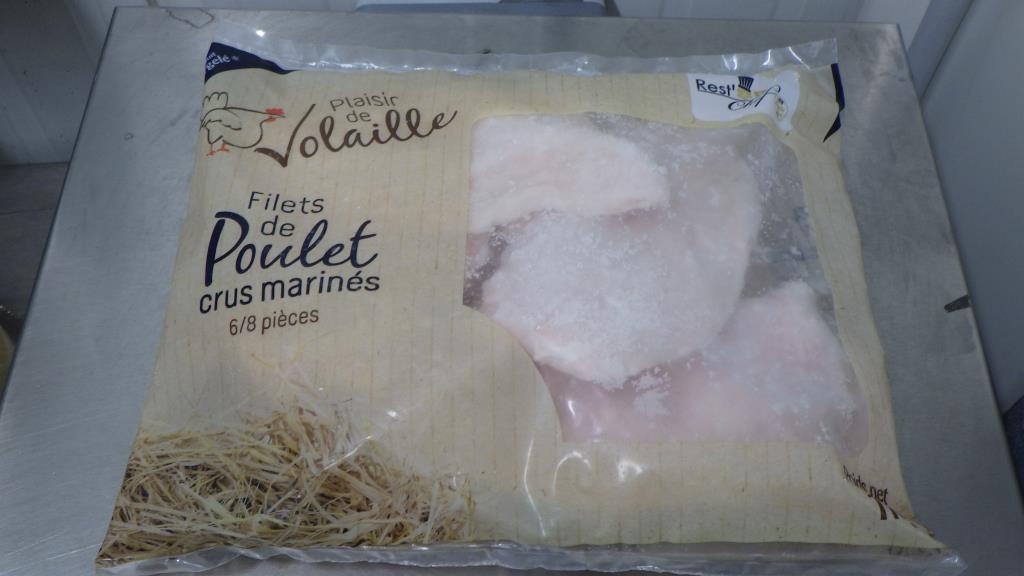
France – Frozen plain marinated chicken cutlet -Salmonella

Gov france

Identifying information for the recalled product

  • Product category Food
  • Product sub-category Meats
  • Product brand name Rest’Or Chef
  • Names of models or references1 kg
  • Product identification
    GTIN Lot Dated
    3499150339301 1902129 Date of minimum durability 07/09/2023
  • Packaging Plastic bag
  • Start date / End of marketing Since 09/09/2021
  • Storage temperature Product to be stored in the freezer
  • Health markPL14170501WE
  • Geographical sales area Whole France
  • Distributors Auchan and Auchan distribution network

Practical information regarding the recall

  • Reason for recall Salmonella detection
  • Risks incurred by the consumer Salmonella spp (causative agent of salmonellosis)