Category Archives: Salmonella

USA – Outbreak Investigation of Salmonella Weltevreden: Frozen Pre-cooked Shrimp (April 2021)

FDA

The FDA, along with CDC and state and local partners, investigated a multistate outbreak of Salmonella Weltevreden infections linked to the consumption of frozen cooked shrimp manufactured by Avanti Frozen Foods of India.

As of September 21, 2021, CDC announced that the outbreak is over. There are a total of nine illnesses in four states. The last illness onset date was July 17, 2021.

Based on FDA’s completed traceback investigation and sample results, the frozen cooked shrimp manufactured by Avanti Frozen Foods of India were linked to this outbreak. The FDA worked with Avanti Frozen Foods of India to ensure that potentially contaminated frozen cooked shrimp were removed from the market.

On August 13, 2021, Avanti Frozen Foods of India expanded its recall of frozen cooked shrimp to include frozen cooked shrimp products imported into the U.S. from November 2020 to May 2021. Since Avanti Frozen Foods expanded its recall, downstream recalls have been initiated for sushi products containing recalled shrimp, sold in the state of California:

Recommendation

Recalled frozen shrimp should no longer be available for sale; however, these products have a long shelf life, and consumers, restaurants, and retailers should check their freezers and should throw away recalled shrimp. The expanded recall from August 17, 2021 includes the following brands:

  • BIG RIVER
  • 365
  • AHOLD
  • CENSEA
  • COS
  • CWNO BRAND
  • FIRST STREET
  • NATURE’S PROMISE
  • HARBOR BANKS
  • HOS
  • MEIJER
  • SANDBAR
  • SEA COVE
  • WATERFRONT BISTRO
  • WELLSLEYFARMS
  • WFNOBRANDS
  • FOODLION
  • HANNAFORD

Please check the expanded recall announcement for full product descriptions.

Previously recalled shrimp should no longer be available for sale; however, these products have a long shelf life, and consumers, restaurants, and retailers should check their freezers and should throw away any previously recalled shrimp. The initial recall includes the following brands:

  • CENSEA
  • CHICKEN OF THE SEA
  • HONEST CATCH
  • CWNO
  • HANNAFORD
  • WATERFRONT BISTRO
  • OPEN ACRES
  • 365
  • MEIJER

Please check the initial recall announcement for full product descriptions.

Anyone who received recalled shrimp should use extra vigilance in cleaning and sanitizing any surfaces that may have come in contact with the recalled product, to reduce the risk of cross contamination.


Case Count Map Provided by CDC

Outbreak Investigation of Salmonella Weltevreden in Shrimp - CDC Case Count Map - August 11, 2021

Case Counts

Total Illnesses: 9
Hospitalizations: 3
Deaths: 0
Last Illness Onset: 7/17/2021
States with Cases: AZ (2), MI (2), NV (4), RI (1)
Product Distribution: Nationwide

USA – Restaurants Are Included in a Salmonella Outbreak That Has Sickened 127

Food Poisoning Bulletin

Restaurants are included in a Salmonella outbreak that has sickened at least 127 people in 25 states, according to the Centers for Disease Control and Prevention (CDC). The government does not yet know which food item caused this outbreak, or if there is another cause.

Eighteen people, out of 49 that gave information to health officials, have been hospitalized, which is a rate of 37%, almost double the typical Salmonella outbreak rate. This could mean that more vulnerable people were sickened, or that the pathogen is quite virulent, or that the pathogen load in the food was quite high.

The CDC has stated that several subclusters at restaurants in multiple states have been identified. These subclusters can help officials solve outbreaks, since they can use traceback from restaurant supplier purchases to try to identify a common food.

Salmonella outbreak at La Mex restaurant in Morris, Illinois may be part of a multistate outbreak, according to the Grundy County Health Department. But there is no official word on whether that outbreak is part of this larger one.

Canada – Outbreak connected to shredded pork rinds leads to CFIA warning – Salmonella

Food Safety News

The Canadian Food Inspection Agency and the Ontario Ministry of Health are warning restaurants in the Greater Toronto Area not to purchase, use, or serve certain brand less Shredded pork rinds because of possible Salmonella contamination.

This warning was triggered by an investigation into a foodborne illness outbreak of salmonellosis. The outbreak is associated with consumption of food dishes containing shredded pork rind and/or shredded pork skin from certain restaurants serving Vietnamese NS other Asian cuisine in the GTA.

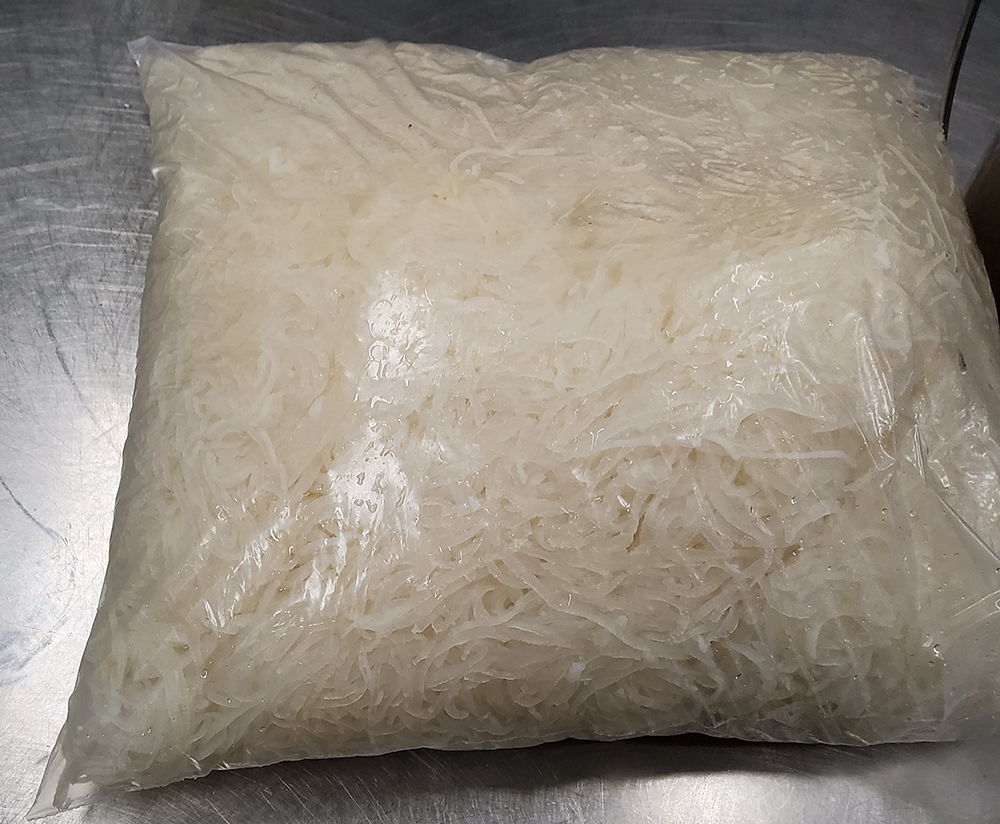
These products were sold frozen to restaurants in clear plastic bags with no labels, no lot codes, no identifiers, and no cooking instructions.

Recalled products:

The following products are known to have been sold to certain restaurants in the GTA which serve Vietnamese/Asian meals

Brand Product Size UPC Codes Additional Information
None Shredded pork rind various none none Products are sold frozen in clear plastic bags, with no labels, no lot codes, no identifiers, and no cooking instructions.
None Shredded pork skin various none none

Restaurants should check to see if you have the affected products. If the products are in their facility, they should not be used.

As of the posting of this warning, there have been reported illnesses associated with the consumption of these products. The Ontario Ministry of Health, in collaboration with Public Health Ontario, local public health units and food safety partners are investigating an outbreak of human illness.

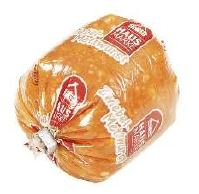
Germany – REWE house brand, onion sausage ball, approx. 90g – Salmonella

LMW

Warning type:

Food

Date of first publication:

15.09.2021

Product name:

REWE house brand, onion sausage ball, approx. 90g

Product pictures:

Onion Mettwurst.JPG

Consumer information from REWE Dortmund SE & Co. KG

Manufacturer (distributor):

REWE Dortmund SE & Co. KG

Reason for warning:

possible contamination of salmonella

Durability:

09/26/2021

Lot identification:

Lot 60805470321

Additional Information:

More details can be found in the enclosed consumer information from REWE.

Only markets in the federal state of North Rhine-Westphalia are affected.

Contact to the responsible authorities:

North Rhine-Westphalia:poststelle@mulnv.nrw.de

Press releases and information
title Attachment or web link
Consumer information from REWE Dortmund SE & Co. KG

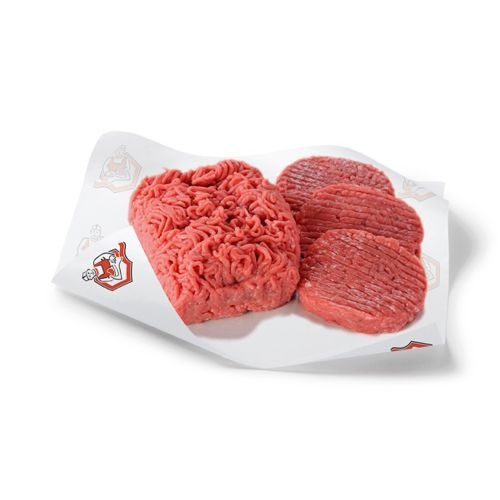
France – Preparation of seasoned minced beef 5% fat – Salmonella

Gov france

Identifying information for the recalled product

  • Product category Food
  • Product sub-category Meats
  • Product brand name unbranded
  • Names of models or references Portioned and bulk
  • Product identification
    Lot
    Manufacturing from 08/09/2021
  • Start date / End of marketing From 08/09/2021 to 08/09/2021
  • Storage temperature Product to be stored in the refrigerator
  • Geographical sales area Henri Boucher Wattrelos, 4 rue Albert 1er, Sartel Commercial Park, 59150 Wattrelos
  • DistributorsHenri Boucher Wattrelos, 4 rue Albert 1er, Sartel Commercial Park, 59150 Wattrelos

Practical information regarding the recall

  • Reason for recall Non-compliant microbiological self-check result
  • Risks incurred by the consumer Salmonella spp (causative agent of salmonellosis)

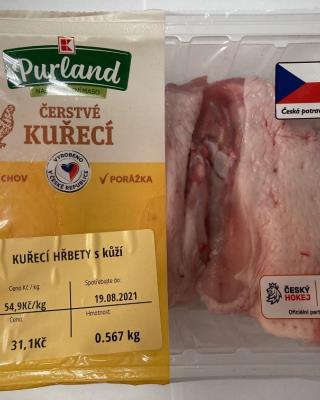
Czech Republic – K-Purland Fresh Chicken – Chicken backs with skin – Salmonella

Potravinynapranyri

Illustration photo no. 1

Place of inspection:
Hodonin ( Dvorakova 4115/6, 695 01 Hodonin )
Company ID: 25110161
Food group: Meat and meat products Packaged meat

K-Purland Fresh Chicken – Chicken backs with skin
Category: Dangerous food
Unsatisfactory parameter:

Salmonella enteritidis

The product has been found to have the pathogenic bacterium  Salmonella enteritidis , which can cause a condition called salmonellosis.

Lots: L: 412172553
Expiration date: 08/19/2021
Packaging: plastic tray with label
Producer: Rabbit Trhový Štěpánov as, Sokolská 302, 257 63 Trhový Štěpánov
Date of sampling: 17. 8. 2021
Reference number: 21-000353-CAFIA-CZ
The sample was found by an official inspection of the State Agricultural and Food Inspection Authority.

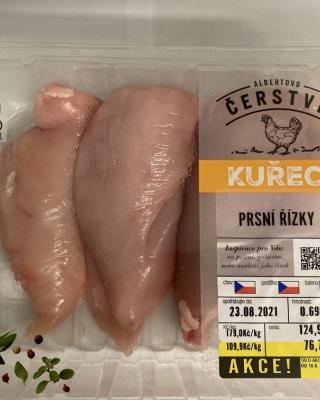
Czech Republic – ALBERT’S FRESH CHICKEN BREASTS, fresh meat – Salmonella

Potravinynapranyri

Illustration photo no. 1

Place of inspection:
Hodonín ( Krátká 4088/2, 695 01 Hodonín )
Company ID: 44012373
Food group: Meat and meat products Packaged meat

ALBERT’S FRESH CHICKEN BREASTS, fresh meat
Category: Dangerous food
Unsatisfactory parameter:

Salmonella enteritidis

The product has been found to have the pathogenic bacterium  Salmonella enteritidis,  which can cause a condition called salmonellosis.

Lots: L: 422172834
Expiration date: 08/23/2021
Packaging: plastic tray with label
Producer: RABBIT Trhový Štěpánov as
Country of origin:  Czechia
Date of sampling: 17. 8. 2021
Reference number: 21-000352-CAFIA-CZ
The sample was found by an official inspection of the State Agricultural and Food Inspection Authority.

Canada – Food Safety Warning – Shredded pork rind and shredded pork skin sold to certain restaurants in the Greater Toronto Area may be unsafe due to Salmonella

CFIA

Advisory details

Ottawa, September 19, 2021 – The Canadian Food Inspection Agency (CFIA) and the Ministry of Health (Ontario) are warning restaurants in the Greater Toronto Area (GTA) not to purchase, use, or serve the products described below due to possible Salmonella contamination.

The following products are known to have been sold to certain restaurants in the GTA which serve Vietnamese/Asian meals. These products were sold frozen to restaurants in clear plastic bags with no labels, no lot codes, no identifiers, and no cooking instructions. At this time there is no evidence of these products being sold directly to consumers and they do not appear to be available or sold at supermarkets.

Recalled product

Brand Product Size UPC Codes Additional Information
None Shredded pork rind various none none Products are sold frozen in clear plastic bags, with no labels, no lot codes, no identifiers, and no cooking instructions.
None Shredded pork skin various none none

What you should do

Check to see if you have the affected products in your restaurant. If the products are in your facility, do not use them.

If you think you became sick from consuming a food product, call your doctor.

Food contaminated with Salmonella may not look or smell spoiled but can still make you sick. Young children, pregnant women, the elderly and people with weakened immune systems may contract serious and sometimes deadly infections. Healthy people may experience short-term symptoms such as fever, headache, vomiting, nausea, abdominal cramps and diarrhea. Long-term complications may include severe arthritis.

Background

This warning was triggered by an investigation into a foodborne illness outbreak of salmonellosis. The outbreak is associated with consumption of food dishes containing shredded pork rind and/or shredded pork skin from certain restaurants serving Vietnamese/Asian meals in the GTA.

Illnesses

There have been reported illnesses associated with the consumption of these products. Ministry of Health (Ontario), in collaboration with Public Health Ontario, local public health units and food safety partners are investigating an outbreak of human illness.

Product photos

Printer ready version of photos

  • shredded pork rind pork

Public enquiries and media

Ministry of Health (Ontario)
Toll free : 1-888-414-4774
In Toronto: (416) 314-6197
Email: media.moh@ontario.ca

Canadian Food Inspection Agency
Media relations
Telephone: 613-773-6600
Email: cfia.media.acia@inspection.gc.ca

Research – The influence of organic load and free chlorine on Salmonella cross-contamination of tomatoes in a model flume system

Journal of Food Protection

The process of washing tomatoes in dump (flume) tanks has been identified as a potential source of cross-contamination. This study’s objective was to assess the potential for Salmonella enterica cross-contamination at various inoculation levels at the presence of 0 and 25 mg/L free chlorine (HOCl) and organic matter.  Uninoculated tomatoes were introduced into a laboratory-based model flume containing tomatoes inoculated with a cocktail of five rifampicin-resistant Salmonella enterica serovars at 104, 106, or 108 CFU/tomato in water containing 0 or 25 mg/L HOCl and 0 or 300 mg/L chemical oxygen demand (COD). Uninoculated tomatoes were removed from the water at after 5, 30, 60, 120 s and were placed in bags containing tryptic soy broth supplemented with rifampicin and 0.1% sodium thiosulfate. Following incubation, enrichments were plated on tryptic soy agar supplemented with rifampicin and xylose lysine deoxycholate agar to determine the presence of Salmonella. HOCl and pH were measured before and after each trial. The HOCl in water containing 300 mg/L COD significantly (P≤0.05) declined by the end of each 120 s trial, most likely due to the increased demand for the oxidant. Higher inoculum levels and lower HOCl concentrations were (P≤0.05) significant factors that contributed to increased cross-contamination seen in this study. When HOCl levels were at 25 mg/L, no Salmonella was recovered on non-inoculated tomatoes under all conditions when inoculum levels were at 104 CFU/tomato. When the inoculum was increased to 106 and 108 CFU/tomato, cross-contamination was observed, independent of COD levels. The results from this study show that the currently required sanitizer level (e.g., 100 or 150 mg/L) for flume water may be higher than necessary and warrants re-evaluation.

Research – Impact of Interventions on the Survival of Salmonella enterica I 4,[5],12:I:- in Pork

Journal of Food Protection

A mixed culture of different isolates of Salmonella serovar I 4,[5], 12:i:- was compared to a mixed culture of reference Salmonella serovars as well as non-pathogenic Escherichia coli surrogates.. The two groups of Salmonella were compared for their resistance to commonly used pork carcass interventions, survival in ground pork and thermal resistance in ground pork. There were no observed differences between the response of the two different groups of Salmonella serovars and the non-pathogenic E. coli surrogates within intervention type.  There were no observed differences in the recovery and survival of the two different groups of Salmonella serovars in pork which had been treated with interventions, ground and stored at 5 o C for two weeks. Finally, there were no observed differences in heat resistance between the two different groups of Salmonella serovars in ground pork which had been treated with interventions, ground and stored at 5 o C for two weeks. However, there were observed differences in heat resistance in both groups of Salmonella serovars associated with refrigerated storage. The heat resistance of both groups of Salmonella serovars decreased after refrigerated storage. The results of these experiments demonstrate that there were no observed differences between the responses of Salmonella serovar I 4,[5], 12:i:- when compared to the reference Salmonella serovars to commonly used interventions in the pork industry, and therefore do not present a unique challenge to the pork industry.