Category Archives: Microbiology

Research – Researchers identify biofilm hotspots, document danger zones

Food Safety News

Scientists in Austria have investigated where biofilms hide and what bacteria can be found in them.

Biofilms are proven sources of contamination in the food industry. They can cause additional costs in production and can be a danger to consumer health.

Researchers at the unit of food microbiology at Vetmeduni Vienna looked at biofilms in an Austrian meat processing environment that included pork, poultry and beef. Knowledge gained on presence and composition, published in the International Journal of Food Microbiology, could help to prevent and reduce biofilm formation within food processing environments.

Research – Biofilm-forming ability of pathogenic strains isolated from retail food in Poland

Journal of Food Protection

Biofilms have a significant impact on food safety in the food industry. Many foodborne outbreaks have been associated with pathogenic strains that can form a biofilm. The present study aimed to examine the ability to form biofilms by pathogenic strains collected from retail food samples under the Official Control and Monitoring Program in Poland. Biofilm formation was assessed by the qualitative detection of EPS production on Congo Red Agar, tube method, crystal violet biofilm assay, and MTT assay. A total of 40 isolates from food samples (10 strains for each of the species Listeria monocytogenes, Staphylococcus aureus, Escherichia coli, and Bacillus cereus ) were examined. . . The study classifies strains as adherent strain, slightly adherent, nonadherent (A, SA and N); as weak, moderate, and strong biofilm formation (WBF, MBF and SBF); and weak, moderate, and high metabolic activity (WMA, MMA and HMA). Incubation conditions and time influenced the biofilm levels formed. Moreover, growth medium had a significant impact on biofilm formation. Results showed that 22.5% strains demonstrated A type in LBB and 77.5% SA type in LBB in the test tube while the stronger adhesion was obtained in BHI with 2% sucrose. Among the isolates incubated in the BHI medium with 2% sucrose, A type was observed in 60% of isolates (60%).. CV assay result show that the after 24 h incubation in LBB, SBP was 7,5% while after 48 h – 37.5% tested strains. For BHI medium supplemented with 2% sucrose after 24 h incubation strains 42.5% was classified as SBP and 37.6% after 48h.MTT assay result indicate that 15% strains incubate in LBB (24h) was HMA, and after 48h incubation time HMA show 25%. For BHI medium supplemented with 2% sucrose after 24 h or 48 h incubation strains 70% and 85 % was classified as HMA.


Research – Study suggests green tea extracts could reduce risk of infection with diarrhoea-causing Norovirus

First Post

Scientists also found that green tea extract in combination with chitosan films can reduce levels of bacteria such as E coli and L innocua to undetectable levels after 24 hours of exposure

It’s not uncommon for one to get an upset stomach occasionally, particularly after eating outside food. This is often the result of different kinds of bacteria and viruses present in the food items. In a research, published in the International Journal of Food Science on 4 July 2020, scientists found that green tea extracts can help in reducing the risk of getting infected with a diarrhoea-causing virus known as norovirus.

Borneo – Alert in Brunei as Sabah reports 43 cholera cases

Borneo Bulletin 

According to the Ministry of Health (MoH), the Malaysian Ministry of Health has reported 43 cholera cases in several areas in Sabah since January 2020 until now.

Continuous monitoring by the MoH showed no cases of cholera detected in Brunei Darussalam. Cholera is an intestinal infection caused by the ‘vibrio cholera’ virus that spreads through contaminated food and water. The main symptom is diarrhoea. Other symptoms include vomiting and abdominal pain. Severe cholera infection can lead to dehydration and death, if left untreated.

RASFF Alert – Animal Feed- Aflatoxins – Groundnuts

RASFF-Logo

RASFF – aflatoxins (B1 = 4.9; Tot. = 32.4 µg/kg – ppb) in feed groundnuts from Argentina in the UK

RASFF Alert – Animal Feed – Salmonella – Dog Chews

RASFF-Logo

RASFF – Salmonella enterica ser. Rissen (presence /25g) and Salmonella enterica ser. Typhimurium (presence /25g) in dog chews from Germany in Austria

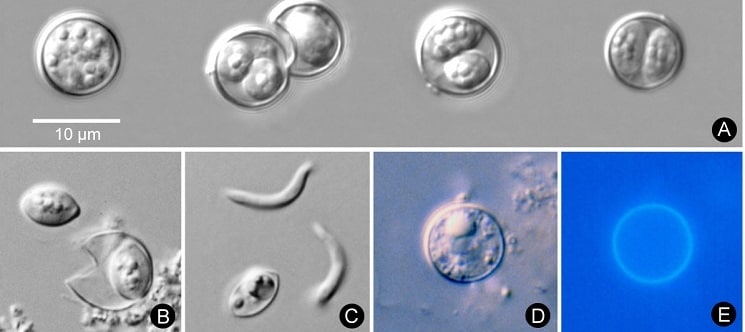
CDC – Cyclospora Information

CDC

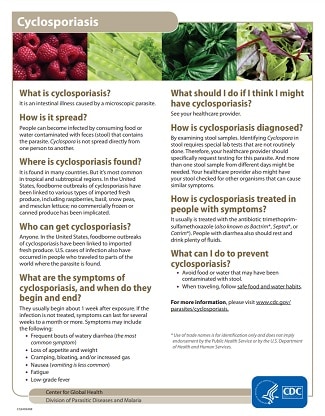
CDC - Cyclosporiasis - Printable Resources

Research – Evasion of Plant Innate Defense Response by Salmonella on Lettuce

Frontiers in Microbiology

To establish host association, the innate immune system, which is one of the first lines of defense against infectious disease, must be circumvented. Plants encounter enteric foodborne bacterial pathogens under both pre- and post-harvest conditions. Human enteric foodborne pathogens can use plants as temporary hosts. This unique interaction may result in recalls and illness outbreaks associated with raw agricultural commodities. The purpose of this study was to determine if Salmonella enterica Typhimurium applied to lettuce leaves can suppress the innate stomatal defense in lettuce and utilization of UD1022 as a biocontrol against this ingression. Lettuce leaves were spot inoculated with S. Typhimurium wild type and its mutants. Bacterial culture and confocal microscopy analysis of stomatal apertures were used to support findings of differences in S. Typhimurium mutants compared to wild type. The persistence and internalization of these strains on lettuce was compared over a 7-day trial. S. Typhimurium may bypass the innate stomatal closure defense response in lettuce. Interestingly, a few key T3SS components in S. Typhimurium were involved in overriding stomatal defense response in lettuce for ingression. We also show that the T3SS in S. Typhimurium plays a critical role in persistence of S. Typhimurium in plantaSalmonella populations were significantly reduced in all UD1022 groups by day 7 with the exception of fliB and invA mutants. Salmonella internalization was not detected in plants after UD1022 treatment and had significantly higher stomatal closure rates (aperture width = 2.34 μm) by day 1 compared to controls (8.5 μm). S. Typhimurium SPI1 and SPI2 mutants showed inability to reopen stomates in lettuce suggesting the involvement of key T3SS components in suppression of innate response in plants. These findings impact issues of contamination related to plant performance and innate defense responses for plants.

Research -New study shows link between animal operation and orchard contamination

Food Safety News

One in every five air samples in almond orchards adjacent to a poultry operation tested positive for E. coli during a two-year study published recently.

“Microorganisms Move a Short Distance into an Almond Orchard from an Adjacent Upwind Poultry Operation” comes as romaine growers continue to study the impact of a 100,000-head cattle feed lot adjacent to Arizona growing fields.

Lettuce growers from regions in California are also looking at implications of having animal operations in the areas near food crops. The Food and Drug Administration recently posted a conclusion that animal operations were the likely cause behind romaine E. coli outbreaks in 2018-19.

The almond research, published in the peer-reviewed journal Applied and Environmental Microbiology,

Research -Evaluation of Public Health Risk for Escherichia coli O157:H7 in Cilantro

Science Direct

This study sought to model the growth and die-off of Escherichia coli (E. coli) O157:H7 along the cilantro supply chain from farm-to-fork to investigate its risk to public health. Contributing factors included in the model were on farm contamination from irrigation water and soil, solar radiation, harvesting, and transportation and storage times and temperatures. The developed risk model estimated the microbiological risks associated with E. coli O157:H7 in cilantro and determined parameters with the most effect on the final concentration per serving for future mitigation strategies. Results showed a similar decrease in the E. coli O157:H7 (median values) concentrations along the supply chain for cilantro grown in both winter and summer weather conditions. With an estimated 0.1% prevalence of E. coli O157:H7 contamination for cilantro post-harvest used for illustration, the model predicted the probability of illness from consuming fresh cilantro as very low with fewer than two illnesses per every one billion servings of cilantro (1.6 x 10⁻⁹; 95th percentile). Although rare, 3.7% and 1.6% of scenarios run in this model for summer and winter grown cilantro, respectively, result in over 10 cases per year in the United States. This is reflected in real life where illnesses from cilantro are seen rarely but outbreaks have occurred. Sensitivity analysis and scenario testing demonstrated that ensuring clean and high quality irrigation water and preventing temperature abuse during transportation from farm to retail, are key to reducing overall risk of illness.