Category Archives: Microbiology

Belgium – “Keiems Bloempje” cheese – Listeria monocytogenes

AFSCA

Recall of Het Dischhof
Product: “Keiems Bloempje” cheese.
Problem: possible presence of Listeria monocytogenes.


In agreement with the AFSCA, the company Het Dischhof is withdrawing from sale the cheese “Keiems Bloempje” – Lot 506 – and is recalling it to consumers because of the possible presence of Listeria monocytogenes. The other batches of these cheeses are not affected by this product recall.

Het Dischhof BV asks its customers not to consume this product and to return it to the point of sale where it was purchased. It will be refunded to them.

Product Description

– Product name: Het Keiems Bloempje
– Date of minimum durability (DDM): 07/04/2021
– Lot number: 506
– Sales period: from 18/02/21 to 16/03/21
– Nature of the packaging: paper packaging
– Weight: ca. 330g


Sold in Belgium through various food stores.

For any further information , contact: info@dischhof.be .

Our apologies for this inconvenience.
New Zealand – Lindsay Farm brand Organic Raw Milk (unpasteurised) – Campylobacter

MPI

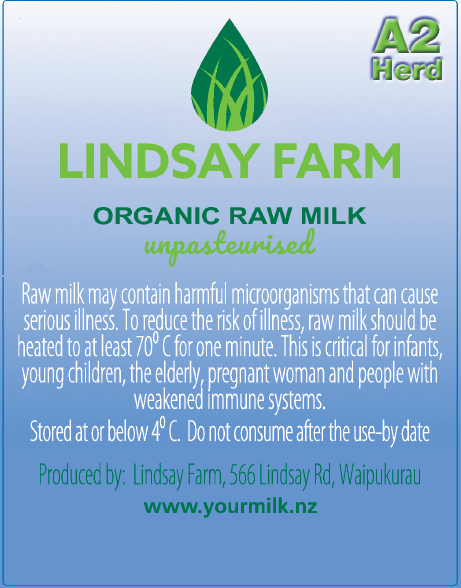
18 March 2021: Lindsay Farm is recalling specific batches of Lindsay Farm brand Organic Raw Milk (unpasteurised) as the product may contain Campylobacter.

Lindsay Farm brand Organic Raw Milk (unpasteurised) 2L
Product identification
Product type  Raw (unpasteurised) drinking milk
Name of product (size) Lindsay Farm brand Organic Raw Milk (unpasteurised) 2L
Batch marking Lot numbers:  0203, 0303, 0403, 0503,0603, 0703, 0803,0903, 1003, 1103, 1203,1303, 1403, 1503, 1603 and 1703
Date marking Use by date between 06.03.2021 and up to and including 21.03.2021
Package size and description The product is sold in a 2L plastic bottle.
Distribution The product is sold in the Hawke’s Bay region via home deliveries and the following registered depots:

Betta Electrical, 46 – 48 Ruatainwha Street, Waipukurau

Chantal Shop, 45 Hastings Street, Napier

Cornucopia – The Organic Shop, 221 Heretaunga Street East, Hastings

Dawnacres Florist, 208 Havelock Road, Akina, Hastings

Nature’s Nurture – The Organic Grocer, 100 High Street, Waipawa

Tangaroa Seafoods, 7 Tangaroa Street, Ahuriri, Napier

Unichem Taradale Pharmacy, 288 Gloucester Street, Taradale, Napier.

Notes This recall does not affect any other batches of Lindsay Farm brand Organic Raw Milk (unpasteurised).

Consumer advice

Customers are asked to check the lot number and use by date printed on the product.

If you have purchased any of the affected product listed on this notice, do not consume it. Customers should return the product to their retailer for a full refund. Alternatively, consume after heating to 70°C and holding at this temperature for one minute. If you don’t have a thermometer, heat the milk until it nearly reaches a boil (or scald the milk) before drinking it.

There have been no reports of associated illness in New Zealand. If you have consumed any of this product and have any concerns about your health, seek medical advice.

How to reduce the risk of illness if you drink raw unpasteurised milk

Campylobacter infection: symptoms and advice

Who to contact

If you have questions, contact Lindsay Farm:

  • Phone: 06 858 5333
  • Address: Lindsay Road, Waipukurau, Central Hawke’s Bay.

Ireland – Recall of Additional SFC Chicken Products due to the Possible Presence of Salmonella

FSAI

Thursday, 18 March 2021

Summary
Category 1: For Action
Alert Notification: 2021.27 Update 1
Product: SFC Boneless Box; pack size: 550g

SFC Crispy Chicken Dippers; pack size: 200g

Batch Code: All best before dates up to and including 30.06.2022
Country Of Origin: United Kingdom

Message:

Further to the FSAI’s food alert 2021.27, SFC is recalling the above batches of two additional chicken products due to the possible presence of Salmonella. Point-of-sale recall notices will be displayed in the stores where the products were sold.

Nature Of Danger:

People infected with Salmonella typically develop symptoms between 12 and 36 hours after infection, but this can range between 6 and 72 hours.  The most common symptom is diarrhoea, which can sometimes be bloody.  Other symptoms may include fever, headache and abdominal cramps.  The illness usually lasts 4 to 7 days. Diarrhoea can occasionally be severe enough to require hospital admission. The elderly, infants, and those with impaired immune systems are more likely to have a severe illness.

Action Required:

Manufacturers, wholesalers, distributors, caterers & retailers:

Retailers must recall the implicated batches and display a point-of-sale recall notice.

Consumers:

Consumers are advised not to eat the implicated batches.

SFC  boneless box
SFC Dippers

USA – Bravo Packing, Inc. Expands Previously Announced Voluntary Recall of Pet FoodProducts Due to Potential Salmonella and Listeria monocytogenes Health Risks to Humans and Animals

Click to access Bravo-Packing-Inc.-Expands-Previously-Announced-Voluntary-Recall-of-Pet-Food-Products-Due-to-Potential-Salmonella-and-Listeria-monocytogenes-Health-Risks-to-Humans-and-Animals-_-FDA.pdf

USA – Marler renews call for declaring ‘outbreak serotypes’ of Salmonella as adulterants in meat and poultry

Food Safety News

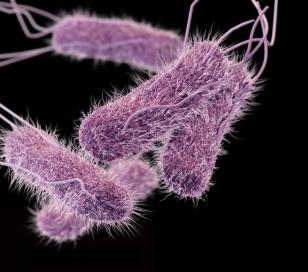
Salmonellaa

Image CDC

Food safety attorney Bill Marler wants to know what’s up with his petition calling on the USDA to declare specific “outbreak serotypes” of Salmonella as adulterants in meat.

He filed the petition more than a year ago, on Jan. 19, 2020, with USDA’s Food Safety and Inspection Service (FSIS), on behalf of Rick Schiller, Steven Romes, the Porter family, Food & Water Watch, Consumer Federation of America, and Consumer Reports.

The petition asks FSIS to declare the following Salmonella “outbreak serotypes” as per se contaminants in meat and poultry products:

Salmonella Agona, Anatum, Berta, Blockely, Braenderup, Derby, Dublin, Enteritidis, Hadar, Heidelberg, I 4,[5],12:i:-, Infantis, Javiana, Litchfield, Mbandaka, Mississippi, Montevideo, Muenchen, Newport, Oranienburg, Panama, Poona, Reading, Saintpaul, Sandiego, Schwarzengrund, Senftenberg, Stanley, Thompson, Typhi, and Typhimurium.

Singapore – 8 Temasek JC staff hospitalised as 43 ill after eating food from Chilli Api

Straits Times

SINGAPORE – Eight Temasek Junior College (TJC) staff have been hospitalised for gastroenteritis symptoms after eating food prepared by Chilli Api Catering last Friday (March 12).

They are currently in stable condition, said TJC principal Low Ay Nar.

Responding to queries from The Straits Times, Mrs Low said that as of Monday (March 15), a total of 43 staff have reported gastroenteritis symptoms after the school provided all its staff with 216 bento lunch boxes from Chilli Api Catering to thank them for their work in Term 1.

Research – Raw pet food microbiology safety risks rise with owner cognitive bias

Pet Food Industry

The optimistic belief that Salmonella only infects other people exemplifies a cognitive bias.

Although still a small portion of the overall pet food market, raw pet food sales grew at faster rates than kibble or conventional wet dog and cat foods during the pandemic. With the rising popularity of raw pet foods, people may believe they are following safe practices more than they…

To read more you will need to login to their site.

Denmark – Food Safety – Lack of heat treatment of raw materials used in smoothie

DVFA

Palæo Foods ApS is recalling a smoothie product because the raw materials are not heat-treated.

Recalled Foods , Published: March 16, 2021

What food:
Smoothie Power Up – Strawberry Blueberry (see photo )
Net content: 330 ml
Expiry date / best before date: 27 / 3-21, 5 / 4-21, 12 / 4-21
EAN barcode no .: 5712889221340
Sold in:
7 Eleven stores nationwide
Calling company:
Palæo Foods ApS, Store Kongensgade 81 C, 1264 Copenhagen
Cause:
Lack of heat treatment of raw materials. 
Risk:
Risk of diarrhea.
Advice for consumers:
The Danish Veterinary and Food Administration advises consumers to deliver the product back to the store where it was purchased or to discard it.

Canada – The recent supreme court decision on the deadliest foodborne disease outbreak in Canadian history

Barf Blog

Gladys Osien and Ron Doering from Gowling WLG write in the latest Food in Canada that the listeriosis outbreak linked to cold cuts from a Maple Leaf Foods plant in Toronto in 2008 resulted in 57 confirmed cases and 22 deaths. It was the deadliest foodborne disease outbreak in Canadian history. The recall reportedly cost the company $20 million.

A class action lawsuit from affected consumers and their families was settled quickly by Maple Leaf and its insurance company. But that was not the end of the matter. To carry out extensive sanitation, the plant was closed for several weeks with the result that retail customers and distributors did not obtain their usual supply. 424 Mr. Sub franchise operators sued Maple Leaf for lost sales and damage to reputation. In November 2020, the Supreme Court of Canada in a 5-4 majority decision dismissed the case against Maple Leaf with important implications for Canadian food companies.

Ireland – Recall of Batches of Various SFC Chicken Products due to the Possible Presence of Salmonella

FSAI

Tuesday, 16 March 2021

Summary
Category 1:

For Action

Alert Notification:

2021.27

Product:

SFC Take Home Boneless Bucket; pack size: 650g

SFC Southern Fried Chicken Burgers; pack size: 228g

SFC Chicken Poppets; pack size: 190g

SFC Southern Fried Chicken Strips; pack size: 155g

Batch Code:

All best before dates up to and including 30.06.2022

Country Of Origin:

United Kingdom

Message:

Further to FSAI’s food alerts 2021.202021.20 update 1, and 2021.20 update 2, SFC is recalling the above batches of some of its chicken products due to the possible presence of Salmonella.  Point-of-sale recall notices will be displayed in Lidl stores.

Nature Of Danger:

People infected with Salmonella typically develop symptoms between 12 and 36 hours after infection, but this can range between 6 and 72 hours.  The most common symptom is diarrhoea, which can sometimes be bloody.  Other symptoms may include fever, headache and abdominal cramps.  The illness usually lasts 4 to 7 days. Diarrhoea can occasionally be severe enough to require hospital admission. The elderly, infants, and those with impaired immune systems are more likely to have a severe illness.

Action Required:

Consumers:

Consumers are advised not to eat the implicated batches.

SFC 2
SFC1