Category Archives: Microbiology

Uganda – Uganda sets sights on reducing Aflatoxin burden

Food Safety News

The government of Uganda has started a campaign to tackle the high levels of aflatoxin in food.

The call, supported by Oxfam, the Uganda National Bureau of Standards (UNBS), the Grain Council of Uganda and the International Institute for Tropical Agriculture, came ahead of World Food Safety Day this year.

Aflatoxins are mycotoxins produced by moulds and can affect produce that is not well-dried. High levels can also contaminate food crops like cereals, legumes, oil crops and others, posing a serious health risk to humans and livestock. Based on past research, consuming foods with high aflatoxin levels increases the risk of liver cancer and other related diseases.

High aflatoxin limits were also described as a “major barrier” to the export of Uganda’s agricultural produce to the East African region and internationally. Contamination can also cause crop loss, contributing to hunger.

The campaign is aimed at creating awareness and training all stakeholders in the value chain, from the farm to the final consumer, on how to handle food to avoid contamination.

Cambodia – Food safety on radar as law takes effect

Phnom Penh Post

Thol Sreyleak, 35, is a resident of O’Bek Ka’am commune of Phnom Penh’s Sen Sok district. The last time she got food poisoning was in May and it was so severe she was admitted to hospital. The experience made her family of four start thinking about making their diet safer as this was the third time Sreyleak had suffered from food poisoning.

The food poisoning incidents took a lot of time away from her daily business, so Sreyleak and her family to decided to join a project to find organic and safe vegetables at the market.

“I was poisoned and had to be hospitalised. The first time was cauliflower poisoning, the second was soybean poisoning and the last was durian poisoning. In the case of durian poisoning, I had abdominal pain, diarrhoea and vomiting until I was hospitalised and I spent $140,” she said.

After her experiences with poisoning, she worried about her health. What makes it even more difficult for her is that her stomach and intestines are weak to begin with and she would feel the pain immediately if she ate bad vegetables or fruits.

“Every day I have to eat very carefully. I’m really worried because foods [recognised as safe] are expensive. I do not know if there is any food that I can eat that isn’t harmful to my health. If I want safe foods, I have to go to markets selling naturally-grown produce, but the cost is high compared to my daily income and it is not affordable,” she said.

Due to concerns about the impact that food safety was having on people’s health in the country, the government has enacted legislation like the law on food safety and the law on plant protection and phytosanitation.

On June 8, the Law on Food Safety was promulgated by King Norodom Sihamoni after sailing through the National Assembly on May 11 and the Senate on May 18.

Consisting of 11 chapters and 43 articles, the law applies to food quality and safety management that covers all stages of the food production chain and food businesses in Cambodia.

The law sets out the framework and mechanisms for managing and ensuring the safety, quality, hygiene and legitimacy of food at all stages of the food production chain in order to provide health protection and food safety to consumers, ensuring an honest and healthy food trade.

Pen Sovicheat, undersecretary of state and spokesman for the Ministry of Commerce, said that market and street vendors were one of the ministry’s targets for promoting good hygiene and better quality to attract tourists.

The ministry considers promoting the sale of foods in the markets and on the streets that is hygienic, safe and of high-quality as the main priority.

Germany – Mama Africa, shrimps smoked – smoked shrimp – Microbiological Safety

LMW

Alert type: Food
Date of first publication: 06/17/2022
Product name:

Mama Africa, shrimps smoked – smoked shrimp

Manufacturer (distributor): Alimenti dal mondo – Italia srl
Reason for warning:

microbiological risk

Packaging Unit: 50g
Contact to the competent authorities:

Bavaria: poststelle@lgl.bayern.de

USA – Freshpet Voluntarily Recalls One Lot of Freshpet Select Fresh from the Kitchen Home Cooked Chicken Recipe 4.5-Pound Bags Due to Potential Salmonella Contamination

FDA

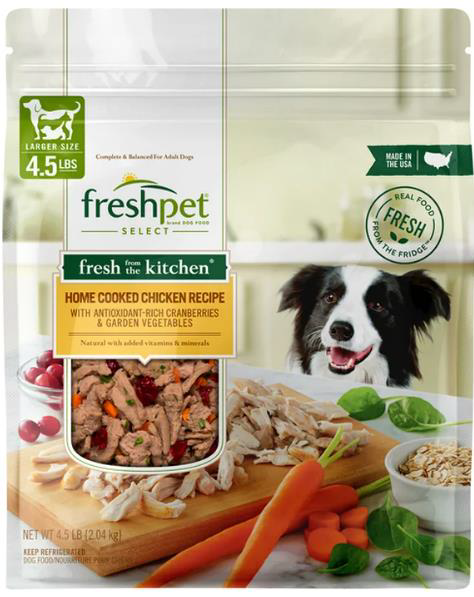
Freshpet Select Fresh From The Kitchen Home Cooked Recipe

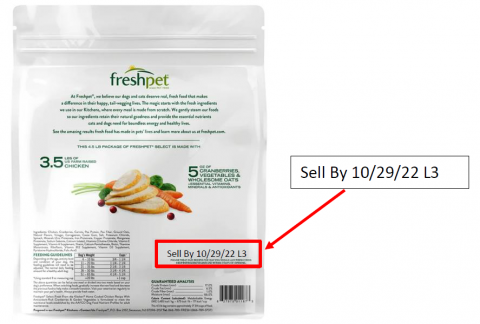
Back Label, Sell By 10/29/22 L3

Freshpet Inc. is announcing a voluntary recall of a single lot of Freshpet Select Fresh From the Kitchen Home Cooked Chicken Recipe (4.5 lb. bag), with sell by date of 10/29/22, due to potential contamination with Salmonella.

Salmonella can affect animals eating the product and there is risk to humans, notably children, the elderly, and the immunocompromised, when handling contaminated products, especially if they have not thoroughly washed their hands after having contact with the products or surfaces exposed to these products.

Healthy people infected with Salmonella should monitor themselves for some or all of the following symptoms: nausea, vomiting, diarrhea or bloody diarrhea, abdominal cramping, and fever. Salmonella can result in more serious ailments, including arterial infections, endocarditis, arthritis, muscle pain, eye irritation, and urinary tract symptoms. Consumers exhibiting these signs after having contact with this product should contact their healthcare provider.

Dogs with Salmonella infections may be lethargic and have diarrhea or bloody diarrhea, fever, and vomiting. Some dogs will have only decreased appetite, fever, and abdominal pain. Infected but otherwise healthy dogs can be carriers and infect other animals or humans. If your dog has consumed the recalled product and has these symptoms, please contact your veterinarian.

If pet parents have products matching the following description and sell by date in their possession, they should stop feeding it to their dogs and dispose of it immediately. Please call us if you have any of the recalled product, Freshpet Select Fresh From the Kitchen Home Cooked Chicken Recipe (4.5 lb. bag) with Sell by Date 10/29/22. The Sell by date, along with the UPC code, can be found on the bottom and back of each bag. Please see chart and product pictures below for details.

Our Freshpet Team had designated this single lot for destruction, but a small portion of the lot was inadvertently shipped to retailers in limited geographic markets in the last two weeks. No other Freshpet products or lot codes are impacted by this recall.

To date, Freshpet has received no reports of illness, injury, or adverse reaction. The lot may have sold at limited Walmart stores in Alabama and Georgia; and limited Target stores and other select retailers in Connecticut, Massachusetts, Maine, New Hampshire, New Jersey, New York, Pennsylvania, Puerto Rico, Rhode Island, Vermont, and West Virginia.

Product Name Retail UPC Code Lot Code Sell by Date
FRESHPET® SELECT FRESH FROM THE KITCHEN HOME COOKED RECIPE 627975011673 10/29/22 10/29/22 L3

The safety of pets and pet parents and the quality of our products are of the greatest importance, and we value the trust placed in Freshpet.

Pet parents who have questions or would like to report adverse reactions should call 1.800.285.0563 Mon. through Fri., 9 am–9 pm (EDT) and Sat. through Sun. 9 am–1 pm (EDT) or visit https://freshpet.co/JUNE22External Link Disclaimer.

This recall is being conducted in cooperation with the U.S. Food and Drug Administration.

UK – Waitrose recalls Waitrose Frozen Cooked & Peeled Jumbo King Prawns and Essential Frozen Cooked King Prawns because of the possible presence of uncooked prawns

FSA

Waitrose is recalling Waitrose Frozen Cooked & Peeled Jumbo King Prawns and Essential Frozen Cooked King Prawns because they may contain raw, uncooked prawns. The possible presence of raw, uncooked prawns makes this product unsafe to eat.

Product details

Waitrose Frozen Cooked & Peeled Jumbo King Prawns
Pack size 200g
Batch code VN394
Best before end: All date codes up to and including February 2024
Essential Frozen Cooked King Prawns
Pack size 250g
Batch code VN394
Best before end: All date codes up to and including June 2023

Risk statement

The possible presence of raw, uncooked prawns in the products listed above.

Action taken by the company

Waitrose is recalling the above products. Point of sale notices will be displayed in all retail stores that are selling these products. These notices explain to customers why the products are being recalled and tell them what to do if they have bought the products. Please see the attached notice.

Our advice to consumers

If you have bought any of the above products do not eat them. Instead, return them to the store from where they were bought for a full refund.

Research – Research Note Survival of Campylobacter jejuni, Salmonella, and Listeria monocytogenes and Temperature Change in Low-temperature–Long-time-cooked Chicken Meat 

Journal of Food Protection

Low-temperature­–long-time (LT–LT) cooking, also known as sous vide cooking, in which meat is sealed in a bag and cooked in hot water at a relatively low-temperature of around 60°C, increased in popularity; indeed, home-use low-temperature cookers are now commercially available. However, after LT–LT cooking, if even a small number of foodborne bacteria remain, they could cause infection and foodborne illnesses. Therefore, in the present study, the aim was to determine the appropriate LT–LT cooking methods for chicken by assessing temperature changes and studying the bacteria in LT–LT-cooked chicken meat. At set cooking temperatures of 60°C and 65°C, the temperatures were measured at the surface and in the centers of single- and double-layer samples of 300-g chicken breast meat. The time required to reach 50°C were 5–14 min at the surface, 25 min in the center of the single-layer sample, and 33–35 min in the center of the double-layer sample. The time taken to reach 50°C was fastest in SF followed by SG and DB (P < 0.05). When the meat was LT–LT cooked at 60°C and 65°C for 60 min, color changes in the meat and heating of the meat were observed all the way to the interior. Campylobacter jejuni, Salmonella O7 and Listeria monocytogenes were inoculated into chicken breasts, which were then cooked at set temperatures of 60°C and 65°C for 15, 30, 60, 90, and 120 min. Campylobacter jejuni survived for up to 30 min of cooking, Salmonella O7 survived for up to 60 min of cooking at 60°C and 30 min at 65°C, and L. monocytogenes survived for up to 90 min of cooking at 60°C and 60 min at 65°C. Thus, to prevent infection and illness caused by the three tested bacteria species, LT–LT cooking for 120 min at 60°C and 90 min at 65°C is recommended.

Research – Decontamination of Pathogenic and Spoilage Bacteria on Pork and Chicken Meat by Liquid Plasma Immersion

MDPI

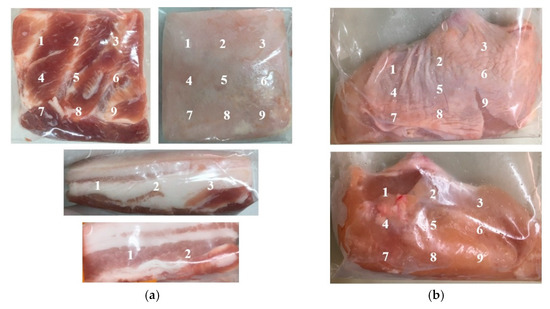
In this research, we aimed to reduce the bacterial loads of Salmonella Enteritidis, Salmonella Typhimurium, Escherichia coliCampylobacter jejuniStaphylococcus aureus, and Pseudomonas aeruginosa in pork and chicken meat with skin by applying cold plasma in a liquid state or liquid plasma. The results showed reductions in S. Enteritidis, S. Typhimurium, E. coli, and C. jejuni on the surface of pork and chicken meat after 15 min of liquid plasma treatment on days 0, 3, 7, and 10. However, the efficacy of the reduction in S. aureus was lower after day 3 of the experiment. Moreover, P. aeruginosa could not be inactivated under the same experimental conditions. The microbial decontamination with liquid plasma did not significantly reduce the microbial load, except for C. jejuni, compared with water immersion. When compared with a control group, the pH value and water activity of pork and chicken samples treated with liquid plasma were significantly different (p ≤ 0.05), with a downward trend that was similar to those of the control and water groups. Moreover, the redness (a*) and yellowness (b*) values (CIELAB) of the meat decreased. Although the liquid plasma group resulted in an increase in the lightness (L*) values of the pork samples, these values did not significantly change in the chicken samples. This study demonstrated the efficacy of liquid plasma at reducing S. Enteritidis, S. Typhimurium, E. coliC. jejuni, and S. aureus on the surface of pork and chicken meat during three days of storage at 4–6 °C with minimal undesirable meat characteristics. View Full-Text

Research – Microbiological Profile, Prevalence and Characterization of Salmonella enterica in Peanuts, Pecans, Raisins, Sun-dried Tomatoes, and Chocolate Sprinkles Sold in Bulk in Markets of Queretaro, Mexico 

Journal of Food Protection

In Mexico, the prevalence of Salmonella enterica in low water activity foods and their link to outbreaks is unknown. The aim of this study was to determine the microbiological profile and the prevalence of S. enterica in low water activity foods (peanuts, pecans, raisins, sun-dried tomatoes, and chocolate sprinkles) purchased in retail establishments in Queretaro, Mexico. Seventy samples of each food item sold in bulk were purchased. Aerobic plate count (APC), molds, yeasts, total coliforms, Escherichia coli, and Staphylococcus aureus were quantified in 10-g samples. The prevalence of S. enterica in 25 g samples was determined. From positive samples, S. enterica  isolates (60) were characterized based on their antimicrobial susceptibility to 14 antibiotics, the presence/absence of 13 virulence genes and serotype. The concentration of APC, molds, yeast, total coliforms, and E. coli ranged from 3.1-5.2 Log CFU g-1, 2.0-2.4 Log CFU g-1, 2.0-3.0 Log CFU g-1, 0.6-1.1 Log MPN g -1, and 0.5-0.9 Log MPN g -1, respectively. S. aureus  was not detected in any sample (<10 CFU g -1). The prevalence of  S. enterica in chocolate sprinkles, raisins, peanuts, pecans, and sun-dried tomatoes was 26%, 29%, 31%, 40%, and 52%, respectively. Most isolates (68.3%) were resistant to at least one antibiotic. The chromosome-associated virulence genes were found in all isolates and only one strain had sopE, and 98.3% of the isolates were grouped in the same virulotype. Among the isolates, the most frequent serotype was Tennessee (51/60). According to the characteristics evaluated, the isolates were grouped in 24 clusters. The elevated prevalence of S. enterica highlight the role of low water activity food items sold in bulk at markets as a potential vehicle for pathogens transmission. Regardless of the low variability among S. enterica isolates, their characterization could be helpful to elucidate which strains are circulating in these foods for improving epidemiological surveillance.

Research – PDIA, an Iminosugar Compound with a Wide Biofilm Inhibitory Spectrum Covering Both Gram-Positive and Gram-Negative Human Bacterial Pathogens

MDPI

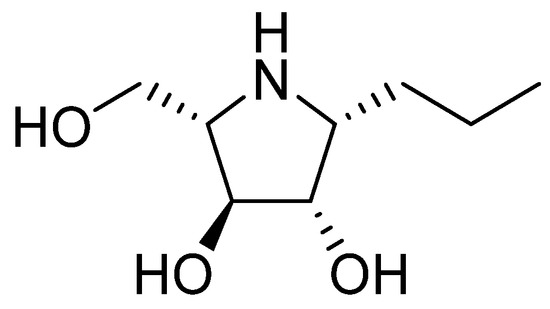
Many difficult-to-treat human infections related to catheters and other indwelling devices are caused by bacteria residing in biofilms. One of the key properties of microorganisms residing in a biofilm is decreased susceptibility towards antimicrobial agents. Therefore, many different approaches have been researched to destroy or inhibit biofilm production by bacteria. Different iminosugars (IS) were reported to inhibit biofilm formation in S. mutansS. aureus, and P. aeruginosa. The aim of this study was to look for a spectrum of the activity in one of these IS. The iminosugar PDIA beta-1-C-propyl-1,4-dideoxy-1,4-imino-L-arabinitol was tested in vitro at the same concentration against 30 different strains of the most important Gram-negative and Gram-positive human pathogens looking for their biofilm production and viability at different time intervals. It appeared that PDIA inhibited biofilm production of Enterobacter spp., P. aeruginosaEnterococcus spp. and S. aureus in 8 h, and Klebsiella spp., Acinetobacter spp. and S.epidermidis in 24 h. PDIA caused no growth inhibition of the tested bacteria at a concentration of 0.9 mM. Our results indicate a broad-spectrum biofilm inhibitory activity of PDIA. which may be the basis for future application studies that will help in control of the associated device and biofilm-related infections caused by a wide spectrum of the causative agents. View Full-Text

Research – Role of Marine Bacterial Contaminants in Histamine Formation in Seafood Products: A Review

MDPI

Histamine is a toxic biogenic amine commonly found in seafood products or their derivatives. This metabolite is produced by histamine-producing bacteria (HPB) such as Proteus vulgarisP. mirabilisEnterobacter aerogenesE. cloacaeSerratia fonticolaS. liquefaciensCitrobacter freundiiC. braakiiClostridium spp., Raoultella planticolaR. ornithinolyticaVibrio alginolyticusV. parahaemolyticusV. olivaceusAcinetobacter lowffiPlesiomonas shigelloidesPseudomonas putidaP. fluorescensAeromonas spp., Photobacterium damselaeP. phosphoreumP. leiognathiP. iliopiscariumP. kishitanii, and P. aquimaris. In this review, the role of these bacteria in histamine production in fish and seafood products with consequences for human food poisoning following consumption are discussed. In addition, methods to control their activity in countering histamine production are proposed. View Full-Text