The source of a bacterial outbreak in Sanders County that caused several people to become ill has been confirmed.
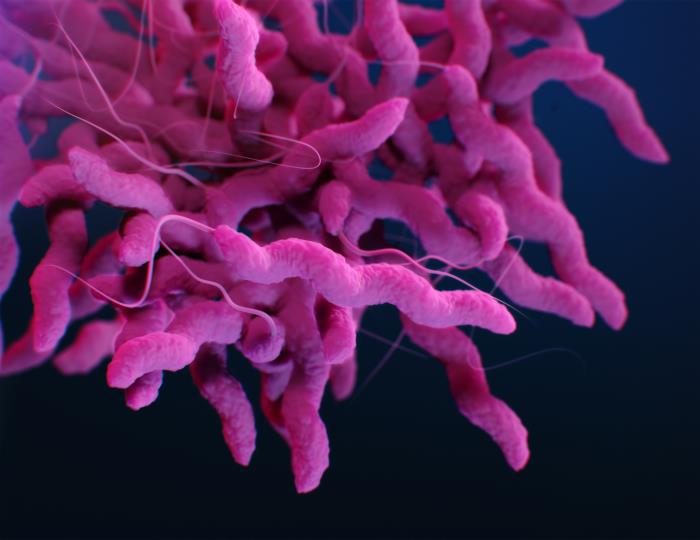
State and county officials recently notified the Montana Department of Transportation (MDT) that the Kennedy Creek water box has been associated with a Campylobacter outbreak.
The Montana Department of Environmental Quality (DEQ) has labelled this untreated water as a health concern and advised MDT to close off public access to the water.
After Sanders County Public Health officials confirmed several cases of infection from Campylobacter bacteria, the water from the untreated creek was tested and the presence of this bacteria was confirmed, according to MDT.
Over 20 people have tested positive for the bacterial infection and have reported diarrhea, abdominal pain, nausea, and fever after drinking water from the location.
Food poisoning caused by Campylobacter (campylobacteriosis) is the most prevalent bacterial disease associated with the consumption of poultry, beef, lamb and pork meat and unpasteurized dairy products. A variety of livestock industry, food chain and public health interventions have been implemented or proposed to reduce disease prevalence, some of which entail costs for producers and retailers. This paper describes a project that set out to summarize the natural science evidence base relevant to campylobacteriosis control in as policy-neutral terms as possible. A series of evidence statements are listed and categorized according to the nature of the underlying information. The evidence summary forms the appendix to this paper and an annotated bibliography is provided in the electronic supplementary material.
Around 3,500 Brits are hospitalised every year with campylobacteriosis – food poisoning caused by Campylobacter contamination. It causes the greatest number of hospitalisations of any food-borne disease in the UK and is the number one cause of bacterial food poisoning. Yet, despite falling Campylobacter levels on chicken over the past five years, levels of illness have not changed. An expert review of the sources, spread and control of Campylobacter from the Oxford Martin School at the University of Oxford concludes today that further interventions are needed – but no one solution will provide perfect control.
Led by Professor Matthew Goddard from the University of Lincoln and published earlier this month in the Proceedings of the Royal Society B, the restatement clarifies the scientific evidence available from a variety of sources in order to better inform policy decisions and provide clarity on the broad scientific consensus. This is vital as the prevalence of antibiotic resistant Campylobacter is increasing in the UK and has been designated a ‘high priority’ pathogen by the WHO.
Key conclusions of the restatement include that there was no clear evidence that long-term use of chlorine rinses, as practised in the USA, lowered levels of the bacteria or food poisoning caused, and that a broader series of control measures had strong evidence for its overall effectiveness as a package.
The UK’s poultry industry has successfully reduced the quantity of retail chicken testing positive for Campylobacter from 73% in 2014 to 40% in 2018. However, cases of illness have not reduced over the same period. In addition to wider control measures, beef, lamb and pork need to be more widely understood to be carriers of the bacteria and potential causes of food poisoning.
Food & Beverages
Vegetable Protein Product
Foodborne Illness
Reason for Announcement:
Gastrointestinal illness and potential liver function issues
Company Name:
Daily Harvest
Brand Name:
Daily Harvest
Product Description:
French Lentil + Leek Crumbles
Company Announcement
June 23, 2022, Daily Harvest, Inc., New York, NY. Daily Harvest has voluntarily recalled all French Lentil + Leek Crumbles due to consumer reports of gastrointestinal illness and potential liver function issues.
From April 28 to June 17, 2022, approximately 28,000 units of the recalled product were distributed to consumers in the continental United States through online sales and direct delivery, as well as through retail sales at the Daily Harvest store in Chicago, IL and a “pop-up” store in Los Angeles, CA. Samples were also provided to a small number of consumers. Daily Harvest directly notified by email those consumers who were shipped the affected product, and other consumers for whom the company had contact information, and consumers were issued a credit for the recalled product.
Consumers who may still have the recalled product in their freezers should immediately dispose of it.
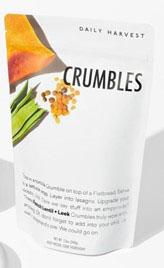
French Lentil + Leek Crumbles is a frozen product packaged in a 12oz white pouch with the words “Daily Harvest” at the top, a large “CRUMBLES” immediately below the top and the words “French Lentil + Leek” in bold, as shown below. All lot codes of the French Lentil + Leek Crumbles are affected. No other Daily Harvest products are affected or part of this recall.
To date, the company has received approximately 470 reports of illness or adverse reactions. Consumer safety is our highest priority, and we have taken immediate steps to stop production and distribution of the product and conduct a root cause investigation, which is ongoing.
This recall is being made in cooperation with the U.S. Food and Drug Administration.
In a shocking incident of negligence, about two dozen students of Kaushal Vikash Kendra, Mango fell victim to food poisoning at their hostel on Tuesday. The students fell sick after eating egg curry and ‘puri’ for breakfast this morning.
One of the victims said she fell sick after consuming egg curry and puri this morning. “ Though a section of girls have other versions but I must say all the girls fell sick after almost an hour of consuming breakfast only,” she said.
Significantly, none of the people from the Kaushal Vikash Kendra management was available for comment on the issue.
Another section of the students claimed that they fell sick due to eating food brought online during a birthday party on Monday night. “It was my friend’s birthday on Monday. We celebrated the occasion by throwing a party at the hostel. She had bought cake, fast food from Mango. In the morning, all those who enjoyed the party had started suffering from loose motion and vomiting. Then we were brought to the MGM medical college hospital by the management,” informed a student.
However, one of the five ailing students who were admitted to the medical college hospital’s emergency ward, could not say anything about five other girls from the same centre found undergoing treatment lying in the corridor of the emergency block.
Arun Kumar, superintendent, MGM Medical College Hospital said that in all two dozen girls were brought for the treatment at noon. “The girls were down due to food poisoning. Six of the girls were sent back after first-aid, but the rest of them were admitted for treatment,” said Kumar, adding that the condition of all the girls is stable.
While public health risk assessments for Listeria monocytogenes (Lm) have been published for different foods, firm-level decision making on interventions targeting Lm involves considerations of both public health and enterprise risks. Smoked seafood is a ready-to-eat product with a high incidence of Lm contamination and associated with several recalls. We thus used cold-smoked salmon as a model product to develop a decision support tool (the Regulatory and Recall Risk [3R] Model) to estimate (i) baseline regulatory and recall (RR) risks (i.e., overall risks of a lot sampled and tested positive [e.g., by food regulatory agencies]) due to Lm contamination and (ii) the RR risk reduction that can be achieved through interventions with different underlying mechanisms: (i) reducing the prevalence and/or level of Lm and (ii) retarding or preventing Lm growth. Given that a set number of samples (e.g., 10) are tested for a given lot, the RR risk equals the likelihood of detecting Lm in at least one sample. Under the baseline scenario, which assumes a 4% Lm prevalence and no interventions, the median predicted RR risk for a given production lot was 0.333 (95% credible interval: 0.288, 0.384) when 10 25-g samples were collected. Nisin treatments, which reduce both the prevalence and initial level of Lm, reduced RR risks in a concentration-dependent manner to 0.109 (0.074, 0.146; 5 ppm), 0.049 (0.024, 0.083; 10 ppm), and 0.017 (0.007, 0.033; 20 ppm). In general, more effective reduction in RR risks can be achieved by reducing Lm prevalence, compared to retarding Lm growth, as the RR risk was reduced to 0.182 [0.153, 0.213] by a 50% prevalence reduction, while only to 0.313 [0.268, 0.367] by bacteriostatic growth inhibitors. In addition, sensitivity analysis indicates that prevalence and initial level of Lm, as well as storage temperature have the largest impact on predicting RR risks, suggesting that reliable data for these parameters will improve model performance.
A significant decrease in norovirus prevalence and concentration was observed in oyster production areas in Ireland during winter 2020/21. Oyster production areas impacted by human wastewater discharges that were under-going norovirus surveillance since 2018 were investigated. Samples collected in the winter seasons of 2018/19 and 2019/20, prior to when the COVID-19 pandemic interventions were applied, showed a prevalence of 94.3% and 96.6% respectively and geometric mean concentrations of 533 and 323 genome copies per gram (gcg -1 ) respectively. These values decreased significantly during the winter of 2020/21 (prevalence of 63.2% and geometric concentration of <LOQ) coinciding with the control measures to mitigate the transmission of SARS-CoV-2. Divergence between norovirus GI and GII prevalence and concentrations was observed over the three year monitoring period. Norovirus GII was the dominant genogroup detected in winter 2020/21 with over half of samples positive although concentrations detected were significantly lower than pre-pandemic winters with a geometric mean concentration of <LOQ.
Waitrose is recalling Waitrose Frozen Cooked & Peeled Jumbo King Prawns and Essential Frozen Cooked King Prawns because they may contain raw, uncooked prawns. The possible presence of raw, uncooked prawns makes this product unsafe to eat.
Product details
Waitrose Frozen Cooked & Peeled Jumbo King Prawns
Pack size
200g
Batch code
VN394
Best before
end: All date codes up to and including June 2023
Essential Frozen Cooked King Prawns
Pack size
250g
Batch code
VN394
Best before
end: All date codes up to and including February 2024
Risk statement
The possible presence of raw, uncooked prawns in the products listed above.
Action taken by the company
Waitrose is recalling the above products. Point of sale notices will be displayed in all retail stores that are selling these products. These notices explain to customers why the products are being recalled and tell them what to do if they have bought the products. Please see the attached notice.