Salmonella in soybean meal from Germany in Germany, Poland and Switzerland
Salmonella infantis in frozen chicken meat cat 3 from Netherlands in Italy

Salmonella in soybean meal from Germany in Germany, Poland and Switzerland
Salmonella infantis in frozen chicken meat cat 3 from Netherlands in Italy
Click to access DWQinPrivateGroupWaterSupplies-2022-02-21.pdf
Key Findings for 2020
➤The quality of drinking water in private supplies was not as good as it should be: one in 20 private water supplies were contaminated with E. coli.
➤93% of Private Group Schemes complied with the Trihalomethanes standard. However, 13 supplies are cited on EU infringement proceedings against Ireland for failing to take the measures necessary to ensure compliance.
➤Over a quarter of Small Private Supplies were not monitored by Local Authorities.
Posted in Bore Hole Water, Contaminated water, E.coli, Food Micro Blog, Food Microbiology, Food Microbiology Blog, Food Microbiology Research, Food Microbiology Testing, microbial contamination, Microbiological Risk Assessment, Microbiology, Microbiology Investigations, Water, water microbiology, Water Safety
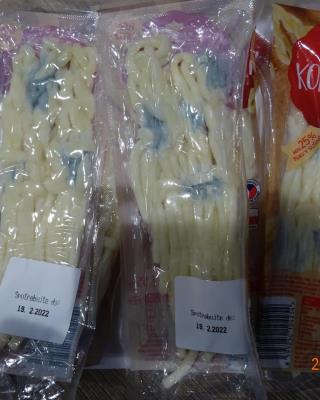
In part of the package, the presence of mold visible to the naked eye was detected under the package. Food is not considered safe if it shows signs of spoilage.
During the inspection, unsatisfactory storage temperatures of this product were not found. The product has not expired.
| Expiration date: | 2/19/2022 |
| Packaging: | PP bag with print, protective atmosphere |
| Quantity of product in package: | 0.055 kg |
| Producer: | SIMABELLE sro, č.p.1074, 739 98 Mosty u Jablunkova, branch: Rudé armády 1820, 733 01 Karviná – Hranice |
| Country of origin: |  Czechia Czechia |
| Sampling date: | Jan 20, 2022 |
| Reference number: | 22-000078-CAFIA-CZ |
Posted in food contamination, Food Hazard, Food Hygiene, Food Inspections, Food Micro Blog, Food Microbiology, Food Microbiology Blog, Food Microbiology Testing, food recall, Food Safety, Food Safety Alert, Food Spoilage, Food Temperature Abuse, Food Testing, microbial contamination, Microbiological Risk Assessment, Microbiology, Microbiology Investigations, mold, Mould/Mold
The latest version of the Singapore Export Authorization Procedure specifies the microbiological criteria to be followed only for ready-to-eat foods, not specifically considering meat and offal.
Recently, the Export Area of the Ministry of Health has learned that the microbiological criteria followed by the Singapore authorities to control the import of fresh meat, meat preparations and offal are different from the criteria contained in the current Export Procedure. Therefore, work will begin on a new version of the document in order to incorporate this new information.
We make available to exporting establishments the document that describes the microbiological criteria for meat and offal in Singapore so that they can take them into account when defining self-control procedures.
Click to access sfa—microbiological-criteria-for-imported-meat.pdf
Salmonella can be isolated from animal food, ingredients, and animal food manufacturing surfaces. There is limited data regarding the sanitation of animal food manufacturing surfaces. The objective of this experiment was to evaluate the effects of nine chemical treatments to reduce Salmonella Typhimurium contamination on various manufacturing surfaces. This experiment was a 9 × 5 factorial with nine chemical treatments and five surfaces. The nine chemical treatments included: 1) no inoculation or sanitation treatment (negative control), and those inoculated with Salmonella Typhimurium and treated with 2) no sanitation treatment (positive control), 3) ground corn, 4) liquid commercial formaldehyde, 5) liquid food-grade sanitizer, 6) liquid medium chain fatty acid blend of caprylic, capronic and capric acids (MCFA), 7) dry commercial calcium propionate, 8) dry commercial acidulant, and 9) dry commercial benzoic acid. The five surfaces included 1) stainless steel, 2) plastic, 3) polypropylene tote bag, 4) rubber belt, and 5) rubber tire. Plastic had greater Salmonella in the positive control than the polypropylene tote bag, with other surfaces being intermediate ( P < 0.05). Surfaces treated with formaldehyde had no detectable Salmonella after treatment, and surfaces treated MCFA had at least a 4-log reduction compared to the control ( P < 0.05). The dry acidulant was the most effective dry sanitizer tested, but had no impact on Salmonella concentration on rubber tires ( P < 0.05). While most effective in this experiment, liquid sanitizers have limitations in a dry, bulk systems. In summary, formaldehyde, food-grade sanitizer and MCFA, were the most effective chemical treatments to reduce Salmonella surface contamination. Surface type can also influence Salmonella mitigation strategies specifically stainless steel and plastic which can be more challenging sanitation within animal food facilities.
Posted in Animal Feed, Animal Feed Salmonella, Animal Feed Testing, Decontamination Microbial, Food Micro Blog, Food Microbiology Blog, Food Microbiology Research, Food Microbiology Testing, microbial contamination, Microbiological Risk Assessment, Microbiology, Microbiology Investigations, Research, Salmonella
Spices and aromatic herbs have always had great historical importance in human nutrition. Their use has been documented for centuries as a rich source of bioactive compounds; they have been used for their health benefits and also for flavoring or coloring food. However, despite the many health properties linked to the use of spices and aromatic herbs, these can represent biological hazards and can contain chemical substances of concern. Certainly, monitoring potential health hazards in spices and aromatic herbs includes microbiological safety and also the content of inorganic substances: both represent a key step. This research aims at monitoring the compliance of various spices and aromatic herbs from a non-European country market (namely: black cumin seeds, Iranian Tokhme Sharbati, clove buds, Shahjeera, Abbaszadeh saffron, organic fenugreek, whole black pepper, cinnamon, Abthul Ahmar (Asario), Ajwan seeds, whole coriander seeds, black sesame seeds, Sabja seeds) with the current European Union (EU) and WHO regulations, when available, regarding mineral and microbiological parameters. In particular, microbiological assays using rapid and conventional methods, and trace mineral determination by inductively coupled plasma mass spectrometry (ICP-MS) were performed. Results show the safety of the tested spices, given that the microbiological parameters were within the legal microbiological criteria set by the European Commission Regulation (EC) No. 2073/2005 and its amendment Regulation (EC) No. 1441/2007. With reference to potentially toxic Cd, Pb, As, Hg, these were within the limits set by the European Commission Regulation (EC) No. 1881/2006 and its amendments, Regulation (EU) No. 1317/2021 and Regulation (EU) No. 1323/2021, and WHO. According to EU regulations, for Pb content, 2 samples out of 16 showed values different from the set limits. View Full-Text
This study aimed to evaluate the efficacy of a and hydrogen peroxide (H 2 O 2 ) and peroxyacetic-acid (PAA) mixer delivered by conventional garden sprayer (GS), electrostatic sprayer (ES) and dip methods to inactivate Listeria monocytogenes on apples. Organic Honey Crisp ( HC ), Fuji ( FJ ), and Pink Lady ( PL ) were dip-inoculated with Listeria monocytogenes (2-strain, serotype 1/2b), which were then kept untreated (control), sprayed with water only, or treated with the H 2 O 2 -PAA mixer (0.0064, 0.1, 0.25 and 0.50%) for 20 s via GS, ES, or dip, followed by draining (2 min) on aluminum foil. Surviving bacteria were recovered on Modified Oxford agar. Atomic force microcopy was used to detect the structural changes of inactivation of L. monocytogenes in broth medium by the H 2 O 2 -PAA mixer solution. Data (2 replicates/6 samples/replicate) were analyzed using the Mixed Model Procedure of SAS ( P =0.05). Initial counts of L. monocytogenes on untreated apples were 6.80 to 6.90 log CFU/apple. The dip method was the most effective treatment (P<0.05) on pathogen reductions (2.31-2.41 log CFU/apple) followed by GS (1.44-1.70 log CFU/apple) and then ES (0.84-1.20 log CFU/apples). Reductions of L. monocytogenes were greatest ( P < 0.05) when apples were treated with H 2 O 2 -PAA mixer -0.25 and -0.50%. Atomic force microscopy analyses indicated that inactivation of L. monocytogenes cells in H2O2-PAA mixer solutions resulted from disruption of the outer membrane. The H 2 O 2 -PAA mixer treated cells had increased width, height and decreased roughness when compared to the untreated cells. Results suggested that applying a H 2 O 2 -PAA mixer by dip or GS methods is better for pathogen reduction than ES on apples.
Posted in Decontamination Microbial, Food Micro Blog, Food Microbiology, Food Microbiology Blog, Food Microbiology Research, Food Microbiology Testing, Food Pathogen, Food Technology, Listeria, Listeria monocytogenes, microbial contamination, Microbiological Risk Assessment, Microbiology, Microbiology Investigations, Pathogen, pathogenic, Research, Technology
The Food Standards Agency (FSA) has welcomed the ban after a link was confirmed between a Salmonella outbreak in people and feeder rodents used for reptile food originating from a premises in Lithuania.
The ban, imposed until further notice by the Department for Environment, Food and Rural Affairs comes after a joint investigation by UKHSA, FSA, DEFRA and APHA into an outbreak of salmonella affecting over 900 people in the UK. The FSA and partners are continuing to urge people to be extra careful when handling any frozen rodents including mice product and packaging due to the risk of salmonella.
People should be extra vigilant, washing hands thoroughly with soap and water immediately after contact, when handling not just the product, but their reptiles and associated equipment and environment, due to the risk of the illness.
Further general advice on reducing the risk of contracting Salmonella (Opens in a new window) (Opens in a new window)is available online.
Tina Potter, Head of Incidents at the Food Standards Agency said:
“As we have continued to see a rise in the number of cases of Salmonella Enteritidis linked to feeder rodents imported from Lithuania over the past number of months, we welcome Defra’s move to ban these products from being imported and sold across the UK.
Even though this ban has been introduced to ensure public health is protected, we cannot emphasise enough the importance of good hygiene practice when handling raw or frozen pet food, as well as the reptile itself”
The feed should be suitably stored, ideally in a dedicated storage compartment or freezer, not in contact with human food and it should always be defrosted naturally at room temperature on newspaper or paper towels away from human food and food preparation surfaces. Any surfaces and equipment used should be thoroughly disinfected.
Handlers and pet owners must always wash their hands thoroughly with soap and warm water immediately after handling the frozen and defrosted feed and handling your reptile and their equipment.”
Advice to reptile owners about feeding their pets
Snake owners and others using frozen mice as food may have concerns about maintaining their animal’s welfare, as the import ban may cause short term shortages. There should be sufficient mice to maintain animal welfare for all snakes and other animals, including birds that need to be fed mice, if owners adapt their current feeding routines. Detailed advice for reptile owners (Opens in a new window) (Opens in a new window)will be published online.
Advice to parents and guardians of children handling reptiles
Children have been particularly affected so we are urging parents and guardians to make sure everyone washes their hands thoroughly with warm soapy water every time they handle and feed mice to their pets and handle their reptiles to reduce risk of becoming ill with Salmonella. Both the vivarium and the areas reptiles are able to roam could be contaminated with Salmonella. Good hygiene should be observed.
If you, or other family members become ill with symptoms such as diarrhoea, abdominal pain and fever, consult your doctor or NHS 111 and inform them that you own/keep a reptile. If you have symptoms, make sure you wash your hands regularly and avoid preparing food for others. Do not go to work or school until 48 hours after symptoms have passed to reduce the chances of passing on the infection.
Meju, a raw material for doenjang preparation, is highly vulnerable to aflatoxin-producing fungi. The aim of this study was to evaluate the effect of a one-year fermentation on aflatoxins and aflatoxin-producing fungi in doenjang spiked with aflatoxins B1, G1, B2, and G2 and inoculated with toxigenic Aspergillus flavus. A significant reduction in aflatoxins was observed after a year of fermentation, measuring 92.58%, 100%, 98.69%, and 100% of B1, G1, B2, and G2, respectively. After a year of fermentation, 6.95 ± 3.64 µg/kg of total aflatoxin was detected, which represents a 97.88% reduction in the total aflatoxin compared with the initial value (328.83 ± 36.60 µg/kg). Several aflatoxin-degrading fungi (Aspergillus versicolor, Cladosporium subcinereum, Aspergillus ochraceus) and bacteria (Bacillus albus, Bacillus velezensis) isolated from doenjang were identified as the major contributors to the reduction of aflatoxin. Furthermore, it was observed that most of the aflatoxin contamination in doenjang occurred during the meju stage, and this stage was found to be most susceptible to A. flavus contamination and growth. These findings reveal that native microorganisms mediate aflatoxin clean-up in doenjang during fermentation and support the use of such microorganisms as a starter culture for the preparation of aflatoxin-free doenjang.
Posted in Aflatoxin, Aflatoxin B1, Aspergillus, Bacillus, Decontamination Microbial, Food Micro Blog, Food Microbiology, Food Microbiology Blog, Food Microbiology Research, Food Microbiology Testing, microbial contamination, Microbiological Risk Assessment, Microbiology, Microbiology Investigations, mold, Mold Toxin, Mould Toxin, Mould/Mold, Moulds, Research

 FoodWorld