Salmonella in post-extraction rapeseed meal from Ukraine in Poland and Lithuania
Salmonella in meat product from Belgium in France

Salmonella in post-extraction rapeseed meal from Ukraine in Poland and Lithuania
Salmonella in meat product from Belgium in France
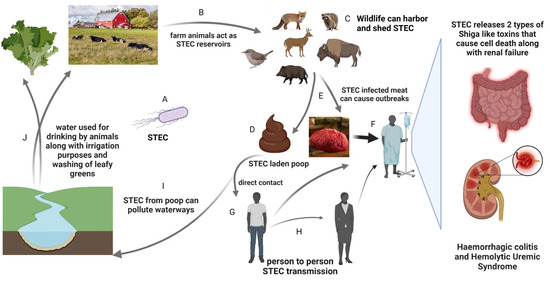
Testing of fresh produce in Norway has found a low level of E. coli contamination.
The Norwegian Food Safety Authority (Mattilsynet) commissioned the Veterinary Institute to examine ready-to-eat lettuce and sugar snap peas in 2021.
A total of 118 samples, of which 37 were sugar snap peas and 81 ready-to-eat leafy greens, were analyzed. Salmonella was not detected, while E. coli was found in 11 samples, one of sugar snap peas and 10 of lettuce. E. coli, as a hygiene indicator, at levels above the guideline values was only detected in one sample of lettuce.
Results were considered unsatisfactory if three or more samples contained more than 100 colony forming units per gram or one sample contained above 1,000 CFU/g.
Officials said finding high levels of E. coli in lettuce may indicate the production process is not working optimally. Good raw material control and management of the washing and rinsing process are important, so microorganisms do not build-up and cross-contamination via water is minimized.
Posted in Decontamination Microbial, E.coli, Food Micro Blog, Food Microbiology, Food Microbiology Blog, Food Microbiology Research, Food Microbiology Testing, microbial contamination, Microbial growth, Microbiological Risk Assessment, Microbiology, Microbiology Investigations, Microbiology Risk, Salmonella
It is a myth that rumen microbial activity allows dairy cows to handle mycotoxin toxicity completely. A closer look at rumen degradation capability shows that this is not the case. Therefore, a mitigation strategy should be holistic, practical and beyond binding.
A complex and diverse Total Mixed Ration (TMR) poses multiple mycotoxin toxicity challenges. Although rumen microbes can reduce the toxicity of some mycotoxins, not all mycotoxins are equally degraded in the rumen. In high-yielding dairy cows high-starch diets can compromise the detoxification capacity of rumen microbes. For some mycotoxins, such as zearalenone (ZEN), rumen degradation may increase the toxicity. Furthermore, extended periods of exposure to low levels of multiple mycotoxins may lead to chronic toxicity, an increasing issue that is notoriously difficult to diagnose at an early stage.
Mycotoxins can threaten dairy cows’ health, rumen function, feed intake, milk yield, milk quality, lameness, and reproductive abilities. Many “mouldy silage syndrome” cases in the field have shown incidences of increased somatic cell counts, undigested faecal feed particles, laminitis, mastitis and ruminitis cases. Cases of reproductive challenges and vaccination failures have been reported with multiple mycotoxins in TMR.
Read more at the link above
Posted in Aflatoxin, Aflatoxin B1, Animal Feed Mould Toxin, Aspergillus Toxin, Decontamination Microbial, Food Micro Blog, Food Microbiology Blog, Food Toxin, Fusarium Toxin, microbial contamination, Microbial growth, Microbiological Risk Assessment, Microbiology, Microbiology Investigations, Microbiology Risk, Mold Toxin, Mould Toxin, Mycotoxin, Toxin, Zearalenone

Quit food safety confusion cold turkey this Thanksgiving! While this holiday is a great time to spend with family and friends, it’s also time to bust some myths.
Myth 1: Refrigerating a whole cooked turkey is safe
False! Always carve your turkey after cooking. A whole cooked turkey will not cool quickly enough, thus putting it at risk for bacterial growth. Carve the turkey into smaller pieces so it cools faster in the refrigerator.
Myth 2: Thawing a turkey on the counter is safe.
Never thaw a turkey on the kitchen counter. Once a turkey has sat at room temperature beyond two hours, it enters the Danger Zone, where bacteria grow rapidly. Thawing a turkey in a refrigerator is safe. Allow approximately 24 hours of thawing time for every four to five pounds of turkey. Turkeys are also safely thawed in a microwave and cold water. When using the cold-water method, allow 30 minutes per pound of turkey and keep it in the original wrapping. Change the water every 30 minutes and cook immediately after thawing.
Myth 3: My pop-up timer is enough to know if my turkey is fully cooked.
Pop-up timers are disposable thermometers used to measure a turkey’s temperature. These timers are a great tool. However, don’t forget to check in the three recommended places as well. The turkey’s internal temperature must reach 165 F in the following locations: the thickest part of the breast, the innermost part of the thigh, and the innermost part of the wing. Use a food thermometer in addition to a pop-up timer to check the turkey’s internal temperature.
Remember the four steps to food safety:
For more information, call the USDA Meat and Poultry Hotline at 1-888-MPHotline (1-888-674-6854) or email MPHotline@usda.gov to reach a food safety expert or chat live at ask.usda.gov from 10 a.m. to 6 p.m. Eastern Time, Monday through Friday. The Meat and Poultry Hotline is also open on Thanksgiving Day from 8 a.m. to 2 p.m. Eastern Time.
A deadly Listeria outbreak in the United Kingdom has been linked to one company but product testing has only found low levels of contamination.
Food Standards Scotland (FSS) and the Food Standards Agency (FSA) suspect the source of contamination to be a salmon-smoking processing factory in Scotland.
Food Standards Scotland wouldn’t name the company or answer questions about the incident from Food Safety News.
Instead, a spokesperson said: “This is an ongoing outbreak of Listeria monocytogenes and, as yet, no definitive source of contamination has been found. Investigations to determine the root cause continue. Investigations of any outbreaks of foodborne illness will comprise both patient questionnaires and sampling of products.
“Local authorities are responsible for working on mitigations with any implicated businesses, and FSS, alongside partners the UK Health Security Agency, Public Health Scotland, and the Food Standards Agency, have been involved in raising awareness of the outbreak with consumers, most recently with targeted messaging to vulnerable groups.”
There have been 14 confirmed Listeria monocytogenes cases in just under two years. At least 10 sick people are above 65 years old, and one was a pregnant woman.
Three people older than 65 have died and for two Listeria monocytogenes was a contributory cause of death. All cases had underlying health conditions.
Of the linked cases of listeriosis since October 2020, eight have been identified since January 2022. The majority of them reported eating ready-to-eat smoked fish.
Posted in food bourne outbreak, Food Illness, Food Micro Blog, Food Microbiology, Food Microbiology Blog, Food Microbiology Research, Food Microbiology Testing, Foodborne Illness, Foodborne Illness Death, foodborne outbreak, foodbourne outbreak, Illness, Listeria, Listeria monocytogenes, microbial contamination, Microbial growth, Microbiological Risk Assessment, Microbiology, Microbiology Investigations, Microbiology Risk, outbreak
A multi-country Shigella outbreak in Europe has been linked to stays at some hotels in Cape Verde.
Confirmed Shigella sonnei cases have been reported in the Netherlands, Denmark, France, Germany, Portugal, and the United Kingdom.
The European Centre for Disease Prevention and Control (ECDC) said there is no information about the source of infection but given the increase in travel during the coming holiday season, new cases are likely.
However, Holiday Claims Bureau and Hudgell Solicitors in the UK have noted complaints of illness and poor hygiene standards from holidaymakers, suggesting the source could be contaminated food or water. Holiday Claims Bureau said it had been informed of sick people testing positive for Shigella.
Travelers have described symptoms such as diarrhea, vomiting, stomach cramps, and pains, which in some cases lasted until they returned home.
Anne Thomson, Hudgell Solicitors’ travel litigation executive, said people can suffer as a result of a change in diet and climate.
“However, when we are alerted to situations where a number of holiday guests are affected by similar symptoms, particularly when they are not part of the same traveling group, we feel an investigation is needed to contain any wider outbreak and prevent future problems,” she said.
“Holidaymakers becoming ill having only ever eaten at the specific hotel they are staying at, and concerns raised by guests over standards of hygiene and cleanliness throughout premises, and not just in dining areas, are often red flags to potential underlying problems.”
Posted in Contaminated water, food bourne outbreak, Food Illness, Food Micro Blog, Food Microbiology, Food Microbiology Blog, Food Microbiology Research, Food Microbiology Testing, Foodborne Illness, foodborne outbreak, foodbourne outbreak, Illness, microbial contamination, Microbial growth, Microbiological Risk Assessment, Microbiology, Microbiology Investigations, Microbiology Risk, outbreak, Shigatoxin, Shigella, Shigella Sonnei, Water, water microbiology, Water Safety
With the holidays approaching, it’s important to keep food safety in mind. One of the best ways to ensure that the food you make and serve is safe to eat it to use a food thermometer. But do you know how to use a food thermometer correctly?
First, you should know that there are several types of food thermometers. The most inexpensive and common is a dial thermometer. This has a dial on a stem that is attached to a probe. You can find these thermometers are most grocery stores. This thermometer is not always the most accurate, but it will give you a general reading.
The second type is an oven-proof thermometer that you use while the food is cooking. A probe goes into the meat roast or whole chicken or turkey, then a cord extends outside the oven to the dial that shows the reading. These can be digital or dial thermometers. You remove the food from the oven when it reaches the safe final internal temperature (or 5°F below that temperature with a 5-minute covered stand time).
Candy thermometers have larger temperature ranges, since the sugar solutions are often cooked to 300°F. These utensils look like a ruler, with a bulb at the bottom. They clip onto the side of a saucepan. To use when making candy or syrups, make sure that the bulb is in the sugar syrup but not touching the bottom of the saucepan.
Finally, instant-read digital thermometers consist of a probe that is attached to a plastic body and folds out. The digital reading is the most accurate, but these utensils can be expensive. You should know that the thermometer will usually time out after a few minutes. To restart it, just clip the probe back into the body and open it up again.
Read more at the link above.
QUEBEC CITY , Nov. 14, 2022 /CNW Telbec/ – The Ministry of Agriculture, Fisheries and Food (MAPAQ), in collaboration with the Food Inspection Division of the City of Montreal and the company Kliens Grocery, located at 5573, avenue du Parc, in Montreal, advises the public not to consume the products indicated in the table below, because they have not been prepared and packaged in such a way as to ensure their safety.
|
Product name |
Format |
Affected lot |
|
“CURED MATYASH HERRING” |
Variable |
Units sold until November 10, 2022 |
|
“JALAPENO LOX HERRING” |
||
|
“LOX HERRING” |
||
|
“ONEG SHABBOS HERRRING” |
||
|
“MATYASH HERRING REG” |
||
|
“ENGLISH MATYASH JALAPENO” |
Variable |
Units sold until November 10, 2022 |
|
“ENGLISH SHMALTZ SALAD” |
||
|
“SHMALTZ HERRING JALAPENO” |
||
|
“SHMALTZ HERRING RAINBOW” |
||
|
“SHABBOS MIX” |
The products that are the subject of this warning were offered for sale until November 10, 2022, and this, only at the establishment designated above. The products were packaged in transparent plastic trays and sold chilled. The label of the products included their name.
The operator is voluntarily recalling the products in question. It has agreed with MAPAQ and the Food Inspection Division of the City of Montreal to distribute this warning as a precautionary measure. Also, people who have any of these products in their possession are advised not to consume it. They must return it to the establishment where they bought it or throw it away. Even if the affected products show no signs of tampering or suspicious odors, their consumption may represent a health risk.
It should be noted that no case of illness associated with the consumption of these foods has been reported to MAPAQ to date.

 FoodWorld