Archives
-
Join 346 other subscribers
KSWFoodWorld
Blog Stats
- 450,556 Views
Category Archives: Microbial growth
Research – Evaluation of the Prevalence of Staphylococcus aureus in Chicken Fillets and Its Bio-Control Using Different Seaweed Extracts
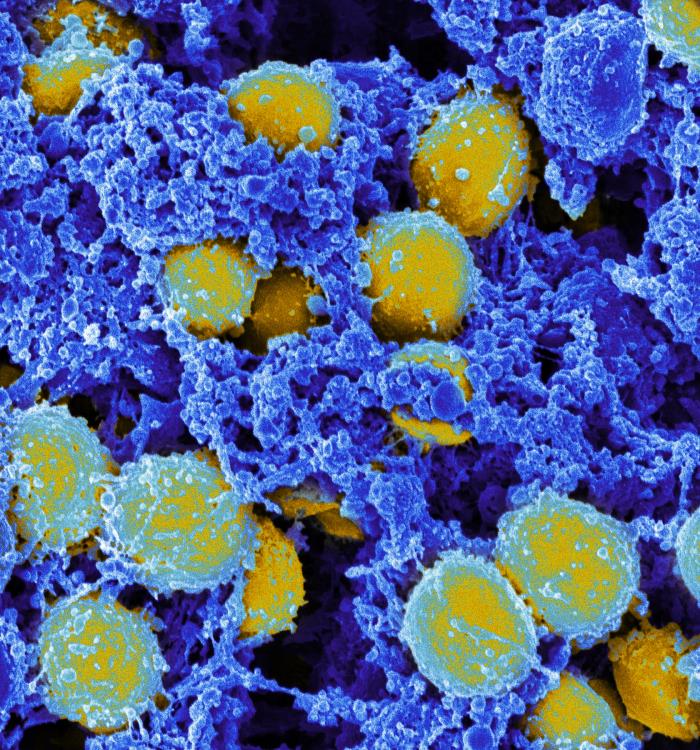
This study aims to assess the occurrence of Staphylococcus aureus in chicken fillets and to control its growth using various lyophilized seaweed extracts (i.e., Halimeda opuntia (HO), Actinotrichia fragilis, and Turbinaria turbinata) by an agar disk diffusion assay in vitro. Results showed that prevalence of S. aureus in breast and thigh samples reached of 92% and 84%, respectively. Lyophilized HO extract was the only seaweed that showed the antibacterial activity against S aureus with a significant difference at p < 0.05. The minimum inhibitory concentration (MIC) of HO extract was 1.5%, with an inhibition zone of 8.16 ± 0.73 mm. Regarding 1,1-diphenyl-2-picrylhydrazyl (DPPH) scavenging activity, IC50 was recorded at 55.36 μg/mL, whereas cytotoxic IC50 of the lyophilized HO extract on peripheral blood mononuclear cells (PBMCs) was 33.7 µg/mL; a higher IC50 of HO extracts permits their use as a safe food additive in meat products. Moreover, total phenolic compounds and total flavonoids compounds recorded 20.36 ± 0.092 and 16.59 ± 0.029 mg/mL, respectively. HPLC analyses of phenolic compounds profiles exhibited many bioactive substances and the higher ratio was daidzein with 10.84 ± 0.005 µg/mL and followed by gallic acid with a value of 4.06 ± 0.006 µg/mL. In a challenge study, chicken fillet (CHF) experimentally inoculated with S. aureus (ST) and treated with the lyophilized HO algal extract at 4% and 6% (CHF/ST/HO) showed a complete reduction of S. aureus count on the 6th and 4th days in chicken fillet stored at 4 °C, respectively. Moreover, CHF/ST/HO at 4% and 6% of HO extract enhanced the sensory attributes of grilled un-inoculated chicken fillet. Thus, lyophilized HO extracts are promising antibacterial and antioxidant candidates in the chicken meat industry.
Posted in Decontamination Microbial, Food Micro Blog, Food Microbiology, Food Microbiology Blog, Food Microbiology Research, Food Microbiology Testing, Food Technology, microbial contamination, Microbial growth, Microbiological Risk Assessment, Microbiology, Microbiology Investigations, Microbiology Risk, Staphylococcal Toxin, Staphylococcus aureus
Research – Exploring the Diversity of Biofilm Formation by the Food Spoiler Brochothrix thermosphacta
Abstract
Brochothrix thermosphacta is considered as a major spoiler of meat and seafood products. This study explores the biofilm formation ability and the biofilm structural diversity of 30 multi-origin B. thermosphacta strains using a set of complementary biofilm assays (biofilm ring test, crystal violet staining, and confocal laser scanning microscopy). Two major groups corresponding to low and high biofilm producers were identified. High biofilm producers presented flat architectures characterized by high surface coverage, high cell biovolume, and high surface area.
Posted in Biofilm, Brochothrix thermosphacta, Decontamination Microbial, Food Micro Blog, Food Microbiology, Food Microbiology Blog, Food Microbiology Research, Food Microbiology Testing, Food Spoilage, microbial contamination, Microbial growth, Microbiological Risk Assessment, Microbiology, Microbiology Investigations, Microbiology Risk
Research -Monitoring the incidence and causes of disease potentially transmitted by food in Australia: Annual report of the OzFoodNet network, 2017
Abstract
In 2017, 47,652 notifications of enteric diseases potentially related to food were received by state and territory health departments in Australia. Consistent with previous years, the majority of all notified infections were either campylobacteriosis (n = 28,432; 60%) or salmonellosis (n = 16,416; 34%). A total of 206 gastrointestinal outbreaks, including 179 foodborne outbreaks, were reported in 2017. The remaining 27 outbreaks were due to environmental or probable environmental transmission (22 outbreaks), animal-to person or probable animal-to-person transmission (three outbreaks), and waterborne or probable waterborne transmission (two outbreaks). Foodborne outbreaks affected 2,130 people resulting in at least 290 hospital admissions and five deaths. Eggs continue to be a source of Salmonella Typhimurium infection across the country, with 49 egg-related outbreaks affecting at least 746 people reported across six jurisdictions in 2017.
Posted in Campylobacter, Decontamination Microbial, Food Micro Blog, Food Microbiology, Food Microbiology Blog, Food Microbiology Research, Food Microbiology Testing, microbial contamination, Microbial growth, Microbiological Risk Assessment, Microbiology, Microbiology Investigations, Microbiology Risk, Research, Salmonella, Salmonella in Eggs
Research – Training in tools to develop quantitative microbial risk assessment along the food chain of Spanish products
Abstract
Food safety is a widespread challenge. Every year it is estimated that almost 1 in 10 people in the world fall ill after eating contaminated food resulting in over 400,000 deaths. The risk of outbreaks is higher when consuming ready-to-eat (RTE) products because they are eaten without a further cooking process that could inactivate pathogenic microorganisms. Hence, food processing is essential to increase the safety of RTE products.
Microbiological risk assessment (MRA) integrates food science, microbiology and data science to provide a comprehensive understanding of the safety of the food system. MRA provides qualitative and/or quantitative information to decision makers, which might promote the adoption of better food practices. In this contest, this project aims to study and implement tools for quantitative microbial risk assessment (QMRA) of food products along the food chain.
A common RTE product (cured ham) from Spain was used as a case study. Following, the exposure assessment model was implemented using mathematical models and statistical software to describe the microbial behaviour along the food chain. The study presents the possibility to identify the risk exposure in different scenarios (e.g. growth during different storage conditions, inactivation induced by traditional or innovative decontamination techniques), showing the flexibility of the predictive tools developed.
Research – Emerging Method to Protect Food Crops from Carcinogenic Aflatoxins
Researchers from the U.S. Department of Agriculture’s Agricultural Research Service (USDA’s ARS) are using a bioplastic coating to naturally shield seeds from Aspergillus, a type of fungi that produces aflatoxin. Exposure to aflatoxins is a food safety issue due to the compound’s carcinogenic and other harmful effects.
In the U.S., Southern agriculture is most affected by aflatoxins, as hot, dry conditions promote Aspergillus growth and aflatoxin production. Recent science has shown, however, that the Midwestern Corn Belt may be increasingly affected in the near future due to climate change. Corn is highly susceptible to aflatoxin contamination, as are seeds, nuts, feed, stored grain, and other important crops.
The new method for mitigating aflatoxin contamination of crops involves coating seeds with a protective, innocuous strain of Aspergillus, delivered via a mixture of biodegradable, corn starch-based bioplastic and biochar. The competitive Aspergillus strain found in the coating prevents aflatoxin-producing Aspergillus from infecting the seed, and other components of the mixture create a physical barrier that prevents contamination.
Posted in Aflatoxin, Aflatoxin B1, Aspergillus, Aspergillus Toxin, Decontamination Microbial, Food Micro Blog, Food Microbiology, Food Microbiology Blog, Food Microbiology Research, Food Microbiology Testing, Food Safety, Food Safety Management, Food Technology, microbial contamination, Microbial growth, Microbiological Risk Assessment, Microbiology, Microbiology Investigations, Microbiology Risk, Technology
Research – Evaluation of the dietary exposure of the Catalan population to mycotoxins of the genus Fusarium
Within the framework of total diet studies, the Catalan Food Safety Agency (ACSA) publishes a second study on the evaluation of mycotoxins: “Evaluation of the dietary exposure of the Catalan population to mycotoxins of the genus Fusarium”.
In 2014, a first study was published in which the presence of the main mycotoxins in food intended for human consumption in the Catalan market was determined, and the intake of food linked to this contamination to estimate the food exposure of the population residing in Catalonia, and evaluate the risk to health (ACSA, 2014). Considering the results obtained, the ACSA considered it necessary to carry out this second, more specific study on mycotoxins, evaluating those that were found most frequently in the foods of the Catalan market, the mycotoxins of the genus Fusarium, and also taking into account the most exposed population groups.
The present study shows that the mycotoxins detected with greater frequency were DON and ENNB followed, with a much lower frequency, by mycotoxin T-2 and mycotoxins FB1 and DON-3G. The rest of mycotoxins analyzed (3-ADON, 15-ADON, NIV, FUS-X, zearalenone, HT-2, FB2 and FB3) will always present levels below the detection limit.
All the age groups evaluated have an exposure to DON and ENNB lower than the respective safety values. The average exposure of the adult population and children in Catalonia to the mycotoxin DON presents values between 7.5% and 10.1% of the safety value. The average exposure of the population to ENNB presents values that are two orders of magnitude lower than the extrapolated safety values.
Total diet studies make it possible to better understand the reality linked to the main chemical pollutants that reach the Catalan market, and in this way specific decisions can be made to correct possible risk situations for the health of consumers.
Posted in ACSA, Aflatoxin, Aflatoxin B1, Aspergillus Toxin, deoxynivalenol, DON, Food Micro Blog, Food Microbiology, Food Microbiology Blog, Food Microbiology Research, Food Microbiology Testing, Food Toxin, Fusarium Toxin, microbial contamination, Microbial growth, Microbiological Risk Assessment, Microbiology, Microbiology Investigations, Microbiology Risk, Mold Toxin, Mould Toxin, Mycotoxin, Ochratoxin, Ochratoxin A, Toxin, Zearalenone
Research – Tofu Whey Wastewater as a Beneficial Supplement to Poultry Farming: Improving Production Performance and Protecting against Salmonella Infection
Tofu whey wastewater (TWW) is a by-product of the tofu production process, and contains high amounts of organic products and Lactobacillus ap. However, no studies have been reported on whether naturally fermented TWW can be used as a beneficial additive for poultry production. This study analyzed the main nutritional components and microbial flora of naturally fermented TWW from rural tofu processing plants and their effect on chick production performance, role in modulating the biochemical and immune parameters, and protection against Salmonella enteritidis (S. enteritidis) infection. It was observed that the average pH of TWW was 4.08; therefore, the total viable count was 3.00 × 10⁹ CFU/mL and the abundance of Lactobacillus was 92.50%. Moreover, TWW supplementation increased the total weight gain and feed intake, reduced the feed/gain ratio, increased the length and relative weight of the gut, and reduced the colonization and excretion of S. enteritidis in chickens. Additionally, TWW decreased oxidative damage and pro-inflammatory cytokine secretion caused by S. enteritidis infection. In addition, TWW supplementation ensured the structure of the intestine remained relatively intact in S. enteritidis-infected chicken. Furthermore, TWW markedly promoted the intestinal barrier integrity and up-regulated the relative abundance of Lactobacillus, counteracting the changes in gut microbiota caused by S. enteritidis infection in chicken. In conclusion, our data demonstrated that TWW could be used as a beneficial addition to poultry production, providing a research basis for the further development of TWW as a health care application in in food-producing animal.
Posted in Decontamination Microbial, Food Micro Blog, Food Microbiology, Food Microbiology Blog, Food Microbiology Research, Food Microbiology Testing, Lactobacillus, microbial contamination, Microbial growth, Microbiological Risk Assessment, Microbiology, Microbiology Investigations, Microbiology Risk, Salmonella
Research – Antimicrobial Phage Spray Effective Against Foodborne Bacteria, Including Multidrug Resistant E. Coli
Researchers at McMaster University have developed a new, highly effective tool to mitigate bacterial contamination of foods, including pathogens displaying antimicrobial resistance (AMR). The technology involves the application of bacteriophages (phages)—benign viruses that eat bacteria—to goods in the form of microgels.
Phages are natural predators to bacteria, and because phages attack bacteria in a highly targeted manner, they can be used in food and agriculture without disturbing the balance of microbial communities. Phage products have been approved by the US Food and Drug Administration (FDA) for controlling dangerous bacterial contaminants such as Escherichia coli in food products. Though they do not affect the taste, texture, and nutritional quality of foods, phages are not widely used by industry due to challenges with delivery and stability of phage products.
Posted in antimicrobial resistance, Bacteriophage, Decontamination Microbial, E.coli, FDA, Food Micro Blog, Food Microbiology, Food Microbiology Blog, Food Microbiology Research, Food Microbiology Testing, microbial contamination, Microbial growth, Microbiological Risk Assessment, Microbiology, Microbiology Investigations, Microbiology Risk, Uncategorized
Research -Risk assessment of enteric viruses along the food chain and in the population
Abstract
Food-borne microbial illness contributes up to one third of global disease burden. The largest category of food-borne illness is gastroenteritis, the majority of which is caused by enteric viruses. Viruses like these are transmitted to food either by waste-contaminated waters, or by handling and transfer during processing.
An important tool for reducing or controlling food-borne microbial risk is risk analysis. This framework has been adopted globally to manage risks associated with microbial contamination in food. Several hundred microbial risk assessments (MRAs) have been published by different national and international organisations, for different food-hazard combinations. The use of MRAs in controlling and understanding virus risk has, to date, been limited, compared with the efforts made on bacterial pathogens. Given the large disease burden that viruses are responsible for, this disparity should be addressed.
The main reasons for the relative lack of risk assessments are the difficulty in detecting and monitoring viruses compared with bacteria. This means less data on prevalence, concentration and inactivation, and allows viruses to remain silent contributors to global disease. There are also key conceptual differences between virus risk assessment and bacterial risk assessment. This project aimed to assess the current state of the art for food-borne virus risk assessment, then to progress the field further by using the data available to produce risk rankings and risk assessments.
This was done by a combination of literature reviewing and various risk assessment tools. The result was an assessment of the overall evidence base in the literature, a semi-quantitative ranking comparison between the viruses and foods of most concern, and a survey of inactivation methods, leading to a quantitative ranking of the effectiveness of each in reducing and managing food-borne virus risk.
Posted in Decontamination Microbial, Food Micro Blog, Food Microbiology, Food Microbiology Blog, Food Microbiology Research, Food Microbiology Testing, Food Virus, microbial contamination, Microbial growth, Microbiological Risk Assessment, Microbiology, Microbiology Investigations, Microbiology Risk, Norovirus, Virus
Research – Identification of Genetic Markers for the Detection of Bacillus thuringiensis Strains of Interest for Food Safety
Abstract
Bacillus thuringiensis (Bt), belonging to the Bacillus cereus (Bc) group, is commonly used as a biopesticide worldwide due to its ability to produce insecticidal crystals during sporulation. The use of Bt, especially subspecies aizawai and kurstaki, to control pests such as Lepidoptera, generally involves spraying mixtures containing spores and crystals on crops intended for human consumption. Recent studies have suggested that the consumption of commercial Bt strains may be responsible for foodborne outbreaks (FBOs). However, its genetic proximity to Bc strains has hindered the development of routine tests to discriminate Bt from other Bc, especially Bacillus cereus sensu stricto (Bc ss), well known for its involvement in FBOs. Here, to develop tools for the detection and the discrimination of Bt in food, we carried out a genome-wide association study (GWAS) on 286 complete genomes of Bc group strains to identify and validate in silico new molecular markers specific to different Bt subtypes. The analyses led to the determination and the in silico validation of 128 molecular markers specific to Bt, its subspecies aizawai, kurstaki and four previously described proximity clusters associated with these subspecies. We developed a command line tool based on a 14-marker workflow, to carry out a computational search for Bt-related markers from a putative Bc genome, thereby facilitating the detection of Bt of interest for food safety, especially in the context of FBOs.
Posted in Bacillus, Bacillus cereus, Bacillus thuringiensis , Bt, Decontamination Microbial, Food Micro Blog, Food Microbiology, Food Microbiology Blog, Food Microbiology Research, Food Microbiology Testing, Food Technology, microbial contamination, Microbial growth, Microbiological Risk Assessment, Microbiology, Microbiology Investigations, Microbiology Risk, Technology

