
Category Archives: foodbourne outbreak

UK – FSA CALLS FOR INDUSTRY ASSISTANCE WITH ONGOING INVESTIGATION OF STEC OUTBREAK – O183

BFFF

The FSA have asked us to raise awareness of an ongoing outbreak of Shiga toxin-producing E. coli (STEC) O183 t5.5, they are investigating along with UKHSA and the involvement of all public health authorities across the UK as well as the ROI.

Note: This outbreak may not be linked directly to your sector, but you are encouraged to get in touch with the FSA should you be able to provide any information of interest to this investigation.

Germany – ‘Caciotta – Caciotta’, unwrapped cheese wheels, 400 g – Foodborne Outbreak -STEC E.coli O26

LMW

Alert type: Groceries
Date of first publication:

07/28/2023

Product name:

‘Caciotta – Caciotta’, unwrapped cheese wheels, 400 g

Manufacturer (distributor):

farm in Malga di Coredo, in the province of Trento, Italy

Reason for warning:

foodborne disease outbreak HUS (hemolytic uremic syndrome) caused by Shiga toxin-producing Escherichia coli O26 (STEC)

Packaging Unit: á 400 g, total net weight: 20 kg, 50 units
Durability: not specified
Production date: not specified
Lot identification: 24623 and 17623
Additional Information:

Goods that were sold directly to end consumers before July 14, 2023 are affected. It cannot be ruled out that the product concerned was also bought by tourists.

Do not consume this product. If you experience symptoms such as diarrhoea, vomiting, severe abdominal pain, drowsiness, reduced urine production (anuria) and weakness and lack of energy (asthenia), please contact a doctor.

BVL Email:

poststelle@bvl.bund.de

RASFF Alert – Suspected botulism due to fresh potato tortilla from Spain

RASFF

Suspected botulism due to fresh potato tortilla from Spain in Andorra, France , Italy and Portugal

EFSA – Multi-country outbreak of Salmonella Senftenberg ST14 infections possibly linked to cherry like tomatoes

EFSA

Abstract

Since August 2022 and as of 12 July 2023, 92 cases of Salmonella Senftenberg have been reported in Austria (5), Belgium (4), Czechia (4), Estonia (1), Finland (12), France (16), Germany (26), Ireland (1), the Netherlands (5), Norway (1), Sweden (11), the United Kingdom (4), and the United States (2). In total, 69.6% of the reported cases were female. One patient has died of the infection. The first case was reported in France with an isolation date of 22 August 2022 and the most recent case was reported on 24 June 2023 in Sweden. Most cases were reported between October 2022 and March 2023, with a decline in the number of countries with exposures after December. In Austria, Germany, and France, cherry-like tomatoes were identified as the food exposure most reported by interviewed cases. The outbreak strain was detected in France from a mixed salad dish, containing cherry tomatoes and green leafy vegetables, prepared on 17 August 2022 but not served. Tomatoes from the salad in France and tomatoes in Austria were suspected as the vehicle of infections by national authorities and were traced back to wholesalers in Germany, the Netherlands and Spain, and to growers in the Netherlands, Spain and Morocco. In the absence of microbiological evidence from the tomatoes, the source of the infections could not be established. The genetic similarity of the human outbreak strains suggests a likely common source(s) causing a prolonged, cross-border food-borne outbreak with cases intermittently reported in 11 EU/EEA countries, the UK, and the US for about 10 months. The contamination may have originated from farms growing tomatoes. Since December 2022, as the number of cases has declined, the risk of new infections has decreased to a low level.

Sweden – Fish suspected in deadly Swedish Listeria outbreak

Food Safety News

Three people have died in Sweden as part of a Listeria outbreak that may have been caused by smoked fish.

Folkhälsomyndigheten (the Public Health Agency of Sweden) said deaths of three of the older patients were connected to their Listeria infections but it is not clear if they died with or because of listeriosis.

From the end of May to the beginning of July, 10 people contracted Listeria infections caused by the same type of the bacteria. Another four people fell ill in late 2022 from this strain.

Patients are 10 men and four women aged 63 to 93 years old. They live in eight different regions in the country.

Based on information from a questionnaire given to patients about foods they ate before becoming sick, many reported eating gravad or cold-smoked salmon but the exact product that caused the outbreak is not yet clear.

USA – Investigations of Foodborne Illness Outbreaks

FDA

What’s New

  • A new outbreak of Cyclospora cayetanensis (ref #1171) in a not yet identified product has been added to the table. There are currently 39 cases. FDA and state partners have initiated sample collection and testing and FDA has initiated traceback.
  • A new outbreak of E. coli O26 (ref #1165) with 13 cases linked to a not yet identified product has been added to the table. FDA has initiated traceback.
  • For the outbreak of Cyclospora cayetanensis (ref #1163), the case count has increased from 118 to 121 cases and FDA has initiated traceback.
  • For the outbreak of Salmonella Paratyphi B var. L(+) tartrate+ (ref #1157), the case count has increased from 34 to 35 cases.
  • For the outbreak of Cyclospora cayetanensis (ref #1159), the case count has increased from 43 to 68 cases.
  • For the outbreak of hepatitis A virus (ref #1143) linked to frozen strawberries, the advisory was updated on July 20, 2023 to include one additional case. FDA reminds consumers to check their freezers and not eat recalled frozen strawberries.

USA – Salmonella Outbreak Linked to Ground Beef

Print

CDC

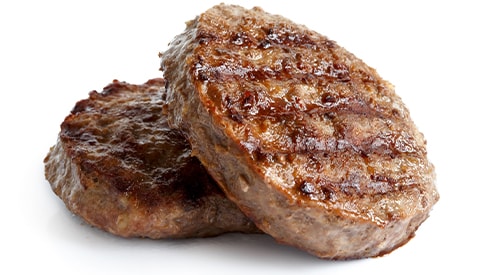
Investigators are working to identify the source of the ground beef sick people ate in this outbreak. Any ground beef can have germs, like Salmonella. Always cook ground beef to an internal temperature of 160°F.

Fast Facts
  • Illnesses: 16
  • Hospitalizations: 6
  • Deaths: 0
  • States: 4
  • Recall: No
  • Investigation status: Active
Two ground beef patties on a white background.
 
Source of the Outbreak

All of the people who remembered the type of ground beef they ate and where they bought it reported eating 80% lean ground beef purchased from ShopRite locations in Connecticut, New Jersey, and New York before they got sick. Ground beef is the only common food people reported eating. Investigators are working to identify the source of the ground beef sick people ate.

Salmonella in Ground Beef

Ground beef is a known source of Salmonella illnessesSalmonella germs live in the intestines of people and animals and can be spread through contaminated food, water, food preparation surfaces, and unwashed hands. Salmonella germs are killed when ground beef is cooked to an internal temperature of 160°F. Eating raw or undercooked ground beef can make you sick.

Research – A Novel Foodborne Illness Detection and Web Application Tool Based on Social Media

MDPI

Abstract

Foodborne diseases and outbreaks are significant threats to public health, resulting in millions of illnesses and deaths worldwide each year. Traditional foodborne disease surveillance systems rely on data from healthcare facilities, laboratories, and government agencies to monitor and control outbreaks. Recently, there is a growing recognition of the potential value of incorporating social media data into surveillance systems. This paper explores the use of social media data as an alternative surveillance tool for foodborne diseases by collecting large-scale Twitter data, building food safety data storage models, and developing a novel frontend foodborne illness surveillance system. Descriptive and predictive analyses of the collected data were conducted in comparison with ground truth data reported by the U.S. Centers for Disease Control and Prevention (CDC). The results indicate that the most implicated food categories and the distributions from both Twitter and the CDC were similar. The system developed with Twitter data could complement traditional foodborne disease surveillance systems by providing near-real-time information on foodborne illnesses, implicated foods, symptoms, locations, and other information critical for detecting a potential foodborne outbreak.

UK records hundreds of Salmonella cases after travel to Turkey

Food Safety News

kswfoodworld salmonella

Almost 250 Salmonella infections in the United Kingdom since the start of 2023 have been linked to travel to Turkey.

The UK Health Security Agency (UKHSA) has shared steps to reduce the risk of common infections when going abroad in summer.

The agency has detected a number of clusters of gastrointestinal illness in people returning from Turkey, the majority of whom had been to the Antalya region. Whole genome sequencing (WGS) has revealed some clusters are related, which indicates a likely common source of infection.

Between mid-January and July 19, there have been 241 confirmed cases of Salmonella Enteritidis, the majority with specimen collection dates from April onward.

Fifty-six percent of cases are male and the median age is 29 years old. Of the 93 cases for which travel information is available, people reported staying in different hotels in Turkey and most ate a variety of foods at their hotel resort as part of an all-inclusive holiday package.

UKHSA issued a warning ahead of the school summer holidays as the source of illness has not been identified. UKHSA, Turkish health authorities and other international public health agencies are involved in ongoing investigations.

USA – Breaking news: Listeria outbreak sickens 5, kills 3 in Washington

Food Safety News

A deadly outbreak of infections from Listeria is under investigation by state and local officials in Washington.

As of late today five patients had been identified. All five required hospitalization and three have died, according to the Tacoma-Pierece County Health Department.

All of the patients are or were in their 60s or 70s and all had weakened immune systems, according to the health department, which is working with Washington State Department of Health (DOH) and Thurston County Public Health and Social Services.

The Tacoma News is reporting that “genetic fingerprinting results (whole genome sequencing) indicate that these patients likely have the same source of infection. Patients became ill between February 27 and June 30, 2023.”

State and local public health officials have not yet discovered a source for the bacteria. They are interviewing patients and their representatives to develop a profile.

The state of Washington generally logs 10 to 25 cases of Listeria infection annually, according to the Tacoma health department.