RASFF – foodborne outbreak suspected to be caused by Salmonella enterica ser. Enteritidis in organic eggs from Italy in France

RASFF – foodborne outbreak suspected to be caused by Salmonella enterica ser. Enteritidis in organic eggs from Italy in France
Posted in food bourne outbreak, food contamination, Food Hygiene, Food Illness, Food Inspections, Food Micro Blog, Food Microbiology, Food Microbiology Blog, Food Microbiology Testing, Food Pathogen, food recall, Food Safety, Food Safety Alert, Food Testing, foodborne outbreak, foodbourne outbreak, outbreak, RASFF, Salmonella, Uncategorized
RASFF – foodborne outbreak suspected to be caused by Shigella sonnei in fresh sugar snap peas from Kenya, via the Netherlands in Norway
Posted in food bourne outbreak, food contamination, Food Hygiene, Food Illness, Food Inspections, Food Micro Blog, Food Microbiology, Food Microbiology Blog, Food Microbiology Testing, Food Pathogen, Food Poisoning, food recall, Food Safety, Food Safety Alert, Food Testing, foodborne outbreak, foodbourne outbreak, RASFF, Shigella, Shigella Sonnei, Uncategorized
RASFF – foodborne outbreak suspected to be caused by live oysters (Crassostrea gigas) from France
RASFF – foodborne outbreak suspected to be caused by live oysters (Crassostrea gigas) from France
RASFF – foodborne outbreak caused by live oysters from France, via the Netherlands in Sweden
RASFF – norovirus in live mussels from France in Switzerland
RASFF – norovirus in live bouchot mussels from France in the Netherlands
RASFF – norovirus in oysters from France in the Netherlands
RASFF – withdrawal of bivalve molluscs harvested in France because of possible contamination with norovirus in Luxembourg
Posted in food bourne outbreak, food contamination, Food Hygiene, Food Illness, Food Inspections, Food Micro Blog, Food Microbiology, Food Microbiology Blog, Food Microbiology Testing, Food Poisoning, food recall, Food Safety, Food Safety Alert, Food Testing, Food Virus, foodborne outbreak, foodbourne outbreak, Norovirus, outbreak, RASFF, Uncategorized, Virus

Image CDC
Nearly 90 people are part of a Salmonella outbreak across Australia after eating a particular brand of frozen microwave meals.
A total of 84 people in New South Wales (NSW), Queensland, South Australia, Western Australia and the Australian Capital Territory (ACT) reported eating Core Powerfoods products before becoming sick.
The number of people ill in the Salmonella Weltevreden outbreak previously stood at 46.
Core Ingredients issued a recall in October. Products were available for sale at IGAs and Coles stores nationally, independent retailers in NSW, ACT, Queensland, Victoria, South Australia, Western Australia and the Northern Territory and some Woolworths metro stores in Victoria.
Posted in food bourne outbreak, food contamination, Food Hygiene, Food Illness, Food Inspections, Food Micro Blog, Food Microbiology, Food Microbiology Blog, Food Microbiology Testing, Food Pathogen, Food Safety, Food Safety Alert, Food Testing, foodborne outbreak, foodbourne outbreak, outbreak, Salmonella, Uncategorized

FiveStar Gourmet Foods takes issues of food safety seriously and in an abundance of caution is voluntarily recalling two fresh produce snack products, MiniMeal2Go-ProteinPack 8.25oz and MiniMeal2Go- AvocadoToast 6.75oz. due to the notification from Almark Foods of Gainesville, GA that Almark Foods may have supplied single-serve prepackaged Hard Boiled Eggs contaminated with Listeria monocytogenes and its association with a current foodborne illness investigation.
No other FiveStar items are involved with this voluntary recall. There are no reported illnesses to date related to the FiveStar Gourmet Foods products.

Posted in FDA, food bourne outbreak, food contamination, Food Inspections, Food Micro Blog, Food Microbiology, Food Microbiology Blog, Food Microbiology Testing, Food Pathogen, food recall, Food Safety, Food Safety Alert, Food Testing, foodborne outbreak, foodbourne outbreak, Listeria, Listeria monocytogenes, outbreak, Uncategorized
Cyclospora is the number one multistate food poisoning outbreak for 2019, with more than 2400 people sick. This wasn’t an individual outbreak, but many individual cases and several outbreaks linked to a venue or product. The overall number of domestically acquired cases is higher than those from 2017 and 2018.
hese are the outbreaks of cyclosporiasis linked to a venue or food:
Posted in Cyclospora, food bourne outbreak, food contamination, food handler, Food Hygiene, Food Illness, Food Inspections, Food Micro Blog, Food Microbiology, Food Microbiology Blog, Food Microbiology Testing, Food Pathogen, food recall, Food Safety, Food Safety Alert, Food Testing, foodborne disease, Foodborne Illness, foodborne outbreak, foodbourne outbreak, Uncategorized
Posted in food bourne outbreak, food contamination, Food Hygiene, Food Illness, Food Inspections, Food Micro Blog, Food Microbiology, Food Microbiology Blog, Food Microbiology Testing, Food Pathogen, Food Poisoning, food recall, Food Safety, Food Safety Alert, Food Testing, foodborne outbreak, foodbourne outbreak, RASFF, Salmonella, Uncategorized
There was a Salmonella outbreak at Doug Sauls’ Bar-B-Que & Seafood in Nash County, North Carolina at the end of November 2019 that sickened almost a dozen people, according to the Nash County Health Department. The restaurant, located at 813 Western Avenue in Nashville, North Carolina is re-opening after being closed on November 22, 2019 by public health officials.
Posted in food bourne outbreak, food contamination, Food Hygiene, Food Inspections, Food Micro Blog, Food Microbiology, Food Microbiology Blog, Food Microbiology Testing, Food Pathogen, Food Safety, Food Safety Alert, Food Testing, foodborne outbreak, foodbourne outbreak, outbreak, Salmonella, Uncategorized
Today, the U.S. Food and Drug Administration is providing an update on our investigation of an outbreak of E. coli O157:H7 illnesses linked to romaine lettuce. The FDA takes our responsibility of protecting the public from unsafe food very seriously and is committed to providing the public with more information as it becomes available.
Early on, based on test results provided by the Maryland Department of Health, our investigation pointed to farms in Salinas, California, as potential sources of contaminated romaine lettuce based on the initial, limited number of reported illnesses. The FDA, in partnership with the California Department of Public Health and the California Department of Food and Agriculture, rapidly mobilized in November to concurrently deploy inspection teams to the farms identified through the initial traceback investigation. The on-site investigations at these farms included collecting a wide-variety of samples for lab testing, including water, soil, soil amendments, scat and swab samples. While the majority of these samples tested negative for the outbreak strain, final results are pending and the Wisconsin Department of Health Services recently reported that it had isolated E. coli O157:H7 from a particular bag of pre-washed, chopped romaine lettuce.
The FDA has also been tracking two additional and separate outbreaks of E. coli O157:H7.
Earlier this week, the FDA, U.S. Centers for Disease Control and Prevention (CDC), and the Canadian Food Inspection Agency announced an outbreak linked to Fresh Express Sunflower Crisp Chopped Salad Kits. To date, the CDC reported eight confirmed cases in the U.S. across three states associated with this cluster of illnesses.The Public Health Agency of CanadaExternal Link Disclaimer also reports 24 cases in six Canadian provinces.
Concurrently, the FDA has been working with health officials in Washington State regarding an outbreak of E. coli O157:H7 associated with romaine consumption at a local restaurant chain. Washington State officials reported 10 confirmed and three probable cases in this outbreak with all reports of exposure in early to mid-November.
It should be noted; these are currently being considered as three separate outbreaks caused by three different strains of E. coli O157:H7.
Posted in E.coli O157, E.coli O157:H7, FDA, food bourne outbreak, food contamination, Food Hygiene, Food Illness, Food Inspections, Food Micro Blog, Food Microbiology, Food Microbiology Blog, Food Pathogen, Food Poisoning, Food Safety, Food Safety Alert, Food Testing, Food Toxin, foodborne outbreak, foodbourne outbreak, STEC, STEC E.coli, Uncategorized
Total Illnesses: 102
Hospitalizations: 58
Deaths: 0
Last illness onset: November 18, 2019
States with Cases: AZ (3), CA (4), CO (6), FL (1), IA (1), ID (3), IL (1), MD (4), MI (1), MN (3), MT (1), NE (1), NJ (7), NC (1), NM (2), OH (12), OR (1), PA (8), SD (1), TX (4), VA (4), WA (2), WI (31)
FDA, CDC, and state health authorities are investigating an outbreak of illnesses caused by E. coli O157:H7 in the United States. Epidemiologic, laboratory, and traceback evidence indicates that romaine lettuce from the Salinas, California growing region is a likely source of this outbreak. According to CDC, there have been 102 cases reported in 23 states. The latest date that one of these patients reports becoming ill was on November 18, 2019.

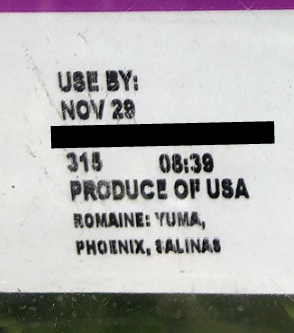
Consumers: Consumers should not eat romaine lettuce harvested from Salinas, California. Additionally, consumers should not eat products identified in the recall announced by the USDA on November 21, 2019.
Romaine lettuce may be voluntarily labeled with a harvest region. If this voluntary label indicates that the romaine lettuce was grown in “Salinas” (whether alone or with the name of another location) do not eat it. Throw it away or return it to the place of purchase. If romaine lettuce does not have information about harvest region or does not indicate that it has been grown indoors (i.e., hydroponically- and greenhouse-grown), throw it away or return it to the place of purchase. Consumers ordering salad containing romaine at a restaurant or at a salad bar should ask the staff whether the romaine came from Salinas. If it did, or they do not know, do not eat it.
At this time, romaine lettuce that was harvested outside of the Salinas region has not been implicated in this outbreak investigation. Hydroponically- and greenhouse-grown romaine, which is voluntarily labeled as “indoor grown,” from any region does not appear to be related to the current outbreak. There is no recommendation for consumers to avoid using romaine harvested from these other sources.
Restaurants and Retailers: Restaurants and retailers should not serve or sell romaine harvested from Salinas, California. If you do not know the source of your romaine lettuce, and if you cannot obtain that information from your supplier, you should not serve, nor sell it.
Suppliers and Distributors: Suppliers, distributors and others in the supply chain should not ship or sell romaine harvested in Salinas, California. If the source of the romaine lettuce is unknown, you should not ship, nor sell the product.
For Restaurants, Retailers, Suppliers and Distributors: Currently, the FDA does not have enough traceback information to identify the specific source of the contamination that would allow us to request a targeted recall from specific growers.
FDA requested that industry voluntarily withdraw romaine grown in Salinas from the market and is requesting that industry withhold distribution of Salinas romaine for the remainder of the growing season in Salinas. Without more specific traceback information, this was the most efficient way to ensure that contaminated romaine was off the market.
At this time, romaine lettuce that was harvested outside of the Salinas region has not been implicated in this outbreak investigation. Hydroponically- and greenhouse-grown romaine, which is voluntarily labeled as “indoor grown,” from any region does not appear to be related to the current outbreak. There is no recommendation for consumers or retailers to avoid using romaine harvested from these other sources.
Based on the information indicating that ill people in Maryland were exposed to romaine lettuce harvested in Salinas, California, FDA, with the assistance of staff from the California Department of Public Health and the California Department of Food and Agriculture, immediately deployed investigators to three farms in the Salinas area that were identified based on the traceback investigation.
FDA continues to actively investigate the cause of this outbreak. Additionally, FDA is investigating two other E. coli outbreaks, each caused by strains that are different from each other and different from the larger outbreak. One of the additional outbreaks, in Washington state, is linked to romaine lettuce, and the other outbreak, with cases in the U.S. and Canada, is linked to Fresh Express Sunflower Crisp Chopped Salad Kits. As part of these investigations, FDA and state partners are conducting traceback investigations to trace romaine exposures to the source.
Currently, the tracebacks on all three outbreaks have identified a common grower in Salinas. FDA, CDC, and California partners are deploying a team to conduct new investigations at several ranches used by this grower as we try to identify the source of the contamination.
Posted in E.coli, E.coli O157, E.coli O157:H7, FDA, food bourne outbreak, food contamination, Food Hygiene, Food Illness, Food Inspections, Food Micro Blog, Food Microbiology, Food Microbiology Blog, Food Pathogen, Food Poisoning, food recall, Food Safety, Food Safety Alert, Food Testing, Food Toxin, foodborne disease, Foodborne Illness, foodborne outbreak, foodbourne outbreak, STEC, STEC E.coli, Uncategorized