Category Archives: foodbourne outbreak

RASFF Alert- Foodborne Outbreak suspected (norovirus) – Live Oysters

RASFF-Logo

RASFF – foodborne outbreak suspected (norovirus) to be caused by live oysters from France in the Netherlands

RASFF Alert – Foodborne Outbreak – Suspected Norovirus in the UK – Oysters

RASFF-Logo

RASFF – foodborne outbreak suspected (norovirus) to be caused by live oysters from the United Kingdom in the UK

Mexico – Children suffer food poisoning at IMSS health service daycare

Mexico News Daily

As many as 70 young children suffered food poisoning at an IMSS daycare in Guadalajara, Jalisco, on Tuesday.

They are believed to have taken ill after eating tainted panela cheese they were served at lunch at the daycare, operated by the Mexican health service.

Showing severe symptoms of vomiting and diarrhea, the children ranging in age from a few months to 4 years old were taken to several IMSS clinics in the city but were later reported to be in stable condition.

Tainted panela cheese blamed for the outbreak.

RASFF Alerts – Norovirus – Oysters

RASFF-Logo

RASFF – foodborne outbreak suspected to be caused by live oysters from France in Italy

RASFF – foodborne outbreak caused by and norovirus in live oysters from France in Sweden

RASFF – norovirus (presence) in oysters (Crasosstrea gigas) from France in the Netherlands

RASFF – withdrawal of live bivalve molluscs harvested in France because of possible contamination with norovirus in France

RASFF – withdrawal of live bivalve molluscs harvested in France because of possible contamination with norovirus in Denmark

RASFF – withdrawal of live bivalve molluscs harvested in France because of possible contamination with norovirus in France

RASFF – withdrawal of cupped oysters (huitres creuses) harvested in France because of possible contamination with norovirus in the Netherlands

RASFF – norovirus in frozen oysters (Crassostrea gigas) from South Korea, via the Netherlands and via Sweden in Finland

USA – Statement on the Salinas-linked romaine lettuce E. coli O157:H7 outbreak and status update on investigation

FDA

The U.S. Food and Drug Administration, along with the U.S. Centers for Disease Control and Prevention and state and local partners, previously reported on Dec. 12 that public health experts were tracking three separate outbreaks linked to romaine lettuce caused by three different strains of E. coli O157:H7. We also reported that, through the FDA’s traceback investigation, we were able to identify a common grower between each of these outbreaks in Salinas, California based on available supply chain information.

Today, the FDA is providing an update on the status of the E. coli O157:H7 illnesses linked to romaine lettuce, along with recent findings based on our investigation of fields linked to a common grower, which was identified in our traceback. It should be noted that romaine from this grower does not explain all of the illnesses seen in these outbreaks.

Outbreaks declared over, consumer advisory lifted

The FDA is lifting the consumer advisory to avoid romaine lettuce from Salinas as the growing season for this region is over, and there is no longer a need for consumers to avoid it. There is also no need to avoid other produce products from Salinas.

The FDA and CDC have been tracking two multi-state romaine lettuce outbreaks. Today, federal health officials are declaring both multi-state romaine lettuce outbreaks over. One of the outbreaks sickened 167 people in 27 states. The other outbreak, linked to Fresh Express salad kits, sickened 10 people in five states.

There was also a third outbreak in Washington State that sickened 11 people. This outbreak has also been declared over.

The last reported illness onset date for all the outbreaks was Dec. 21. Based on this information, it appears that our Nov. 22 advisory to not eat romaine from Salinas played an important role in preventing illnesses and containing this outbreak because it prompted the removal of romaine lettuce from Salinas from the marketplace and warned consumers to throw away romaine from that growing region.

Common grower, multiple fields investigated

The FDA traceback investigation for these outbreaks required investigators to go through hundreds of supply chain records to find a commonality to a single grower with multiple fields. We were able to narrow this down further to at least 10 fields in the lower Salinas Valley.

Investigators from the FDA, CDC, the California Department of Food and Agriculture and the California Department of Public Health, visited several of these fields and took a variety of samples from water, soil and compost. So far, sample results have come back negative for all of the three outbreak strains of E. coli O157:H7. However, we did find a strain of E. coli that is unrelated to any illnesses in a soil sample taken near a run-off point in a buffer zone between a field where product was harvested and where cattle are known to occasionally graze. This could be an important clue that will be further examined as our investigation continues. However, this clue does not explain the illnesses seen in these outbreaks.

Our investigation is ongoing, and we are doing everything possible to find the source or sources of contamination. The investigation into how this contamination occurred is important, so romaine growers can implement measures that will prevent future contamination and illnesses.

The FDA is planning to conduct an additional, in-depth, root-cause investigation. The investigation will further characterize how contamination might have occurred and will inform what preventive controls are needed to prevent future outbreaks. Once complete, we plan to issue a prompt report and share lessons learned, so that growers can implement best practices to protect consumers from contaminated produce.

Investigation will inform future prevention

As we mentioned in our last update, it is important to remember that millions of servings of fresh leafy greens are safely eaten every day by consumers, although the repeat nature of these outbreaks linked to leafy greens – and more specifically to romaine lettuce – remains a concern.

We are doing our part by continuing our sampling assignment to monitor for pathogens in romaine lettuce across the nation. Industry can and must do their part too. Everyone across the romaine supply chain must do everything possible to fully understand why and how these outbreaks keep happening and continue to aggressively implement preventive measures to further protect consumers.

Outbreaks illustrate need to stay focused on prevention

It’s critical that all stakeholders, including growers, processors, distributors and retailers, stay laser-focused on prevention to help bend the curve of foodborne illness. We understand the importance of food safety, and we know there’s a human face to every foodborne illness.

The FDA remains committed to doing everything we can to prevent outbreaks, working with fellow regulators and the food industry to identify and address causes and keep consumers aware of potential risks.

Rest assured that we are working hard every day to try to prevent foodborne illness. We also know that food safety is a shared responsibility. It involves food producers, distributors, manufacturers, retailers and certainly regulatory officials at the federal, state, local, territorial and tribal levels. That’s why we work directly with our partners on things such as training and inspections. We also work closely with industry, so they understand our requirements and are educated on the latest scientific standards and good agricultural practices. Working together, we have and will continue to advance food safety.

A New Era of Smarter Food Safety

While we will always place emphasis on prevention, being able to promptly respond to an outbreak when it occurs is a critical part of our food safety mission.

As public health agencies have gotten better at detecting foodborne illnesses, our ability to trace back to the source of contaminated foods that may have caused the illnesses has lagged, due in part to the lack of modernized food traceability capabilities.

As part of the FDA’s New Era of Smarter Food Safety initiative, we plan to use advances in technology to improve our ability to track and trace products through the supply chain. We’ll be launching a New Era of Smarter Food Safety Blueprint in early 2020 that will outline how we will advance our work in this area. This blueprint will help consumers get information more quickly, enabling people to better protect themselves and their families.

We look forward to continuing our work with growers, processors, distributors and retailers in our shared efforts to protect consumers, and we will continue to provide updated information as it becomes available.

The FDA, an agency within the U.S. Department of Health and Human Services, protects the public health by assuring the safety, effectiveness, and security of human and veterinary drugs, vaccines and other biological products for human use, and medical devices. The agency also is responsible for the safety and security of our nation’s food supply, cosmetics, dietary supplements, products that give off electronic radiation, and for regulating tobacco products.


USA – Outbreak Investigation of E. coli: Romaine from Salinas, California (November 2019)

FDA


Outbreak appears over; FDA investigation efforts continue.

Case Counts

Total Illnesses: 167
Hospitalizations: 85
Deaths: 0
Last illness onset: December 21, 2019

Recommendation

As of January 15, 2020, the CDC reports that the outbreak appears to be over. Contaminated romaine from the Salinas, CA growing region that made people sick in this outbreak is likely no longer available. Consumers need not avoid romaine lettuce, or any other produce, from the Salinas, CA growing area.

Update

FDA will continue its investigation into potential sources and contributing factors that led to the outbreak in order to inform future prevention efforts.

FDA, CDC, and California health and agriculture authorities concluded their investigation of the common grower noted as having supplied romaine lettuce linked to three concurrent outbreaks; this outbreak which includes cases in the U.S. and CanadaExternal Link Disclaimer; one outbreak in Washington state potentially linked to leafy greens; and the third outbreak, with cases in the U.S. and Canada, linked to Fresh Express Sunflower Crisp Chopped Salad Kits.

When investigators arrived on the ranches there was no romaine lettuce in the ground and the fields had been plowed, as the growing season had already ended. Investigators collected water, soil, and compost samples to be analyzed. So far, sample results have come back negative for the three outbreak strains of E. coli. FDA did find a strain of E. coli that is unrelated to any illnesses in a soil sample. This strain of E. coli was determined to be of low risk to people. Although this grower was determined to be a common supplier for all three outbreaks based on available supply chain information, the romaine lettuce from this grower does not explain all the illnesses seen in the three outbreaks.

The outbreak linked to Fresh Express Sunflower Crisp Chopped Salad Kits, with cases in the U. S. and Canada, was declared over by CDC on January 15, 2020. There are no products that caused these illnesses left on the market. The outbreak in Washington state sickened 11 people. This outbreak has also been declared over.

As part of FDA’s ongoing efforts to understand and prevent foodborne illnesses linked to leafy greens, the FDA will conduct a root cause investigation. The investigation will be conducted throughout this year’s romaine lettuce planting, growing, and harvesting season. Results will be shared publicly when the investigation and analysis are concluded.

Denmark – Campylobacter outbreak from chicken continues in Denmark

Food Safety News 

Almost 90 people are part of an outbreak in Denmark from Campylobacter after eating chicken meat from one slaughterhouse.

Statens Serum Institut (SSI), the Danish Veterinary and Food Administration (Fødevarestyrelsen) and DTU Food – National Food Institute investigated the Campylobacter jejuni outbreak.

As part of a project this past year involving the Clinical Microbiology Department (KMA) in Aalborg, Danish Veterinary and Food Administration and SSI; Campylobacter isolates from patients diagnosed in Aalborg beginning in March 2019 were collected, sent to SSI and whole genome sequenced.

Between February 2019 and Jan. 9, 2020, 88 patients with the same type of Campylobacter have been identified. Among the sick were 35 women and 53 men aged 2 to 91 years old. The outbreak appears to be declining with fewer infections toward the end of 2019.

Malaysia – Fried noodles at Johor school suspected to be the cause of food poisoning of 120 students

Channel News Asia

JOHOR BAHRU: Fried noodles served at a Johor school are suspected to have caused 120 students to go down with food poisoning on Monday (Jan 13) with symptoms of stomach ache, diarrhoea, nausea, vomiting, headache and fever.

The Johor Government Religious Secondary School (SMAKJ) near Kluang, where 474 students are enrolled, had served the fried noodles for breakfast at the dining hall.

The food suspected to have caused the incident was fried noodles served at breakfast, but further investigation was still being conducted by the health office to determine the actual cause.

Clinical samples had been sent to the laboratory for analysis and the dormitory kitchen has been examined by the food safety and quality unit, Dr Aman added.

“The hostel kitchen has been ordered to temporary close under the Prevention and Control of Infectious Diseases Act 1988 for the purpose of disinfection of premises and further investigation.”

Argentina -More than 50 sick in Argentinian city due to Salmonella

Food Safety News

An emergency committee to control the sale of food has been created in a city in northwest Argentina after a spike in Salmonella cases in early 2020.

There have been 51 confirmed cases of Salmonella in Salta so far this year. At least five people have been hospitalized but recovered after treatment.

The committee will be responsible for controlling food sold on public roads at street stalls and at commercial premises. It includes experts from the National University of Salta (UNSA) and Catholic University of Salta (Ucasal).

Officials hope by increasing controls they can bring the rise in infections under control and minimize the risk to the public.

France -Collective food-borne infections suspected of being linked to the consumption of raw shellfish, epidemiological report as of January 8, 2020

Sante Publique France

Cases of TIAC suspected of being linked to the consumption of raw shellfish in mainland France have been reported since December 2019.

A collective food poisoning (TIAC) ​​is defined by the appearance of at least 2 cases of illness with a similar symptomatology, generally gastrointestinal, the cause of which can be related to the same food or meal. Any person (doctor, manager of collective catering establishments, consumer, etc.) who is aware of an episode that may be a TIAC, must declare this suspicion of TIAC to the administration (Regional Health Agency (ARS) and / or the Departmental Directorate (for social cohesion) and for the protection of populations (DD (CS) PP). This declaration involves local information from the other structure (ARS or DD (CS) PP).

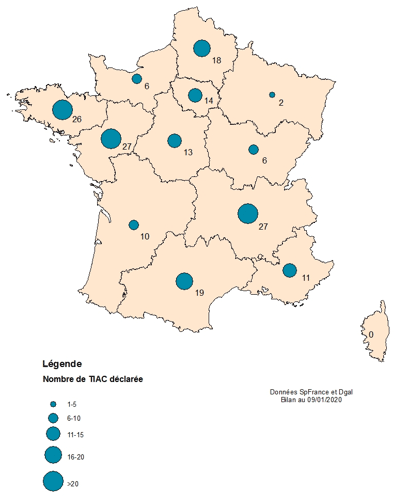
Since the beginning of December 2019, 179 compulsory declarations (DO) of collective food poisoning (TIAC) ​​suspected of being linked to the consumption of raw shellfish, mainly oysters, have been sent to Santé publique France. The reports come from the majority of regions in mainland France (see Figure 1).

Figure 1 – Number of TIAC suspected of being linked to the consumption of raw shellfish, by reporting region. Metropolitan France, December 1, 2019 – January 8, 2020.
Figure 1 - Number of TIAC suspected of being linked to the consumption of raw shellfish, by reporting region.  Metropolitan France, December 1, 2019 - January 8, 2020.

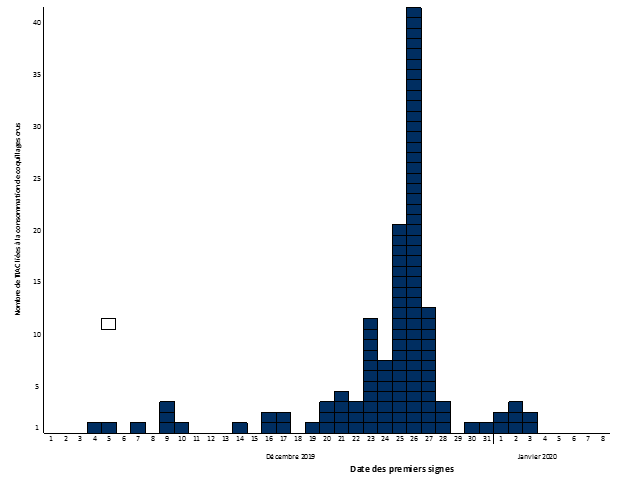
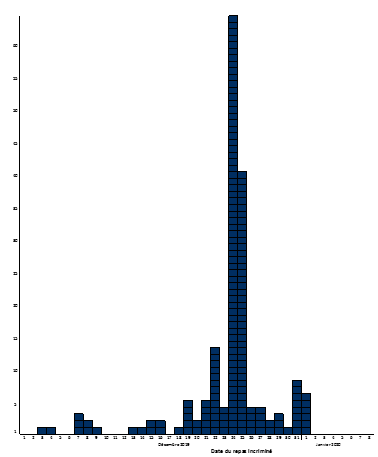
The vast majority (138/179, 77%) of these TIAC occurred from December 23 (Figures 2 and 3). A peak of patients is observed around December 25-27 (Figure 2). The offending meals are grouped around December 24-25 (Figure 3).

A total of 1,033 people were sick, of whom 21 (2%) were hospitalized. Most of them are people over the age of 15. Of the 595 patients with age information, 19 (3.1%) were children under the age of 15. The symptoms, mainly diarrhea and vomiting, as well as the incubation times, are compatible with infections with norovirus or other enteric viruses. Stool tests performed to date by the National Reference Center for Gastroenteritis Viruses have confirmed the presence of norovirus and other enteric viruses.

Figure 2 – Number of TIAC suspected of being linked to the consumption of raw shellfish by date of first signs of patients (information available for 125/179 TIAC). December 1, 2019 – January 8, 2020.
Figure 2 - Number of TIAC suspected of being linked to the consumption of raw shellfish by date of first signs of patients (information available for 125/179 TIAC).  December 1, 2019 - January 8, 2020.
Figure 3 – Number of TIAC suspected of being linked to the consumption of raw shellfish by date of the offending meal (information available for 176/179 TIAC). December 1, 2019 – January 8, 2020.
Figure 3 - Number of TIAC suspected of being linked to the consumption of raw shellfish by date of the offending meal (information available for 176/179 TIAC).  December 1, 2019 - January 8, 2020.

The number of TIAC suspected of being linked to the consumption of raw shellfish is significantly higher than in previous years. Each year between 25 and 120 TIAC suspected of being linked to the consumption of shellfish are reported to Public Health France, of which between 4 and 30 occurred during the December-January periods.

Following reports from TIAC suspected of being linked to the consumption of raw shellfish, the Directorate General for Food (DGAL) in conjunction with the Departmental Directorates in charge of protecting populations (DD (CS) PP) is carrying out an investigation traceability in order to trace back to the production area for suspected shellfish and confirmation analyzes are carried out on the areas concerned. To date, several areas have been closed due to contamination by noroviruses. Zone closings can be viewed on this site:
http://www.atlas-sanitaire-coquillages.fr/ (“Statutes” section)