Category Archives: foodborne outbreak

Research – Multi-country outbreak of Salmonella Virchow ST16 infections linked to the consumption of meat products containing chicken meat

EFSA

Abstract

Since June 2017, a persistent cross-border outbreak of Salmonella Virchow ST16 has been ongoing in five European Union/European Economic Area (EU/EEA) countries, the United Kingdom (UK), and the United States (US). A total of 210 cases have been reported from the following countries: Denmark (2), France (111), Germany (26), Ireland (4), the Netherlands (34), the UK (32), and the US (1). Among the interviewed cases (55), hospitalisation rates ranged from 16.7% (2/12) in the UK, to 29.4% (5/17) and 38.5% (10/26) in France and Germany, respectively. No deaths have been reported. A majority of cases have been linked to local restaurants serving kebab meat. The number of confirmed cases represents only a small proportion of all infections in the EU/EEA, partly due to the varying sequencing capacities of countries.

The comparison of the representative outbreak strains with the available genome profiles of S. Virchow ST16 from non-human isolates, revealed that most of the matching isolates belonged to broiler meat and broiler-related environments, thereby supporting the hypothesis of chicken meat as a vehicle of infections.

The available information from case interviews, traceback investigations, and whole genome sequencing (WGS) cluster analysis, showed that kebab meat products containing contaminated chicken meat are the likely vehicles of infections, and that the clone has been circulating in the EU poultry meat production chain at least in France, Germany, and the Netherlands. In the absence of batch numbers of the contaminated kebab products and related Salmonella testing information, the source(s) of the infections could not be established.

New infections are likely to occur in the EU/EEA affecting any age group, until further investigations are performed to identify the source(s) and point(s) of contamination along the chicken meat production chain, including the primary production upstream lines. This will allow appropriate control measures to be implemented.

USA – FDA Core Investigation Table Update

FDA

What’s New

  • A new outbreak of Salmonella Infantis (ref #1141) linked to a not yet identified product has been added to the table. FDA has initiated traceback. This investigation is ongoing and additional information will be provided as it becomes available.
  • For the Salmonella Hartford outbreak in a not yet identified food, the case count has increased from 50 to 53 cases.
Date
Posted
Ref Pathogen
or
Cause of
Illness
Product(s)
Linked to
Illnesses

(if any)
Total
Case
Count

Status
3/29/2023 1141 Salmonella Infantis Not Yet
Identified
12 Active
3/8/2023 1144 Salmonella Hartford Not Yet
Identified
53 Active
3/1/2023 1143 Hepatitis A Virus Frozen Organic
Strawberries
See
Outbreak
Advisory
Active
2/15/2023 1123 Listeria
monocytogenes
Not Yet
Identified
See
CDC
Investigation
Notice
Active
11/9/2022 1127 Listeria
monocytogenes
Enoki
Mushrooms
See
Outbreak
Advisory
Active

USA – Stewart Parnell looks for better Habeas in Atlanta than he just had in Mid-Georgia – Peanut Butter Salmonella Outbreak

Food Safety News

A decade after his indictment and a year after United States Magistrate Judge Thomas Q. Langstaff denied his petition for early release, one-time peanut butter mogul Stewart Parnell still has one more card to play.

Parnell, 68, has 15 years to run on his sentence imposed after a 2014 jury conviction for numerous federal felonies associated with the deadly 2008-09 multistate Salmonella outbreak traced to his Peanut Corporation of America peanut processing facility in Blakely, GA. He is serving his time at the federal correctional facility at Hazelton, WV.

Parnell begins this year with a new appeal of his Habeas corpus petition in the U.S. Court of Appeals for the 11th U.S. Circuit in Atlanta. A Habeas petition claims unlawful detention or imprisonment because of constitutional infractions. It can open cell doors,

Research – A foodborne outbreak of Campylobacteriosis at a wedding – Melbourne, Australia, 2022

1 Health

Abstract

Campylobacter is the most common bacterial cause of foodborne gastroenteritis in Australia; how-ever, outbreaks caused by the pathogen are relatively uncommon. In March 2022, the Victorian Department of Health was notified of a gastrointestinal illness in 20 guests following attendance at a wedding reception.

Two of these individuals were notified with laboratory-confirmed campylobacteriosis, and an investigation was undertaken to identify the source of the infection and implement strategies to prevent further illness. A case-control study was conducted to determine the likely source of infection. Cases were defined as attendees of the wedding reception, with onset of diarrhoea and/or abdominal cramping 1–10 days after attending the function. Controls were randomly selected from the remaining list of non-ill guests. Cases and controls were interviewed using a standardised, menu-based questionnaire.

Food preparation processes were documented, and food samples collected.

A total of 29 wedding guests met the case definition. Cases reported onset of illness 2–5 days fol-lowing the wedding and major symptoms included abdominal cramping (100%), diarrhoea (90%), headache (79%), and fever (62%). Two cases were hospitalised, one with ongoing secondary neu-rological sequelae.

Illness was significantly associated with consumption of a duck breast brioche canapé containing duck liver parfait (odds ratio = 2.85; 95% confidence interval: 1.03–7.86). No leftover food samples were available for testing.The investigation found that the duck canapé was the likely vehicle of infection. Consistent with the literature on Campylobacter transmission, it is likely that inadequate cooking of the duck liver for the parfait was the contributing factor that led to illness. This highlights the risks posed by undercooked poultry dishes, and shows that education of food handlers remains a priority.

UK reveals more sick in multi-country Salmonella outbreak

Food Safety News

The number of patients in a Salmonella outbreak in the United Kingdom has increased to more than 130.

It was previously reported that 81 people were sick in the UK as part of a multi-country Salmonella Mbandaka outbreak. As of early March, there are 132 UK cases, according to the Food Standards Agency (FSA).

Whole genome sequencing confirmed a microbiological link between ready-to-cook chicken breast manufactured in Ukraine, and cases in Finland, Estonia, and the UK. The chicken was supplied to the UK from Ukraine via the Netherlands, and a company in the Netherlands has recalled products sent to the UK. All items were for food service use and have been withdrawn from the UK market.

In May 2022, the UK reported 31 Salmonella Mbandaka cases with 25 from England and three each in Scotland and Wales with sample dates between Sept. 2021 and April 2022. Four were admitted to the hospital and one person died.

As of late 2022, Finland had 89 cases while a few patients also lived in the Czech Republic, Estonia, France, Germany, Ireland, the Netherlands, and Israel. Cases occurred in all age groups.

Ready-to-eat (RTE) chicken products or fresh chicken meat, such as those used in sandwiches and wraps, were said to be the likely vehicles of infection, according to an assessment by the European Centre for Disease Prevention and Control (ECDC).

Finnish officials linked the suspected RTE products to an Estonian company, which received processed chicken meat from different suppliers.

ECDC said epidemiological data and microbiological evidence from whole genome sequencing of human isolates indicated there were several sources through different distribution chains.

USA – FDA Warning Letter – Mariscos Bahia, Inc. – Salmonella Outbreak

FDA

The United States Food and Drug Administration (FDA) and the California Department of Public Health (CDPH) inspected your seafood processing facility, Mariscos Bahia Inc, located at 8300 Rex Rd., Pico Rivera, CA 90660-3719 from October 6 to October 21, 2022. The inspection was initiated as part of a multistate foodborne outbreak investigation of Salmonella Litchfield (S. Litchfield) infections linked to seafood, including fresh, raw salmon, supplied by your facility. According to the Centers for Disease Control and Prevention (CDC), 39 people from 4 states were infected with the outbreak strain of S. Litchfield. During our inspection we collected environmental samples (swabs) from various areas in your facility, including areas that are near food during processing operations. FDA laboratory analyses found the presence of the outbreak strain of S. Litchfield and two additional Salmonella strains, Salmonella Mbandaka (S. Mbandaka) and Salmonella Oranienburg (S. Oranienburg), which are human pathogens, in your facility. On October 20, 2022, your firm recalled various types of fresh fish processed at your facility and distributed between June 14, 2022 and October 17, 2022, because they had the potential of being contaminated with Salmonella. FDA and CDC have determined, based upon the epidemiologic, traceback evidence, and whole genome sequencing (WGS) matches between clinical and FDA environmental samples, that fresh salmon processed at your facility was the likely source of this multistate S. Litchfield outbreak.

USA – FDA -Core Investigation Table

FDA

What’s New

  • For the outbreak of Salmonella Hartford (ref # 1144) in a not yet identified product, the case count has increased from 47 to 50 cases. FDA has also initiated an onsite inspection and sample collection and analysis.
Date
Posted
Ref Pathogen
or
Cause of
Illness
Product(s)
Linked to
Illnesses

(if any)
Total
Case
Count

Status
3/8/2023 1144 Salmonella Hartford Not Yet
Identified
50 Active
3/1/2023 1143 Hepatitis A Virus Frozen Organic
Strawberries
See
Outbreak
Advisory
Active
2/15/2023 1123 Listeria
monocytogenes
Not Yet
Identified
See
CDC
Investigation
Notice
Active
11/9/2022 1127 Listeria
monocytogenes
Enoki
Mushrooms
See
Outbreak
Advisory
Active

USA – Update – Outbreak Investigation of Hepatitis A Virus Infections: Frozen Strawberries (February 2023)

FDA

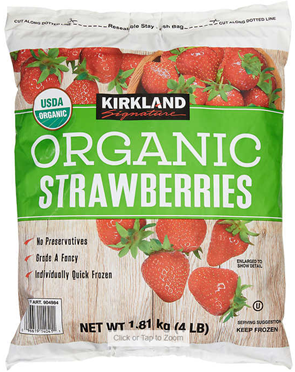
Sample Kirkland Product from the Outbreak Investigation of Hepatitis A Virus Infections Related to Frozen Strawberries (February 2023)

Product

California Splendor Recall: Kirkland Signature 4-lb. bag Frozen Organic Whole Strawberries in certain states with specific lot codes.

Scenic Fruit Recall: frozen organic strawberries with the following brand names and Best By Dates distributed to specific states:

  • Simply Nature, Organic Strawberries, Best By 06/14/2024
  • Vital Choice, Organic Strawberries, BEST BY 05/20/2024
  • Kirkland Signature, Organic Strawberries, Best If Used By 10/08/2024
  • Made With, Organic Strawberries, Best Before 11/20/2024
  • PCC Community Markets, Organic Strawberries, Best By 29/10/2024
  • Trader Joe’s, Organic Tropical Fruit Blend with the following Best By dates: 04/25/24; 05/12/24; 05/23/24; 05/30/24; 06/07/24

Stores Affected

California Splendor supplied recalled product to Costco stores in Los Angeles and Hawaii, and to two San Diego business centers. Scenic Fruit supplied recalled product to Costco, Aldi, KeHE, Vital Choice Seafood, and PCC Community Markets in specific states, and to Trader Joe’s nationwide.

On March 17, 2023, the retailer, Meijer, also issued press to voluntarily recall Made-WithExternal Link Disclaimer brand frozen organic strawberries from certain market store locations.

This is not an exhaustive list of products or stores. FDA is continuing to work with the firms to identify potential additional product information.

Symptoms of Hepatitis A

Illness usually occurs within 15 to 50 days after eating or drinking contaminated food or water. Symptoms of hepatitis A virus infection include fatigue, nausea, vomiting, abdominal pain, jaundice, dark urine, and pale stool. In some instances, particularly in children under the age of six, hepatitis A infection may be asymptomatic.

Status

Ongoing

Recommendation

  • Consumers, restaurants, and retailers should not sell, serve, or eat recalled frozen strawberries. These recalled products should be returned or thrown away.
  • If consumers purchased the recalled frozen organic strawberries and ate those berries in the last two weeks, and have not been vaccinated against hepatitis A, they should immediately consult with their healthcare professional to determine whether post exposure prophylaxis (PEP) is needed. PEP is recommended for unvaccinated people who have been exposed to hepatitis A virus in the last two weeks because vaccination can prevent a hepatitis A virus infection if given within 14 days of exposure. Those with evidence of previous hepatitis A vaccination or previous hepatitis A virus infection do not require PEP.
  • Contact your healthcare provider if you think you may have symptoms of a hepatitis A virus infection after eating these frozen organic strawberries, or if you believe that you have eaten these strawberries in the last two weeks.

EU – Oysters linked to 170 illnesses in Finland; people sick in other countries – Norovirus

Food Safety News

french oysters

Contaminated shellfish are continuing to cause illnesses in several European countries and Hong Kong.

At least 170 people have fallen ill in Helsinki, Finland, after eating oysters in various restaurants in February and March. Cases have also been reported in other Finnish cities.

Norovirus has been found in nine different oyster batches with two from the Netherlands, six from France, and one from Ireland. Importers have withdrawn affected batches from the market.

Officials have tested food from restaurants and taken patient samples, finding norovirus. Some of those sick reported eating oysters.

A report on the outbreak is being prepared for the Finnish Food Authority (Ruokavirasto) and the Finnish Institute for Health and Welfare (THL).

Norovirus is the most commonly identified cause of foodborne outbreaks in Finland. Between 2017 and 2021, oysters caused 11 norovirus outbreaks in which more than 110 people fell ill.

Finland has published four Rapid Alert System for Food and Feed (RASFF) alerts on food poisoning due to norovirus in oysters since late February.

USA – Five with Hepatitis A in Washington linked to tainted Mexican Strawberries

Food Poison Journal

Key Facts:

As of March 13, 2023, there are:

  • 5 outbreak-associated cases of hepatitis A reported from 1 state (Washington).
  • Illnesses started on dates ranging from November 24, 2022, to December 27, 2022.
  • 2 people have been hospitalized. No deaths have been reported.
  • Epidemiologic and traceback evidence indicate that frozen organic strawberries are the likely source of this outbreak.

CDC, state public health and regulatory officials, and the U.S. Food and Drug Administration are investigating an outbreak of hepatitis A linked to frozen organic strawberries imported from certain farms located in Baja California, Mexico, by a common supplier.