foodborne outbreak suspected to be caused by Salmonella enterica ser. Kedougou in courgettes from the Netherlands and Spain in Finland

foodborne outbreak suspected to be caused by Salmonella enterica ser. Kedougou in courgettes from the Netherlands and Spain in Finland
Posted in food bourne outbreak, food contamination, Food Hygiene, Food Illness, Food Inspections, Food Micro Blog, Food Microbiology, Food Microbiology Blog, Food Microbiology Testing, Food Pathogen, food recall, Food Safety, Food Safety Alert, Food Testing, foodborne outbreak, foodbourne outbreak, outbreak, RASFF, Salmonella
The link above is a list of outbreak investigations being managed by FDA’s CORE Response Teams. The investigations are in a variety of stages, meaning that some outbreaks have limited information, and others may be near completion.
A public health advisory will be issued for outbreak investigations that have resulted in specific, actionable steps for consumers to take to protect themselves. Please direct your attention to those pages for the most up to date information on the investigation and for consumer protection information.
The FDA, along with CDC and state and local partners, investigated a multistate outbreak of E. coli O157:H7 infections in the fall of 2020. The epidemiology and traceback investigation have determined that the outbreak was linked to leafy greens. The epidemiological and traceback investigations were not able to determine a specific type of leafy green linked to illnesses. On 12/22/2020, the CDC announced that this outbreak appears to be over. This outbreak, announced by FDA and CDC on October 28, 2020, was caused by a strain of E. coli that is genetically related to a strain linked to the fall 2019 romaine outbreak.
The FDA completed a traceback investigation of multiple types of leafy greens identified in patient interviews. Although no single ranch was identified as a common source of the leafy greens, FDA and state partners also conducted on-site investigations on farms of interest.
Teams were deployed to dozens of ranches in the region to conduct large scale environmental sampling. Additionally, no Shiga toxin-producing E. coli were found on leafy greens.
At this time, FDA’s investigational activities, including sample analysis are ongoing. A detailed report of FDA’s findings in the investigation will be released in early 2021, following the conclusion of investigational activities.
CDC has declared this outbreak to be over. There is no recommendation for consumers, retailers, or suppliers.
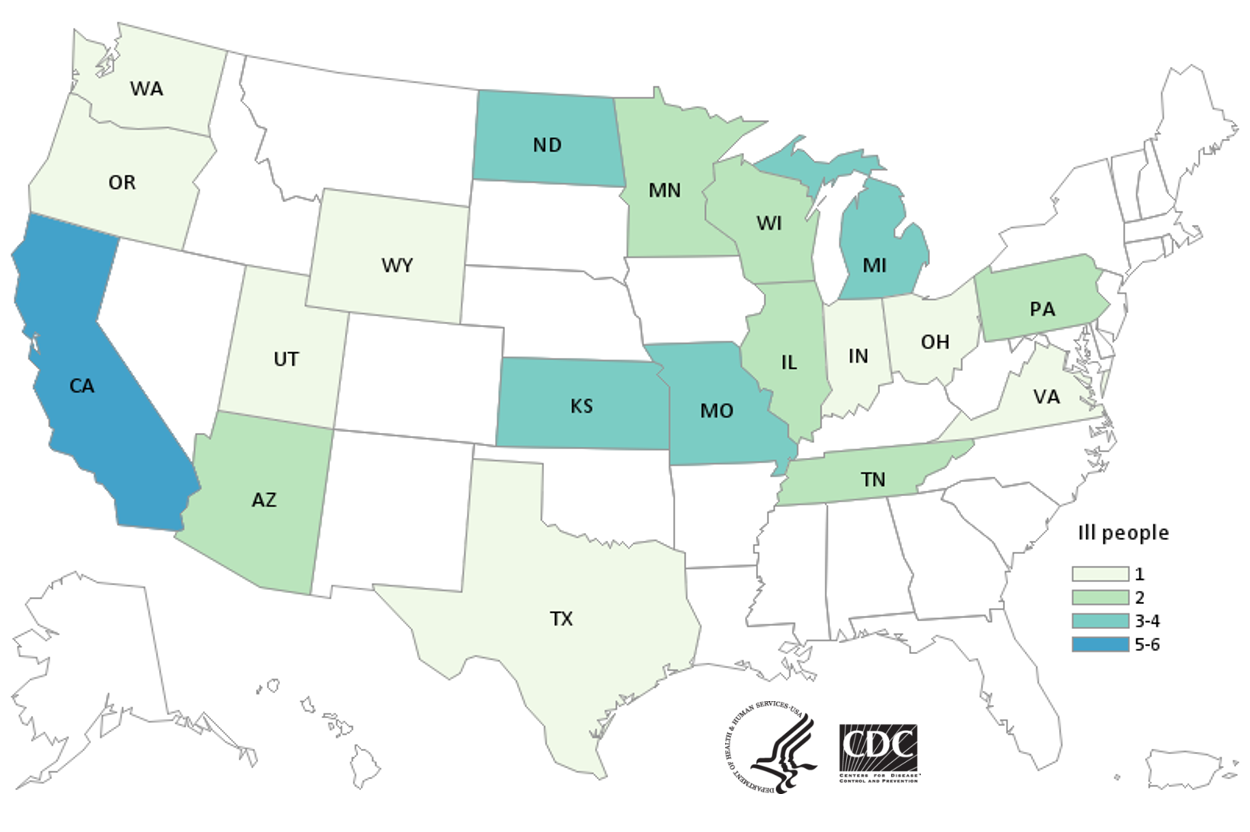
Total Illnesses: 40
Hospitalizations: 20 (4 Cases HUS)
Deaths: 0
Last Illness Onset Date: October 31, 2020
States with Cases: AZ (2), CA (6), IL (2), IN (1), KS (4), MI (3), MN (2), MO (3), ND (4), OH (1), OR (1), PA (2), TN (2), TX (1), UT (1), VA (1), WA (1), WI (2), WY (1)
*States with confirmed distribution; product could have been distributed further
Posted in E.coli, E.coli O157, E.coli O157:H7, food bourne outbreak, food contamination, Food Hygiene, Food Illness, Food Inspections, Food Micro Blog, Food Microbiology, Food Microbiology Blog, Food Microbiology Testing, Food Pathogen, Food Poisoning, food recall, Food Safety, Food Safety Alert, Food Testing, Food Toxin, foodborne outbreak, foodbourne outbreak, outbreak, STEC, STEC E.coli, Uncategorized

More than 150 students and staff at a school in Belgium fell ill during an outbreak of norovirus earlier this month, according to information recently released.
The Federal Agency for the Safety of the Food Chain (FASFC) reported the food poisoning at the Atheneum Pegasus school in the city of Ostend was caused by crudités, which are mixed raw vegetables.
The FASFC, known in French as AFSCA and Dutch as FAVV, was informed in early December about the incident and started investigating with Zorg en Gezondheid (The Agency for Care and Health), and Sciensano, the national reference laboratory, to determine the source of contamination.
A total of 71 students and some staff were absent on one day and complained of vomiting, abdominal pain and fever.
Posted in food bourne outbreak, food contamination, food handler, Food Hygiene, Food Illness, Food Inspections, Food Micro Blog, Food Microbiology, Food Microbiology Blog, Food Microbiology Testing, Food Pathogen, food recall, Food Safety, Food Safety Alert, Food Testing, Food Virus, foodborne outbreak, foodbourne outbreak, Norovirus, outbreak, Virus

The Norwegian Institute of Public Health has discovered an increased incidence of the gastrointestinal bacterium Yersinia enterocolitica O3. So far, infection has been detected in 10 people who live in several counties. Outbreak investigation has been initiated in collaboration with relevant municipal chief physicians, the Veterinary Institute and the Norwegian Food Safety Authority.
The National Institute of Public Health collaborates with the municipal health service, the Norwegian Food Safety Authority and the Norwegian Veterinary Institute to map whether patients can have a common source of infection. The patients are interviewed and the local Norwegian Food Safety Authority takes samples from food products in the homes of those who are infected, if residues are available, in order to identify the source of the outbreak if possible.
Posted in Bacteria, bacterial contamination, food bourne outbreak, food contamination, Food Hygiene, Food Illness, Food Inspections, Food Micro Blog, Food Microbiology, Food Microbiology Blog, Food Microbiology Testing, Food Pathogen, food recall, Food Safety, Food Safety Alert, Food Testing, Food Toxin, foodborne outbreak, foodbourne outbreak, outbreak, Yersinia, yersinia enterocolitica
The FDA and CDC, in collaboration with state and local partners, have completed the investigation on two of three multistate outbreak of E. coli O157:H7 infections in the U.S. this fall.
One of these investigations, Outbreak Unknown Source 3, identified 18 reported illnesses in nine states: California, Colorado, Illinois, Michigan, New York, Ohio, Pennsylvania, Virginia, Washington.
FDA completed a traceback investigation of several potential food vehicles identified in patient interviews and although no single farm was identified as a common source of the outbreak, FDA and state partners also conducted on-site investigations on farms of interest. However, information and samples collected in these inspections did not link these farms to the outbreak. The investigation of a farm does not mean that the farm is linked to an outbreak. The results of an investigation into a farm may well lead to that firm being ruled out of the investigation. On 12/18/2020, the CDC announced that this outbreak had ended.
The other completed outbreak investigation, Outbreak Unknown Source 1, identified 32 reported illnesses in 12 states: California, Illinois, Louisiana, Maryland, Michigan, Montana, New Jersey, Ohio, Utah, Virginia, Washington, Wisconsin. This strain of E. coli is genetically similar to a strain linked to a romaine outbreak that occurred in the spring of 2018, though a food was not linked to the current outbreak. FDA completed a traceback investigation and was unable to determine a common source of the outbreak. FDA and state partners also conducted on-site inspections on farms of interest, though information collected in these inspections did not link these farms to the outbreak. On 12/18/2020, the CDC announced that this outbreak had ended.
Investigations of a third E. coli outbreak of Unknown Source 2 continue.
Consumers, restaurants, and retailers, were advised not to eat, sell, or serve recalled Tanimura & Antle, Inc. brand packaged single head romaine lettuce with a pack date of 10/15/2020 or 10/16/2020.
The recalled products are now well beyond expiration and likely no longer on the market or in consumers’ homes.
Posted in E.coli, E.coli O157, E.coli O157:H7, FDA, food bourne outbreak, food contamination, food death, Food Hygiene, Food Illness, Food Inspections, Food Micro Blog, Food Microbiology, Food Microbiology Blog, Food Microbiology Testing, Food Pathogen, Food Poisoning, Food Poisoning Death, Food Safety, Food Testing, Food Toxin, foodborne outbreak, foodbourne outbreak, outbreak, Poisoning, STEC, STEC E.coli
The list in the link above of outbreak investigations being managed by FDA’s CORE Response Teams. The investigations are in a variety of stages, meaning that some outbreaks have limited information, and others may be near completion.
Posted in food bourne outbreak, food contamination, food death, Food Hygiene, Food Illness, Food Inspections, Food Micro Blog, Food Microbiology, Food Microbiology Blog, Food Microbiology Research, Food Microbiology Testing, Food Pathogen, Food Poisoning, food recall, Food Safety, Food Safety Alert, foodborne outbreak, foodbourne outbreak, outbreak, Research, Uncategorized

A state in Venezuela has reported a Salmonella outbreak with almost 250 people affected.
The Anzoatiguense Institute of Health (Saludanz) has recorded a significant increase in cases of salmonellosis during the past month in the state of Bolívar. So far, there have been no deaths.
Omar Aray, president of the health agency, said 240 children and adults had been affected and seen at different health centers.
The Campo Claro, Barrio Sucre, El Espejo, Guamachito, Las Casitas, Barrio Corea, Buenos Aires and Brisas del Mar regions had the highest number of reports.

In total, 23 confirmed cases of Vibrio parahaemolyticus illness were reported in the following provinces: Saskatchewan (1), Quebec (7), New Brunswick (10), and Prince Edward Island (5). Individuals became sick between early July and late October 2020. One individual was hospitalized. No deaths were reported. Individuals who became ill were between 11 and 92 years of age. The majority of illnesses (61%) were male.
| Week of symptom onset or specimen collection | Number of cases |
|---|---|
| 2020-06-28 | 1 |
| 2020-07-05 | 0 |
| 2020-07-12 | 0 |
| 2020-07-19 | 0 |
| 2020-07-26 | 1 |
| 2020-08-02 | 2 |
| 2020-08-09 | 2 |
| 2020-08-16 | 4 |
| 2020-08-23 | 3 |
| 2020-08-30 | 2 |
| 2020-09-06 | 5 |
| 2020-09-13 | 2 |
| 2020-09-20 | 0 |
| 2020-10-04 | 0 |
| 2020-10-11 | 0 |
| 2020-10-18 | 0 |
| 2020-10-25 | 0 |
| 2020-11-01 | 1 |
Posted in food bourne outbreak, food contamination, Food Hygiene, Food Illness, Food Inspections, Food Micro Blog, Food Microbiology, Food Microbiology Blog, Food Microbiology Testing, Food Pathogen, Food Poisoning, food recall, Food Safety, Food Safety Alert, foodborne outbreak, foodbourne outbreak, outbreak, Vibrio, Vibrio parahaemolyticus
SINGAPORE – Three children from a pre-school in Newton were hospitalised following an outbreak of salmonella and stomach flu among its charges aged between 18 months and six years old.
One of them was discharged on Tuesday (Dec 8), said the Early Childhood Development Agency (ECDA) in a statement later in the day.
Its spokesman also said it is working with the Health Ministry on the case at Kiddiwinkie Schoolhouse @ Newton.


