Category Archives: Food Toxin

RASFF Alert – Foodborne Outbreak Suspected – STEC E.coli O26:H11 – Raw Milk Reblochon

kswfoodworld food safety poisoning

RASFF-foodborne outbreak suspected (STEC O26H11 eae+ stx2+) to be caused by raw milk reblochon from France in France

RASFF Alerts – STEC E.coli – Wheatgrass Powder – Raw Sheep Milk Cheese – Chilled Topside Beef

kswfoodworld food safety poisoning

RASFF-shigatoxin-producing Escherichia coli (stx1+ /25g) in wheatgrass powder from Germany in Germany

RASFF-shigatoxin-producing Escherichia coli (eae- stx1+ /25g) in raw milk sheep cheese from France in Italy

RASFF-shigatoxin-producing Escherichia coli (stx1+; eae+ /25g) in chilled beef topside from the United Kingdom in the Netherlands

RASFF Alert – DSP – Diarrhoeic Shellfish Poisoning – Live Mussels

kswfoodworld food safety poisoning

RASFF-Diarrhoeic Shellfish Poisoning (DSP) toxins in live mussels (Mytilus edulis) from Ireland in Ireland

RASFF Alerts – Animal Feed – Aflatoxin – Groundnut Kernels – Peanuts – Birdfood

kswfoodworld food safety poisoning

RASFF-aflatoxins (B1 = 36.4 µg/kg – ppb) in groundnut kernels for birdfeed from the Gambia in Germany

RASFF-aflatoxins (B1 = 69.6; Tot. = 82.3 µg/kg – ppb) in groundnut kernels for birdfeed from the Gambia in Germany

RASFF-aflatoxins (B1 = 43.8 µg/kg – ppb) in bird food peanuts from Senegal, via Belgium in Belgium

USA – Salmonella-Contaminated Eggs Sicken 35 People Across Nine States

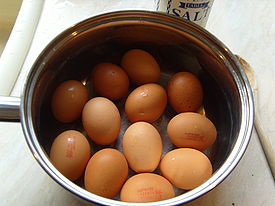
Food Logistics 275px-Boiled_eggs_in_saucepan_by_Sarah_McCulloch

A salmonella outbreak attached to more than 200 million eggs has sickened 35 people, spreading across nine states.

NBC reports that 35 people across nine states have been sickened by a salmonella outbreak tied to a recall of more than 200 million eggs.

The eggs have been traced to egg-based producer Rose Acre Farms in Hyde County, North Carolina. Last month, the Centers for Disease Control and Prevention said that 23 people were sickened by the eggs, but since then the number has jumped to 35.

The 12 people that fell ill recently were in five different states along the East Coast.

According to NBC, the eggs were sold under different brands in a variety of retailers and restaurants. According to the CDC, 11 people have been hospitalized but no deaths have been reported.

Canada – Food Recall Warning – Haute Montagne brand raw milk cheese “Reblochon de Savoie (AOP) au lait cru” recalled due to E. coli O26

CFIA CIFA

Recall details

Ottawa, May 14, 2018 – Les Dépendances is recalling Haute Montagne brand raw milk cheese  “Reblochon de Savoie au lait cru” from the marketplace due to possible E. coli O26 contamination. Consumers should not consume the recalled product described below.

Recalled products

Brand Name Common Name Size Code(s) on Product UPC
Haute Montagne Reblochon de Savoie (AOP) au lait cru 450 g550 g All lots starting with “8CR” 8 31014 00139 0

USA – Why Are There So Many HUS Complications in the E. coli O157:H7 Romaine Outbreak? An Attorney Answers

Food Poisoning Bulletin 

The hospitalization rate and hemolytic uremic syndrome case count in the deadly E. coli O157:H7 HUS outbreak that is linked to romaine lettuce has been very high. Typically, in an E. coli outbreak, about 30% of patients are hospitalized, and about 5 to 10% develop hemolytic uremic syndrome (HUS).

But in this outbreak, the hospitalization rate is almost 50%, and 13% of those patients have developed HUS. Why is the hospitalization rate and the HUS rate so high in this particular outbreak?

Typically, the group most susceptible to developing HUS is children under the age of 5. The patient age range in this outbreak is from 1 to 88. There could be quite a few children sick, which may explain the high HUS rate.

Another explanation for the high HUS rate and the high hospitalization rate is the type of toxins the E. coli bacteria are producing. Shiga toxin-producing E. coli bacteria make two types of those toxins: Stx1 and Stx2. Unfortunately, the bacteria in this outbreak are making Stx2, which causes more damage to the body.

Another factor could be that the lettuce was contaminated with an unusually high number of bacteria. It takes just 10 E. coli bacteria to make someone sick. More bacteria can release more toxins and cause more damage.”

New Zealand – Updated – Shellfish biotoxin alert issued for parts of Bay of Islands

Map of Cape Wiwiki to Cape Brett shellfish warning.

MPI 

The Ministry for Primary Industries today issued a public health warning against collecting shellfish in the Bay of Islands, extending to the outer heads between Cape Wiwiki and Cape Brett.

Routine tests on shellfish samples taken from the Bay of Islands region have shown levels of Paralytic Shellfish Poisoning (PSP) toxins above the safe limit of 0.8 mg/kg set by MPI. Anyone eating shellfish from this area is potentially at risk of illness.

MPI also strongly advises the public against collecting shellfish in the Hawke’s Bay region due to concerning levels of toxins being detected in shellfish. A warning is also in place for the Kenepuru and Pelorus Sounds.

Mussels, oysters, tuatua, pipi, toheroa, cockles, scallops, cat’s eyes, kina (sea urchin) and all other bivalve shellfish should not be eaten.

Note, cooking shellfish does not remove the toxin.

Pāua, crab and crayfish may still be eaten if the gut has been completely removed prior to cooking, as toxins accumulate in the gut. If the gut is not removed its contents could contaminate the meat during the cooking process.

Symptoms typically appear between 10 minutes and 3 hours after ingestion and may include:

  • numbness and a tingling (prickly feeling) around the mouth, face, and extremities (hands and feet)
  • difficulty swallowing or breathing
  • dizziness
  • headache
  • nausea
  • vomiting
  • diarrhoea
  • paralysis and respiratory failure and in severe cases, death.

If anyone becomes ill after eating shellfish from an area where a public health warning has been issued, phone Healthline for advice on 0800 61 11 16, or seek medical attention immediately. You are also advised to contact your nearest public health unit and keep any leftover shellfish in case it can be tested.

Monitoring of toxin levels will continue and any changes will be communicated accordingly. Commercially harvested shellfish – sold in shops and supermarkets, or exported – is subject to strict water and flesh monitoring programmes by MPI to ensure they are safe to eat.

Find out more

Signs will be erected in the affected areas.

USA – 54 sick from Salmonella at Chicago’s Cook County Jail

Barf Blog

At least five detainees have gotten sick in an apparent salmonella outbreak at a medium-security division of the Cook County Jail in Chicago.

Detainees at the jail’s Division 11, 3015 S. California Boulevard, “began experiencing symptoms of a gastrointestinal illness” last week, according to a statement from the Cook County Sheriff’s Office. Over the weekend, five cases of salmonella were confirmed among the 54 detainees reporting symptoms.

Two of the detainees were hospitalized for their symptoms, the sheriff’s office said. One has since been returned to the jail and the other was expected to be returned to the jail on Tuesday.


USA – More Ill with Salmonella Linked to Rose Acre Farms’ Eggs

Food Poison Journal 

Consumers, restaurants, and retailers should not eat, serve, or sell recalled eggs produced by Rose Acre Farms’ Hyde County farm. Throw them away or return them to the place of purchase for a refund.

  • These eggs were sold under multiple brand names, including Coburn Farms, Country Daybreak, Food Lion, Glenview, Great Value, Nelms, Publix, Sunshine Farms, and Sunups.
  • Check egg cartons for the following numbers: P-1065 (the plant number) and another set of numbers between 011 and 102 (the Julian date), or, for Publix and Sunups egg cartons, plant number P-1359D and Julian date 048A or 049A with Best By dates of APR 02 and APR 03.
  • Visit the FDA website for a list of recalled products.
  • Wash and sanitize drawers or shelves in refrigerators where recalled eggs were stored. Follow these five steps to clean your refrigerator.