
RASFF-aflatoxins (B1 = 3.4; Tot. = 15 µg/item) in groundnuts in shell from China in Portugal
RASFF-aflatoxins (B1 = 11.3; Tot. = 12.8 µg/kg – ppb) in groundnut kernels from Brazil in Greece

RASFF-deoxynivalenol (DON) (15.28 mg/kg – ppm) and zearalenone (16.45 mg/kg – ppm) in granola purple müsli mix from Switzerland in Switzerland
This study was conducted to investigate the presence of Bacillus cereus in ice cream samples and to identify associated toxin genes by mPCR. 125 ice cream samples were used as material. A total of 38 samples were found to be positive for B. cereus. It was found that 31.9% of the isolates had three enterotoxic HBL complex encoding genes, 10.6% had two hbl genes and 6.3% contained one hbl gene. On the other hand, 15.9% of the isolates contained three NHE complex encoding genes, 31.9% had two nhe genes and 20.2% contained one nhe gene. Also 7.4% of isolates were found to contain both NHE and HBL complexes while ctyK1 was not detected from any isolate. The presence of B. cereus and their enterotoxigenic genes in ice creams may be a potential risk for public health.
The presence of the B.cereus in high numbers and the toxins in foods pose a potential risk in terms of health and food spoilage. In food poisoning cases, hbl, nhe, cytK, and the effect of emetic toxin are especially notable. The resistance of spores against pasteurization and psychrotolerant feature enable the explanation of the existence of B. cereus in ice‐cream.
The possible contamination by aflatoxins (AFs), ochratoxin A (OTA), fumonisin B1 (FB1), fusaric acid (FA), and beauvericin (BEA), was investigated in 55 samples of dried figs and dried figs‐based products purchased from the South Italy (Calabria) market. A total of 41 samples showed contamination by at least one of the mycotoxins investigated. Aflatoxin B1 was found in six samples (0.19 — 8.41 μg/kg) total aflatoxins were found in 13 samples (0.5–17.12 μg/kg), OTA was found in 21 samples (<LOQ—158.58 μg/kg), FB1 was found in eight samples (153.81–5,412.96 μg/kg), BEA was found in 12 samples (<LOQ—5,708.49 μg/kg), and FA was found in 28 samples (<LOQ—74,520.20 μg/kg). The analyzed samples were contaminated with one (41.8%), two (7.3%), three (5.5%), four (10.9%), and five (5.5%) mycotoxins. To the best of our knowledge, the incidence of contamination by FA and BEA has been shown for the first time in dried figs.
The present work was focused on mycotoxin mixtures contamination levels of dried figs and dried figs‐based products. It is known that the co‐occurrence of mycotoxins leads to additive or synergistic effects. For some analyzed samples the AFB1, aflatoxins, and ochratoxin A (OTA) levels exceed the European Union countries legal limit. In addition, the simultaneous presence of FB1, FA, and BEA can be a potential threat to the health of consumers. Although different studies examined AFs, OTA, and Fusarium toxins as single mycotoxins in dried figs, to our knowledge, the co‐occurrence of AFs, OTA, FB1, FA, and BEA in dried figs and in dried figs‐based products samples has not been reported previously. Therefore, to prevent mycotoxins contamination, the employment of good practices in all the processing steps is necessary. Furthermore, the quality control of the ingredients used in figs preparations (spices, other dried fruits, cocoa, etc.), usually not adequately, is essential. Finally, it is of importance to establish more stringent rules to ensure food safety, even if no legal limit was still set for Fusarium toxins in dried fruit.
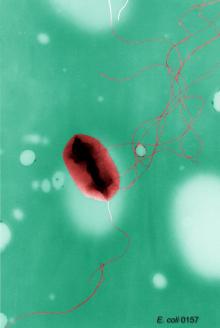
Image CDC
While thoroughly cooking meat and washing vegetables and hands after food preparation can prevent E. coli infection, treatment for the severe stomach bug can be difficult, as antibiotics are known to make the disease worse by releasing a potent toxin into the infected person’s gut.
Now, scientists from the University of Glasgow have found a product made by natural soil-living bacteria that can successfully treat E. coli O157 – [one of] the most serious types of the bug – without producing any serious side effects.
The new study, published in Infection and Immunity, found that Aurodox, a compound first discovered in 1973 but found to be poorly active as a true antibiotic, was able to successfully block E. coli O157 infections.
Scotland has one of the highest incidences of E. coli O157 in the world, and almost half of O157 cases in Scotland are in children under 16 years of age.
The Aurodox compound was able to reduce the ability of E. coli O157 to bind to human cells and, unlike traditional antibiotics, did not cause the release of potent toxins. The researchers believe that this compound could be used as a promising future treatment of E. coli O157 infections.
RASFF-deoxynivalenol (DON) (1461 µg/kg – ppb) in gluten free oatflakes from the United Kingdom in Hungary
RASFF-ochratoxin A (16 µg/kg – ppb) in raisins from Turkey in Portugal

The E. coli O157:H7 romaine outbreak has grown, according to an update posted by the Centers for Disease Control and Prevention (CDC). Since the last update posted in November 26, 2018, an additional nine patients have been added to the total for 52 sick. Those patients live in 15 states. Nineteen people have been hospitalized.
Posted in E.coli, E.coli O157, E.coli O157:H7, food bourne outbreak, food contamination, food death, Food Hygiene, Food Illness, Food Inspections, Food Micro Blog, Food Microbiology, Food Microbiology Blog, Food Pathogen, Food Poisoning, food recall, Food Safety, Food Safety Alert, Food Testing, Food Toxin, foodborne disease, Foodborne Illness, foodborne outbreak, foodbourne outbreak, Uncategorized
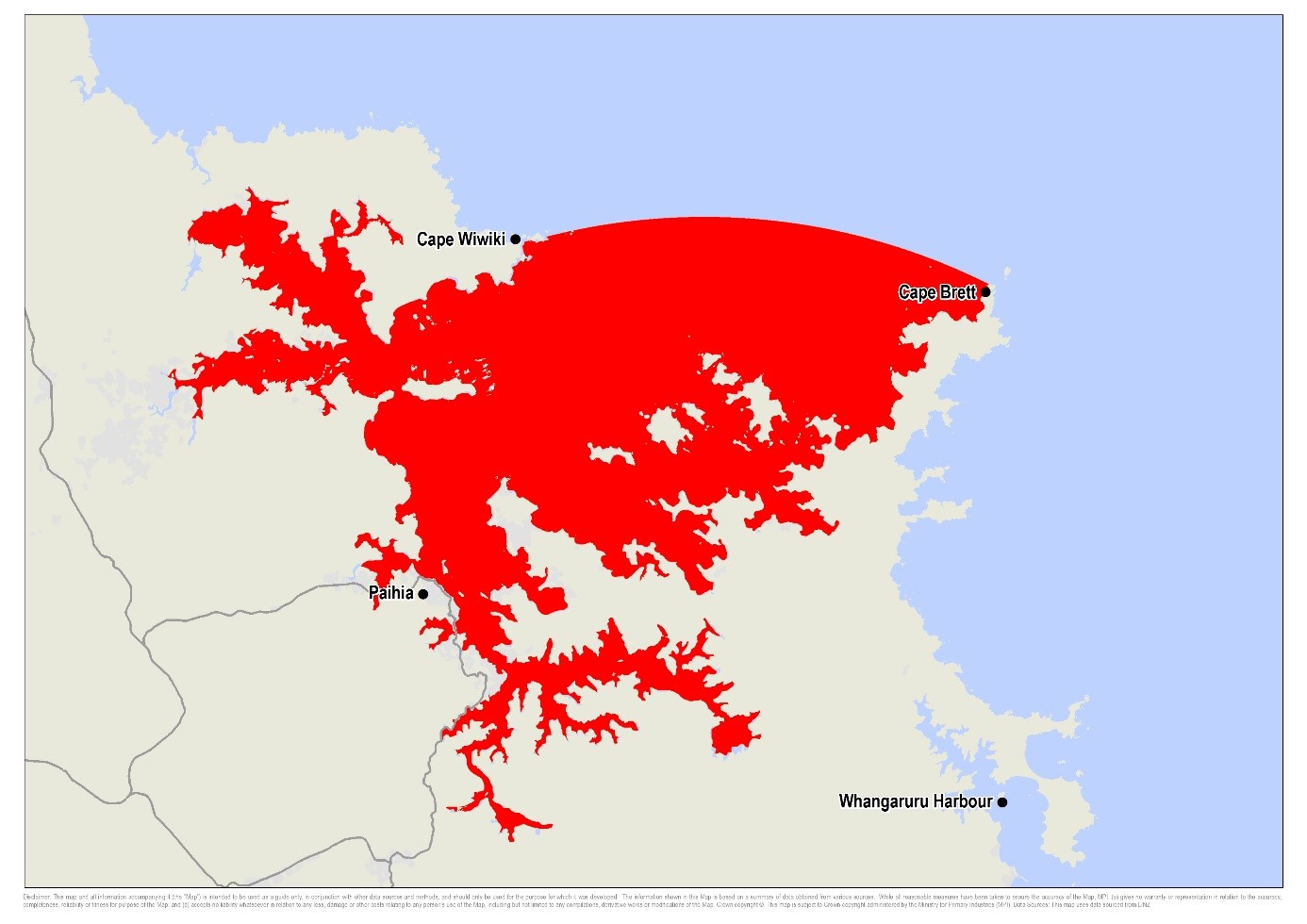
The Ministry for Primary Industries (MPI) yesterday issued a public health warning advising the public not to collect or consume shellfish harvested from the entire Bay of Islands inside a line between Cape Brett northward to Cape Wiwiki.
Routine tests on shellfish samples taken from this region have shown levels of Paralytic Shellfish Poisoning (PSP) toxins above the safe limit of 0.8 mg/kg set by MPI. Anyone eating shellfish from this area is potentially at risk of illness.
At least three people including two children are dead and over 250 taken ill due to alleged food poisoning in Uttarakhand’s Bageshwar district.
According to Kumaon Commissioner Rajeev Rautela, those dead include two children aged 10 and five years old and a woman.
At a wedding ceremony on November 29 night, many guests consumed food and subsequently fell sick including the bride and groom. All have been admitted to different hospitals in Berinag, Kapkot, Bageshwar, Almora and Haldwani.

 FoodWorld