Category Archives: Food Toxin

USA – E. coli O103 Jimmy John’s Clover Sprouts Outbreak Sickens 22 in Iowa

Food Poisoning Bulletin alfalfa

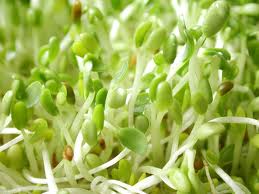
An E. coli O103 Jimmy John’s clover sprouts outbreak has sickened at least 22 people in Iowa, according to a warning letter the FDA sent to Jimmy John’s and Sprouts Unlimited on February 21, 2020. This outbreak was briefly mentioned by the FDA in a recall notice on December 18, 2019, but there were very few details about the outbreak at that time.

Canada – Aqua Okeano brand and Aqua Okeano / Seven Baskets brand fish products recalled due to potential presence of dangerous bacteria – Clostridium botulinum

Canada Gov

cdc clost spore

Image CDC

Recall details

Ottawa, February 25, 2020 – Fresh 7 Baskets Limited is recalling Aqua Okeano brand and Aqua Okeano / Seven Baskets brand fish products from the marketplace because they may permit the growth of Clostridium botulinum. Consumers should not consume the recalled products described below.

Recalled product

Brand Product Size UPC Codes
Aqua Okeano Fish Ball with Cuttlefish 200 g 6 285048 270002 All best before dates up to and including 2021 AU 23
Aqua Okeano Fried Fish Ball 200 g 6 285048 270248 All best before dates up to and including 2021 AU 23
Aqua Okeano Handmade Fish Cake with Vegetable 300 g 6 285048 270484 All best before dates up to and including 2021 AU 23
Aqua Okeano White Fish Ball 200 g 6 285048 270316 All best before dates up to and including 2021 AU 23
Aqua Okeano / Seven Baskets Fish Ball with Cuttlefish 190 g 6 28504 82707 9 All best before dates up to and including 2021 AU 23
Aqua Okeano / Seven Baskets Fried Fish Ball 180 g 6 28504 82713 0 All best before dates up to and including 2021 AU 23
Aqua Okeano / Seven Baskets Handmade Fish Cake with Vegetable 270 g 6 28504 82751 2 All best before dates up to and including 2021 AU 23
Aqua Okeano / Seven Baskets White Fish Ball 180 g 6 28504 82711 6 All best before dates up to and including 2021 AU 23

What you should do

If you think you became sick from consuming a recalled product, call your doctor.

Check to see if you have the recalled products in your home. Recalled products should be thrown out or returned to the store where they were purchased.

Food contaminated with Clostridium botulinum toxin may not look or smell spoiled but can still make you sick.

Symptoms in adults can include facial paralysis or loss of facial expression, unreactive or fixed pupils, difficulty swallowing, drooping eyelids, blurred or double vision, difficulty speaking or including slurred speech, and a change in sound of voice, including hoarseness.

Symptoms of foodborne botulism in children can include difficulty swallowing, slurred speech, generalized weakness and paralysis. In all cases, botulism does not cause a fever. In severe cases of illness, people may die.

Background

This recall was triggered by Canadian Food Inspection Agency (CFIA) test results. The CFIA is conducting a food safety investigation, which may lead to the recall of other products. If other high-risk products are recalled, the CFIA will notify the public through updated Food Recall Warnings.

The CFIA is verifying that industry is removing the recalled products from the marketplace.

Illnesses

There have been no reported illnesses associated with the consumption of these products.

India – More than 100 people fall sick after consuming food at a feast

Times of India

Dehradun: More than 100 people fell sick after consuming food at a feast in Basantipur area of Udham Singh Nagar district. Majority of the sick locals were admitted to a Gadarpur-based community health centre on Friday. Food poisoning is suspected.

India – Telangana: 50 KGBV students fall ill due to food poisoning

Times of India

About 50 students of Kasturba Gandhi Balika Vidyalaya (KGBV) after having dinner late on Thursday. Sources said that before going to bed, many students complained of stomach ache and vomiting sensation.


RASFF Alert – Aflatoxin – Peanuts

RASFF-Logo

RASFF – aflatoxins (B1 = 10.3; Tot. = 38.4 µg/kg – ppb) in peanuts from the United States in the UK

Research – World Mycotoxin Report: Impact 2020

All About Feed Mold Mould Mycotoxin kswfoodworld

The prevalence of FUM and DON mycotoxins remained high last year, according to the results of the World Mycotoxin Survey 2019, released by Biomin.

Last year more than 20,000 samples were tested in 86 countries. Overall the survey shows that the occurrence of Fumonisins and Deoxynivalenol remain high in every continent. Although the prevalence of mycotoxins is shifting, explains Annelies Mueller product manager, Biomin in a live webinar: “Due to climate change mycotoxins which were usually found in the southern part of the world are now moving to the north. Mycotoxins are moving with the shifting climate.” The mycotoxin report shows detailed results on the prevalence of mycotoxins for each continent.

USA – USDA Can Determine Contamination-Free Romaine Regions

Quality Assurance Magazine Eurofins Food Testing UK

USDA data on daily shipments of romaine lettuce can be used to determine which production regions are free from contamination during a foodborne illness outbreak. These data, reported by USDA’s Agricultural Marketing Service with a one- or two-day lag, provide essentially real-time information on produce shipped out to retailers. An analysis conducted by the USDA’s Economic Research Service (ERS) demonstrates how this information may allow FDA to rule out an entire production region as the source of contamination.

Leafy greens, including romaine lettuce, are the sixth most commonly consumed type of vegetable in the United States. From May to November, most romaine lettuce in the U.S. comes from California’s Central Coast region; from December to April, most comes from the Yuma, Ariz. region. Among the 29 outbreaks of Shiga-toxin producing Escherichia coli O157:H7 (E. coli) associated with romaine lettuce between 1998 and 2018, illnesses peaked in April and October, which corresponds with the tail end of harvest season in the two main romaine growing regions. In 2017 and 2018, there were three multistate, multinational foodborne illness E. coli outbreaks associated with the consumption of romaine lettuce that occurred at the tail end of either Yuma, Ariz., or California’s Central Coast production seasons. These outbreaks led to a total of 376 illnesses, 158 hospitalizations, and 7 deaths.

Australia – LD&D Australia Pty Ltd — Dairy Choice Full Cream 2L and Community Co ‘The Good Drop’ Full Cream 2L Milk – E.coli

PSA

Photograph of Dairy choice and Good drop milk

Identifying features

Use by date
25 February 2020

What are the defects?

The recall is due to microbial (E. coli) contamination.

What are the hazards?

Food products contaminated with E. coli may cause illness if consumed.

What should consumers do?

Any consumers concerned about their health should seek medical advice and should return the products to the place of purchase or contact LD&D Milk Pty Ltd below for a full refund.

For further information please contact LD&D Milk Pty Ltd on 1800 677 852.

Traders who sold this product

IGA stores and various independent stores in NSW

Where the product was sold
New South Wales
Dates available for sale
  • 12 February 2020 – 14 February 2020

Recall advertisements and supporting documentation

Coordinating agency

Food Standards Australia New Zealand is the coordinating agency for this recall.

Australia – Aldi Stores (a Limited Partnership) — Farmdale Full Cream Milk 3L – E.coli

PSA

Photograph of Farmdale Full Cream Milk 3L

Identifying features

Use by date
25 February 2020
Other
APN/EAN 26244365

What are the defects?

The recall is due to microbial (E.coli) contamination.

What are the hazards?

Food products contaminated with E.coli may cause illness if consumed.

What should consumers do?

Any consumers concerned about their health should seek medical advice. Customers should return the recalled product to the place of purchase for a full recall.

For further information, visit https://www.aldi.com.au/en/about-aldi/product-recalls/ or contact the Aldi Food Recall Hotline on 1800 709 993.

Traders who sold this product

ALDI stores

Where the product was sold
Australian Capital Territory
New South Wales
Dates available for sale
  • 12 February 2020 – 17 February 2020

Recall advertisements and supporting documentation

Coordinating agency

Food Standards Australia New Zealand is the coordinating agency for this recall.

Research – Effects of coating pistachio kernels with mixtures of whey protein and selected herbal plant extracts on growth inhibition of Aspergillus flavus and prevention of aflatoxin during storage

Wiley Online

Whey protein concentrate (WPC) mixed with various concentrations of Shirazi thyme (ST), sage, and cumin seed (CS) extracts separately. Then pistachio kernels (PK) contaminated with Aspergillus flavus (Af) were coated with each extract and the Af mycelium and generated aflatoxins measured after 3, 5, and 7‐days at 20°C. The ST, sage, and CS had two major antioxidants of thymol (~27%) and carvacrol (~41%), α‐thujone (~28%) and camphor (~14%), and cumin‐aldehyde (~21%) and safranal (~20%), respectively. While the Af mycelium diameter on PK without extract became >90 mm within 3 days, it was shrunk after 7 days when the WPC‐coated PK had 4,000 ppm ST extract. When ST concentrations increased in WPC‐coated PK linearly, the Af growth and aflatoxins production decreased logarithmically. No aflatoxins (B1, B2, G1, and G2) detected in PK after 9 days when the extract concentrations of ST, sage, and CS in WPC reached, respectively to 5,000, 4,500, and 6,500 ppm. Sage extract had significantly (p < .01) the highest TPC (lowest IC50) and preventing power for aflatoxin generation in comparison with ST and CS extracts. The PK will be safe and healthy if the extract concentration of sage, ST, and CS exceed 950, 1,400, and 1,700 mg/kg, respectively.