Category Archives: Food Testing

Research – The effect of feeding a Saccharomyces cerevisiae fermentation derived postbiotic as a pre-harvest food safety hurdle for reducing Salmonella Enteritidis in the ceca of layer pullets

Journal of Food Protection

Salmonella Enteritidis is responsible for a significant proportion of foodborne Salmonellosis in the United States and continues to be attributable to table eggs, despite increased federal oversight in recent years. Technologies, including feed additives, continue to be evaluated for pre-harvest application of their potential food safety benefits. Here, Diamond V Original XPC™, a Saccharomyces cerevisiae fermentation based postbiotic (SCFP), was evaluated for its effectiveness in the reduction of Salmonella Enteritidis (SE) colonization in young layer pullets. A total of forty, day-old Hy-Line W-36 layer pullets were equally divided and randomly assigned to one of two dietary treatments with SCFP, or without (PCON) and orally gavaged on Day 28 with 10 6 CFU/mL of SE. Another twenty, day-old layer pullets were fed the same control feed without SCFP and blank inoculated on Day 28 with 1 ml of sterile PBS to serve as a negative control (NCON). Qualitative and quantitative analyses of cecal Salmonella contents were performed for all birds on Day 32. The prevalence of SE in the ceca of all directly challenged birds was 100%, however, the SE concentration in birds fed SCFP diet (3.35 Log 10 CFU/g) was significantly lower ( P <0.0001) than that of the PCON birds not fed SCFP (4.49 Log 10 CFU/g). Moreover, the proportion of SE colonized individuals with enumerable SE concentrations was lower in SCFP fed birds (57.9%) when compared to the PCON (95.0%). These data suggest that inclusion of SCFP in the diet may aid in the reduction of SE within the ceca of commercial laying hens and could serve as an additional, pre-harvest food safety hurdle.
Netherlands – Important safety warning AH burgers, bratwurst and beef finches – STEC E.coli

NVWA

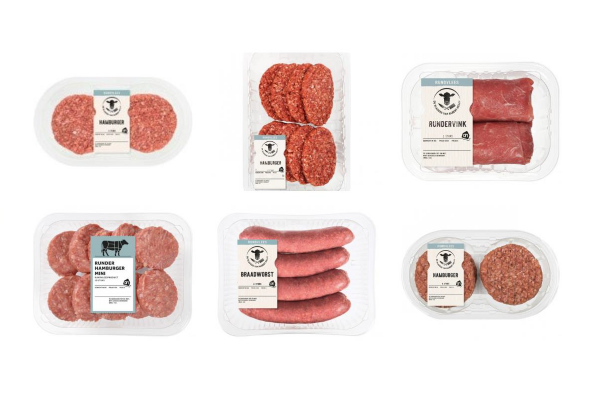
Albert Heijn warns against a number of beef products with an expiry date of 24 or 25 September 2020. The E.coli bacteria was found in the products.

It concerns the following products:

  • AH mini hamburger 10 pieces, TGT 24-09-2020
  • AH hamburger 8 pieces, use-by-date 9/24/2020 and 9/25/2020
  • AH beef bratwurst 4 pieces, TGT 24-09-2020
  • AH hamburger 2 pieces, TGT 25-09-2020
  • AH hamburger 4 pieces, TGT 25-09-2020
  • AH beef finch 2 pieces, TGT 25-09-2020

The beef products are no longer in Albert Heijn stores, but customers can have these products in the freezer. Albert Heijn asks customers not to eat the beef products and to return them to an Albert Heijn store where they will be reimbursed for the purchase price upon return.

See also the Albert Heijn website

Download ‘Important safety warning for AH burgers, bratwurst and beef finches’

PDF document | 1 page | 166 KB

Warning | 05-10-2020

E.coli

Eating a product with an E.coli bacteria (faeces bacteria, STEC, EHEC) can, if not thoroughly cooked, cause nausea, vomiting and (bloody) diarrhea within a week. Especially for young children, the elderly, people with low immunity and pregnant women. Consult your doctor or general practitioner for more information if you have health complaints after eating the said product.

6 packs of Albert Heijn beef products

Research – Recovery Rate of Cells of the Seven Regulated Serogroups of Shiga Toxin-Producing Escherichia coli from Raw Veal Cutlets, Ground Veal, and Ground Beef from Retail Stores in the Mid-Atlantic Region of the United States

Journal of Food Protection

A total of 482 veal cutlet, 555 ground veal, and 540 ground beef samples were purchased from retail establishments in the Mid-Atlantic region of the U.S. over a non-contiguous, two-year period between 2014 and 2017. Samples (325 g each) were individually enriched and screened via real-time PCR for all seven regulated serogroups of Shiga toxin-producing Escherichia coli (STEC). Presumptive STEC positive samples were subjected to serogroup-specific immunomagnetic separation and plated onto selective media. Up to five isolates typical for STEC from each sample were analyzed via multiplex PCR for both the virulence genes (i.e., eae , stx 1 and/or stx 2 , and ehxA ) and serogroup-specific gene(s) for the seven regulated STEC serogroups. The recovery rates of non-O157 STEC from veal cutlets (3.94%, 19 of 482 samples) and ground veal (7.03%, 39 of 555 samples) were significantly higher (P < 0.05) than that from ground beef (0.93%, 5 of 540 samples). In contrast, only a single isolate of STEC O157:H7 was recovered; this isolate originated from one (0.18%) of 555 samples of ground veal. Recovery rates for STEC were not associated with state, season, packaging type, or store type (P > 0.05), but were associated with brand and fat content (P < 0.05). Pulsed-field subtyping of the 270 viable/confirmed STEC isolates from the 64 total samples testing positive revealed 78 pulsotypes (50 to 80% similarity) belonging to 39 pulsogroups, with ≥90% similarity among pulsotypes within pulsogroups. Also, multiple isolates from the same sample displayed an indistinguishable pulsotype for 43 of 64 (67.7%) samples testing positive.  These findings support related data from regulatory sampling exercises over the past decade and confirm that recovery rates for the regulated STEC serogroups are appreciably higher for raw veal compared to raw beef samples as was also observed herein for meat purchased at food retailers in the Mid-Atlantic region of the U.S.

Canada imposes new import measures for romaine lettuce from U.S.

Digital Journal

In an effort to prevent future E. coli illnesses from romaine lettuce, the Canadian Food Inspection Agency (CFIA) is imposing new import measures on shipments from parts of California where prior outbreaks originated.

Belgium – Sequoia – Organic free-range chicken thighs from Le Picoreur. – Salmonella

AFSCA

In agreement with the AFSCA, Sequoia is withdrawing from sale the product Le Picoreur organic free-range chicken thighs and is recalling it to consumers because of the presence of Salmonella.

Sequoia asks its customers not to consume this product and to return it to the point of sale where it was purchased, with proof of purchase for reimbursement.

Product description
– Product name: BLC organic free-range chicken thigh
– Brand: Le picoreur
– Use-by date (DLC) (“To be consumed until”) and batch number:
         – 27, 28 and 30/09 / 20 with batch number 25801101
– 5/10/2020 with batch number 26501501 (update)
– Health stamp: FR 85.223.001 CE
– Sale period: from 09/15/20 to 09/29/20
– Type of packaging: plastic

The product was sold via:
Sequoia Stockel – 101, rue de l’Eglise, 1150 Woluwe-Saint-Pierre
Sequoia Jourdan – 2, rue Gray, 1040 Etterbeek

For any further information , contact:
Sequoia
info@sequoia.bio

USA – Country Fresh Voluntary Product Recall – Watermelon Chunks – Listeria monocytogenes

FDA

Country Fresh is initiating a voluntary recall of a limited quantity of watermelon chunks from select stores as a precautionary measure due to a possible health risk from Listeria monocytogenes detected on equipment used in packing this product. FDA made these findings during a recent inspection.

Listeria monocytogenes is an organism which can cause serious and sometimes fatal infections in young children, frail or elderly people, and others with weakened immune systems. Although healthy individuals may suffer only short-term symptoms such as high fever, severe headache, stiffness, nausea, abdominal pain and diarrhea, Listeria infection can cause miscarriages and stillbirths among pregnant women.

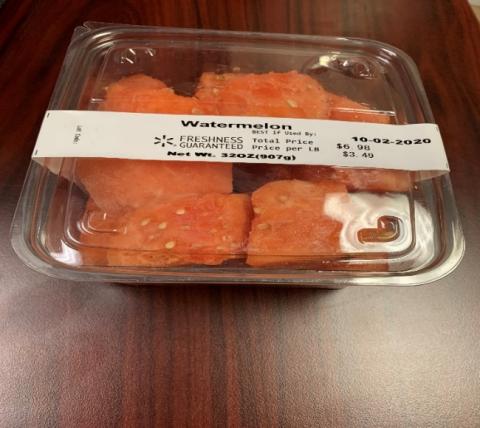
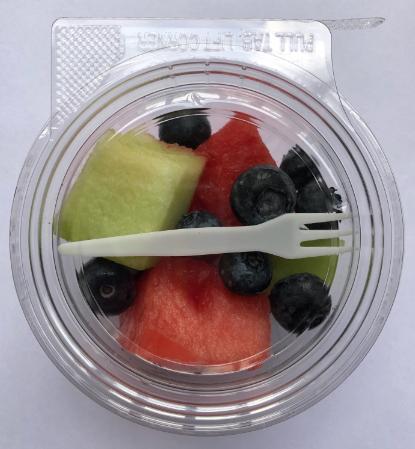
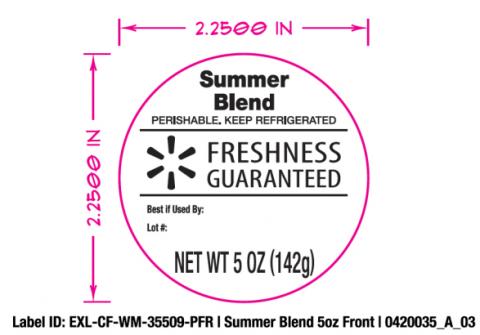
The recall affects product codes of watermelon items shipped directly to Walmart and RaceTrac’s retail distribution centers stores in select stores located in Arkansas, Missouri, Illinois, Oklahoma, and Texas. The product was packaged in a variety of clam shell containers (see photos). The best-if-used by dates of October 2, 3, and 4, 2020 and the SKUs are as follows:

Walmart – Freshness Guaranteed
Watermelon 4 x 10 oz – UPC Code: 681131180672
Watermelon 2 x 32 oz – UPC Code: 681131180672 Watermelon Chunks 2 x 42 oz – UPC Code: 681131180658 Watermelon Spears 4 x 16 oz – UPC Code: 681131180665 Summer Blend FTC 4 x 5 oz – UPC Code: 681131355094

RaceTrac
Watermelon 5.5oz – UPC Code: 74641000644 Melon Trio 5.5oz – UPC Code: 74641031945

Country Fresh has not received any reports of illnesses to date associated with these recalled items. The recalled products were distributed from 9/23/2020 – 9/25/2020. RaceTrac and Walmart retail stores are removing the recalled product from store shelves and inventories immediately. Customers with recalled watermelon should discard it immediately and not consume it.

This recall is being undertaken with the knowledge of the U.S. Food and Drug Administration.

Country Fresh takes food safety matters very seriously, stringently follows all mandated regulations and implements preventive measures designed to minimize potential risks. Country Fresh is working in close coordination with FDA in its continuing investigation to resolve the matter promptly and deeply regrets the inconvenience to our consumers and customers. If you have any questions, please contact Customer Service at: 1-877-251-8300 Monday – Friday, 8-5pm CST

Watermelon 32oz, Lot URR0103, Use By 10/2/20
Watermelon 32oz, Lot URE0103, Use By 10/3/20
Watermelon 42oz, Lot URR0103, Use By 10/2/20
Watermelon 42oz, Lot URE0103, Use By 10/3/20
Watermelon 16oz, Lot URR0103, Use By 10/2/20
Watermelon 16oz, Lot URS0103, Use By 10/4/20
Watermelon 10oz, Lot URR0103, Use By 10/2/20
Watermelon 10oz, Lot URE0103, Use By 10/3/20
Watermelon 10oz, Lot URS0103, Use By 10/4/2
Watermelon 5.5oz, Lot URE0103, Use By 10/4/20
Summer Blend 5oz, Lot URR0103, Use By 10/2/20
Summer Blend 5oz, Lot URE0103, Use By 10/3/20
Summer Blend 5oz, Lot URS0103, Use By 10/4/20
Melon Trio 5.5oz, Lot URE0103, Use By 10/4/20

Expanded Press Release


Company Contact Information

Consumers:
Country Fresh Customer Service
 1-877-251-8300

Product Photos

Germany – Good & cheap salad mix leaf salad mix – STEC E.coli

Warning type:

Food

Date of first publication:

02.10.2020

Product name:

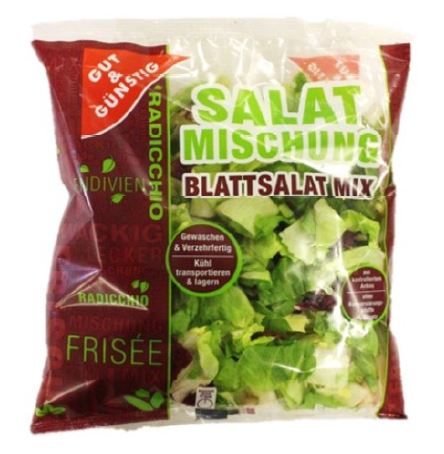
Good & cheap salad mix leaf salad mix

Product pictures:

Product photo.jpg
Manufacturer (distributor):

GARTENFRISCH Jung GmbH

Reason for warning:

E. Coli producing shiga toxin

Packaging Unit:

150 g pack

Durability:

05/10/2020

Additional Information:

Reference is made to the attached press release from the food business operator.

Contact to the responsible authorities:

Baden-Württemberg:

poststelle@mlr.bwl.de

Bavaria:

poststelle@lgl.bayern.de

Hesse:

Schnellwarnung@rpda.hessen.de

Lower Saxony:

poststelle@ml.niedersachsen.de

Saxony:

poststelle@sms.sachsen.de

Thuringia:

LM-Ueberektiven@tlv.thueringen.de

Press releases and information
title Attachment or web link
Press release

Research – Magnetic ‘T-Budbots’ made from tea plants kill and clean biofilm

Science Daily

kswfoodworld biofilm

Biofilms — microbial communities that form slimy layers on surfaces — are difficult to treat and remove, often because the microbes release molecules that block the entry of antibiotics and other therapies. Now, researchers reporting in ACS Applied Materials & Interfaces have made magnetically propelled microbots derived from tea buds, which they call “T-Budbots,” that can dislodge biofilms, release an antibiotic to kill bacteria, and clean away the debris. Watch a video of the T-Budbots here.

Many hospital-acquired infections involve bacterial biofilms that form on catheters, joint prostheses, pacemakers and other implanted devices. These microbial communities, which are often resistant to antibiotics, can slow healing and cause serious medical complications. Current treatment includes repeated high doses of antibiotics, which can have side effects, or in some cases, surgical replacement of the infected device, which is painful and costly. Dipankar Bandyopadhyay and colleagues wanted to develop biocompatible microbots that could be controlled with magnets to destroy biofilms and then scrub away the mess. The team chose Camellia sinensis tea buds as the raw material for their microbots because the buds are porous, non-toxic, inexpensive and biodegradable. Tea buds also contain polyphenols, which have antimicrobial properties.

The researchers ground some tea buds and isolated porous microparticles. Then, they coated the microparticles’ surfaces with magnetite nanoparticles so that they could be controlled by a magnet. Finally, the antibiotic ciprofloxacin was embedded within the porous structures. The researchers showed that the T-Budbots released the antibiotic primarily under acidic conditions, which occur in bacterial infections. The team then added the T-Budbots to bacterial biofilms in dishes and magnetically steered them. The microbots penetrated the biofilm, killed the bacteria and cleaned the debris away, leaving a clear path in their wake. Degraded remnants of the biofilm adhered to the microbots’ surfaces. The researchers note that this was a proof-of-concept study, and further optimization is needed before the T-Budbots could be deployed to destroy biofilms in the human body.

Video: https://www.youtube.com/watch?v=-_GxUTO0qGI&pp=QAA%3D

FAO and WHO to relook at Listeria in RTE foods

Food Safety News

FAO and WHO experts are to look again at Listeria monocytogenes in ready-to-eat (RTE) foods.

The move by the Food and Agriculture Organization (FAO) and the World Health Organization (WHO) is due to developments in diagnostics and changes in the epidemiology of listeriosis outbreaks.

The Joint FAO/WHO Expert Meetings on Microbiological Risk Assessment (JEMRA) is planned for Oct. 20 to Nov. 6.

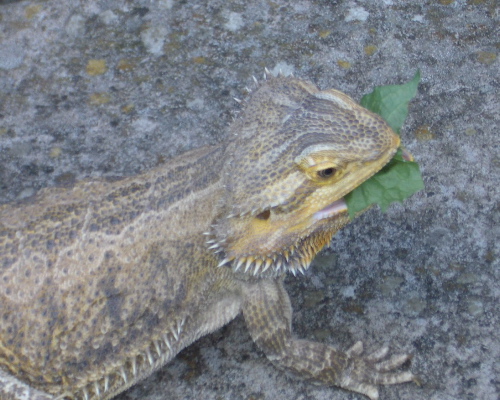
Research – Multistate Salmonella outbreaks tied to pet hedgehogs, lizards

BeardedDragonEatting

CIDRAP

The Centers for Disease Control and Prevention (CDC) has announced two separate outbreaks of Salmonella in states across the United States, totaling 43 cases.

Through whole-genome sequencing, public health investigators have traced the outbreaks to hedgehogs (Salmonella Typhimurium) and bearded dragons (Salmonella Muenster), but no common source for either has been found yet.

Although the CDC has listed no new cases as of Sep 22 and Sep 25 for the bearded dragon– and hedgehog-related cases, respectively, it takes about 2 to 4 weeks from when the illness occurs for it to be added to the investigation numbers.