Category Archives: Food Testing

Research – Bacteria flip an electric switch to worsen food poisoning

Science Daily

Salmonella bacteria flip an electric switch as they hitch a ride inside immune cells, causing the cells to migrate out of the gut toward other parts of the body, according to a new study publishing on April 9 in the open-access journal PLOS Biology by Yaohui Sun and Alex Mogilner of New York University and colleagues. The discovery reveals a new mechanism underlying the toxicity of this common food-borne pathogen.

Salmonella are among the commonest, and deadliest, causes of food poisoning, causing over 400,000 deaths every year. Many of those deaths result when the bacteria escape the gut inside immune cells called macrophages. Macrophages are drawn to bacteria in the gut by a variety of signals, most prominently chemicals released from the site of infection. Once there, they engulf the bacteria as a regular part of their infection-fighting job. However, rather than remaining there, bacteria-laden macrophages often leave the site and enter the bloodstream, disseminating the bacteria and greatly increasing the gravity of the infection.

Tissues such as the gut often generate small electrical fields across their outer surfaces, and these electrical fields have been known to drive migration of cells, including macrophages. In the new study, the authors first showed that the lining of the mouse cecum (the equivalent of the human appendix) maintains a cross-membrane electrical field, and that Salmonella infection altered this field and contributed to the attraction of macrophages. Measurements of the polarity of the local charge indicated that the macrophages were attracted to the anode, or positively charged pole within the field. Once they engulfed bacteria, however, they became attracted to the cathode and reversed their migratory direction, moving away from the gut lining, toward vessels of the circulatory system. This switch was driven by a in the composition of certain charged surface proteins on the macrophages; the mechanism by which bacterial engulfment triggers this change is still under investigation.

“Dissemination, rather than localized infection, is the greatest cause of mortality from Salmonella (and other food-borne bacteria), and so understanding more about this polarity switch is likely to help develop new treatments to reduce deaths from food-borne bacterial infections,” said Mogilner.

USA – Norovirus Outbreak Associated with Dave and Buster’s in Auburn, WA

Food Poisoning Bulletin norovirus-1080x655

A norovirus outbreak associated with Dave and Buster’s restaurant at 1101 Outlet Collection Way SW, Suite 1057, in Auburn, Washington has sickened at least 12 people, according to King County Public Health. Since April 5, 2019, five people from a single party reported illnesses after eating at that facility on March 31, 2019.

USA – E. coli O103 Outbreak Sickens 96 in 5 States; No Source Found

Food Poisoning Bulletin

An E. coli O103 outbreak sickens 96 in 5 states, according to the CDC. The outbreak was first announced less than two weeks ago and the number of patients has more than quadrupled in 10 days. Eleven people have been hospitalized. No one has developed hemolytic uremic syndrome (HUS), a type of kidney failure that is a complication of this illness

E. coli O103 Outbreak KY GA TN VA OH

Canada – Salmonella Enteritidis Outbreak in Canada Sickens 63; No Source Found

Food Poisoning Bulletin

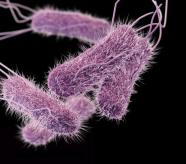
Salmonellaa

Image CDC

A Salmonella Enteritidis outbreak in Canada has sickened at least 63 people in six provinces, but public health officials have not identified a source of the pathogen. Officials are sharing this information to inform consumers how to avoid Salmonella infections. There is another Salmonella outbreak in that country that has sickened more than 500 people. That outbreak is linked to frozen breaded raw chicken and other raw chicken products.

USA – Dungeness Valley Creamy Raw Milk Recalled For Possible E. coli

Food Poisoning Bulletin

Ecoli Istock

Image CDC

Dungeness Valley Creamery of Sequim, Washington, is recalling their raw, unpasteurized whole milk, skim milk, and cream because it may be contaminated with E. coli bacteria that can cause illness. Routine sampling by the Washington State Department of Agriculture found the pathogen in retail raw whole milk that was dated 4/6.

RASFF Alerts – Listeria monocytogenes – Chilled Smoked Salmon- Cheese – Brie -Raw Milk Cheese – Sheep Cheese

RASFF-Logo

RASFF – Listeria monocytogenes (presence /25g) in chilled smoked salmon from Belarus in Poland

RASFF – Listeria monocytogenes (present) in various cheeses from France in Belgium

RASFF – Listeria monocytogenes in brie from France in Belgium

RASFF – Listeria monocytogenes in raw milk cheese (Brie de Meaux) from France in Luxembourg

RASFF – Listeria monocytogenes (presence /25g) in sheep cheese from Slovakia in Slovakia

RASFF Alerts – Aflatoxin – Pistachios – Chilli Powder – Peanut and White Chocolate Spread – Peanut and Milk Chocolate Spread – Peanut with Caramel Spread – Dried Figs – Chopped Dates – Peanuts

RASFF-Logo

RASFF – aflatoxins (B1 = 10; Tot. = 58.9 µg/kg – ppb) in unshelled roasted pistachios from Turkey in Germany

RASFF – aflatoxins (B1 = 75.5; Tot. = 78.3 µg/kg – ppb) in chilly powder from India in Greece

RASFF – aflatoxins (B1 = 7.4; Tot. = 8.0 µg/kg – ppb) in peanut spread with white chocolate from Ukraine in Slovakia

RASFF – aflatoxins (B1 = 9.8; Tot. = 11.3 µg/kg – ppb) in peanut spread with milk chocolate from Ukraine in Slovakia

RASFF – aflatoxins (B1 = 7.2; Tot. = 36 µg/kg – ppb) in dried figs from Turkey in the Netherlands

RASFF – aflatoxins (B1 = 19.1; Tot. = 22.2) in peanut spread with caramel from Ukraine in Slovakia

RASFF – aflatoxins (B1 = 5.8; Tot. = 5.8 µg/kg – ppb) in chopped dates from Pakistan, via Germany in the Netherlands

RASFF – aflatoxins (B1 = 10.1 µg/kg – ppb) in shelled pistachios from the United States in Italy

RASFF – aflatoxins (B1 = 28.09; Tot. = 30.95 µg/kg – ppb) in pistachios from Kyrgyzstan, via Turkey in Italy

RASFF – aflatoxins (B1 = 4.07; Tot. = 4.6 mg/kg – ppm) in peanuts with shell from Egypt in Italy

RASFF Alert – Moulds – Mayonnaise

RASFF-Logo

RASFF – mayonnaise from Denmark infested with moulds in Denmark

RASFF Alerts- STEC E.coli – Raw Beef Ribs – Raw Milk Goats Cheese

RASFF-Logo

RASFF – shigatoxin-producing Escherichia coli (stx2+ /25g) in chilled raw beef ribs from Poland in Slovakia

RASFF – shigatoxin-producing Escherichia coli (O26 eae+ stx+) in raw milk goat’s cheese from France in France

RASFF Alert – E.coli – Live Mussels

RASFF-Logo

RASFF – too high count of Escherichia coli (between 330 and 1400 MPN/100g) in live mussels (Mytilus galloprovincialis) from Spain in Italy