Category Archives: food recall

USA – Notes from the Field: Multiple Modes of Transmission During a Thanksgiving Day Norovirus Outbreak — Tennessee, 2017

CDC

On November 28, 2017, the manager of restaurant A in Tennessee reported receiving 18 complaints from patrons with gastrointestinal illness who had dined there on Thanksgiving Day, November 23, 2017. Tennessee Department of Health officials conducted an investigation to confirm the outbreak, assess exposures, and recommend measures to prevent continued spread.

On November 23, one patron vomited in a private dining room, and an employee immediately used disinfectant spray labeled as effective against norovirus* to clean the vomitus. After handwashing, the employee served family-style platters of food and cut pecan pie. For the November 23 Thanksgiving Day, restaurant A served 676 patrons a limited menu from 11 a.m. to 8 p.m. The manager provided contact information, seating times, and seating locations for 114 patrons with reservations. All patrons with contact information were telephoned, and a questionnaire was used to assess illness and exposures for anyone living in the household who ate at restaurant A on November 23. Stool specimens were requested from ill patrons. Among the 676 patrons, 137 (20%) were enrolled in a case-control study.

A probable case was defined as diarrhea (three or more loose stools in 24 hours) or vomiting within 72 hours of eating at restaurant A on November 23; probable cases with norovirus RNA detected in a stool specimen by real-time reverse transcription–polymerase-chain reaction (RT-PCR) were considered confirmed. On November 30, environmental swabs for norovirus testing were collected in the restaurant. Patient and environmental samples were tested by real-time RT-PCR and sequenced at the Tennessee State Public Health Laboratory.

Thirty-six (26%) case-patients (two confirmed and 34 probable) and 101 (74%) controls were enrolled in the case-control study. Illness onsets occurred during November 23–25, with 17 of 35 (49%) cases occurring on November 24 (Figure). The mean incubation period was 31 hours (range = 2.5–54.5 hours), and the mean illness duration was 3 days (range = 0–6 days). Only one case-patient sought medical care. Diarrhea was reported by 33 (94%) case-patients, fatigue by 29 (83%), nausea and abdominal cramps by 28 (80%), vomiting by 24 (69%), and fever by six (17%).

Among menu items, only pecan pie was significantly associated with illness (odds ratio [OR] = 2.6; 95% confidence interval [CI] = 1.1–5.8); however, it was eaten by only 16 (47%) of 34 case-patients. The vomiting event occurred around noon; patrons seated during 11 a.m.–1 p.m. were significantly more likely to become ill than were patrons seated during other times (OR = 6.0; 95% CI = 2.6–15.3). No significant differences between dining locations (i.e., private dining room versus general seating) were identified (OR = 1.4; 95% CI = 0.4–4.3). Logistic regression was used to evaluate the effects of eating pecan pie, seating time, and seating location; only seating time during 11 a.m.–1 p.m. remained statistically significant (OR = 6.0; 95% CI = 2.2–16.5).

Stool specimens from two case-patients identified Norovirus GII.P16-GII.4 Sydney. Norovirus GII was identified in one environmental swab collected from the underside of a table leg adjacent to the vomitus.

RASFF Alerts – Salmonella – Poultry Meat Preparation – Chilled Mussels – Black Pepper – Ground Chilli – Whole Egg Powder – Ruccola – Sesame Seeds – Whitish Sesame Seeds – Chicken Meat Preparation

RASFF-Logo

RASFF-Salmonella enterica ser. Paratyphi B (presence /25g) in frozen poultry meat preparation from the Netherlands in France

RASFF-Salmonella (presence /25g) in chilled mussels from Spain in France

RASFF-Salmonella (present /25g) in black pepper from Spain in Germany

RASFF-Salmonella (in 3 out of 5 samples /25g) in ground chili from India in Spain

RASFF-Salmonella (present /25g) in whole egg powder from Slovakia in Hungary

RASFF-Salmonella enterica ser. Napoli (presence /25g) in ruccola from Italy in Norway

RASFF-Salmonella (presence /25g) in sesame seed from Nigeria in the Netherlands

RASFF-Salmonella enterica ser. Bongori (presence in 1 out of 5 samples /25g) in whitish sesame seeds from Sudan in Greece

RASFF-Salmonella (presence in 1 out of 5 samples /25g) in whitish sesame seeds from Sudan in Greece

RASFF-Salmonella (presence /25g) in frozen chicken meat preparation from Brazil in the Netherlands

Belgium – Belgian agency issues warning about meat linked to Salmonella outbreak

Food Safety News

Food Poisoning Salmonella

Authorities in Belgium have warned that certain meat products could be contaminated with Salmonella following processing of potentially contaminated raw materials from the Netherlands.

The Federal Agency for the Safety of the Food Chain (FASFC) said an alert through the Rapid Alert System for Food and Feed (RASFF) shows fresh meat used as raw material that could be contaminated with Salmonella Goldcoast was delivered to Belgium from the Netherlands.

This RASFF alert covers a suspected foodborne outbreak caused by pig meat from the Netherlands. As well as Belgium, 14 other countries received pig meat products. These are Austria, Canada, Croatia, Cyprus, Denmark, France, Germany, Greece, Italy, Luxembourg, Poland, Romania, Spain and the United Kingdom.

According to figures from the national public health institute of Belgium, Sciensano, there has not been an increase detected in the number of infections with Salmonella in 2018 compared to the previous year.

RASFF Alert- Campylobacter -Roasted Chicken Breast

RASFF-Logo

RASFF-Campylobacter ( <100 CFU/g) in frozen roasted chicken breast from Poland in France

RASFF Alert – Mycotoxin -DON – Deoxynivalenol – Gluten Free Oatcakes

RASFF-Logo

RASFF-deoxynivalenol (DON) (1461 µg/kg – ppb) in gluten free oatflakes from the United Kingdom in Hungary

RASFF Alert- Ochratoxin A – Raisins

RASFF-Logo

RASFF-ochratoxin A (16 µg/kg – ppb) in raisins from Turkey in Portugal

USA – E. coli O157:H7 Romaine Outbreak Increases With 52 Sick and 19 Hospitalized

Food Poisoning Bulletin

E. coli O157:H7 Romaine Outbreak 12618

The E. coli O157:H7 romaine outbreak has grown, according to an update posted by the Centers for Disease Control and Prevention (CDC). Since the last update posted in November 26, 2018, an additional nine patients have been added to the total for 52 sick. Those patients live in 15 states. Nineteen people have been hospitalized.

USA – Bauer’s Candies’ Modjeskas May Be Contaminated with Hepatitis A

Food Poisoning Bulletin

Bauer’s Candies’ Modjeskas

The FDA has issued a public health alert about possible hepatitis A contamination in Bauer’s Candies’ Modjeskas. This product is individually wrapped marshmallow candy that is dipped in chocolate or caramel. A worker in the facility tested positive for hepatitis A.

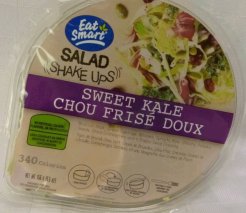
Canada -Food Recall Warning – Eat Smart brand Salad Shake Ups – Sweet Kale recalled due to Listeria monocytogenes

CFIA  20181203a_1543877467445_eng

Recall details

Ottawa, December 4, 2018 – Industry is recalling Eat Smart brand Salad Shake Ups – Sweet Kale from the marketplace due to possible Listeria monocytogenes contamination. Consumers should not consume the recalled product described below.

Recalled products

Brand Name Common Name Size Code(s) on Product UPC
Eat Smart Salad Shake Ups – Sweet Kale 156 g Best Before DEC 03 2018 DE 03
112 319
7 09351 30243 5

What you should do

If you think you became sick from consuming a recalled product, call your doctor.

Check to see if you have recalled products in your home. Recalled products should be thrown out or returned to the store where they were purchased.

Food contaminated with Listeria monocytogenes may not look or smell spoiled but can still make you sick.

USA – Michigan Cracker Barrel Shuttered due to Salmonella

Food Poison Journal

The Cracker Barrel restaurant near I-94 and S. 9th St. is voluntarily closing its’ doors for good following a salmonella outbreak investigation.The Kalamazoo County Health & Community Services Department (HCS), along with the Michigan Department of Health and Human Services (MDHHS) began investigating the location in June 2018 for health code violations and reports of food borne illnesses. HCS officials said the establishment voluntarily closed in June to begin facility renovations and worked with them to ensure all Michigan Food Law requirements were met to reopen.