Category Archives: Food Poisoning

UK – Report into international foodborne disease rates published

FSA

report published by the FSA has found it is not possible to compare foodborne disease rates effectively between countries. This is due to the hugely different methodologies and recording systems employed.

Researchers compared the ways different countries estimate how many people suffer from food poisoning each year, in an effort to determine whether these rates can be reliably compared.

The study, commissioned by the FSA and carried out by Public Health England, uncovered three broad approaches used globally:

  1. Prospective cohort studies – a sample population is recruited in advance, then report weekly on any symptoms of illness and may also submit samples so specific causes can be determined.
  2. Surveillance pyramid studies – an estimation of the number of cases missed through under-diagnosis and under-reporting, by using multipliers to extrapolate from laboratory confirmed illnesses.
  3. Retrospective cross-sectional surveys – a representative sample of the population is contacted and asked about their symptoms in the recent past.

Countries need to calculate foodborne disease estimates due to under-reporting, as not everyone who suffers from infectious intestinal disease (IID) will seek medical help and those who do will not always get a confirmed diagnosis. The data can then inform a country’s own food policy and prioritisation of resources.

Researchers concluded that the UK is using the most accurate approach available (prospective cohort studies).

FSA Head of science, evidence and research, Rick Mumford, said:

“The report concludes that attempting to accurately compare different countries’ foodborne disease rates is an almost impossible task. The only way you could attempt this would be for different countries to have the same type of study with the exact same study specifications, over the same time period. Even then, differences in underlying surveillance data available in each country could cause issues, particularly in terms of determining what proportion of IID cases are due to food.

“We have a much greater understanding of the different approaches taken across the globe and will continue to look and learn from this.”

Read the full report here.

FSA EXPLAINS

Rick Mumford, Head of Science, Evidence & Research Directorate, has provided an analysis of the report and what it means for comparing international food standards (Opens in a new window).

RASFF Alert – Bacillus cereus – Spicy Smoked Paprika Powder

RASFF-Logo

RASFF – Bacillus cereus (up to 23000 CFU/g) in spicy smoked paprika powder from Spain in Austria

RASFF Alert – Aflatoxin – Chestnut Flour – Groundnuts

RASFF-Logo

RASFF – aflatoxins (B1 = 4.3; Tot. = 7.7 µg/kg – ppb) in chestnut flour from Italy in Italy

RASFF – aflatoxins (B1 = 27; Tot. = 27 µg/kg – ppb) in groundnuts from the United States in the Netherlands

RASFF Alert – STEC E.coli – Chilled Vacuum Packed Bovine Meat

RASFF-Logo

RASFF – shigatoxin-producing Escherichia coli in chilled vacuum packed bovine meat from Ireland in Italy

Research-BfR addresses risk of E. coli in flour

Food Safety News#

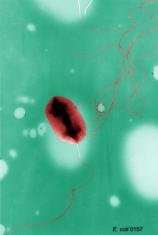
kswfoodworld E.coli O157

Image CDC


A German risk assessment agency has issued an opinion after STEC was frequently found in flour samples.

Shiga toxin-producing E. coli (STEC) was detected in multiple flour samples (wheat, spelt and rye) from mills during routine food monitoring in Germany in 2018.

The Federal Ministry of Food and Agriculture (BMEL) asked the German Federal Institute for Risk Assessment (BfR) to assess the sources, risk and prevention of STEC in flour.

Fifty STEC-positive samples were detected in 328 wheat, spelt and rye flour samples analyzed in 2018 as part of the Federal Monitoring Plan. A product recall in November 2019 of ready-made dough for short pastry biscuits shows STEC can occur in such a product.

Investigations of flour samples from mills in Germany for STEC have shown between 10 and 21 percent have positive samples. Viable STEC of different serogroups are detectable in flour for more than 50 weeks.


Ukraine – Ukraine reports 40 botulism cases in first half of 2020

112 UA

cdc clost spore

Image CDC

The Ukraine Ministry of Health has reported 40 cases of botulism since January, including two fatalities.

Since the beginning of 2020, 40 cases of infection with botulism observed in Ukraine; two cases were lethal. Besides, nine and 13-year-old children were among the diseased, as the Public Health Center reported on Facebook.

“The consumption of the home-made preserves, air-dried, smoked, salted fish and other food products purchased in the unauthorized trading may lead to the infection with botulism,” the center reported.

A 59-year-old man died from botulism in Ukraine. On the eve, a man ate homemade canned pork. It was severe acute disease and the state of the patient deteriorated after serum infusion and three surgeries. A man died on December 30, 2019.


USA – 641 CASES OF CYCLOSPORA REPORTED IN US: NEW OUTBREAK LINKED TO SALAD PRODUCT

Inventiva

More than 640 people in 11 US states have been diagnosed with Cyclospora, with the outbreak possibly related to bagged salad products. The bagged salads included iceberg lettuce, red cabbage, and carrots. Symptoms of cyclosporiasis, a disease caused by a microscopic parasite, include lack of appetite and weight loss, bloating, nausea, low-grade fever, weakness, and diarrhea. Cases have been recorded in almost a dozen states between May and this month. Of those infected with the multi-state outbreak of Cyclospora, 37 were hospitalized, the Food and Drug Administration said. There were no confirmed deaths.

The outbreak is being investigated by the FDA, the CDC, and the state and local authorities. Cyclospora infections may be linked to salad products manufactured by Fresh Express containing iceberg lettuce, red cabbage, and carrots and distributed in several regions of the United States.

Research – Aspergillus mycotoxins and their effect on the host

Pub Med

Abstract

Aspergillus fumigatus is known to produce various immunosuppressive mycotoxins including gliotoxin. However, none of these mycotoxins has been confirmed as being directly related to the pathogenesis of aspergilli. Recent studies have made substantial progress in the determination of mycotoxins as virulence factors. Gliotoxin was found to be produced much faster than previously believed under certain culture conditions, such as at 37 degrees C and under high oxygen content, which is close to the environment in the host. Gliotoxin was also found to be detectable in the sera of aspergillosis mice and of aspergillosis patients. Based on these findings, it is becoming evident that gliotoxin is produced in the infected organs of patients of aspergillosis at a significant level. In addition to these known mycotoxins, A. fumigatus produces many mycotoxins apparently different from known toxins. From the aspect of gene analysis, the deletion of laeA was found to block the expression of metabolic gene clusters such as sterigmatocystin, and the gene is also expected to be related to the production of gliotoxin. The significance of mycotoxins as virulence factors will hopefully be clarified in the near future.

Research – Survival of toxigenic Escherichia coli on chamomile, peppermint, green, black, ginger, and cinnamon teas during storage and brewing

Wiley Online

In this study, the persistence of toxigenic Escherichia coli (E. coli ) on dried chamomile, peppermint, ginger, cinnamon, black and green teas stored under 4, 10, and 25°C was determined. The E. coli survival rate in ginger and cinnamon teas decreased below 0 on Day 5. In the other tested teas, E. coli survivability showed a downward trend over time, but never dropped to 0. Chamomile tea retained the greatest population of viable E. coli . Meanwhile, die‐off of E. coli was higher at 25°C compared to lower temperatures. Additionally, fate of E. coli during brewing at 60, 70 and 80°C was evaluated. The E. coli population was reduced to below 2 Log colony forming units (CFU)/g after 1 min at 80°C, At the same time, the E. coli survival at 60°C was higher than that at 70°C in all tested teas. The data indicated that if E. coli survives after storage of prepared teas, it may also survive and grow after the brewing process, especially if performed using temperatures <80°C. Finally, we analyzed the correlations between temperature, time, tea varieties and E. coli survival, and successfully constructed a random forest regression model. The results of this study can be used to predict changes in E. coli during storage and fate during the brewing process. Results will form the basis of undertaking a risk assessment.

Pakistan – Aflatoxins: A peril which limits the export of maize crop from Pakistan

Cabi Blog

The agriculture sector is one of the most climate-sensitive sectors of Pakistan’s economy. It responds to temperature, precipitation, soil radiation, etc., which are directly associated with climate change. Rising temperature, uneven distribution of precipitation, floods, droughts, and other climatic disasters have affected human life along with socio-economic sectors of the world.

In Pakistan, maize is one of the important cereal crops which contributes 2.2 percent to the valued added products and 0.4 percent to the GDP. It is grown on an area of 1251 hectares with production of 5901 tonnes. In recent years, some mycotoxins, which we refer as Aflatoxins have been detected in maize crop grown in Pakistan. It has limited the export of Pakistani corn which causes losses in the economic benefit for all the chain actors linked with maize.

On the other hand, its consumption in the domestic market has been increased dramatically as Pakistani feed industry process/mill thousands of tons of maize every year to surge the demand of poultry sector. To address the issue of aflatoxin in maize crop, USDA and USAID joined hands with Pakistan Agricultural Research Council (PARC), Rafhan Maize Products Co. Ltd and CAB International to implement a programme namely ‘Aflatoxin Control in Pakistan’ using a cutting-edge USDA biocontrol technology.