Category Archives: Food Microbiology Research

Czech Republic – Salmonella detected in chicken meat from Ukraine and Brazil

Food Safety News

Officials in the Czech Republic have revealed poultry meat from Ukraine and Brazil has tested positive for Salmonella.

The State Veterinary Administration (SVS) has carried out more than 20 inspections as part of a control campaign aimed at shipments of poultry meat and eggs from countries outside the European Union.

In total, 21 inspections, 18 on poultry meat and three on eggs, have been undertaken since early April. A total of 43 samples were taken and results are available for 29 of them.

Samples of poultry meat from Ukraine, Brazil and the United Kingdom have been tested so far. As have some eggs from Ukraine.

Salmonella was confirmed four times in poultry meat, one from Ukraine and three from Brazil.

Italy – SWEET LOCAL SALAMI – Listeria monocytogenes

Salute

Brand : MARIGA

Name : SWEET LOCAL SALAMI

Reason for reporting : Remind for microbiological risk

Date of publication : 16 May 2023

Documentation

Documentation

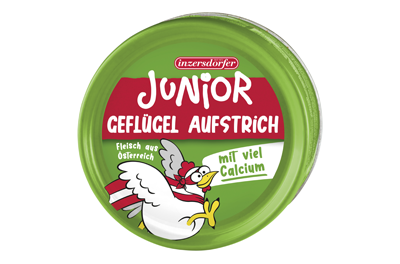
Austria – Inzersdorfer Junior Poultry Spread 80g – Microbial Contamination

AGES

AGES informs about a recall of the company Maresi Austria GmbH. On May 15th, 2023, the company recalled the product Inzersdorfer Junior Poultry Spread 80g:
© Maresi Austria
recall reason
Microbiological contamination
Manufacturer
Maresi Austria GmbH
Expiry Date
04.2026
Batch number
L3102

Maresi Austria GmbH is recalling “Inzersdorfer Junior Poultry Spread 80g” with the batch number “L3102” and the best before date “04 2026”.

As part of internal quality controls, bulges (bloating) on ​​the lid were discovered on individual packages of the product “Inzersdorfer Junior Poultry Spread 80g” with the batch number “L3102” and the best-before date “MHD 04 2026” .

There is therefore the possibility of microbiological contamination in individual packs of the product, which can lead to premature spoilage of the contents as a result. For reasons of precautionary consumer protection, Maresi Austria is recalling this article. Health impairments cannot be ruled out 100 percent. Consumption is not recommended for the product with the following batch number and the following best-before date.

Inzersdorfer Junior Poultry Spread 80 g
Batch number: L3102
Best before date: 04 2026
GTIN: 90333118

Products with the above best before date can be returned to the stores where they were purchased. Customers are reimbursed the purchase price even without proof of purchase. This warning does not imply that the hazard was caused by the producer, manufacturer, importer or distributor.

Other batches and products from Inzersdorfer are not affected and can be consumed without hesitation.

A Maresi hotline has been set up on 050 40 20 36 51 for more information .

original recall

Research – Fate of Listeria monocytogenes, Salmonella spp., and Shiga Toxin-Producing Escherichia coli on Slices of an All-Beef Soppressata during Storage

MDPI

Abstract

Cells of Listeria monocytogenesSalmonella spp., or Shiga toxin-producing Escherichia coli (STEC) were inoculated (ca. 4.0 log CFU/slice) onto slices (ca. 4 g each slice) of an all-beef soppressata (ca. pH 5.05 and aw 0.85). The storage of vacuum-sealed slices of inoculated soppressata at 4 °C or 20 °C for 90 days resulted in reductions of all three pathogens by ca. 2.2 to 3.1 or ca. ≥3.3 log CFU/slice, respectively. When pathogen levels decreased to below detection (≤1.18 log CFU/slice) by direct plating, it was possible to recover each of the target pathogens by enrichment, albeit more frequently from slices stored at 4 °C (p < 0.05) compared to 20 °C. In summary, the slices of the commercially produced beef soppressata selected for this study did not provide a favorable environment for either survival or outgrowth of surface-inoculated cells of L. monocytogenesSalmonella spp., or STEC during storage.

Research – Salmonella Biofilm Formation under Fluidic Shear Stress on Different Surface Materials

MDPI

Abstract

This study characterized biofilm formation of various Salmonella strains on common processing plant surface materials (stainless steel, concrete, rubber, polyethylene) under static and fluidic shear stress conditions. Surface-coupons were immersed in well-plates containing 1 mL of Salmonella (6 log CFU/mL) and incubated aerobically for 48 h at 37 °C in static or shear stress conditions. Biofilm density was determined using crystal violet assay, and biofilm cells were enumerated by plating on tryptic soy agar plates. Biofilms were visualized using scanning electron microscopy. Data were analyzed by SAS 9.4 at a significance level of 0.05. A surface–incubation condition interaction was observed for biofilm density (p < 0.001). On stainless steel, the OD600 was higher under shear stress than static incubation; whereas, on polyethylene, the OD600 was higher under static condition. Enumeration revealed surface–incubation condition (p = 0.024) and surface–strain (p < 0.001) interactions. Among all surface–incubation condition combinations, the biofilm cells were highest on polyethylene under fluidic shear stress (6.4 log/coupon; p < 0.001). Biofilms of S. Kentucky on polyethylene had the highest number of cells (7.80 log/coupon) compared to all other strain–surface combinations (p < 0.001). Electron microscopy revealed morphological and extracellular matrix differences between surfaces. Results indicate that Salmonella biofilm formation is influenced by serotype, surface, and fluidic shear stress.

Research – Effects of Selected Essential Oils on Listeria monocytogenes in Biofilms and in a Model Food System

MDPI

Abstract

The composition of 18 essential oils was determined using gas chromatography–mass spectrometry, and their antilisterial activity was evaluated by the disk diffusion method, followed by the determination of the minimum inhibitory and minimum bactericidal concentrations. The most active essential oils were oregano, thyme, cinnamon, winter savory, and clove, with MIC values ranging from 0.09 to 1.78 µL/mL. We investigated the biofilm-forming potential of Listeria monocytogenes on polystyrene at 5 °C, 15 °C, and 37 °C in three different media. The formation of biofilm was found to be dependent on the temperature and the availability of nutrients. After treatment with selected essential oils, the reduction in biofilm biomass was in the range of 32.61% and 78.62%. Micromorphological changes in the L. monocytogenes treated by oregano and thyme essential oils were observed in the form of impaired cell integrity and cell lyses by using scanning electron microscope. Oregano and thyme essential oils (MIC and 2MIC) significantly (p < 0.05) reduced the population of L. monocytogenes in minced pork meat during storage at 4 °C. In conclusion, the obtained results indicated the good activity of some selected essential oils on L. monocytogenes, with bacteriostatic, bactericidal, and antibiofilm effects at very low concentrations.

Research -Climate change and food safety: Temperature impact on the attachment of Escherichia coli pathogroups on cress leaf

Wiley Online

Abstract

Climate change and its worldwide effects are undeniable. Temperature increase due to climate change may affect foodborne pathogen survival on fresh produce. This study aimed to present an evaluation of climate change impact regarding temperature rise situations, on attachment of different pathogenic Escherichia coli strains on cress grown under controlled conditions. EHEC O157:H7, EAEC O104:H4 and EPEC O26 were inoculated with initial inoculum concentration of 8 log MPN/mL at different stages during growth to observe how inoculation time (7, 14, 21 and 28 days post sowing; dps) and route (seed and leaves) affect pathogen load on fresh produce. This study revealed that temperature increase designed according to mitigation scenarios for climate change (+2, +4 and +6 °C) did not cause any considerable change in pathogen persistence on leaf at 30 dps (~4.5 to 7 log MPN/g). In plants contaminated at later stage (21 and 28 dps), higher bacterial populations were obtained for all temperatures studied. Our results show that E. coli translocated towards leaf portions from seed and established significant amount of pathogen load on leaf (~4 to 5.3 log MPN/g). Also, inoculated bacteria have tightly bound to leaf (~3.5 to 7 log MPN/g) and cannot be eliminated by washing. Although persistence of E. coli O157:H7, O104:H4 and O26 did not differ significantly according to temperature, the bacterial load on the leaves was above infectious dose for humans.

Research – Scientists Discover How Foodborne Vibrio Infects People, Could Lead to New Treatments

Food Safety.Com

Food Illness

Researchers at the University of Texas (UT) Southwestern Medical Center have discovered how foodborne pathogen Vibrio parahaemolyticus infects people after eating raw or undercooked shellfish. The findings could lead to new ways to treat illness caused by the enteric bacteria.

The study provides the first visual evidence of how a gut bacterial pathogen uses an “assembly method” to build syringe-like structures to inject toxins into intestinal cells, giving a new view of how enteric bacteria, when exposed to bile acids, efficiently respond and build a virulence system.

Dutch farm owner, manager up on charges of selling contaminated eggs; one man died – Salmonella

Food Safety News

Two people in the Netherlands have been accused of knowingly selling eggs contaminated with Salmonella.

The case at Zwolle District Court covers events in 2017 and involves the duo, who were owner and manager of a farm at the time.

The Public Prosecution Service (OM) believes Salmonella findings were hidden for financial reasons. The defendants deny knowing about the contamination.

New Zealand – Shellfish biotoxin alert – North Island

MPI

North Island warning

Reason for alert Paralytic Shellfish Poisoning (PSP)

Date warning issued 10 May 2023

Media release

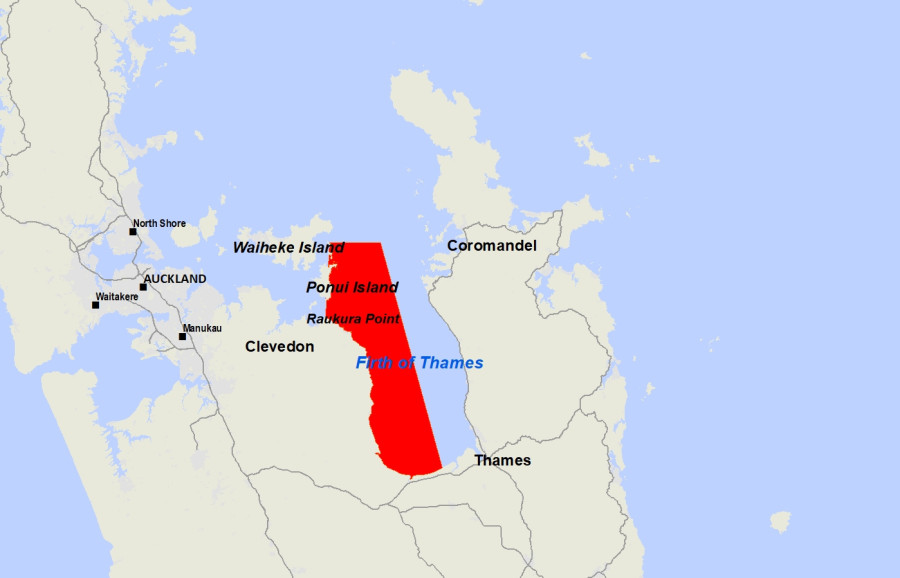
Affected area Western side of the Firth of Thames.
Shellfish affected Mussels, oysters, tuatua, pipi, toheroa, cockles, scallops, catseyes, kina (sea urchin) and all other bivalve shellfish.

Note, cooking shellfish does not remove the toxin.

Pāua, crab and crayfish may still be eaten if the gut has been completely removed prior to cooking, as toxins accumulate in the gut. If the gut is not removed its contents could contaminate the meat during the cooking process.

Symptoms Symptoms typically appear between 10 minutes and 3 hours after ingestion and may include:

  • numbness and a tingling (prickly feeling) around the mouth, face, and extremities (hands and feet)
  • difficulty swallowing or breathing
  • dizziness
  • headache
  • nausea
  • vomiting
  • diarrhoea
  • paralysis and respiratory failure and in severe cases, death.
Other information Paralytic shellfish toxins have been detected in shellfish from the Kaipara Harbour at levels over the safe limit of 0.8mg/kg set by MPI. Ongoing testing will continue and any changes will be communicated accordingly.

Map of the affected area

Map of affected area from the western half of the Firth of Thames.

Public warnings about toxic shellfish

We test shellfish and seawater for toxic algae every week from popular shellfish gathering areas around New Zealand. If the shellfish are not safe to eat, we issue public health warnings and put up signs at affected beaches.