Category Archives: Food Microbiology Research

Research -Evaluation of Public Health Risk for Escherichia coli O157:H7 in Cilantro

Science Direct

This study sought to model the growth and die-off of Escherichia coli (E. coli) O157:H7 along the cilantro supply chain from farm-to-fork to investigate its risk to public health. Contributing factors included in the model were on farm contamination from irrigation water and soil, solar radiation, harvesting, and transportation and storage times and temperatures. The developed risk model estimated the microbiological risks associated with E. coli O157:H7 in cilantro and determined parameters with the most effect on the final concentration per serving for future mitigation strategies. Results showed a similar decrease in the E. coli O157:H7 (median values) concentrations along the supply chain for cilantro grown in both winter and summer weather conditions. With an estimated 0.1% prevalence of E. coli O157:H7 contamination for cilantro post-harvest used for illustration, the model predicted the probability of illness from consuming fresh cilantro as very low with fewer than two illnesses per every one billion servings of cilantro (1.6 x 10⁻⁹; 95th percentile). Although rare, 3.7% and 1.6% of scenarios run in this model for summer and winter grown cilantro, respectively, result in over 10 cases per year in the United States. This is reflected in real life where illnesses from cilantro are seen rarely but outbreaks have occurred. Sensitivity analysis and scenario testing demonstrated that ensuring clean and high quality irrigation water and preventing temperature abuse during transportation from farm to retail, are key to reducing overall risk of illness.
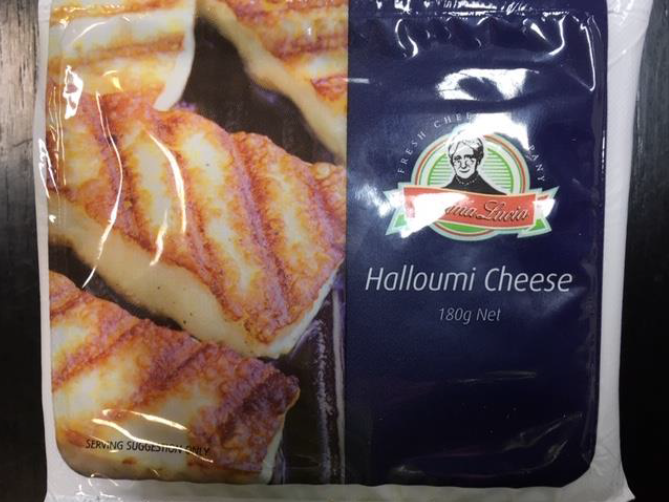
New Zealand – Mamma Lucia brand Halloumi Cheese – E.coli

MPI

A pack of Mamma Lucia Brand Halloumi Cheese (180g)

Product identification
Product type Cheese
Name of product (size) Mamma Lucia brand Halloumi Cheese (180g)
Batch marking 20139
Date marking Use by 14 11 20
Package size and description The product is sold in a 180g plastic package.
Distribution The product is imported from Australia.

The affected product has only been sold at Mediterranean Foods Trattoria & Deli, 42 Constable Street, Newtown, Wellington.

Notes This recall does not affect any other Mamma Lucia brand products.

Consumer advice

Customers are asked to check the batch and date mark printed on the product packaging.

Affected product should not be consumed. There have been no reports of associated illness, however if you have consumed any of this product and have any concerns about your health, seek medical advice.

Customers should return the product to their retailer for a full refund.

Escherichia coli (E. coli) is a bacterium that normally lives in the intestines of people and other warm-blooded animals. Although most strains of E. coli are harmless, some types can cause serious illness with severe diarrhoea and stomach cramps.

Who to contact

If you have questions, contact Mediterranean Foods (Wgtn) Limited:

  • Phone: 021 750 211
  • Address: 30 Landfill Road, Owhiro Bay, Wellington.

UK -Cardiff City Road restaurant found infested with salmonella-carrying cockroaches

Wales Online

A popular City Road café in the Welsh capital was closed down after around 100 cockroaches were discovered in the kitchen and dining area.

The insects were found at Mr Tikka on City Road in Roath, Cardiff, when council officers carried out an unannounced routine inspection on May 7 of last year.

When officers arrived, the owner, Rubi Begum, was seen sweeping two live insects off the counter and white powder – believed to be an insecticide – was on the kitchen floor.

More insects, including German cockroaches, which pose a significant health risk, were later discovered in the kitchen and dining area where customers were eating.

Research – Raw is risky: Why salads are the biggest source of food poisoning and what to do to avoid it

Barf blog

Brian Adam of Intallght writes just over a year ago, the United States saw the largest outbreak of E. coli since 2006; affecting at least 98 people in more than 20 states. The origin wa bagged romaine lettuce. Unfortunately, this is not an isolated case. Vegetables and fresh fruit have become a real headache for food safety experts.

Today in the United States, fresh vegetables are the largest source of food poisoning. In Europe, the figures are not so pristine, but the bacteria and viruses associated with this type of food also are to blame for the vast majority of poisonings. We are facing a real danger for food safety: salads.

Research – Growth and survival of foodborne pathogens during soaking and drying of almond (Prunus dulcis) kernels

JFP

The practice of soaking almonds prior to consumption is popular both commercially and at home. The food safety implications of soaking almonds was investigated through analysis of blogs and videos (n = 85 recipes) to identify both the reasons for soaking almonds and the common practices employed. Among the recipes analyzed, the most common reasons for soaking almonds (94.1%) were perceived benefits such as improved digestion and nutrient uptake. Most recipes (34.1%) suggested soaking at “room temperature” for times that ranged from 4 to 24 h or, more commonly, “overnight” (51.8%). Post-soaking drying instructions were provided in 40 recipes (47.1%). Among those providing a drying temperature (31.8%), 85% specified 66°C and lower. To evaluate the growth of foodborne pathogens during almond soaking, separate cocktails of Escherichia coli O157:H7, Listeria monocytogenes, and Salmonella enterica were inoculated onto raw almonds or into the soak water (almonds-to-water ratios of 1:1 and 1:3 [w/v]). Populations were monitored during soaking at 15, 18, and 23°C for up to 24 h, and during post-soak drying at 66°C for 14 h (for Salmonella only). At 15°C and a 1:1 almond:water ratio, no significant population increase (P > 0.05) was observed between 0 and 24 h for any of the pathogens. At 18°C, increases of 0.63, 1.70, and 0.88 log CFU/sample were observed over 24 h for populations of E. coli O157:H7, L. monocytogenes, and Salmonella, respectively. Populations of E. coli O157:H7, L. monocytogenes, and Salmonella increased by 3.48, 3.22, and 3.94 log CFU/sample, respectively, after 24 h at 23°C. When soaked almonds were dried for 14 h at 66°C, moisture and water activity decreased from 40% to ~6% and 0.99 to 0.60, respectively, but no significant reduction in Salmonella populations was observed. Recommendations for using shorter times (<8 h) and cooler temperatures (≤15°C) should reduce the potential for foodborne pathogens, if present, to grow during soaking of almonds.

Research – Sporeforming Bacteria Associated with Dairy Powders Can be Found in Bacteriological Grade Agar-Agar Supply

JFP

Thermophilic sporeforming bacteria are found ubiquitously in natural environments and therefore are present in a number of agricultural food products. Spores produced by these bacteria can survive harsh environmental conditions encountered during food processing and have been implicated in food spoilage. During research efforts to develop a standardized method for enumerating spores in dairy powders, the dairy powder associated thermophilic sporeformer Anoxybacillus flavithermus was discovered growing in un-inoculated control plates of Tryptic Soy agar (TSA) supplemented with 1% w/v starch, after incubation at thermophilic (55°C) growth temperatures. This paper reports the investigation into the source of this thermophilic sporeformer in TSA medium components and characterization of the bacterial isolates collected. Aqueous solutions of Tryptic Soy broth (TSB) powder from four suppliers and four agar-agar powders (two manufacturing lots from one supplier; Agar A_1 and Agar A_2, and two from separate suppliers; Agar B and Agar C) were subjected to two different autoclave cycle times (121°C for 15 min or 121°C for 30 min) and then prepared as TSA. After incubation at 55°C for 48h, bacterial growth was only observed in media prepared from both lots of Agar A agar-agar powder, and only when they were subjected to a 15 min autoclave cycle, implicating these powders as a source of the sporeformer contamination. Genetic characterization of 49 isolates obtained indicated the presence of five unique rpoB allelic types (ATs) of the thermophilic sporeformer, Geobacillus spp . in agar-agar powder from Agar A. These results not only highlight the importance of microbiological controls, but also alert researchers to the potential for survival of thermophilic sporeformers such as Anoxybacillus and Geobacillus in microbiological media used for detection and enumeration of these same thermophilic sporeformers in products like dairy powders.

Spain – Spain plans to tighten rules for marketing of unpasteurised milk

Food Safety News Raw Milk Food Safety KSW Foodworld

Spanish scientists have proposed additional requirements for the marketing of raw milk but have not gone as far as to ban it.

European regulation allows unpasteurized milk for direct human consumption to be placed on the market without treatment to kill bacteria, parasites and viruses. The current situation in Spain follows this legislation with no additional requirements so raw milk can be sold regardless of volume.

The Spanish Agency for Food Safety and Nutrition (AESAN) asked its Scientific Committee to assess whether risk management measures related to raw milk intended for direct human consumption are adequate to provide a high level of consumer protection. Or if it was necessary to prohibit raw milk sold in this way in Spain.

Proposed measures include microbiological criteria, mandatory packaging of milk and indicating on the label: “Raw milk without thermal treatment: boil before consumption” and “Maintain refrigerated at temperatures between 1 and 4 degrees C (34 to 39 degrees F).Raw Milk Food Safety KSW Foodworld

Research – Effectiveness of a Novel, Rechargeable, Polycationic N-halamine Antibacterial Coating on Listeria Monocytogenes Survival in Food Processing Environments

JFP

The goal of this research was to evaluate the efficacy of a novel rechargeable non-leaching polycationic N-halamine coating applied to stainless steel (STEEL) food contact surfaces to reduce Listeria monocytogenes contamination on ready-to-eat (RTE) foods. For this purpose, four L. monocytogenes strains were inoculated onto the charged (C; chlorine-activated) or uncharged (NC) N-halamine coated STEEL coupon surfaces (intact vs. scratched). After inoculation, test surfaces were incubated under different temperatures (2, 10, and 25°C) for different exposure times (0, 48, and 72 h). L. monocytogenes transfer from coated adulterated surfaces to ready to eat meat (beef sausages and roast beef) was also tested at 2 °C. Results showed that both intact-C and scratched-C coated surfaces showed significant reductions at any temperature; however, in presence of organic material, they were more effective in reducing L. monocytogenes at 2 °C and 10 °C than at 25 °C (p < 0.05). In contrast, INTACT-NC and SCRATCHED-NC increased their reduction capability at 25 °C (p < 0.05) decreasing the magnitude of difference of L. monocytogenes reduction with INTACT-C and SCRATCHED-C at the same temperature. Overall, higher L. monocytogenes reduction was observed for INTACT-C and SCRATCHED-C (≈ 4.1 ± 0.19 log CFU/cm2) than INTACT-NC and SCRATCHED-NC (≈ 2.3 ± 0.19 log CFU/cm2) at any temperature (p < 0.05). Additionally, the combination of the surface condition and chlorine presence on the N-halamine coating exposed for 2 h at 2 °C in presence of organic load (50 % meat purge) did not significantly affect the coating bactericidal efficacy. Regarding L. monocytogenes transfer to RTE meat, an overall reduction of ≈ 3.7 logs CFU/g was observed in sausages and roast beef. These findings suggest that a novel rechargeable N-halamine coating on STEEL surfaces has considerable potential to inactivate L. monocytogenes.

Research – Attributing human foodborne diseases to food sources and water in Japan using analysis of outbreak surveillance data

JFP

In Japan, strategies for ensuring food safety have been developed without reliable scientific evidence on the relation between foodborne infections and foods. The aim of this research was to provide information on the proportions of foodborne diseases caused by seven major causative pathogens ( Campylobacte r spp., Salmonella spp., EHEC, V. parahaemolyticus , Clostridium perfringens , Staphylococcus aureus , and Norovirus) attributable to foods using analysis of outbreak surveillance data. For the calculation of the number of outbreaks attributed to each source, simple-food outbreaks were attributed to the single-food category in question, and complex-food outbreaks were classified under each category proportionally to the estimated probability. Between 2007 and 2018, 8.730 outbreaks of foodborne diseases caused by seven pathogens were reported and another 6,690 (76.6%) were of “unknown source”. We observed fluctuations in the sources of foodborne diseases caused by the seven pathogens from 2013 to 2018 as follows: chicken products (92.9%, CI 92.6–92.9) for Campylobacter spp., beef products (40.1%, CI 38.2–41.2) and vegetables (39.3%, CI 38.2–41.2) for EHEC, eggs (22.8%, CI 14.9–31.9), chicken products (13,3%, CI 6.4–21.3) for Salmonella spp., finfish (86.3%, CI 62.5–95.8) and shellfish (13.7%, CI 4.2–37.5) for V. parahaemolyticus, grains and beans (47.2%, CI 31.2–62.5) for S. aureus, vegetables (69.3%, CI 50.8–79.7) and beef products (13.1%, CI 10.2–15.3) and chicken products (10.0%, CI 1.7–27.1) for C. perfringens , and shellfish (74.7%, CI 73.1–75.9) for Norovirus. In this study, we provide the best currently available basis to evaluate the link between foodborne diseases and foods. Additionally, our results reflected the effect of strict health regulations for raw beef during a given time period, and demonstrate the importance of controlling the contamination rate of Campylobacter spp. in chicken products at each step of the food supply chain.

Research -Effect of Silver Nanoparticles on the Morphology of Toxoplasma gondii and Salmonella braenderup

Hindawi

The study of silver nanoparticles (AgNPs) has recently increased due to the different antimicrobial properties that have been evaluated. Studies have shown that AgNPs decrease the cell viability of some parasitic species and inhibit bacterial growth and biofilm formation. Toxoplasma gondii is a parasite with different stages of development including the oocyst, and it can survive in the environment for a long time generating contamination of vegetables and water. This parasite has the ability to generate congenital toxoplasmosis and chorioretinitis in humans. Another human pathogen present in water is Salmonella braenderup, this bacterium, when consumed, causes gastroenteritis and typhoid fever. We evaluate the affectation that causes the AgNPs in oocysts of T. gondii and S. braenderup using fluorescence microscopy and scanning electron microscopy techniques. The results showed that at different ratios of AgNPs and microorganisms, as well as at different exposure time during the treatments, morphological alteration of the cell structure of oocysts of T. gondii and S. braenderup was evidenced, suggesting a potential treatment method for the inhibition of the viability of these microorganisms.