Category Archives: Food Microbiology Research

Research – Listeria monocytogenes prevalence varies more within fields than between fields or over time on conventionally farmed New York produce fields

JFP

Past studies have shown that the on-farm distribution of Listeria monocytogenes is affected by environmental factors (e.g., weather). However, the majority of studies were conducted at large scales (e.g., across farms), while few studies examined drivers of L. monocytogenes prevalence at smaller scales (e.g., within a single field). This study was performed to address this knowledge gap by (i) tracking L. monocytogenes distribution in two fields on one farm over a growing season, and (ii) identifying factors associated with L. monocytogenes isolation from drag swab, soil, and agricultural water samples. Overall, L. monocytogenes was detected in 78% (21/27), 19% (7/36), and 8% (37/486) of water, drag swab, and soil samples, respectively. All isolates were characterized by pulsed-field gel electrophoresis (PFGE). Of the 43 PFGE types identified, 14 were isolated on multiple sampling visits and/or from multiple sample types, indicating persistence in or repeated introduction into the farm environment during the study. Our findings also suggest that L. monocytogenes prevalence, even at the small spatial scale studied here, (i) was not uniform, and (ii) varied more within fields than between fields or over time. This is illustrated by the fact that plot (in-field variation), field (between field variation), and sampling visit (time) accounted for 18%, 2% and 3% of variance in odds of isolating L. monocytogenes, respectively. Moreover, according to random forest analysis, water-related factors were among the top-ranked factors associated with L. monocytogenes isolation from all sample types. For example, the likelihood of isolating L. monocytogenes from drag and soil samples increased monotonically as rainfall increased. Overall, findings from this single-farm study suggests that mitigation strategies for L. monocytogenes in produce fields should focus on water-associated risk factors (e.g., rain, distance to water), and be tailored to specific high-risk in-field areas.

Research – Inactivation of Salmonella and Shiga toxin-producing Escherichia coli (STEC) from the surface of alfalfa seeds and sprouts by combined antimicrobial treatments using ozone and electrolyzed water

Science Direct

Individual chemical and non-chemical treatments have failed to disinfect alfalfa seeds and sprouts from pathogens thoroughly. This study investigated the disinfection of alfalfa seeds and sprouts using a procedure combining ozone with acidic (pH 3.0) electrolyzed water (AEW). Inoculated alfalfa seeds with a cocktail of 3 strains Salmonella and 3 strains of STEC were treated sequentially with aqueous ozone followed by AEW. Treatment started by immersing the samples into ozonated water (5 mg/L ozone) for 15 or 20 minutes with persistent oxygen feeding pressurized with 10 psi. The samples then were immersed in 1 L of AEW for 15 min. Salmonella and STEC were significantly (P < 0.05) reduced by 3.6 and 2.9 log CFU/g on seeds respectively, and by 3.1 and 3.0 log CFU/g reduction on sprouts. Significant differences (P < 0.05) were found in the magnitude of the log reduction between Salmonella and STEC on seeds and between seeds and sprouts. Using combined treatments showed no significant changes in the quality, including shelf life, weight, and color in sprouts as compared to controls. The findings suggest that the combination of ozone and AEW is effective in inactivation of Salmonella and STEC on alfalfa seeds and sprouts with no adverse effects on sprouts quality.

Hong Kong – Cross contamination, temperature abuse factors in sandwich outbreak

Food Safety News

Cross contamination and temperature abuse are factors that played a role in an outbreak of Salmonella in Hong Kong earlier this year.

In May, the Centre for Health Protection (CHP) of the Department of Health recorded 236 illnesses linked to consumption of sandwiches produced in a food factory with more than 50 people needing hospital treatment.

Cross contamination of raw eggs by food handlers at the factory, prolonged storage of sandwiches at improper temperatures during delivery and at retail were suspected to be contributing factors to the outbreak.

The most commonly consumed items included a ham, cheese and egg sandwich by 166 cases, ham and egg sandwich by 50 cases and a cheese and egg sandwich by 29 patients.

Scotland – Salmonella and STEC behind most outbreaks in Scotland

Food Safety News

There were 11 foodborne outbreaks in Scotland this past year with almost 50 people falling ill.

Salmonella and Shiga toxin-producing E. coli (STEC) were the most frequently reported organisms.

Findings come from the Health Protection Scotland (HPS), part of Public Health Scotland (PHS), annual surveillance report on bacterial, protozoal and viral outbreaks of infectious intestinal disease in 2019.

The 11 outbreaks and 49 illnesses in 2019 is down from the 14 outbreaks and 117 illnesses reported in 2018, but in line with the previous five-year average of 13 outbreaks per year. Figures from 2018 include a norovirus outbreak that affected 60 people.

Research – Research shows estimated 180 deaths per year in UK because of foodborne illness

Food Safety News

Researchers have estimated there are 180 deaths per year in the United Kingdom caused by foodborne diseases from 11 pathogens.

The Food Standards Agency (FSA) estimates that about 2.4 million cases of foodborne illness occur every year in the UK.

Foodborne norovirus is projected to cause 56 deaths per year, Salmonella 33 deaths, Listeria monocytogenes 26, Clostridium perfringens 25, and Campylobacter 21. Most fatalities occur in those aged 75 years and older.

Foodborne deaths from Shigella, Cryptosporidium, Giardia, adenovirus, astrovirus and rotavirus are rare, according to the study published in the journal BMJ Open Gastroenterology.

India – Avoid food poisoning during monsoon with these simple tips

Indian Express

While monsoon brings respite from heat and humidity, the incessant showers can also bring seasonal flu and increase chances of infection. Which is why one needs to be extra careful in the rainy season, especially now. While we have taken care to avoid outside food, the chances of food poisoning owing to contaminated food and water can increase during such times.

Nutritionist Nmami Agarwal gives some essential tips to avoid food poisoning during monsoon. See the link above.


New Zealand – Research – Campylobacter Outbreak 2016

RNZ

The number of people infected in the Havelock North campylobacter crisis in 2016 was much higher than previously estimated, new research suggests.

Thousands of people were infected by drinking water from contaminated bores. Four people died and others were left permanently disabled.

joint study using gene-sequencing helped scientists discover the true scale of the outbreak.

The study suggests the campylobacteriosis case number could be as high as 8320, with up to 2230 of these living outside of Havelock North.

The Institute of Environmental Science and Research (ESR) science leader Dr Brent Gilpin said the study used DNA sequencing to link cases.

Research – Genomic epidemiology of domestic and travel-associated Vibrio parahaemolyticus infections in the UK, 2008–2018

Science Direct

CDC Vibrio

Image CDC

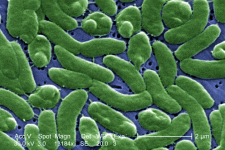
Globally, V. parahaemolyticus is the most prevalent food-poisoning bacterium associated with seafood consumption. To date, the epidemiology of Vibrio parahaemolyticus infections in the UK has remained unexplored. Here we analysed archived V. parahaemolyticus strains isolated from domestic infections and travellers into the UK from 2008 to 2018 and who had submitted clinical samples to Public Health England (PHE)’s Gastrointestinal Bacteria Reference Unit. A total of 48 strains were retrieved from the PHE strain collection, confirmatory tested by PCR and analysed by genome-wide phylogeny using a global collection of genomes with representative strains from the major epidemic clones. Most reported infections entering the UK originated from travellers returning from Southeast Asia, however cases were also reported to have potentially originated from the USA, Cuba, India, Turkey, Caribbean, France, Slovenia and also within the UK, highlighting the wide geographical spread of infections. A large genetic diversity of V. parahaemolyticus strains was observed, with sequence type 3 (ST3; pandemic group) strains the most common sequence type (23 of the 48 analysed strains, 47.9%). The majority of strains were tdh positive (25/48, 71%), with 5 isolates positive for both haemolysin genes (tdh and trh), with 2 isolates trh positive only (5.7%). Six isolates did not possess either haemolysin gene. We demonstrate that whole genome sequencing can be effective to type certain human pathogens entering a traditionally considered “non-endemic” county and this was captured via passive epidemiological surveillance systems. Such approaches may potentially provide a useful snapshot of the diversity of a given pathogen group circulating worldwide.

Research – Effect of Ploidy on Vibrio parahaemolyticus and Vibrio vulnificus Levels in Cultured Oysters

JFP Vibrio_vulnificus_01

Vibrio parahaemolyticus and V. vulnificus are naturally occuring human pathogenic bacteria commonly found in estuarine environments where oysters are cultured. The use of triploid oysters has increased, due to their rapid growth rate and that they maintain a high quality throughout the year. Previous work suggested levels of Vibrio spp. may be lower in triploid oysters, as compared to diploids. Therfore, this study aimed to determine if there is a difference in the abundances of V. parahaemolyticus and V. vulnificus between half-sibling diploid and triploid oysters. In four trials, 100 individual oysters (either iced or temperature abused) were analyzed for V. parahaemolyticus and V. vulnificus using direct plating followed by colony hybridization. Mean levels of V. parahaemolyticus in iced and abused diploid oysters were 3.55 and 4.21 log CFU/g, respectively. Mean levels in iced and abused triploid oysters were 3.49 and 4.27 log CFU/g, respectively. Mean levels of V. vulnificus in iced and abused diploid oysters were 3.53 and 4.56 log CFU/g, respectively. Mean levels in iced and abused triploid oysters were 3.54 and 4.55 log CFU/g, respectively. The differences in Vibrio spp. abundances between diploid and triploid oysters was not significant (p>0.05). However, the differences across treatments were significant (p<0.05), with the exception of V. parahaemolyticus levels in trial 3 (p=0.83). Variation between individual oysters was also observed, with 12 of 808 measurements being outside of the 95 th percentile. This phenomenon of occasional statistical outliers (“hot” or “cold” oysters) has been previously described and supports the appropriateness of composite sampling to account for inherent animal variability. In summary, the data indicate that abundances of V. parahaemolyticus and V. vulnificus are not dependent on the ploidy of cultured oysters, but vary with the type of handling.


Research – Project to look at 2019 Spanish Listeria outbreak

Food Safety News Listeria cdc

Andalusian authorities have allocated €100,000 (U.S. $113,000) for research to learn from the region’s Listeria outbreak in 2019. The project will focus on the epidemiological, microbiological and clinical analysis of the listeriosis outbreak, according to the Ministry of Health and Families in Andalusia.

The outbreak from “La Mecha” brand chilled roasted pork produced by Magrudis affected more than 200 people. During the health alert between mid-August and mid-October three people died and there were five abortions.