Category Archives: Food Microbiology Research

Research – Control of Salmonella and Pathogenic E. coli Contamination of Animal Feed Using Alternatives to Formaldehyde-Based Treatments

MDPI

kswfoodworld salmonella

This study compared a novel non-formaldehyde combination product developed for pathogen control in animal feed Finio (A), with a panel of three commonly used organic acid feed additive products: Fysal (B), SalCURB K2 (C) and Salgard (D). Products were evaluated for their ability to reduce Salmonella Typhimurium DT104 and avian pathogenic Escherichia coli in poultry feed. A commercial layer-hen mash was treated with each product and then mixed with feed previously contaminated (via inoculated meat and bone meal) with either Salmonella or E. coli. After 24 hours at room temperature, 10 replicate samples were taken from each preparation and plate counts were performed using a selective agar. All concentrations of product A (0.5, 1.0, 1.5, 2.0 and 2.5 kg per metric tonne (MT)) plus the higher concentration of products B and D (6.0 kg MT−1) significantly reduced Salmonella counts compared with those in the untreated control group (< 0.05). Product C did not significantly reduce levels of Salmonella under these conditions. Because of the poor recovery of E. coli, statistical comparisons for this organism were limited in scope, but only product A at the highest concentration appeared to have eliminated it.

Research – Vibrio parahaemolyticus: University of Exeter researchers discover how it can go dormant and then ‘wake up’

Outbreak News Today

Food Illness

Scientists have discovered how bacteria commonly responsible for seafood-related stomach upsets can go dormant and then “wake up”.

Vibrio parahaemolyticus is a marine bacterium that can cause gastroenteritis in humans when eaten in raw or undercooked shellfish such as oysters and mussels.

Some of these bacteria are able to turn dormant in poor growth conditions such as cold temperatures – and can remain in that state of hibernation for long periods before resuscitating.

University of Exeter scientists have identified a population of these dormant cells that are better at waking up, and have discovered an enzyme involved in that waking up process.

“Most of these bacteria die when they encounter poor growth conditions, but we identified sub-populations of bacteria that are able to stay dormant for long periods of time,” said lead author Dr Sariqa Wagley, of the University of Exeter.

Hong Kong – Bacillus cereus in Soybean Milk

CFS

Recently, the Centre for Food Safety (CFS) collected a soybean milk sample from a local food shop when following up on a food complaint. The sample was later found containing a bacterium known as Bacillus cereus (B. cereus) in an amount that exceeded the limit in the CFS’ Microbiological Guidelines for Food and was consided unsatisfactory. Soybean milk produced by local retail shops, such as soybean product shops and congee shops, usually has a short shelf life and requires stringent temperature control to maintain its safety. In this article, we will look into how the bacterium finds its way to survive in soybean milk production and how to prevent it.
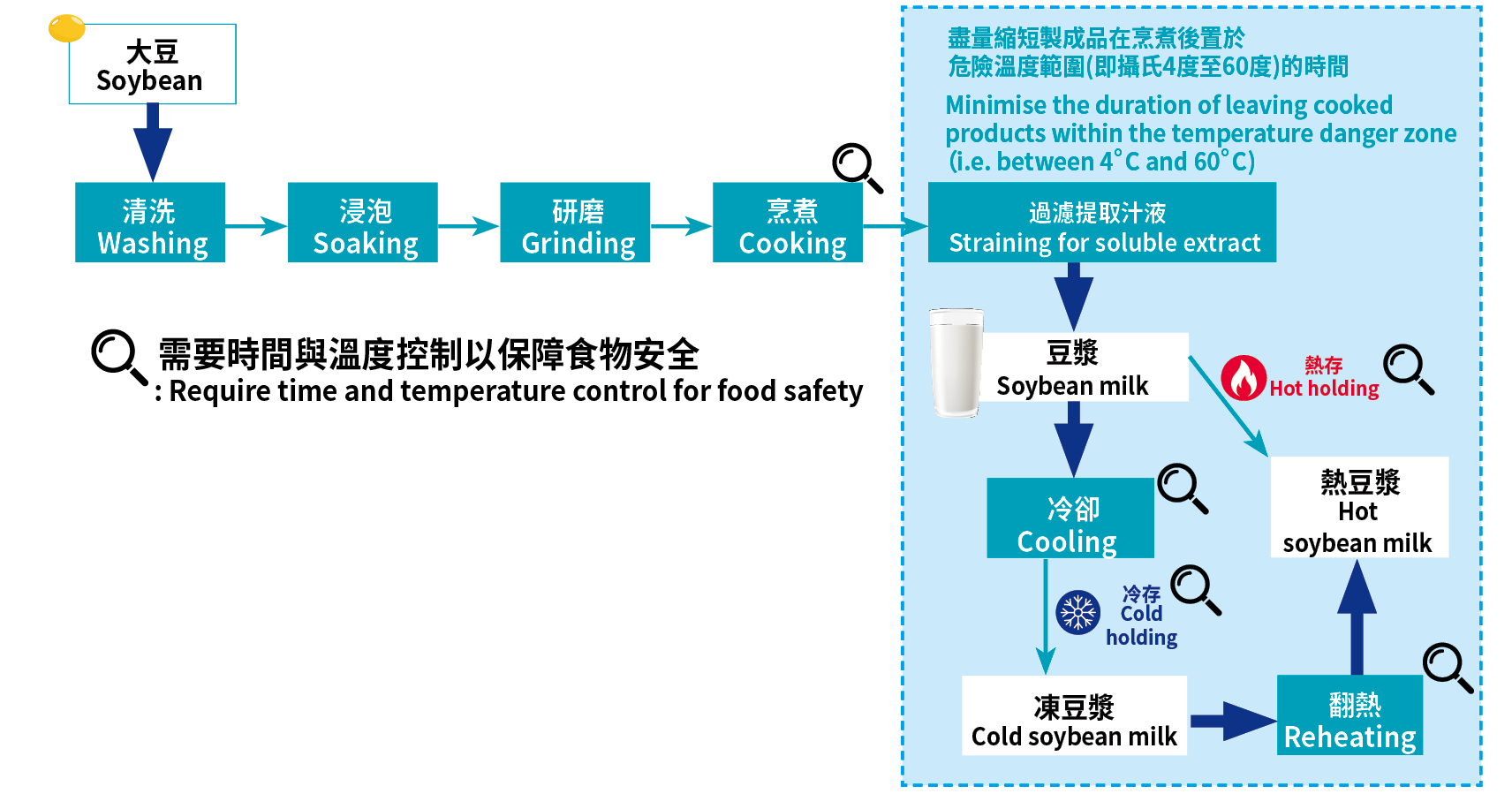
Figure 1 Highlights of processes requiring time and temperature control during production of soybean milk

Bacillus cereus Surviving Heat Treatment

B. cereus is a spore-forming bacterium and is ubiquitous in the environment. It is naturally present in soils, plants, agricultural products, etc. Hence, soybeans used in the production of soybean milk (see Figure 1) may contain B. cereus.

While cooking is effective to kill vegetative cells of B. cereus, its spores are heat-resistant and can only be eliminated by high temperature treatment, e.g. 121°C for 3 minutes. In this regard, the cooking temperature of soybean milk production at retail shops is not sufficient to kill the spores. Instead, the heat of cooking can not only induce the spores to germinate and become vegetative cells, but also create a favourable environment for the cells to grow by eliminating other microorganisms competing for growth. As a result, if the soybean milk is left under ambient condition for a prolonged period of time after cooking, vegetative cells can proliferate into a large number.

The vegetative cells can then produce a heat-resistant emetic (i.e. causes vomiting) toxin.  Even if contaminated soybean milk is reheated subsequently, it can still cause food poisoning that is characterised by causing the victim to vomit shortly after consumption.

Prevention by Time and Temperature Control

Despite the tenacious nature of B. cereus, soybean milk can still be safely produced. To prevent the microbiological hazard, certain production processes require time and temperature control (see Figure 1). First, the soybean slurry from grinding process has to be cooked thoroughly to kill B. cereus vegetative cells and other bacteria.  The heat treatment can also denature soybean enzymes that affect digestion of consumers.

After cooking, it is important to minimise the duration of leaving cooked products within the temperature danger zone, i.e. between 4°C and 60°C, in order to prevent the growth of vegetative cells of B. cereus formed from surviving spores. Cooked soybean slurry is strained through cheese cloth for soluble extract, i.e. soybean milk.  After straining, freshly made soybean milk can be held at above 60°C for hot serving.  As for cold soybean milk, it has to be cooled as quickly as possible, i.e. cooling to 20°C within two hours, and then to 4°C within the next four hours or less. Cooled soybean milk can then be stored at or below 4°C for cold serving. At certain food service businesses, soybean milk in cold holding may be reheated for serving. In that case, it has to be reheated with temperature reaching at least 75°C.

Last but not least, the production environment and equipment have to be kept hygienic to reduce microbiological contamination.  In particular, the equipment used after cooking processes, such as cheese cloth, container and dispenser, has to be cleaned after each use to minimise the building up of B. cereus which may contaminate cooked soybean milk of the next batch.

Key Points to Note

  1. Soybeans can be naturally contaminated with B. cereus. Normal cooking can kill vegetative cells of B. cereus, but not the spores and toxin of it.
  2. If cooked soybean milk is left at ambient temperature for too long, vegetative cells of B. cereus formed from surviving spores can produce toxin.
  3. It is important to minimise the duration of leaving soybean milk at a temperature range between 4°C and 60°C after cooking which favours the growth of B. cereus vegetative cells and toxin production.

Advice to the Trade

  • Avoid over-production as soybean milk has a short shelf life.
  • Speed up the cooling process by, for example, dividing soybean milk into small portions or using water bath or ice bath to cool bottled soybean milk.
  • Minimise the storage time of soybean milk, preferably clearing the stock within one day after production.

Advice to the Public

  • Consume soybean milk produced at retail shops as soon as possible.
  • Refrigerate the soybean milk at 4°C or below if it is not to be consumed immediately.

UK – The co-location of food and pet food production Guidance and advice for Food Business Operators and their enforcement agencies Published: December 2020

FSA

Click to access guidance-on-co-location-of-food-and-pet-food-production.pdf

Research – Light technology kills eggshell pathogens

KMA Land

hazegg.jpg

Pulsed ultraviolet light can be an alternative to some of the antimicrobial technologies now used in the poultry industry to kill pathogens, according to researchers at Pennsylvania State University. By reducing the microbial load on eggshells, foodborne illness associated with eggs and poultry meat can be reduced while chick health is maintained.

Paul Patterson, a professor of poultry science at Penn State, said the technology has merit for commercial application. The research team applied components of standard egg processing to a conveyor and sanitized eggs in a commercial setting, he said.

In the study eggshells were inoculated with nonpathogenic bacterial strains used for research. They were treated with pulsed ultraviolet light derived from a xenon flashlamp. Eggs were exposed on a modified egg-carrying conveyor that provided complete rotation of eggs under the flashlamp.

The researchers found that pulsed ultraviolet light treatment inactivated two different microbial strains with greater energy.

Food Safety Website – Stop Foodborne Illness

Stop Foodborne Illness

Incorporated as a not-for-profit in California in 1994, STOP began as a grassroots effort. The U.S. government and non-governmental organizations were not addressing this public safety issue and STOP stepped in to fill the void. The founders knew that increasing awareness about foodborne pathogens had to be a guiding principle.

Initially, STOP learned that there is not a singular government agency – there are many – that oversee food safety in the U.S. We also identified the lack of effective communication at all levels of governmental hierarchy – federal, state and local. It was clear that we weren’t the only organization seeking answers. As STOP became more knowledgeable of how food becomes contaminated, the weaknesses of the system and the complexity of the challenge of preventing foodborne illness became very apparent.

Learning that the United States government — our government — had known about emerging foodborne pathogens but lacked a comprehensive plan to combat them was disheartening. It was identified that as early as 1982, scientists and pathologists had been quietly warning the United States Department of Agriculture (USDA), Congress, and the media that a failure to inspect meat and poultry for bacteria would lead to a food safety disaster.

Time was of the essence and although there was significant resistance at every turn, STOP knew it held the truth.

STOP added its strong voice to the Safe Food Coalition, a group of consumer, public health and labor organizations which has advocated for improvements to the food safety system, particularly with respect to meat and poultry, since 1986. Industry held power, influence, and money. Victims’ families and survivors held onto lives that had been irreparably altered by foodborne illness. Families continued to tell their stories through the advocacy of STOP and its coalition partners.

STOP’s voices became a clarion call for change and eventually STOP was invited to participate in policy making. After countless hours spent educating the USDA and the meat industry about the devastation caused by E. coli, STOP became a key element in facilitating the first meat and poultry reforms since 1906. In 1996, STOP founders Roni and Nancy, were invited to witness this historic overhaul being signed into law by President Clinton.

Research – Monitoring online posts by consumers could help improve food safety

Phys Org

An estimated 48 million cases of foodborne illness are contracted in the United States every year, causing about 128,000 hospitalizations and 3,000 deaths, according to the Centers for Disease Control (CDC). In some instances, the source is well known, such as a batch of tainted ground beef that infected 209 people with E. Coli in 2019. But 80 percent of food poisoning cases are of unknown origin, making it impossible to inform consumers of hazardous food items.

David Goldberg, assistant professor of management information systems at San Diego State University, wants to improve the traceability and communication of risky  products. In a new study published by the journal Risk Analysis, his research team proposes a new Food Safety Monitoring System (FSMS) that utilizes consumer comments posted on websites to identify products associated with food-related illnesses.

The researchers utilized an AI technology called text mining to analyze comments and reviews from two websites: Amazon.com, the world’s largest e-commerce retailer, and IWasPoisoned.com, a site where consumers alert others to cases of food poisoning. The database consisted of 11,190 randomly selected Amazon reviews of “grocery and canned food” items purchased between 2000 and 2018, along with 8,596 reviews of food products posted on IWasPoisoned.com. These two datasets allowed the researchers to test the text mining tools before analyzing 4.4 million more Amazon reviews.

UK – An outbreak of human listeriosis associated with frozen sweet corn consumption: Investigations in the UK

Science Direct

The use of Whole genome sequencing (WGS) identified a multi-country outbreak of human listeriosis associated with consumption of frozen sweet corn produced in Hungary. The purpose of this report was to summarise information on the cases occurring in the UK which were part of this outbreak and outline investigations on the presence of Listeria monocytogenes in the affected food chain.

Prior to the international recall of this product in 2018, 12 UK cases of listeriosis were identified as infected by the outbreak strain between 2015 and 18. Epidemiological and microbiological investigations confirmed these cases as belonging to the outbreak. A further case occurred in 2019 and a contaminated frozen pack from one of the implicated batches of sweet corn was recovered from the patient’s domestic freezer.

The outbreak strain was also detected in products from a sandwich manufacturer in 2018 which added frozen sweet corn directly to sandwich fillings. The sandwich manufacturer’s sweet corn was supplied by a distributor in England which obtained frozen products from the Hungarian manufacturer implicated in the outbreak. Within the distributor’s premises, 208 food and environmental samples were taken: L. monocytogenes was detected in 44% of 70 samples of frozen sweet corn and 5% of 79 other foods.

The outbreak strain was detected in the frozen sweet corn, in one other frozen food (mixed vegetables) and in the factory environment. The outbreak strain was also recovered from frozen beans on retail sale in the first four months of 2019. Five other L. monocytogenes strains together with two other Listeria species were detected in samples from the importer’s premises. One of the L. monocytogenes strains in the importer’s factory, which was distinct from the outbreak strain, was also recovered from sweet corn collected from the sandwich manufacturer, sweet corn tested in England in 2013 and 2016 and the blood of two cases of human listeriosis which occurred in England in 2014. This report shows how analysis by WGS provides evidence to understand complex food chains.

This report also highlights risks for transmission of human listeriosis from frozen sweet corn and the potential for misuse of this food as a ready-to-eat product.

Germany – Germany warns of salmon linked to Listeria infections

Food Safety News

A significant proportion of listeriosis cases in Germany are caused by eating smoked or cured salmon products, according to the Robert Koch-Institut (RKI).

A total of 22 cross-federal state outbreaks of listeriosis have evidence pointing to smoked or cured salmon products as the cause of infections. This includes 15 illnesses from 2010 to 2015 and 41 in both 2019 and 2020.

These outbreaks include 236 clinical Listeria monocytogenes isolates and 208 cases of listeriosis could be assigned to these isolates.

Patients were diagnosed between 2010 and 2020. This past year 41 people got sick in 14 of the 22 outbreaks which suggests that the sources of infection persist and outbreaks are ongoing.

Information – Food Safety During Pregnancy

MPI

FW20017: Food Safety During Pregnancy
Most foods and drinks are safe to consume during pregnancy. But there are some products pregnant women should be careful with or avoid. Public Health and Food Safety authorities in most OECD countries provide risk communication material related to food safety during pregnancy. Such a resource is available on the New Zealand Food Safety (NZFS) website.
However, this advice was published in 2007 and was based on information available then. Since that time a range of new foods has been introduced and become popular in the diet of New Zealanders, while there is improved understanding over which foods might be a risk.
NZFS wants to ensure the food safety advice for pregnancy remains current with the latest science and dietary practices for New Zealand.It is important that food safety advice for pregnant women captures all of the foods that could be a risk, however it needs to balance this with ensuring pregnant women can maintain a varied diet and have access to the widest source of nutrition without being overly restrictive.
To achieve this a research project was commissioned to the Institute of Environmental Science and Research Limited (ESR) to provide a scientifically robust background for updating food safety advice for pregnant women. Food safety considerations are focused on Listeria monocytogenes, Toxoplasma gondii, mercury and caffeine, as these four hazards have known specific impacts on the foetus.
Other microbiological and chemical hazards were not targeted as the risks are not pregnancy specific and food safety advice for the general public is also applicable for pregnant women. This report is restricted to food safety issues and does not cover advice on healthy nutrition during pregnancy.Maternal exposure to the microbiological hazards Listeria monocytogenes and Toxoplasma gondii is strongly linked to adverse effects on the foetus. For two other microbiological hazards, Salmonella spp. and Campylobacter spp., associated with adverse outcomes specific to the pregnancy period, the supporting epidemiological evidence is weaker.
The report has examined up-to-date information on these two other hazards and provided safety advice where relevant.The research examined data on complex changes in the maternal immune system that include both down regulation and up regulation of aspects of the immune system. Evidently pregnant women may be more susceptible to some infections than non-pregnant women, but no more susceptible to most types of infections. However, the complications of common infections in pregnant women can be more severe.
The main outcome of the research is an evaluation of evidence for food safety advice during pregnancy. The report included an evaluation of all food groups listed in the current New Zealand Food Safety’s guide to food safety in pregnancy. Consideration was also given to a small number of foods that were not previously evaluated in relation to pregnancy. Additional advice was proposed for these foods. NZFS agrees with the suggestion that advice should

New Zealand Food Safety Food Safety During Pregnancy be included in the guide for sprouts, recommending that these foods are not eaten unless cooked; for dried herbs recommending thorough cooking and a recommendation to not drink unpasteurised fruit juice and cider (non-alcoholic). The report confirmed that in most cases, New Zealand Food Safety’s advice on foods to eat or not eat during pregnancy are consistent with the available scientific evidence.
In a small number of instances, suggestions were made to better align the advice with the current available evidence. NZFS agrees with these suggestions and intends to expand the advice accordingly. Based on the evidence provided NZFS agrees that the current advice related to low acid soft pasteurised cheeses (e.g. Brie, Camembert, blue, ricotta, mozzarella, feta) should be strengthened to recommend that pregnant women do not eat these cheeses unless cooked.The report supports NZFS’s intention to make its advice on a range of commercial pasteurised dairy products with relatively short shelf-life less restrictive. Currently the advice is to dispose products like pasteurised milk or yoghurt after two days of opening.
The reviewed scientific evidence identified that, if that the products are refrigerated in original packaging and care is taken not to contaminate lids when using, it is safe to follow manufacturer’s advice on the package. Suggested modifications will allow pregnant women better planning of their daily diets and will also reduce unnecessary food wastage.
The report has suggested the current advice related to soft serve ice cream be reconsidered. However, NZFS’s opinion is that, given the likelihood of Listeria sloughing into the product through its processing, current advice to avoid this product during pregnancy is adequate. For some foods the scientific evidence is not currently strong enough to support specific food safety advice on these foods, although the available evidence suggests they may represent potentially emerging risk foods for pregnant women. A brief summary of such foods is provided at the end of the report. NZFS will follow up on any new scientific research related to these products.