Category Archives: Food Microbiology Research

Research – Photothermal pasteurization of paprika powder by ultra-high irradiance blue (405 nm) light: Impact on Salmonella inactivation and quality attributes

Science Direct

Abstract

This study aimed to evaluate the inactivation efficacy of ultra-high irradiance blue (405 nm) LED treatments against Salmonella spp. in paprika powder and develop an alternative Weibull model to describe the inactivation kinetics. Paprika samples were inoculated with a Salmonella cocktail at a ratio of 1 mL/100 g (∼8.7 log CFU/g), acclimated for 7 days at 22 °C, and irradiated with blue LED at a fixed distance (5 cm) using different irradiances (548, 697, and 842 mW/cm2) and exposure times (60, 120, 180, and 240 s). Sterilization-like temperatures of up to 131.7 °C were observed in paprika after 240 s at 842 mW/cm2. Reduction levels in Salmonella counts ranged from 2.1 to 7.8 logs after 240 s. A modified Weibull model satisfactorily described the Salmonella inactivation kinetics (𝑅adj2 > 0.98). Compared to control samples, a significant decrease in redness (a* values) and higher DPPH scavenging activity were observed in treated paprika powders.

Industrial relevance: The obtained results indicated that UHI LED technology could serve as an alternative dry pasteurization method to improve the microbiological safety of spices. This would open further possibilities, including the use of this technology to disinfect food-contact surfaces in dry operations. These findings are thus important in supporting the development and optimization of LED technology for food safety applications in the food industry. Blue light has a shorter penetration depth, which may limit the size and shape of products that can be pasteurized with UHI blue LED technology.
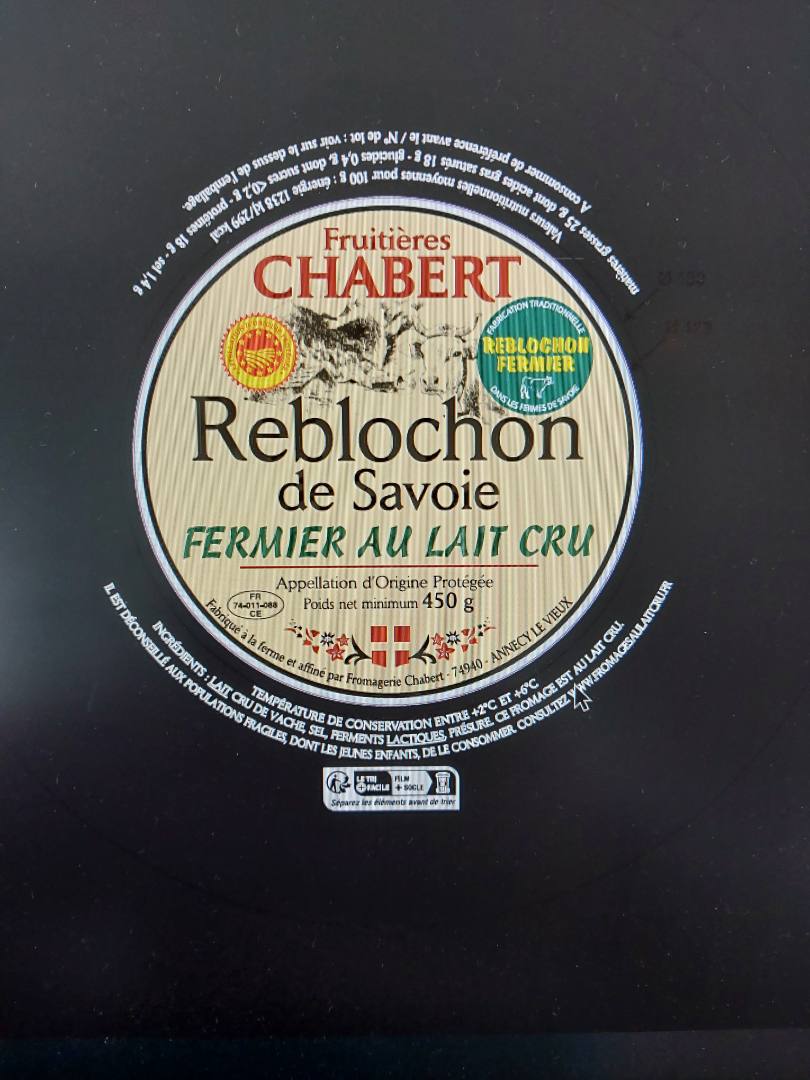
France – Reblochon Farmer from Aravis 450g – Listeria monocytogenes

Gov France

Product category
Food
Product subcategory
Milk and dairy products
Product brand name
Chabert ARAVIS cheese shop
Model names or references
Reblochon de Savoie AOP farmhouse with raw milk Fruitière Chabert
Product identification
GTIN Batch Date
93414170001017 4F19114B Use-by date 05/10/2024
Products List
REBLOCHON_ARAVIS_450G_ALERTE.pdfAttachment
Packaging
450G
Start/end date of marketing
From 03/23/2024 to 05/10/2024
Storage temperature
Product to keep in the refrigerator
Geographical sales area
Whole France
Distributors
Leclerc – Dullin David

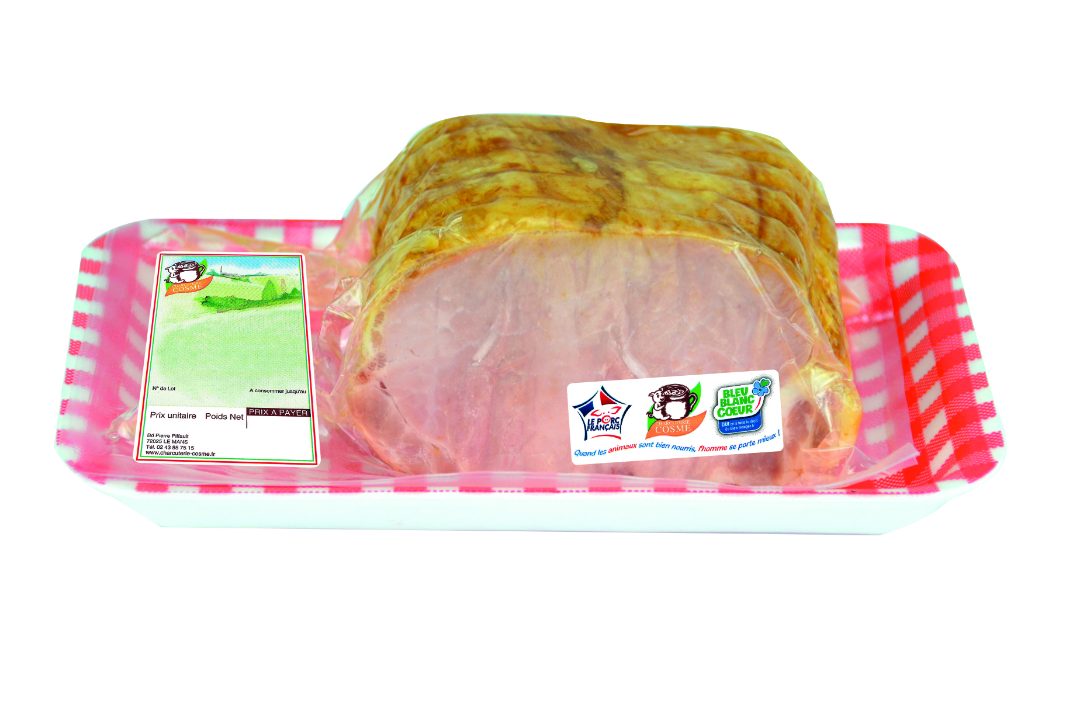
France – COOKED ROAST PORK x10 – COOKED ROAST PORK x5 – Listeria monocytogenes

Gov France

Product category
Food
Product subcategory
Meats
Product brand name
COSME CHARCUTERIE
Model names or references
COOKED ROAST PORK X10 COOKED ROAST PORK X5
Product identification
Batch Date
ROAST COOKED X5 – 241620 Use-by date between 05/07/2024 and 05/09/2024
COOKED ROAST X10 – 241620 Use-by date between 05/12/2024 and 05/15/2024
Packaging
TRAY OF 5 SLICES IN PROTECTIVE ATMOSPHERE PACK OF 10 SLICES IN VACUUM
Start/end date of marketing
From 04/17/2024 to 04/20/2024
Storage temperature
Product to keep in the refrigerator
Health mark
FR 72.181.005
Geographical sales area
Departments: INDRE-ET-LOIRE (37), LOIR-ET-CHER (41), LOIRET (45), MAYENNE (53), NIEVRE (58), ORNE (61), SARTHE (72)
Distributors
TERRE Y FRUIT – QUALITY FRUIT – CHARENTONNE BREEDERS – LE GRAND MARCHE – REGIONAL BUTCHERS – MARCHE PROVENCAL – PRIM FRESH – CARREFOUR CONTACT – HYPER U – LECLERC – SUPER U – U EXPRESS – RELAY MOUSQUETAIRES
List of points of sale
ET-Listing_client.pdf

Research – Food Safety News Publisher’s Platform: What you need to know about Botulism

Food Safety News

Botulism is a rare, life-threatening paralytic illness caused by neurotoxins produced by an anaerobic, gram-positive, spore-forming bacterium, Clostridium botulinum.[1] Unlike Clostridium perfringens, which requires the ingestion of large numbers of viable cells to cause symptoms, the symptoms of botulism are caused by the ingestion of highly toxic, soluble exotoxins produced by C. botulinum while growing in foods.[2] These rod-shaped bacteria grow best under anaerobic (or, low oxygen), low-salt, and low-acid conditions.[3] Bacterial growth is inhibited by refrigeration below 4° C., heating above 121° C, and high water-activity or acidity.[4] And although the toxin is destroyed by heating to 85° C. for at least five minutes, the spores formed by the bacteria are not inactivated unless the food is heated under high pressure to 121° C. for at least twenty minutes.[5] C. botulinum bacteria and spores are widely distributed in nature, because they are indigenous to soils and waters.[6] They occur in both cultivated and forest soils, bottom sediment of streams, lakes, and coastal waters, in the intestinal tracts of fish and mammals, and in the gills and viscera of crabs and other shellfish.[7]

England – Salmonella infections return to pre-pandemic levels in England

Food Safety News

The number of Salmonella cases in England has returned to pre-COVID-19 pandemic levels and 11 outbreaks were reported in 2022.

Salmonella Enteritidis went back to being the most frequently reported serovar and Salmonella Typhimurium infections also increased, said the UK Health Security Agency (UKHSA).

In 2022, there were 8,125 Salmonella cases in England, compared to 5,033 in 2021, 4,712 in 2020 and 8,398 in 2019.

Belgium – Organic rye from the Pit & Pit brand – Ochratoxin A

AFSCA

Pit & Pit organic rye

In agreement with the FASFC, Pit & Pit is withdrawing the “Organic Rye” product from the Pit & Pit brand from sale and recalling it from consumers due to excessively high levels of ochratoxin A.

Pit & Pit asks its customers not to consume this product and to return it. A free return label can be requested by sending an email with the photo of the label to help@pit-pit.com. Upon receipt of the return, the product will be refunded to you.

Product Description :

Product name: Organic rye
Brand: Pit & Pit
Type of packaging: transparent bag
Expiration date (DDM): 04/30/2024 – 09/30/2024
Weight and batch numbers:
1kg – Lot s : LUVZFWZL9, LUW4IC94L, LUX2U3XHO, LUZLHHA62, U1ZHWGL5, LV3UIT0DA, LUW4IC94L
The product was sold online, via the website http://www.pit-pit.com.

For any further information , please contact: help@pit-pit.com.

USA – FSIS Issues Public Health Alert for Ground Beef Products Due to Possible E. Coli O157:H7 Contamination

FSIS USDA

The U.S. Department of Agriculture’s Food Safety and Inspection Service (FSIS) is issuing a public health alert for ground beef products that may be contaminated with E. coli O157:H7. FSIS is issuing this public health alert to ensure that consumers are aware that these products should not be consumed. A recall was not requested because the products are no longer available for purchase.

The raw ground beef items were produced on March 28, 2024. The products have a “Use/Freeze by” date of April 22, 2024, and packaging date of “032824.” The list of products that are subject to the public health alert can be found here. The labels for these products can be found on the FSIS website [view labels].

The products subject to the public health alert bear establishment number “EST. 960A” inside the USDA mark of inspection. These items were shipped to food service institutions and retail locations nationwide.

The problem was discovered by the establishment while conducting an inventory of product that was on hold because it was found positive for E. coli O157:H7. The company notified FSIS that they inadvertently used a portion of the contaminated beef to produce ground beef products that they subsequently shipped into commerce.

There have been no confirmed reports of illness due to consumption of these products. Anyone concerned about an illness should contact a healthcare provider.

Research – Onsite Detection of Multiple Foodborne Bacteria Achieved Within One Hour Using Handheld Device

Food Safety.com

Researchers from Osaka Metropolitan University have achieved rapid, simultaneous detection of multiple foodborne bacteria with a handheld electrochemical device, which sends results to a smartphone app for convenient interpretation of results.

The biosensor-based technology was able to detect Escherichia coli and Staphylococcus aureus in real-world samples, onsite and within an hour. Time-wise, the new device offers a vast improvement over traditional, culture-based methods conducted in a laboratory, which can take days to produce results.

Research – Effect of food environment on the ability of microorganisms to form biofilms

Wiley Online

Abstract

The aim of this study is to understand the effect of the food product’s, even in trace amounts, in the biofilm formation potential of Escherichia coli and Staphylococcus aureus. Bacterial adhesion was tested using three different food media, in which bacterial cells were adapted before determining how this would affect their adhesion score and biofilm formation potential: sterilized milk, mineral water, and pasteurized commercial orange juice. After characterization of the bacteria and the adhesion support by the contact angle, the adhesion score obtained by the theoretical mathematical model XDLVO developed by van Oss was compared to that obtained by the experimental approach, in order to examine the role of non-specific (thermodynamic) and specific (biological) interactions in adhesion. Changes in the membrane composition of bacteria, as a function of acclimation conditions, were evaluated by infrared spectroscopy. Results reveal variability in the spectral region between 900 and 1200 cm−1 specific to capsular polysaccharides (CPS) or lipopolysaccharides (LPS), and also in the range between 2800 and 3000 cm−1 characteristic of membrane lipids and phospholipids. Biofilm formation by S. aureus and E. coli was affected by commercial UHT milk. This led to increased hydrophobicity and total adhesion energy within the environment of these strains. However, no correlation was observed between the adhesion scores obtained through experimental and theoretical approaches. This underscores the necessity of considering the specific characteristics of individual food products in understanding the phenomenon of biofilm formation. Understanding, the mechanism, the variations in bacterial surface characteristics, and the conditions that favor or disadvantage the formation of biofilms, may have important implications, in the development of preventive and curative strategies, to control of food-borne infections.

Research – Assessment of the chemical profile and potential biocontrol of Amphora coffeaeformis against foodborne pathogens and Culex pipiens L. to ensure food safety

Wiley Online

Abstract

The extensive use of synthetic antibiotics and insecticides in controlling microbes and insect spreads led to a build-up of resistance strains and caused negative impacts on human health through bioaccumulation in food and the environment. The present study assessed the antimicrobial activity of Amphora coffeaeformis (A. coffeaeformis) ethanolic extract against foodborne pathogenic microbes as well as assessed its ability to control Culex pipiens L. (C. pipiens) larvae. The gas chromatography–mass spectrum (GC/MS) and high-performance liquid chromatography (HPLC) analysis showed that A. coffeaeformis extract was rich with phenolic compounds, organosulfur compounds, carboxylic acids, amino acids, organic quinoline, dipeptide and monosaccharide. The extract of A. coffeaeformis showed antibacterial capability against all tested bacteria, with minimal inhibition concentration (MIC) values ranging from 20.2 to 66.7 g/mL, as well as antifungal effects against all tested mycotoxigenic fungi, with MIC values ranging from 113.62, 68.95 and 49.37 μg/mL mg/mL. Furthermore, the extract showed high larvicidal activity against C. pipiens larvae at 24, 48, and 72 h, respectively. LC50 values decreased gradually with the treatment period. Likewise, the adult emergence and growth index were significantly negatively related to increasing extract concentrations. Moreover, the extract exhibited a noteworthy depletion in the reproductive potential and increased sterility index of C. pipiens females developed of treated larvae. Besides a reduction in egg hatching percent, increase pupal malformations, increase and adult abnormalities. C. pipiens biochemical markers; glutathione-S-transferase, carboxylesterase, acetylcholinesterase, α-esterase and cytochrome P-450 showed significant alteration after the extract exposure. Overall, these findings promise the application possibility of A. coffeaeformis extract as a biopreservator against foodborne pathogens and as bioinsecticides for mosquito control as well.