Category Archives: Food Microbiology Research

Research – Reclaimed wastewater in agriculture: health risk from pathogens on fruit and vegetables?

BFR

German Federal Institute for Risk Assessment (BfR) advises against irrigation in certain cases

In Germany, fresh produce intended to be eaten raw that grow close to the ground, such as lettuce, carrots, strawberries or fresh herbs, should not be irrigated with reclaimed wastewater. The German Federal Institute for Risk Assessment (BfR) advises against this, particularly with regard to pathogenic viruses and parasites that can get onto or into the plants via this route. Current data are still insufficient for a conclusive risk assessment. However, there is evidence that certain viruses and single-celled parasites (protozoa) can defy environmental influences and cause diseases via raw fruit and vegetables. “Reclaimed wastewater in agriculture poses a new challenge to food safety,” says BfR President Professor Dr Dr Andreas Hensel. “In order to reduce pathogens as much as possible, we need very good treatment and detection methods.”

Climate change, unpredictable weather patterns and droughts are depleting water resources in Germany and Europe. To counteract this, Regulation (EU) 2020/741 sets minimum requirements for the use of reclaimed wastewater for agricultural irrigation. The EU regulation for water reuse applies from June 26, 2023 and is intended to protect the environment and human and animal health. The BfR has assessed possible health risks from the use of reclaimed wastewater for the irrigation of plant-based foodstuffs with regard to selected pathogenic viruses and protozoa. Particular attention was paid to fruit and vegetables that can be eaten raw, in which any pathogens that may be present are not reduced or killed by heating.

On the basis of available data, the BfR recommends not using reclaimed wastewater to irrigate plants, whose parts intended for raw consumption are growing close to or in the ground. This applies until suitable treatment processes and controls can ensure that the irrigation water does not contain pathogens, especially human-pathogenic viruses or protozoa. Because according to the current state of knowledge, pathogens can get onto or into the edible parts of the plants via all of the irrigation systems considered (subsurface drip irrigation, drip irrigation, furrow irrigation, sprinkler system, hydroponic culture) and cause illness in humans when consumed raw. Depending on the type of pathogen and the state of health of the person affected, the health impairment may vary; severe illnesses are possible in risk groups. Further research is required with regard to the suitability of methods for inactivating or reducing pathogens during wastewater treatment.

In the opinion of the BfR, plants whose raw edible fraction grows far from the soil, for example vineyards and fruit trees, can be irrigated with reclaimed wastewater of quality class A or B, provided that direct contact of the raw edible fraction with the reclaimed wastewater (by selecting a suitable irrigation system) and the irrigated soil is excluded. Since the viruses and protozoa under consideration are heat-sensitive, no adverse health effects due to pathogens in the reclaimed wastewater are to be expected for plant foods that are sufficiently heated before consumption.
Outbreak Investigation of Listeria monocytogenes: Ice Cream (July 2022)

FDA

The FDA, along with CDC, is assisting the Florida Department of Health (FL DOH) and Florida Department of Agriculture & Consumer Services (FDACS) in investigating an outbreak of Listeria monocytogenes infections linked to ice cream supplied by Big Olaf Creamery of Sarasota, Florida. As of August 2, 2022, CDC reports 25 illnesses in 11 states.

This is an ongoing investigation, and the FDA is continuing to work with the FL DOH and FDACS to investigate. FDA will update this advisory should additional consumer safety information become available.

Recommendation

Consumers, restaurants, and retailers should not eat, sell, or serve any recalled Big Olaf ice cream products and should throw the product away, regardless of the “Best By” or expiration date.

Listeria is most likely to sicken pregnant people and their newborns, adults aged 65 or older, and people with weakened immune systems. Other people can be infected with Listeria, but they rarely become seriously ill.

Call your healthcare provider right away if you have these symptoms after eating Big Olaf ice cream products:

  • Pregnant people typically experience only fever, fatigue, and muscle aches. However, Listeria infection during pregnancy can lead to miscarriage, stillbirth, premature delivery, or life-threatening infection of the newborn.
  • People who are not pregnant may experience headache, stiff neck, confusion, loss of balance, and convulsions, in addition to fever and muscle aches.

Consumers, restaurants, and retailers who purchased or received any recalled Big Olaf ice cream products should throw the products away, follow FDA’s safe handling and cleaning advice and use extra vigilance in cleaning and sanitizing any surfaces and containers that may have come in contact with these products to reduce the risk of cross-contamination. Listeria can survive in refrigerated temperatures and can easily spread to other foods and surfaces.

Product Images

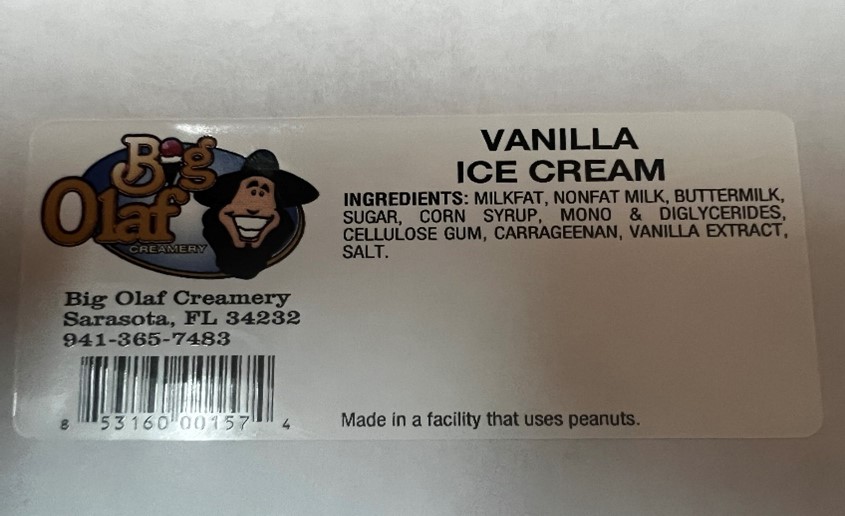
Big Olaf Ice Cream Product Image

The Big Olaf brand ice cream was sold to consumers in plastic pint size containers, plastic ½ gallon containers, and plastic 2.5-gallon tubs, scoopable are sold to the independent retail stores. All flavors, lots, codes, and all expiration dates through 6/30/2022 are included in this recall.

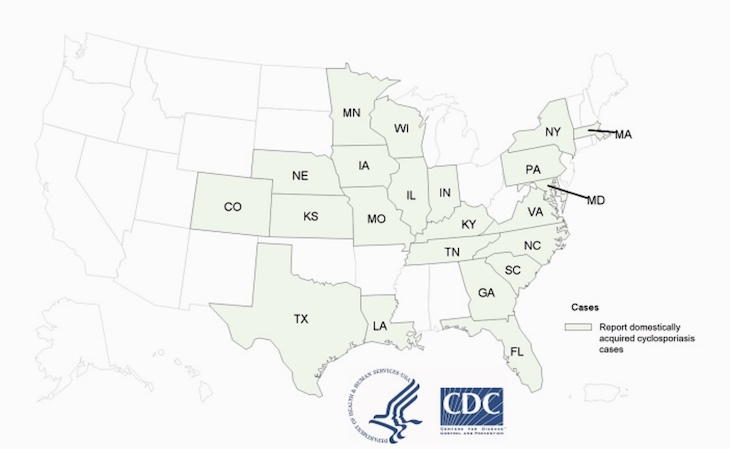
Case Count Map Provided by CDC

Outbreak Investigation of Listeria Monocytogenes in Florida-Based Big Olaf Ice Cream (July 2022) - CDC Case Count Map as of August 4, 2022

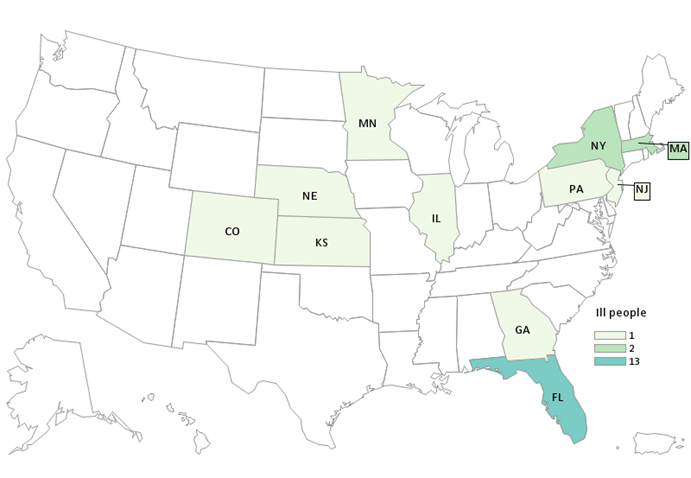
Map of U.S. Distribution of Recalled Big Olaf’s Ice Cream Products

Outbreak Investigation of Listeria Monocytogenes from Florida-Based Ice Cream - Map of U.S. Distribution of Recalled Ice Cream (July 13, 2022)

Case Counts

Total Illnesses: 25
Hospitalizations: 24
Deaths: 1
Fetal Loss: 1
Last illness onset: 6/24/2022
States with Cases: CO (1), FL (13), GA (1), IL (1), KS (1), NE (1), MA (2), MN (1), NJ (1), NY (2), PA (1)
Product Distribution*: FL, OH
*Distribution has been confirmed for states listed, but product could have been distributed further, reaching additional states

EU – 15 July update: Monophasic Salmonella Typhimurium outbreak linked to chocolate products

ECDC

As of 15 July 2022, 401 confirmed (n=399) and probable (n=2) cases of monophasic S. Typhimurium have been identified in the EU/EEA and the United Kingdom. This is an increase of nine cases since the last update on 3 June 2022. The latest reported case is from the UK with sampling date on 16 June 2022. In addition, cases have been identified in Canada (n=4), Switzerland (n=49), and United States (n=1), bringing the total number of cases to 455 globally.

This outbreak is characterised by high proportion of hospitalised (about 40%) cases, most of these are children below 10 years of age, and some cases with severe clinical symptoms like bloody diarrhoea.

Affected cases have been identified through advanced molecular typing techniques. As this method of testing is not routinely performed in all countries, some cases may be undetected.

Based on epidemiological and microbiological investigations, specific chocolate products from a Belgian chocolate factory were identified as likely vehicles of infection.

The factory was closed on 8 April 2022 (week 14) and product recalls were launched globally. The recalls aimed to prevent the consumption of products potentially contaminated with Salmonella. As a result of control measures, number of cases have declined rapidly.

Further investigations are needed to identify the root cause of the contamination, and to ensure that contaminated products are not put on the market.

Table 1. Number of confirmed and probable cases of monophasic S. Typhimurium in the EU/EEA, the United Kingdom, Canada, Switzerland and the United States, as of 15 July 2022

Country Confirmed cases Probable cases Total number of cases
Austria 14 0 14
Belgium 64 2 66
Czech Republic 1 0 1
Denmark 4 0 4
France 121 0 121
Germany 34 0 34
Ireland 18 0 18
Italy 1 0 1
Luxembourg 2 0 2
Netherlands 3 0 3
Norway 1 0 1
Spain 3 0 3
Sweden 5 0 5
Total EU/EEA 271 2 273
United Kingdom 128 0 128
Total EU/EEA and UK 399 2 401
Canada 4 0 4
Switzerland 49 0 49
United States 1 0 1
Total 453 2 455

USA – Laboratory Accreditation for Analyses of Foods Program

FDA

About the Program

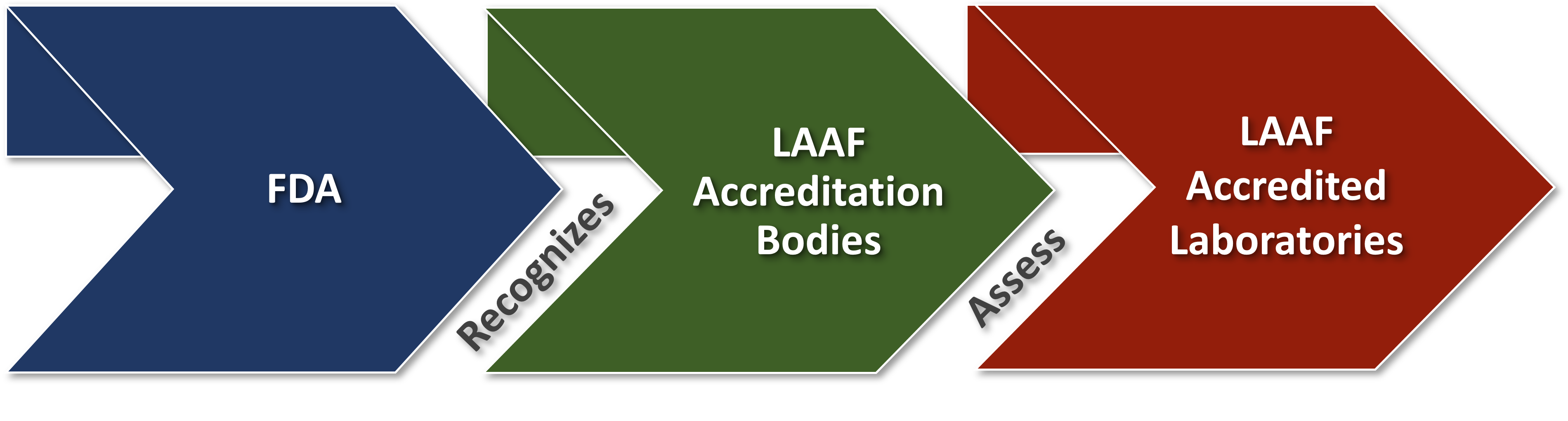
The FDA Food Safety Modernization Act (FSMA) final rule on Laboratory Accreditation for Analyses of Foods (LAAF) establishes a laboratory accreditation program for the testing of food in certain circumstances. Under the LAAF program, FDA will recognize accreditation bodies (ABs) that will accredit laboratories to the standards established in the final rule (referred to as LAAF-Accredited Laboratories).

For additional information and guidance, see FSMA Final Rule on Laboratory Accreditation for Analyses of Foods (LAAF).

FDA recognizes LAAF accreditation bodies which assess LAAF accredited laboratories.

Tables in the link above identify accreditation bodies that have been recognized and laboratories that have been accredited under the LAAF program. One recognized accreditation body (AB) may LAAF-accredit many laboratories. A recognized accreditation body may issue one or many certificates of accreditation for any LAAF-accredited laboratory (AL) location covering one or multiple laboratory scopes (LS). Separate laboratory locations under common ownership may be LAAF-accredited by different recognized accreditation bodies.

USA – Raw pet food company sues to block FDA public health alert

EFOOD ALERT

Arrow Reliance Inc. (d.b.a. Darwin’s Natural Pet Products) has filed suit in US federal court in an attempt to prevent the US Food and Drug Administration (FDA) from issuing a Public Health Alert about possible Salmonella contamination in a cat food product.

Darwin’s, which is based in Tukwila, Washington, filed the their request for a temporary restraining order on July 29, 2022, in the US District Court, Western District of Washington (Case 2:22-cv-01057).

The lawsuit contends that the FDA “wrongfully” threatened to issue the Public Health Alert if the company refused to issue a recall of its adult cat food.

The FDA’s request for a product recall apparently arose after kittens tested positive for Salmonella.

Finland – Nearly 30 sick in Finnish Salmonella outbreak

Food Safety News

Officials in Finland are trying to find the source of a Salmonella outbreak that has sickened almost 30 people.

Between March and July, 27 people in different parts of Finland have fallen ill with Salmonella Mbandaka infections.

Twenty patients are women. Their average age is 30 years old and the age range is from less than 1 to 74 years old.

Interviews with those who were ill revealed that 17 of 20 had eaten outside the home before becoming sick, said the Finnish Institute for Health and Welfare (THL).

The Finnish Food Authority (Ruokavirasto) and local food control authorities are tracing potential sources based on information given in the interviews.

USA – Cyclospora Illnesses Spike to 384 Sick with 30 Hospitalized

Food Poisoning Bulletin

Cyclospora Illnesses Spike to 384 Sick with 30 Hospitalized

Cyclospora illnesses have spiked to 384 sick in 22 states and 30 hospitalized, according to the Centers for Disease Control and Prevention (CDC). There has been a cyclospora outbreak, in fact, usually several cyclospora outbreaks, in the United States during the spring and summer months every year since 2013. This is an increase of 323 cases since the last update was issued on June 30, 2022. Cases are still being reported.

French E. coli outbreak linked to cucumbers from Belgium

Food Safety News

More than 30 people were sick in France in late 2021 as part of an outbreak traced to contaminated cucumbers.

In September 2021, the Hauts-de-France Regional Health Agency was notified of a suspected foodborne outbreak among students in the Lille area. Two hospitalized children were diagnosed with hemolytic uremic syndrome (HUS). HUS is a severe complication associated with E. coli infection that causes kidney failure. The agency asked Santé publique France for support in investigating the incident.

In total, 35 cases of gastroenteritis, half of whom had bloody diarrhea and fever, were identified. Ten people were hospitalized.

Identified cases were 29 children in four schools and five elderly adults who received meals through a local delivery program. One case was the parent of a pupil. Five children and one adult had meals delivered to them at home.

The median age of patients was 8 with a range of 4 to 89 years old and almost two thirds were female.

School cafeterias and the meal delivery service were all supplied by the same municipal canteen.

USA – USDA Announces Action to Declare Salmonella an Adulterant in Breaded Stuffed Raw Chicken Products

FSIS USDA

The U.S. Department of Agriculture’s (USDA) Food Safety and Inspection Service (FSIS) is announcing that it will be declaring Salmonella an adulterant in breaded and stuffed raw chicken products.

“Food safety is at the heart of everything FSIS does,” said Agriculture Secretary Tom Vilsack. “That mission will guide us as this important first step launches a broader initiative to reduce Salmonella illnesses associated with poultry in the U.S.”

“Today’s announcement is an important moment in U.S. food safety because we are declaring Salmonella an adulterant in a raw poultry product,” said Sandra Eskin, USDA Deputy Under Secretary for Food Safety. “This is just the beginning of our efforts to improve public health.”

By declaring Salmonella an adulterant in these products, FSIS will be able to ensure that highly contaminated products that could make people sick are not sold to consumers. Since 1998, breaded and stuffed raw chicken products have been associated with up to 14 outbreaks and approximately 200 illnesses. Products in this category are found in the freezer section and include some chicken cordon bleu or chicken Kiev products. These products appear cooked, but they are heat-treated only to set the batter or breading and the product contains raw poultry. Continual efforts to improve the product labeling have not been effective at reducing consumer illnesses.

Research – English E. coli outbreak caused by milk pasteurisation problem in 2019

Cambridge Org

In November 2019, an outbreak of Shiga toxin-producing Escherichia coli O157:H7 was detected in South Yorkshire, England. Initial investigations established consumption of milk from a local dairy as a common exposure. A sample of pasteurised milk tested the next day failed the phosphatase test, indicating contamination of the pasteurised milk by unpasteurised (raw) milk. The dairy owner agreed to immediately cease production and initiate a recall. Inspection of the pasteuriser revealed a damaged seal on the flow divert valve.

Ultimately, there were 21 confirmed cases linked to the outbreak, of which 11 (52%) were female, and 12/21 (57%) were either <15 or >65 years of age. Twelve (57%) patients were treated in hospital, and three cases developed haemolytic uraemic syndrome. Although the outbreak strain was not detected in the milk samples, it was detected in faecal samples from the cattle on the farm. Outbreaks of gastrointestinal disease caused by milk pasteurisation failures are rare in the UK. However, such outbreaks are a major public health concern as, unlike unpasteurised milk, pasteurised milk is marketed as ‘safe to drink’ and sold to a larger, and more dispersed, population. The rapid, co-ordinated multi-agency investigation initiated in response to this outbreak undoubtedly prevented further cases.