Category Archives: Food Microbiology Research

Sweden – Pasta meal behind 80 illnesses in Sweden – Staphylococcus/Bacillus

Food Safety News

Around 80 people got food poisoning from a pasta meal at a soccer tournament this past month in Sweden.

An investigation into the incident in Gammelstad on Aug. 5 revealed people fell ill after eating spaghetti bolognese from a restaurant in the city of Luleå.

Testing of the bolognese left at the restaurant was found to be satisfactory. Samples were also taken in Gammelstad where serving took place. High levels of bacteria were detected in the pasta, plus the presence of toxins that can cause food poisoning. Food had been left at room temperature for some time after serving, which provided an opportunity for bacterial growth.

Bacillus cereus and Staphylococcus aureus were found in the pasta meal. Symptoms experienced by those sick matched what would be expected with such contamination.

Research – First Description of a Yersinia pseudotuberculosis Clonal Outbreak in France, Confirmed Using a New Core Genome Multilocus Sequence Typing Method

Sante Publique

Yersinia pseudotuberculosis is an enteric pathogen causing mild enteritis that can lead to mesenteric adenitis in children and septicemia in elderly patients. Most cases are sporadic, but outbreaks have already been described in different countries. We report for the first time a Y. pseudotuberculosis clonal outbreak in France, that occurred in 2020. An epidemiological investigation based on food queries pointed toward the consumption of tomatoes as the suspected source of infection. The Yersinia National Reference Laboratory (YNRL) developed a new cgMLST scheme with 1,921 genes specific to Y. pseudotuberculosis that identified the clustering of isolates associated with the outbreak and allowed to perform molecular typing in real time. In addition, this method allowed to retrospectively identify isolates belonging to this cluster from earlier in 2020. This method, which does not require specific bioinformatic skills, is now used systematically at the YNRL and proves to display an excellent discriminatory power and is available to the scientific community. IMPORTANCE We describe in here a novel core-genome MLST method that allowed to identify in real time, and for the first time in France, a Y. pseudotuberculosis clonal outbreak that took place during the summer 2020 in Corsica. Our method allows to support epidemiological and microbiological investigations to establish a link between patients infected with closely associated Y. pseudotuberculosis isolates, and to identify the potential source of infection. In addition, we made this method available for the scientific community.

Auteur : Savin Cyril, Le Guern Anne-Sophie, Chereau Fanny, Guglielmini Julien, Heuzé Guillaume, Demeure Christian, Pizarro-Cerdá Javier
Microbiology spectrum, 2022, p. e0114522

Research – An outbreak of cryptosporidiosis associated with drinking water in north-eastern Italy, August 2019: microbiological and environmental investigations

Eurosurveillance

crypto

The enteric parasite , along with norovirus,  and rotavirus, is among the most frequent causes of waterborne disease [1,2]. In humans, transmission of  occurs via the faecal-oral route, either through direct exposure to infected people (person-to-person infection) or animals (animal-to-person infection), or through ingestion of water (drinking water, recreational water such as swimming pools, water parks, lakes, rivers) or consumption of raw or undercooked food contaminated with infectious oocysts [3]. Infection may remain asymptomatic or manifest as acute gastroenteritis (> 80% of infected individuals). Symptoms occur 1 to 12 days (mean: 7 days) after exposure and usually last 6 to 9 days. The severity and duration of symptoms are linked to the immune status of the host, and cryptosporidiosis can be life threatening in immunosuppressed individuals [4].

There are many  species that can infect humans, but the vast majority of cases are due to , a zoonotic species that also infects young ruminants, and , which is essentially only a human pathogen [5]. The environmental route of transmission is of high relevance for  [6]. This is due to several factors including: (i) the high survival rate of oocysts in water (more than 24 months at 20°C), (ii) high resistance to disinfection (30 mg/L of free chlorine are needed to achieve 99% inactivation at pH 7, with a recommended value of 0.2 mg/L for drinking water) [6], (iii) low infectious dose (10–132 oocysts in healthy adults [7]) and (iv) low host specificity [5]. Oocysts lose their infectivity when frozen, boiled or heated over 60°C [6].

The ability of  to survive at high chlorine concentrations [8] and, consequently, at the disinfectant concentrations commonly used in water treatment, has always been a challenge for water treatment plant operators. However, other disinfectants, such as chlorine dioxide, ozone, UV rays and filtration have proved to be rather effective in removing . Water safety mainly depends on the combination of different treatment stages, and a multi-barrier approach is a key paradigm for ensuring safe drinking water [6]. Nonetheless, in small water supplies managed by local communities that serve only few thousand people, multi-barrier treatment systems are usually not implemented. Thus, in order to ensure the safety of drinking water, more traditional treatments, e.g. disinfection, are used and water quality is checked against certain regulatory parameters.

During 2017–20, 60 waterborne outbreaks of cryptosporidiosis have been detected in Europe, the majority of which involving treated recreational water (swimming pools) as the vehicle of infection [9]. The number of outbreaks linked to contaminated drinking water has shown a notable decrease in the past decades, although, when occurring, large numbers of individuals may be involved, as exemplified by the outbreaks reported in 2010–11 in Sweden [10,11].


FDA – Core Outbreak Table – Investigations of Foodborne Illness Outbreaks

FDA

What’s New

  • An outbreak of Salmonella Mississippi (ref# 1097) in a not yet identified product has been added to the table and FDA has initiated traceback.
  • For the E. coli O157:H7 outbreak (ref# 1081) in a not yet identified food, sample collection and analysis have been initiated.
  • For the Salmonella Senftenberg outbreak (ref# 1087) in a not yet identified food, the case count has increased from 22 to 25 cases.
  • For the Salmonella Typhimurium outbreak (ref# 1095) in a not yet identified food, the case count has increased from 62 to 73 cases, an on-site inspection and sample collection and analysis has been initiated.
  • For the Cyclospora outbreak (ref# 1080) the case count has increased from 70 to 75.
  • For the Cyclospora outbreak (ref# 1084), the case count has increased from 41 to 42.
  • For the Salmonella Braenderup outbreak (ref# 1075), the case count increased from 74 to 75.
  • For the outbreak of Listeria monocytogenes (ref# 1057) linked to ice cream, FDA initiated an on-site inspection.

Israel – Strauss gets approval to reopen chocolate plant after Salmonella closure

Food Safety News

Strauss Group has been given permission to restart a factory in Israel that was shut months because of Salmonella findings.

The confectionery manufacturing site in Nof Hagalil will gradually return to production following a thorough clean-up of the plant and investments in infrastructure.

Food inspectors from the Israeli Ministry of Health allowed the resumption of operations after an audit. Agency officials will continue inspections of the plant as part of the return to full production. Strauss Group said this ramp up may take several months.

Approval was suspended in April after a recall of Elite brand products and link to an outbreak prompted an audit which found a number of issues at the factory including Salmonella on a production line and in the liquid chocolate used to make finished products. Elite products were recalled from United States, Canada, Australia, Brazil, Europe and the United Kingdom.

Research – Scientists blame Listeria’s low priority for regulatory support as the likely true cause for a low-burn listeria outbreak

Food Safety News

Government prosecutors wrapped conspiracy and fraud around the head of the former president of Blue Bell ice cream, but a hung jury did not buy it. That Texas jury was 10-to-2 in favor of acquittal.

But how then should be explained the illnesses and deaths associated with the 2015 listeriosis outbreak. Does science explain less human responsibility?

Nineteen expert researchers worked on that question, and they’ve produced a 22-page research paper with their answers. They point to an event beginning long before Blue Bell Creameries knew Listeria contamination was a threat.

Research – Persistence of Listeria monocytogenes ST5 in Ready-to-Eat Food Processing Environment

MDPI

Most human listeriosis is foodborne, and ready-to-eat (RET) foods contaminated by Listeria monocytogenes during processing are found to be common vehicles. In this study, a total of four L. monocytogens STs (ST5, ST121, ST120, and ST2) have been identified in two RTE food plants from 2019 to 2020 in Shanghai, China. The L. monocytogenes ST5 was predominant in one RTE food processing plant, and it persists in the RTE meat processing plant with continued clone transmission. The genetic features of the four STs isolates were different. ST5 and ST121 had the three genes clpLmdrL, and lde; however, ST120 and ST2 had two genes except for clpL. SSI-1was present in ST5, ST121, and ST120. Additionally, SSI-2 was present only in the ST121 isolates. ST120 had all six biofilm-forming associated genes (actAprfAlmo0673recOlmo2504 and luxS). The ST2 isolate had only three biofilm-forming associated genes, which were prfAlmo0673, and recO. The four ST isolates had different biofilm formation abilities at different stages. The biofilm formation ability of ST120 was significantly higher when grown for one day. However, the biofilm formation ability of ST120 reduced significantly after growing for four days. In contrast, the biofilm formation ability of ST5 and ST121 increased significantly. These results suggested that ST5 and ST121 had stronger ability to adapt to stressful environments. Biofilms formed by all four STs grown over four days can be sanitized entirely by a disinfectant concentration of 500 mg/L. Additionally, only ST5 and ST121 biofilm cells survived in sub-lethal concentrations of chlorine-containing disinfectant. These results suggested that ST5 and ST121 were more resistant to chlorine-containing disinfectants. These results indicated that the biofilm formation ability of L. monocytogenes isolates changed at different stages. Additionally, the persistence in food processing environments might be verified by the biofilm formation, stress resistance, etc. Alternatively, these results underlined that disinfectants should be used at lethal concentrations. More attention should be paid to ST5 and ST121, and stronger surveillance should be taken to prevent and control the clonal spread of L. monocytogenes isolates in food processing plants in Shanghai. View Full-Text

Research – Bacillus cereus in Dairy Products and Production Plants

MDPI

Spore-forming Bacillus cereus is a common contaminant of dairy products. As the microorganism is widespread in the environment, it can contaminate milk at the time of milking, but it can also reach the dairy products in each phase of production, storage and ripening. Milk pasteurization treatment is not effective in reducing contamination and can instead act as an activator of spore germination, and a potential associated risk still exists with the consumption of some processed foods. Prevalences and concentrations of B. cereus in milk and dairy products are extremely variable worldwide: in pasteurized milk, prevalences from 2% to 65.3% were reported, with concentrations of up to 3 × 10⁵ cfu/g, whereas prevalences in cheeses ranged from 0 to 95%, with concentrations of up to 4.2 × 10⁶ cfu/g. Bacillus cereus is also well known to produce biofilms, a serious concern for the dairy industry, with up to 90% of spores that are resistant to cleaning and are easily transferred. As the contamination of raw materials is not completely avoidable, and the application of decontamination treatments is only possible for some ingredients and is limited by both commercial and regulatory reasons, it is clear that the correct application of hygienic procedures is extremely important in order to avoid and manage the circulation of B. cereus along the dairy supply chain. Future developments in interventions must consider the synergic application of different mild technologies to prevent biofilm formation and to remove or inactivate the microorganism on the equipment. View Full-Text

UK – Vulnerable consumers advised of ongoing risk of Listeria associated with ready to eat smoked fish

FSA

The Food Standards Agency (FSA), Food Standards Scotland (FSS), and the UK Health Security Agency (UKHSA) are reinforcing their advice to vulnerable groups of consumers in relation to the risks of Listeria monocytogenes infection linked to ready to eat smoked fish.

The advice to those who are over 65, pregnant or have weakened immune systems is that they should ensure that ready to eat smoked fish is thoroughly cooked before they eat it. ‘Ready to eat smoked fish’ refers to chilled smoked fish products that would not normally be cooked at home before being eaten.

This is because of an ongoing outbreak of Listeria monocytogenes which is particularly unsafe for those who are susceptible to Listeria infection.

The investigation has identified 14 linked cases of listeriosis since 2020, with eight of these since January 2022. Cases have been identified in England and Scotland. The majority of these individuals reported eating ready to eat smoked fish. One case has been a pregnant woman.

Listeriosis is a form of food poisoning caused by the bacterium Listeria monocytogenes. Most people who are affected get mild gastroenteritis which subsides in a few days.

However, certain individuals are particularly at risk of severe illness such as meningitis and life-threatening sepsis. These include those over the age of 65, those with certain underlying conditions such as cancer, liver and kidney failure or who are taking medications which can weaken the immune system. Listeriosis in pregnancy can cause miscarriages and severe sepsis or meningitis in new-born babies.

While the risks to the general public of becoming seriously ill due to Listeria are very low, we need people who are vulnerable – specifically those over 65, pregnant women and people with weakened immune systems – to be aware of the ongoing risks of consuming ready to eat smoked fish.

If anyone from these groups is eating ready to eat smoked fish, we are reminding them of the advice to ensure that it is thoroughly cooked before they eat it including when served as part of a dish.

People can also further reduce the risk by keeping chilled ready to eat smoked fish cold (5⁰C or below), always using products by their use-by date, following the storage instructions on the label, and cooking it until it is piping hot right through.

Dr Caroline Handford, Acting Head of Incidents at the Food Standards Agency

Most people won’t have any symptoms of the infection or will only experience mild symptoms such as abdominal pain or diarrhoea, which usually pass within a few days without the need for treatment.

However, some people are at higher risk of much more serious illness, including those over 65, people who are pregnant or new-born babies, and those with weakened immune systems including people undergoing immunosuppressive treatment, and people with chronic liver or kidney disease.

In light of this ongoing outbreak, we are advising pregnant and vulnerable people to only eat ready to eat smoked fish that has been thoroughly cooked to reduce the risk of listeriosis. If you have any concerns about your health please speak to your midwife, GP or hospital specialist team.

Professor Saheer Gharbia, Interim Deputy Director Gastrointestinal Infections and Food Safety at UKHSA

More on Listeria:

Listeria is a bacterium that causes an illness called listeriosis. It is widespread in the environment and once a food product has been contaminated it can grow on food at standard refrigeration temperatures. It can be destroyed by thorough cooking. It is of most concern in chilled, ready to eat foods that are not normally cooked before being eaten, such as smoked fish. The full list risky foods associated with listeriosis is available on the NHS website: Listeriosis page.

The risk of listeriosis is particularly high but not completely limited to individuals above 65 years of age, those with cancer, organ transplants, patients taking steroids, patients undergoing immunosuppressive or cytotoxic treatment including biologics and chemotherapy, people who are pregnant and their unborn or new-born babies, those with uncontrolled HIV infection, uncontrolled diabetes, chronic liver or kidney disease, people with an alcohol dependency and those with iron overload.

More information can be found on the Listeria guidance page on the FSA website.

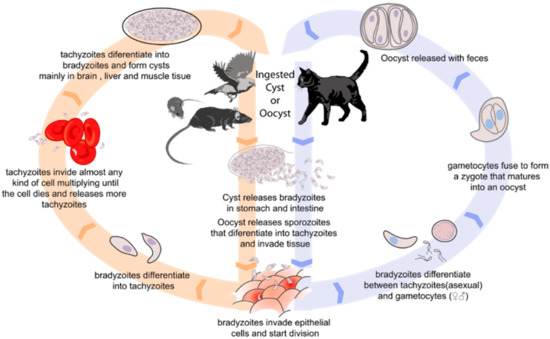
Research – Toxoplasma gondii in Foods: Prevalence, Control, and Safety

MDPI

Toxoplasma gondii is an obligate intracellular parasite that causes toxoplasmosis, with approximately one third of the population around the world seropositive. The consumption of contaminated food is the main source of infection. These include meat products with T. gondii tissue cysts, and dairy products with tachyzoites. Recently, contamination has been detected in fresh products with oocysts and marine products. Despite the great health problems that are caused by T. gondii, currently there are no standardized methods for its detection in the food industry. In this review, we analyze the current detection methods, the prevalence of T. gondii in different food products, and the control measures. The main detection methods are bioassays, cell culture, molecular and microscopic techniques, and serological methods, but some of these do not have applicability in the food industry. As a result, emerging techniques are being developed that are aimed at the detection of multiple parasites simultaneously that would make their application more efficient in the industry. Since the prevalence of this parasite is high in many products (meat and milk, marine products, and vegetables), it is necessary to standardize detection methods, as well as implement control measures. View Full-Text