Category Archives: Food Microbiology Blog

USA – Old Europe Cheese, Inc. Expands Voluntary Recall of Its Brie Cheeses Due to Possible Health Risk – Listeria monocytogenes

FDA

Culinary Tours Cranberry

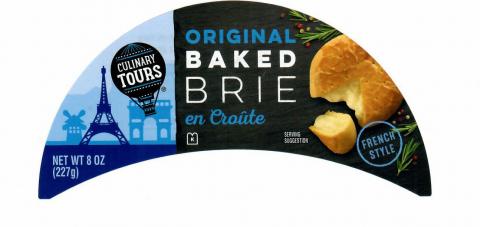
Culinary Tours Plain Baked Brie

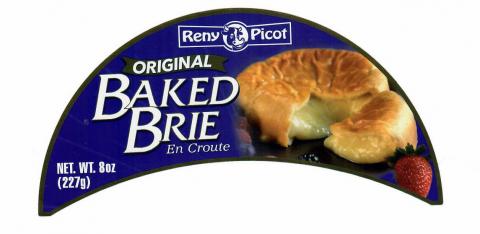
Reny Picot Plain baked Brie

Reny Picot Fig

Summary

Company Announcement Date:
FDA Publish Date:
Product Type:
Food & Beverages
Cheese/Cheese Product
Foodborne Illness
Reason for Announcement:
Listeria monocytogenes
Company Name:
Old Europe Cheese, Inc.
Brand Name:
Multiple
Product Description:
Brie and Camembert Cheeses

Company Announcement

Old Europe Cheese, Inc. of Benton Harbor, MI is expanding its voluntary recall of Brie cheeses announced on September 30, 2022, because of potential contamination with Listeria monocytogenes, to include additional products, specifically baked brie cheeses. Listeria monocytogenes is an organism which can cause serious and sometimes fatal infections in young children, frail or elderly people and others with weakened immune systems. Although healthy individuals may suffer only short-term symptoms such as high fever, severe headache, stiffness, nausea, abdominal pain and diarrhea, Listeria infection can cause miscarriages and stillbirths among pregnant women.

RECALL DETAILS

The following baked brie products are being added to the 9/30/2022 Old Europe Cheese voluntary recall. These are products with best by dates through 12/14/2022 and are subject to the voluntary recall. The products were distributed from August 01, 2022 through September 28, 2022 and were available at supermarkets, wholesale and retail stores nationwide and Mexico.

The following products being recalled are marked with Best By Dates ranging from September 28, 2022 to December 14, 2022.

Brand

Product Name

Packaging & size

UPC Code

CULINARY TOUR *8 oz Plain Baked Brie Clamshell 8 oz 011225005350
CULINARY TOUR *11 oz Cranberry Baked Brie Clamshell 11 oz 011225005367
LA BONNE VIE *8 oz Plain Baked Brie Clamshell 8 oz 820581678814
LA BONNE VIE *11 oz Cranberry Baked Brie Clamshell 11 oz 820581678821
LIDL * 8 oz Plain Baked Brie Clamshell 8 oz 4056489151203
LIDL *11 oz Cranberry Baked Brie Clamshell 11 oz 4056489151203
LIDL *11 oz Fig Baked Brie Clamshell 11 oz 4056489310907
PRIMO TAGLIO * 8 oz Plain Baked Brie Clamshell 8 oz 021130098460
Reny Picot *8 oz Plain Baked Brie Clamshell 8 oz 033421050088
Reny Picot *11 o zCranberry Baked Brie Clamshell 11 oz 033421051115
Reny Picot *11 oz Apple Baked Brie Clamshell 11 oz 033421500811
Reny Picot *11 oz Fig Baked Brie Clamshell 11 oz 033421053119

Consumers who have purchased the stated products are urged not to consume it and discard the product. FDA recommends in these cases that anyone who purchased or received any recalled products to use extra vigilance in cleaning and sanitizing any surfaces and containers that may have come in contact with these products to reduce the risk of cross-contamination. Listeria can survive in refrigerated temperatures and can easily spread to other foods and surfaces.

Old Europe Cheese has set up a telephone line to answer any questions about this recall, The number is 269-925-5003 ext 335 and is open Monday through Friday from 9:00am-12:30pm and 2:00pm-4:00pm ET.

France – Poultry ballotine- Listeria monocytogenes

Gov france

Identification information of the recalled product

  • Product category Feed
  • Product subcategory Meats
  • Product brand namePig71
  • Model names or references Poultry ballotine in half
  • Identification of products
    GTIN Batch Date
    3461934834619 1251 Use-by date 28/10/2022
  • Marketing start/end date From 09/10/2022 to 10/26/2022
  • Storage temperature Product to be stored in the refrigerator
  • Health mark EN 71.306.003 CE
  • Geographic area of ​​sale Regions: Auvergne-Rhône-Alpes, , , Burgundy-Franche-Comté, , , Île-de-France
  • Distributors Intermarché, Leclerc, Carrefour, Colruyt, Super u,

Practical information regarding the recall

  • Reason for recall Listeria monocytogenes < 10/g
  • Risks incurred by the consumer Listeria monocytogenes (causative agent of listeriosis)

France – PORK GALANTINE- Listeria monocytogenes

Gov france

Identification information of the recalled product

  • Product category Feed
  • Product subcategory Meats
  • Product brand name PIG 71
  • Model names or references pork galantine
  • Identification of products
    GTIN Batch Date
    3461934834619 1251 Use-by date 30/10/2022
  • Marketing start/end date From 09/10/2022 to 10/15/2022
  • Storage temperature Product to be stored in the refrigerator
  • Health marken 71.306.003 EC
  • Further information Product presented “by the cut” in the traditional department
  • Geographic area of ​​sale Regions: Auvergne-Rhône-Alpes, , , , Burgundy-Franche-Comté, , , , Île-de-France
  • Distributors shiever

Practical information regarding the recall

  • Reason for recall Presence of listeria < 10/g
  • Risks incurred by the consumer Listeria monocytogenes (causative agent of listeriosis)
    Other risk
    Poisoning

France – Smoked Salmon – Listeria monocytogenes

Gov france

Identification information of the recalled product

  • Product category Feed
  • Product subcategory Fishery and aquaculture products
  • Product brand name Unbranded
  • Model names or references2 Slices of smoked salmon 70g Scotland Toast of smoked salmon 80g
  • Identification of products
    Batch Date
    F2650011 – 2 Slices of smoked salmon 70g Scotland Use-by date 23/10/2022
    F2650482 – Smoked salmon toast 80g Use-by date 23/10/2022
  • Packaging Vacuum-packed smoked salmon plates
  • Marketing start/end date From 29/09/2022 to 04/10/2022
  • Storage temperature Product to be stored in the refrigerator
  • Health mark EN 76.664.003 EC
  • Geographic area of ​​sale Whole France
  • Distributors SEDIS FOOD and NETWORK OF INTERNAL SHOPS

Practical information regarding the recall

  • Reason for recall Detection of Listeria monocytogenes
  • Risks incurred by the consumer Listeria monocytogenes (causative agent of listeriosis)

Research – Microbiological Quality of Red Meat Offal Produced at Australian Export Establishments

MDPI

A national baseline study of offal hygiene was undertaken at 17 Australian export establishments. A total of 1756 samples of different offal types were analysed for aerobic plate count (APC), generic Escherichia coli, and coliform bacteria. Average APC values varied from 1.51 to 5.26 Log10 CFU/g, depending on species and offal type. The average APC on beef, sheep, lamb, and goat offal was 3.25, 3.38, 3.70, and 2.97 Log10 CFU/g, respectively. There is a small but significant difference in APC on offal sampled frozen (3.26 Log10 CFU/g) and offal sampled fresh (3.73 Log10 CFU/g). Escherichia coli prevalence on beef, sheep, lamb, and goat offal was 15.4%, 28.1%, 17.5%, and 39.3%, respectively. The number of E. coli on positive offal samples ranged from 1.42 to 1.82 Log10 CFU/g. While the quality of some offal approach that of muscle meat, the hygienic quality of red meat offal can be understood by considering the anatomical site from which it is harvested, the usual bacterial levels found at that site, the difficulty in hygienically removing the offal from the carcase, the process prior to packing, and the chilling method used. View Full-Text

Research – Bacterial Attachment and Biofilm Formation on Antimicrobial Sealants and Stainless Steel Surfaces

MDPI

Biofilm of antibiotic resistant bacteria

Biofilms are highly resistant to external forces, especially chemicals. Hence, alternative control strategies, like antimicrobial substances, are forced. Antimicrobial surfaces can inhibit and reduce microbial adhesion to surfaces, preventing biofilm formation. Thus, this research aimed to investigate the bacterial attachment and biofilm formation on different sealants and stainless steel (SS) surfaces with or without antimicrobials on two Gram-positive biofilm forming bacterial strains. Antimicrobial surfaces were either incorporated or coated with anti-microbial, -fungal or/and bactericidal agents. Attachment (after 3 h) and early-stage biofilm formation (after 48 h) of Staphylococcus capitis (S. capitis) and Microbacterium lacticum (M. lacticum) onto different surfaces were assessed using the plate count method. In general, bacterial adhesion on sealants was lower compared to adhesion on SS, for surfaces with and without antimicrobials. Antimicrobial coatings on SS surfaces played a role in reducing early-stage biofilm formation for S. capitis, however, no effects were observed for M. lacticum. S. capitis adhesion and biofilm formation were reduced by 8% and 25%, respectively, on SS coated with an antimicrobial substance (SS_4_M), compared to the same surface without the antimicrobial coating (SS_4_control). Incorporation of both antifungicidal and bactericidal agents (S_5_FB) significantly reduced (p ≤ 0.05) early-stage biofilm formation of M. lacticum, compared to the other sealants incoportating either solely antifungal agents (S_2_F) or no active compound (S_control). Furthermore, the thickness of the coating layer correlated weakly with the antimicrobial effect. Hence, equipment manufacturers and food producers should carefully select antimicrobial surfaces as their effects on bacterial adhesion and early-stage biofilm formation depend on the active agent and bacterial species.

USA – MEMORANDUM OF UNDERSTANDING – a collaborative efforts to reduce the occurrence of foodborne illness 

FDA

I. PURPOSE

This Memorandum of Understanding (MOU) constitutes an agreement between two Agencies within the U.S. Department of Health and Human Services (DHHS), specifically the Centers for Disease Control and Prevention’s (CDC) National Center for Environmental Health (NCEH) and the Food and Drug Administration (FDA) – hereinafter referred to individually as “Partner” and collectively as the “Partners.”

The purpose of this MOU is to outline an agreement through which both Partners intend to advance collaborative efforts to reduce the occurrence of foodborne illness risk factors in retail and foodservice establishments. Both Partners intend to promote the joint efforts established under this MOU, subject to the availability of funding and other necessary resources, which will be based on communication as the foundation of the two Partners working together to advance safe food practices in the United States.

II. BACKGROUND

Under the FD&C Act, the FDA, is directed to promote and protect the public health by assuring the safety, efficacy, and security of drugs, veterinary products, medical devices and radiological products as well as the safety and security of foods, dietary supplements, and cosmetics. The FDA also has responsibility for regulating the manufacturing, marketing, and distribution of tobacco products to protect the public health and to reduce tobacco use by minors. The mission of FDA is to enforce laws enacted by the U.S. Congress and regulations established by the Agency to protect the consumer’s health and safety. To accomplish its mission, the FDA must stay abreast of the latest developments in research and communicate with stakeholders about complex scientific and public health issues. Increased development of research, education, and outreach partnerships within the CDC NCEH will greatly contribute to FDA’s mission.

The FDA serves as a lead federal agency for retail food protection. Ensuring the safety of food at the retail level requires the collaboration of the FDA, other federal Agencies including, but not limited to, CDC and the U.S. Department of Agriculture, as well as state, tribal, local, and territorial (STLT) regulatory agencies, industry, academia, and consumers.

STLT governments exercise primary regulatory control over the retail segment of the food industry and provide the largest portion of the program’s resources. The FDA’s ability to leverage the resources of STLTs, while providing expertise, guidance, and technical assistance, represents an effective public health partnership and a model for a national integrated food safety system (IFSS).

USA – Torero’s Mexican Restaurant in Renton linked to E. coli Outbreak

Food Poison Journal

Summary

Public Health is investigating an outbreak of Shiga toxin-producing E. coli (also known as STEC) associated with diarrhea and abdominal pain at Torero’s Mexican Restaurant in Renton.

The investigation is ongoing. At this time, we have not identified how STEC was spread within the restaurant. This is not uncommon for STEC outbreaks, because the bacteria can spread through contaminated food items, environmental surfaces, and from person to person.

Illnesses

Since September 5, 2022, 3 people from 3 separate meal parties reported becoming ill after eating food from Torero’s Mexican Restaurant in Renton on September 3, 2022 and September 7, 2022. All of the people developed one or more symptoms consistent with STEC, including diarrhea (often bloody), abdominal cramping, nausea, and vomiting. We have not identified any ill employees.

USA – CDC says outbreak linked to Wendy’s sandwiches is over with more than 100 sick

Food Safety News

Federal officials have declared that an outbreak of E. coli O157:H7 infections related to romaine lettuce on Wendy’s sandwiches has ended.

The Centers for Disease Control and Prevention is reporting that the total number of confirmed patients is 109, up from the 97 reported in its most recent update on Sept. 1. About half — 52 — of the patients have been so sick they had to be admitted to hospitals. Thirteen of the patients developed hemolytic uremic syndrome (HUS), a serious often life-threatening condition that can cause kidney failure. No one had died as of this evening.

As of the report tonight from the CDC the specific source of the E. coli could not be 100 percent confirmed. However, 83 percent of 82 patients for whom the information was available reported eating at Wendy’s before becoming ill.

“The true number of sick people in this outbreak is likely much higher than the number reported, and the outbreak may not have been limited to the states with known illnesses. This is because many people recover without medical care and are not tested for E. coli,” according to the CDC statement.

USA – Michigan consumers warned of produce contaminated with human waste

Food Safety News

The Michigan Department of Agriculture and Rural Development (MDARD) is advising consumers not to eat any Kuntry Gardens produce or products containing produce from Kuntry Gardens of Homer, MI, because it may be contaminated with raw, untreated human waste.

All of the implicated products are expected to be labeled under the name Kuntry Gardens.

During a routine produce safety inspection, MDARD staff identified that Kuntry Gardens was using raw, untreated human waste on the fields where produce was grown for sale to local grocery stores and direct sale. The use of raw, untreated, human waste for growing commodities intended for human food is a violation of state and federal laws and regulations.

If not treated professionally, human waste and other body fluids can spread dangerous infectious diseases such as hepatitis A, Clostridium difficile, E. coli, rotavirus and norovirus.

The state health department has placed impacted product still on the farm under seizure and is working with the farm to oversee disposition and corrective action.