Category Archives: Food Microbiology Blog

Research – Managing Salmonella Enteritidis in commercial chicken flocks

MPI

INTERIM REQUIREMENTS FOR MANAGING SALMONELLA ENTERITIDIS FROM 6 OCTOBER 2022

The Animal Products Order: Emergency Control Scheme – Managing Salmonella Enteritidis in Commercial Chicken Flocks expired on 5 October 2022. After this, we’re using a regulatory framework to manage long-term risks to public health and international trade from Salmonella Enteritidis (SE).

Under the amended Animal Products Regulations 2021, people involved in the commercial chicken supply chain must have a registered Risk Management Programme no later than 1 November 2023. Before this occurs, interim requirements have been established in the Animal Product Notice: Production, Supply and Processing.

Animal Products Regulations 2021 

Animal Product Notice: Production, Supply and Processing [PDF, 2.5 MB]

On 29 June 2022, Cabinet agreed that risk management programmes (RMPs) and monitoring and surveillance programmes will be the regulatory framework. Industry was consulted on proposed options for a long-term regulatory framework from 29 April to 15 May 2022.

Management of Salmonella Enteritidis and Future Food Safety Risk [PDF, 817 KB]

The guidance on this web page will help people involved in the commercial chicken supply chain to comply with the good operating practice, testing and verification requirements of the Animal Product Notice: Production, Supply and Processing (the Notice) in Part JB1 [PDF, 2.5 MB]

The rules apply to all those in the commercial chicken supply chain, including:

  • breeders, hatcheries, and rearers
  • egg producers and broiler meat farms.
Italy – PORCHETTA DI ARICCIA – Microbial Contamination – Risk

Salute

Brand : SUPERMERCATI IPERAL SpA

Name : PORCHETTA DI ARICCIA

Reason for reporting : Recall due to microbiological risk

Publication date : 4 October 2022

Documentation

Documentation

Italy -Salmon and Mayonnaise Sandwich – Listeria monocytogenes

Salute

Brand : Gli Allegri Sapori

Name : salmon and mayonnaise sandwich

Reason for reporting : Recall due to microbiological risk

Publication date : 4 October 2022

Documentation

Documentation

USA – Swiss American Participates in Manufacturer Old Europe’s Recall of Brie and Camembert

FDA

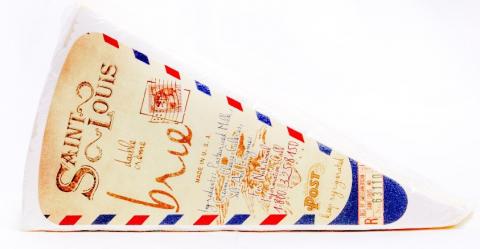
Picture of Saint Louis Brie wedge”

Summary

Company Announcement Date:
FDA Publish Date:
Product Type:
Food & Beverages
Cheese/Cheese Product
Foodborne Illness
Reason for Announcement:
Listeria monocytogenes
Company Name:
Old Europe Cheese, Inc
Brand Name:
Saint Louis
Product Description:
Brie wedges and variable weights

Company Announcement

10/04/2022

Saint Louis, Missouri

Old Europe Cheese, Inc. of Benton Harbor, MI is issuing a voluntary recall of its Brie cheeses because of potential contamination with Listeria monocytogenes, an organism which can cause serious and sometimes fatal infections in young children, frail or elderly people and others with weakened immune systems. Although healthy individuals may suffer only short-term symptoms such as high fever, severe headache, stiffness, nausea, abdominal pain and diarrhea, Listeria infection can cause miscarriages and stillbirths among pregnant women.

Swiss American is recalling St Louis Brie products after being alerted by the manufacturer Old Europe Cheese, Inc. that the products could be contaminated with Listeria monocytogenes. This is part of a voluntary broader recall by the manufacturer.

Customers are urged to check for:
St Louis Domestic Brie Wedge
7 oz
UPC: 041563 263709
All dates up to and including 12/14/2022

St Louis Domestic Cut Brie Wedge-6 lb RW
Variable weight
UPC: 041563 370018
All dates up to and including 12/14/2022

St Louis Brie
Variable Weight
UPC: 21107100000
All dates up to and including 12/14/2022

ST LOUIS BRIE PRE CUT WEDGES
Code Date: best by dates through 12/14/2022
Size: 16.00 OZ
UPC: 00021565000000

ST LOUIS CW BRIE WHEEL
Code Date: best by dates through 12/14/2022
Size: 16.00 OZ
UPC: 00021171800000

Canada- Certain Nature’s Best brand and Zavat Chalav brand Mozzarella Cheese products recalled due to Listeria monocytogenes

CFIA

Summary

Product
Mozzarella Cheese
Issue
Food – Microbial Contamination – Listeria
What to do

Do not consume, use, sell, serve, or distribute recalled products

Affected products

The affected products are being recalled from the marketplace due to possible Listeria contamination.

The recalled products have been sold in Ontario and Quebec and may have been distributed in other provinces and territories.

What you should do

  • If you think you became sick from consuming a recalled product, contact your healthcare provider
  • Check to see if you have recalled products
  • Do not consume, serve, use, sell, or distribute recalled products
  • Recalled products should be thrown out or returned to the location where they were purchased

Food contaminated with Listeria monocytogenes may not look or smell spoiled but can still make you sick. Symptoms can include vomiting, nausea, persistent fever, muscle aches, severe headache and neck stiffness. Pregnant women, the elderly and people with weakened immune systems are particularly at risk. Although infected pregnant women may experience only mild, flu-like symptoms, the infection can lead to premature delivery, infection of the newborn or even stillbirth. In severe cases of illness, people may die.

France – Sashimi quality tuna steak – Listeria monocytogenes

Gov france

Identification information of the recalled product

  • Product category Feed
  • Product subcategory Fishery and aquaculture products
  • Product brand name unbranded
  • Model names or references Sashimi quality tuna steak 120g
  • Identification of products
    GTIN Batch Date
    4056489614463 9222690077 Use-by date 10/10/2022
  • Marketing start/end date From 09/27/2022 to 09/30/2022
  • Storage temperature Product to be stored in the refrigerator
  • Geographic area of ​​sale see the attached file for the list of stores concerned
  • Distributors LIDL
  • List of points of saleList_Supermarkets.pdf

Practical information regarding the recall

  • Reason for recall Detection of Listeria monocytogenes less than 10 before DLC
  • Risks incurred by the consumer Listeria monocytogenes (causative agent of listeriosis)

France – Chicken thigh- E.coli

Gov france

Identification information of the recalled product

  • Product category Feed
  • Product subcategory Meats
  • Product brand name Unbranded
  • Model names or references purchased between Saturday September 24 and Wednesday September 28.
  • Identification of products
    GTIN Batch
    0201821000000 purchase between 09/24/2022 and 09/28/2022
  • Packaging BULK
  • Marketing start/end date From 09/24/2022 to 09/28/2022
  • Storage temperature Product to be stored in the refrigerator
  • Health mark Leclerc Sainte-Eulalie
  • Further information sold in the Traditional Butchery section, non-contractual photo
  • Geographic area of ​​sale Department GIRONDE (33)
  • Distributors Leclerc Sainte-Eulalie

Practical information regarding the recall

  • Reason for recall Escherichia coli
  • Risks incurred by the consumer Escherichia coli

Research – Microbial Properties of Raw Milk throughout the Year and Their Relationships to Quality Parameters

MDPI

Raw milk microbiota is complex and influenced by many factors that facilitate the introduction of undesirable microorganisms. Milk microbiota is closely related to the safety and quality of dairy products, and it is therefore critical to characterize the variation in the microbial composition of raw milk. In this cross-sectional study, the variation in raw milk microbiota throughout the year (n = 142) from three farms in China was analyzed using 16S rRNA amplicon sequencing, including α and β diversity, microbial composition, and the relationship between microbiota and milk quality parameters. This aimed to characterize the contamination risk of raw milk throughout the year and the changes in quality parameters caused by contamination. Collection month had a significant effect on microbial composition; microbial diversity was higher in raw milk collected in May and June, while milk collected in October and December had the lowest microbial diversity. Microbiota composition differed significantly between milk collected in January–June, July–August, and September–December (p < 0.05). Bacterial communities represented in raw milk at the phylum level mainly included Proteobacteria, Firmicutes and Bacteroidota; Pseudomonas, Acinetobacter, Streptococcus and Lactobacillus were the most common genera. Redundancy analysis (RDA) found strong correlations between microbial distribution and titratable acidity (TA), fat, and protein. Many genera were significantly correlated with TA, for example Acinetobacter (R = 0.426), Enhydrobacter (R = 0.309), Chryseobacterium (R = 0.352), Lactobacillus (R = −0.326), norank_o__DTU014 (R = −0.697), norank_f__SC-I-84 (R = −0.678), and Subgroup_10 (R = −0.721). Additionally, norank_f__ Muribaculaceae was moderately negatively correlated with fat (R = −0.476) and protein (R = −0.513). These findings provide new information on the ecology of raw milk microbiota at the farm level and contribute to the understanding of the variation in raw milk microbiota in China. View Full-Text

New Zealand – Nationwide recall of Pams frozen berries as Hepatitis A infections rise to 12, several hospitalised

Stuff NZ

Another nine cases of hepatitis A have been detected with links to frozen berries, prompting a recall of half a dozen products from the Pams brand.

Pams – a New Zealand division of supermarket giant Foodstuffs – is recalling various frozen berry products as a precaution, over a possible link to recent cases of the contagious virus.

Of the 12 cases found so far, seven have been hospitalised, including young, fit teenagers – not typically deemed at high risk from the illness, New Zealand Food Safety deputy director-general Vincent Arbuckle said.

The investigation into the source continues. Until, and unless, a definitive source is identified, the advice to heat-treat remains in place for all frozen berry products – regardless of brand, officials warned.

Ireland – Recall of a Batch of Glenhaven 4 Breaded Chicken Fillets due to the Presence of Salmonella

FSAI

Glenhavent Chicken Fillets

Summary
Category 1: For Action
Alert Notification: 2022.63
Product: Come Home to Glenhaven 4 Breaded Chicken Fillets (frozen); pack size: 380g
Batch Code: 22158B; Best before: Dec 2023
Country Of Origin: Ireland

Message:

The above batch of Glenhaven 4 Breaded Chicken Fillets is being recalled due to the presence of Salmonella.  Point-of-sale recall notices will be displayed in stores supplied with the implicated batch.

Nature Of Danger:

People infected with Salmonella typically develop symptoms between 12 and 36 hours after infection, but this can range between 6 and 72 hours.  The most common symptom is diarrhoea, which can sometimes be bloody.  Other symptoms may include fever, headache and abdominal cramps.  The illness usually lasts 4 to 7 days. Diarrhoea can occasionally be severe enough to require hospital admission. The elderly, infants, and those with impaired immune systems are more likely to have a severe illness.

Action Required:

Manufacturers, wholesalers, distributors, caterers & retailers:

Retailers are requested to remove the implicated batch from sale and to display a point-of-sale recall notice in stores where the affected batch was sold.

Consumers:

Consumers are advised not to eat the implicated batch.