Category Archives: Food Microbiology Blog

New Zealand – 21 Hepatitis A cases now linked to New Zealand Berries

Food Poison Journal

Since 28 June 2022, 21 locally-acquired cases of hepatitis A associated with frozen berry consumption have been identified, including three in the past week. All New Zealand cases have reported significant consumption of uncooked imported frozen berries. Nine (43%) cases were hospitalised.

Of all New Zealand cases, 17 have an identical sequence profile, which indicates they likely came from the same source.

USA – 30 cases of Salmonella infection reported in Tahoka

KCBD

TAHOKA, Texas (KCBD) – Thirty cases of Salmonella have been reported in Tahoka as of Oct. 25, 2022, according to Lynn County Judge Mike Braddock. Officials believe they’re all related and could have come from a community fundraiser.

Judge Braddock and the Emergency Management Coordinator for Lynn County believe the bacteria could be from a K9 fundraiser held on Oct. 16, 2022, however, they’re still investigating.

Officials say they do not believe the bacteria is from a restaurant.

During the investigation into the cause, the City of Tahoka tested the water to rule out the possibility the bacteria was in the water system.

USA – Core Outbreak Table – Investigations of Foodborne Illness Outbreaks

FDA

What’s New

  • A new outbreak of E. coli O157:H7 (reference #1121) in a not yet identified product has been added to the table and traceback has been initiated.
  • For the outbreak of Salmonella Litchfield in seafood, (reference #1105), FDA issued an Outbreak Advisory on 10/19/2022.
  • Based on CDC’s epidemiological investigation of two large multistate outbreaks of Cyclospora cayetanensis (reference #1080 and #1084), ill people reported eating a variety of leafy greens before becoming sick. For both investigations, CDC, FDA, and state and local partners conducted epidemiologic and traceback investigations and collected and analyzed product and environmental samples. All samples collected were reported as negative for Cyclospora. Due to the lack of additional detail in the epidemiological data and the absence of supporting evidence collected from traceback and sample collection, FDA could not identify a specific product as the source of either outbreak.
  • For the outbreak of Salmonella Senftenberg (reference #1087) in a not identified product, one additional case was reported, the outbreak has ended, and FDA’s investigation has closed.
  • For the adverse illness event series in frozen food (reference #1076), the outbreak has ended, and the FDA investigation has closed.

Luxembourg – DELHAIZE SMOKED CHICKEN – Listeria monocytogenes

SAP

Last name Smoked Chicken
Mark Delhaize
Unity +/- 1.3kg
bar code 2223380000000
Use-by date (DLC) 11/07/2022
Batch 5412190116

Danger: Potential presence of Listeria monocytogenes

Listeria monocytogenes can cause fever, headache and gastroenteritis. Vulnerable people such as immunocompromised and elderly people and young children may present with neurological symptoms due to meningitis. Pregnant women should also be especially alert to these symptoms. Gastroenteritis can appear between a few hours and 3 days after consumption, while neurological symptoms can only appear after 3 months. People who have consumed these products and have these symptoms are invited to consult a doctor and report this consumption to him.

Click to access 2022-10-25-delhaize-poulet-cuit-fume-listeria-fr-002.pdf

Sale in Luxembourg by: Delhaize

Source of Information: Delhaize Recall Notification

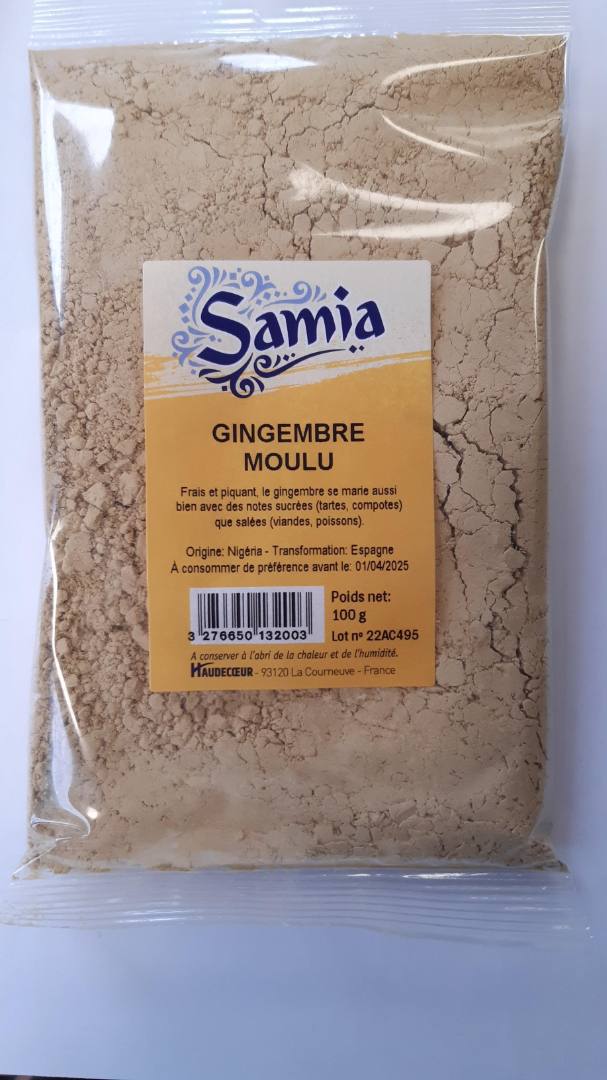
France – Ground Ginger – Salmonella

Gov france

Identification information of the recalled product

  • Product category Feed
  • Product subcategory Herbs and spices
  • Product brand name Sami
  • Model names or references 100g
  • Identification of products
    GTIN Batch Date
    3276650132003 22AC495 Date of minimum durability 04/01/2025
  • Packaging100g
  • Marketing start/end date Since 04/26/2022
  • Storage temperature Product to be stored at room temperature
  • Geographic area of ​​saleWhole France
  • DistributorsLarge surfaces and grocery stores

Practical information regarding the recall

  • Reason for recall Presence of Salmonella
  • Risks incurred by the consumer Salmonella spp (causative agent of salmonellosis)

UK – Listeriosis in England and Wales: summary for 2020

Gov UK

Main points for 2020

This report summarises the number, demographics and clinical outcomes of confirmed cases of listeriosis in England and Wales in 2020:

A total 124 cases of listeriosis were reported in England and Wales.

Incidence rates of listeriosis were highest in people aged 80 years and over.

Overall, the crude incidence of listeriosis was lower in men than women, but reported cases among men aged 60 to 69 were 4 times higher than in women aged 60 to 69.

Pregnancy associated infections accounted for a fifth of all reported cases and, a 34.8% of pregnancy-associated cases resulted in stillbirth or miscarriage.

Among non-pregnancy associated cases of listeriosis, death was reported for 29 cases (29.3%), of whom 17 (17.2%) were known to have listeriosis recorded as a cause of death on the death certificate.

Incidence of listeriosis varied geographically, with the lowest incidence in the North West (0.15 per 100,000 population) and the highest in the East Midlands (0.27 per 100,0000 population).

There were 2 listeriosis outbreaks investigated in England, including a national outbreak associated with smoked salmon.

Australia – Outbreak of gastro at Canberra doughnut shop believed to be caused by sick worker and poor hand hygiene practices – Norovirus

ABC News

The investigation found the illness was caused by the spread of norovirus, a virus that often causes gastro and is spread through direct contact with an infected person or ingestion of faeces or vomit particles from an infected person.

It found no reports of gastro symptoms from customers in the store, making it unlikely a sick patron was the cause of the outbreak, and also noted food handlers on site did not provide stool samples for testing.

The report stated there was evidence collected on-site “suggestive of faecal contamination”, and the spread of the virus was most likely a result of a worker carrying the virus.

USA – Pennsylvania recalls raw milk and cheese due to Listeria monocytogenes

Food Poison Journal

Consumers should immediately discard raw whole milk or chocolate milk sold in Dauphin County and other southcentral Pennsylvania retail stores under the BeiHollow label between October 12 and 21. BeiHollow pasteurized cheese melt and cup cheese sold between September 20 and October 21 should also be discarded due to possible contamination. Tests following a report of potential listeria contamination confirmed the presence of listeria monocytogenes bacteria.

Raw whole and chocolate milk was sold in plastic half- and three-quarter gallons at BeiHollow Farm stores in Elizabethville and Lykens, Dauphin County. Cheese melt and cup cheeses of various sizes were sold in the same stores. The producer would not supply a list of other locations where the products were sold.

FDA Works to Protect Consumers from Foodborne Illness and other Adverse Events

FDA

A Conversation with Stic Harris, Conrad Choiniere, and Michael Rogers on Foodborne Illness and other Adverse Events 

Each year, the FDA receives approximately 9,600 reports of foodborne illness or other adverse events related to FDA-regulated human food and dietary supplement products submitted by individual consumers, public health professionals, or industry.[1] In addition, the FDA’s Coordinated Outbreak Response & Evaluation (CORE) Network evaluates an average of 75 incidents annually that may potentially constitute a national, multi-state outbreak. 

The FDA takes its responsibility to safeguard the food supply very seriously and is committed to being transparent about how FDA approaches its food safety mission, particularly about how the agency responds when it receives reports of foodborne illness and other adverse events.   

That is what three foods program leaders will discuss in this conversation about challenges and opportunities they face every day in working to protect consumers from potential hazards in the complex, global food system.

Stic Harris, DVM, MPH, is the director of FDA’s Coordinated Outbreak Response & Evaluation (CORE) Network, which is on the frontline of foodborne illness outbreak investigations.

Conrad Choiniere, Ph.D., is the director of the Office of Analytics and Outreach at FDA’s Center for Food Safety and Applied Nutrition (CFSAN). His office evaluates consumer complaints and reports of potential hazards associated with FDA-regulated food, dietary supplements and cosmetic products.

Michael Rogers, MS, is the Assistant Commissioner for Human and Animal Food Operations in FDA’s Office of Regulatory Affairs (ORA), the inspection and enforcement arm of the FDA. In his role he works with ORA’s consumer complaint coordinators and investigators in the field, who are the agency’s boots on the ground in this work to keep foods safe.

These three leaders represent different aspects of the agency’s food safety work and, together, they will provide an overview of how FDA is doing its job and what it can, and will, do to continually improve in this space.

France – SMOKED CHICKEN – Listeria monocytogenes

Gov france

Identification information of the recalled product

  • Product category Feed
  • Product subcategory Meats
  • Product brand name CHICKEN SMOKED WITH BEECH WOOD RONSARD OVALYS
  • Model names or referencesBEECH WOOD SMOKED CHICKEN
  • Identification of products
    Batch Date
    5412190115 Use-by date 09/11/2022
  • Packaging CHICKEN IN FILM
  • Marketing start/end date From 20/10/2022 to 21/10/2022
  • Storage temperature Product to be stored in the refrigerator
  • Health mark FR 56 017 002 EC
  • Geographic area of ​​sale Regions: Brittany
  • Distributors NETTO VITRE – 35 – INTER BRIEC DE L ODET – 29- HYPER U COMBOURG – 35- INTER CHANTEPIE – 35- C. LECLERC LANESTER – 56- NETTO SARAH BERNARDT – 35- SUPER U MUZILLAC – 56- INTER BUBRY – 56- INTER BAIN FROM BRITTANY -35- NETTO SENE – 56-

Practical information regarding the recall

  • Reason for recall SUSPICION OF LISTERIA MONOCYTOGENES
  • Risks incurred by the consumer Listeria monocytogenes (causative agent of listeriosis)