Category Archives: Food Micro Blog

India – Couple die of food poisoning in Cuddalore, three kids hospitalised

New Indian Express

CUDDALORE/VILLUPURAM: An elderly man and his wife died and three children, including their grandson, were hospitalised after suffering from food poisoning. According to police from Mangalampettai in Cuddalore district, on December 29, N Subramanian (60) and his wife S Kolanji (55) of Ilangiyanur village near Virudachalam and their grandson V Saravanakrishnan(6) slept after eating sambar rice. Later, Kolanji started vomiting and also suffered from diarrhea.

“The next morning she was admitted in the primary health centre at Kothakudi and shifted to Kallakurichi GH, from where she was sent to Salem GH. She was discharged on Tuesday based on a request from the family and she died on the same day. Meanwhile, Subramanian died at JIPMER on Wednesday,” said police source.

Their grandson and two other children are undergoing treatment in Tiruchy and Cuddalore.
According to the police, the couple had sambar rice on the fateful night and gave some to the neighbours.

USA – Wendy’s patrons may have been exposed to hepatitis A; still time for treatment for some

Food Safety News

The Arkansas Department of Health  is warning of possible hepatitis A exposures after an employee of Wendy’s at 721 North Arkansas, in Russellville tested positive for the virus.

Anyone who ate at the restaurant between Dec. 12, 2021, and Jan. 3, 2022, should seek care immediately if they have never been vaccinated against hepatitis A or are unsure of their vaccine status.

There are no specific treatments once a person contracts the liver virus. However, it can be prevented through vaccination. It can also be prevented from developing in people who have been exposed if a medicine called immune globulin is administered within two weeks of exposure. This medicine contains antibodies from other people who are immune to hepatitis A.

Research – Tracking down the origin of cholera pandemics

Science Direct

Food Illness

The bacterium Vibrio cholerae is the causative agent of the diarrheal disease cholera and is responsible for seven known pandemics. The seventh cholera pandemic began in 1961 and is still active. Unlike previous pandemics, it is caused by cholera strains of a slightly different type. How did the modified cholera strains develop and spread, and what might have contributed to their success? Scientists from the Max Planck Institute for Evolutionary Biology in Plön, Germany, and CAU Kiel, in an international team with colleagues from City College New York and the University of Texas Rio Grande Valley, have now gained new insights into a molecular mechanism that provides insight into the interactions between cholera bacteria and may have played a role in the emergence of the seventh pandemic.

In their natural environment, bacteria are subject to competition with other bacteria for space and nutrients. In this process, molecular mechanisms help them to hold their own. One such mechanism is the so-called “type 6 secretion system” (T6SS), with which a bacterium transports toxic proteins into a neighboring bacterium and thereby kills it. Thus, cholera bacteria of the seventh pandemic use their T6SS to keep other bacteria in check and presumably more easily cause infection.

Researchers now had the special opportunity to study the T6SS of cholera bacteria from previous pandemics. For this purpose, among other things, the T6SS genome sequence of cholera bacteria from the 2nd pandemic was reconstructed from a museum specimen from the 19th century in a complex procedure and recreated in the laboratory.

In the process, the scientists were able to show that 2nd and 6th pandemic cholera bacteria lack a functional T6SS. As a result, the bacteria of earlier pandemics not only lack the ability to attack other bacteria, they are themselves killed by bacterial strains of the seventh pandemic. This may have been one of the reasons that older cholera strains were displaced by modified cholera strains of the seventh pandemic and are now hard to find.

Data from new lab

Daniel Unterweger, one of the study’s authors and a group leader at the Max Planck Institute in Plön, Germany, says: “With these findings, we support the theory that microbial competition between bacteria is very important for understanding pathogens and bacterial pandemics. Our research on the cholera bacterium was made possible by an S2 laboratory newly established at the institute. Here, we can conduct experiments with bacterial pathogens under the necessary safety precautions. The study contains some of the first data from the new laboratory.”

Link to Article

Belgium – QUESO IBERICO of the ALBERT HEIJN brand – Listeria monocytogenes and STEC E.coli

AFSCA

Recall of Albert Heijn
Product: QUESO IBERICO of the ALBERT HEIJN brand (with DDM 5-01-2022, 6-01-2022, 7-01-2022, 8-01-2022, 12-01-2022 ).
Problem: possible presence of Listeria monocytogenes and E.coli

In agreement with the AFSCA, Albert Heijn withdraws from sale the product ‘AH queso iberico’ (with DDM 5-01-2022, 6-01-2022, 7-01-2022, 8-01-2022, 12-01 -2022) and reminds consumers.

A presence of Listeria monocytogenes and E.coli is possible in this product. Its consumption can therefore present a health risk, in particular for young children, the elderly, people with weakened immune systems and pregnant women.

Albert Heijn asks his customers not to consume this product and to return it to the point of sale where it was purchased. The product will be refunded or exchanged there. Please contact a doctor if you have any health problem.

Product description

– Product category: cheese
– Product name: AH QUESO IBERICO
– Brand: ALBERT HEIJN
– Dates of minimum durability (DDM): 5-01-2022, 6-01-2022, 7-01-2022, 8 -01-2022, 12-01-2022
– Type of packaging: plastic packaging
– Sales period: until 06-01-2022 (included)
– Weight: 118 g

For any further information , please contact Albert Heijn on 0800 777 05.

Netherlands – Safety warning Queso Iberico from Albert Heijn – STEC E.coli – Listeria monocytogenes

NVWA

Albert Heijn is removing Queso Iberico cheese from the stores. The product contains increased numbers of E. coli which may belong to the pathogenic STEC bacteria. Listeria monocytogenes may be present in some products. Eating the cheese can be a health hazard, especially for young children, the elderly, people with weakened immune systems and pregnant women.

Albert Heijn Website

Czech Republic -Chilled chicken breast fillet, quality class A – Salmonella

Potravinynapranyri

Place of inspection:
Chrastava ( náměstí 1.máje 138, 46331 Chrastava )
ID: 67854460
Food group: Meat and meat products / Unpacked: meat, minced meat, meat preparations

Chilled chicken breast fillet, quality class A
Category: Dangerous food
Unsatisfactory parameter:

Salmonella enterica serum. Enteritidis

The pathogenic bacterium Salmonella enterica serum was detected in chicken meat . Enteritidis . This bacterium can cause a condition called salmonellosis.

Expiration date: 11/4/2021
Producer: KUBEX Zakład Rozbioru Drobiu, PL 02614302
Country of origin:  Poland
Sampling date: 2. 11. 2021
Reference number: 22-000002-SVS-CZ
The sample was found by an official inspection of the State Veterinary Administration.

France – NO ORGANIC RED Bread- Listeria monocytogenes

Gov france

Identifying information for the recalled product

  • Product category Food
  • Product sub-category Milk and dairy products
  • Product brand name WITHOUT BRAND
  • Names of models or references NO ORGANIC RED
  • Product identification
    GTIN Lot Dated
    0209998101216 210913-3R Use-by date 03/13/2022
  • Start date / End of marketing From 06/11/2021 to 12/18/2021
  • Storage temperature Product to be stored in the refrigerator
  • Health mark BE K 385 CE
  • Further information The product was sold in the traditional dairy section by the cut
  • Geographical sales area Whole France
  • Distributors ORGANIC MARKET OF THE LECLERC CENTER OF SAINT AMAND LES EAUX

Practical information regarding the recall

  • Reason for recall Presence of listeria
  • Risks incurred by the consumer Listeria monocytogenes (causative agent of listeriosis)

Research – Salmonella enterica Serovar Panama, an Understudied Serovar Responsible for Extraintestinal Salmonellosis Worldwide

NCBI

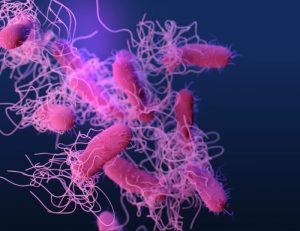
kswfoodworld salmonella

In recent years nontyphoidal Salmonella has emerged as one of the pathogens most frequently isolated from the bloodstream in humans. Only a small group of Salmonella serovars cause this systemic infection, known as invasive nontyphoidal salmonellosis. Here, we present a focused minireview on Salmonella enterica serovar Panama, a serovar responsible for invasive salmonellosis worldwide. S. Panama has been linked with infection of extraintestinal sites in humans, causing septicemia, meningitis, and osteomyelitis. The clinical picture is often complicated by antimicrobial resistance and has been associated with a large repertoire of transmission vehicles, including human feces and breast milk. Nonhuman sources of S. Panama involve reptiles and environmental reservoirs, as well as food animals, such as pigs. The tendency of S. Panama to cause invasive disease may be linked to certain serovar-specific genetic factors.

Zimbabwe – Shigella outbreak declared in Bulawayo City

Outbreak News Today

Shigella - kswfoodworld

A Shigellosis outbreak was declared November 26, 2021 in Bulawayo City, the second largest city in Zimbabwe.

The outbreak is mostly centered around Tshabalala suburb. As of Dec. 15, a total of 1,111 cases and 1 death (CFR 0.1%) have been reported so far from Bulawayo City.

The source of the outbreak is not reported.

From the beginning of the year to Dec. 12, 2021, Zimbabwe recorded 13,397 cases of Shigellosis with 22 deaths (CFR 0.2%).

New Zealand – Annual report concerning Foodborne Diseases in New Zealand 2020

MPI

New Zealand Food Safety, part of the Ministry for Primary Industries (MPI), leads New Zealand’s food safety system, protecting the health and wellbeing of consumers here and overseas. This includes reducing food-related risks to human health. Human health surveillance is an essential element of the monitoring and review component of New Zealand Food Safety’s risk management framework. In addition, evidence from notifications, case enquiries, outbreak investigations and other epidemiological studies of human enteric diseases are used as sources of data for risk profiles and assessments.

There is ongoing interest in foodborne disease statistics within New Zealand Food Safety and its stakeholders. This report for the calendar year 2020 is part of a series providing a consistent source of data and method of presentation to allow monitoring of foodborne illness in New Zealand. Human health surveillance data and foodborne disease The information in this report concerns reported cases of notifiable disease and reported outbreaks collected in the EpiSurv database.

Some notifiable illnesses may be caused by transmission of pathogens through foods, but it is important to remember that most of the information relates to the illness, not the mode of transmission.

The information needs to be considered with two caveats:

1. Notified cases of illness and reported outbreaks represent a subset of all the cases and outbreaks that occur in New Zealand each year. Many sick individuals do not visit a GP or otherwise come to the attention of the health system. By using these data as indicators, we are assuming that they are representative of all the cases and outbreaks that occur [1].

2. Foodborne transmission is only one of the routes by which humans are exposed to pathogens; other routes include water, animal contact and person to person. There are some indicators from which we can get information on the proportion of cases caused by foodborne transmission:

•Outbreak reports: the circumstances of an outbreak (multiple cases from a single event) mean that an investigation is more likely to identify a source of exposure to the pathogen than investigation of sporadic cases.

•Expert opinion: based on their experience in laboratories and epidemiological investigations, as well as knowledge of factors influencing the risk, experts can provide estimates of the proportion of cases caused by foodborne transmission.

Estimates for New Zealand have been developed for some foodborne diseases [2, 3], as presented in relevant report sections. These are not fixed values; future changes to the New Zealand food chain may require the values to be amended.

•Overseas analyses and estimates: information for countries with food supplies similar to New Zealand can be helpful, especially for illnesses where a foodborne estimate could not be developed f rom local studies. New Zealand estimates [2, 3] and published country-specific estimates, for the USA [4], Canada [5], Australia [6, 7], England and Wales [8] and the Netherlands [9] are given in Table 1.

In addition, a WHO project to estimate the global burden of foodborne diseases derived estimates for 14 international regions [10, 11]. The estimates for New Zealand, Australia, Canada, the Netherlands and the international WHO estimates are based on expert opinion, the estimates for England and Wales are based on outbreak analysis, while the US estimates are based on data from surveillance, risk factor studies and a literature review.

It is worth noting that, although for most of the diseases included in this report foodborne transmission is considered significant, there are several illnesses (shigellosis, giardiasis, cryptosporidiosis, hepatitis A) where foodborne transmission is considered to only contribute a small proportion of the total disease burden