Category Archives: Food Micro Blog

Research – In-House Validation of Multiplex PCR for Simultaneous Detection of Shiga Toxin-Producing Escherichia coli, Listeria monocytogenes and Salmonella spp. in Raw Meats

MDPI

The aim of the study was to perform in-house validation of the developed multiplex PCR (mPCR)-based alternative method to detect Shiga toxin-producing Escherichia coli (STEC), Listeria monocytogenes (L. monocytogenes) and Salmonella spp. in raw meats following the ISO 16140-2: 2016. A comparative study of the developed mPCR against the Bacteriological Analytical Manual (BAM) method was evaluated for inclusivity and exclusivity, sensitivity and the relative level of detection (RLOD). Inclusivity levels for each target bacterium were all 100%, while exclusivity for non-target bacteria was 100%. The sensitivity of the developed mPCR was calculated based on the analysis of 72 samples of raw meat. The sensitivity of the developed mPCR was 100%. The RLOD values of the developed mPCR for STEC, L. monocytogenes and Salmonella spp. were 0.756, 1.170 and 1.000, respectively. The developed mPCR showed potential as a tool for the fast, specific and sensitive detection of the three bacteria in the raw meat industry View Full-Text

Research – Foodborne Illness Outbreaks Reported to National Surveillance, United States, 2009–2018

CDC

Abstract

Foodborne outbreaks reported to national surveillance systems represent a subset of all outbreaks in the United States; not all outbreaks are detected, investigated, and reported. We described the structural factors and outbreak characteristics of outbreaks reported during 2009–2018. We categorized states (plus DC) as high (highest quintile), middle (middle 3 quintiles), or low (lowest quintile) reporters on the basis of the number of reported outbreaks per 10 million population. Analysis revealed considerable variation across states in the number and types of foodborne outbreaks reported. High-reporting states reported 4 times more outbreaks than low reporters. Low reporters were more likely than high reporters to report larger outbreaks and less likely to implicate a setting or food vehicle; however, we did not observe a significant difference in the types of food vehicles identified. Per capita funding was strongly associated with increased reporting. Investments in public health programming have a measurable effect on outbreak reporting.

Foodborne diseases remain a major public health challenge in the United States, where 31 known pathogens cause an estimated 9 million illnesses, 56,000 hospitalizations, and 1,300 deaths annually (1). Efforts to improve food safety and reduce the burden of foodborne disease rely on data from foodborne disease surveillance and outbreak investigations to help prioritize food safety interventions, policies, and practices. Data from foodborne illness outbreaks reported to the Centers for Disease Control and Prevention (CDC) provide vital information on the foods causing illness and common food–pathogen pairs. Those data are used by the Interagency Food Safety Analytics Collaboration (IFSAC) to inform outbreak-based attribution models that attribute illnesses to specific food categories (2,3).

Foodborne illness outbreaks are investigated by local, state, and territorial health departments, CDC, the US Food and Drug Administration (FDA), and the Food Safety and Inspection Service of the United States Department of Agriculture and are reported to CDC’s Foodborne Disease Outbreak Reporting Surveillance System (FDOSS) through the web-based National Outbreak Reporting System (NORS). Although reported outbreaks are a rich data source, they represent a subset of all outbreaks occurring in the United States; not all outbreaks will be detected, investigated, and reported. Factors influencing which outbreaks are detected, investigated, and reported to CDC include both structural factors associated with the jurisdiction in which the outbreak occurred (e.g., infrastructure and capacity) and characteristics of the outbreak (e.g., size, geographic location, pathogen).

We integrated data from a variety of sources to examine structural factors and describe outbreak characteristics of foodborne outbreaks involving Salmonella, Shiga toxin–producing Escherichia coli (STEC) O157, norovirus, and bacterial toxins that were reported to national surveillance. In addition, we assessed the effects of state variation in outbreak reporting on the types of food vehicles identified.

Research – Inactivation of viruses related to foodborne infections using cold plasma technology

Wiley Online

Globally, there is a rise in day-to-day demand for minimally processed foods to supply nutritious, wholesomeness and safe foods to the consumers. Contamination of food by pathogens is a serious problem resulting in several outbreaks. Food pathogens like molds, bacteria were detectable and can be inactivated. The virus detection in foods is always a difficult task as their presence could not alter any noticeable change in the quality. Norovirus, Hepatitis A viruses are well-known for their foodborne outbreaks and illnesses. Enveloped viruses are resistant and have the stability to the current traditional preservation methods due to the presence of a protective capsid layer and an envelope. The current thermal processing has shown significant effect on the product quality. The use of chemical disinfestation compounds is not suitable for food commodities. There is a need for alternative nonthermal food processing technologies for decontamination of food and food packages and preserving the food quality as well. Cold plasma is one of the emerging nonthermal, chemical-free residues, and eco-friendly technology widely being applied to the different food sectors. The main antiviral mechanism is the disruption of the capsid protein layer, the oxidation and denaturation of viral proteins. The method has also caused damage to the envelope layer and genetic material. This review focuses on cold plasma inactivation efficiency on different viruses.

Moldova – Cronobacter found in Numil infant formula

ANSA

The National Food Safety Agency informs consumers that, following the notification of the European food alert system RASFF 2022.2901, regarding the non-compliant powdered milk product: “Mixture of powdered milk with prebiotics for children – from birth, with rapid preparation”, lot. L02.05.2022 and L28.04.2022, valid until 12.10.2023, exporter: PW Proszki Mleczne, Poland, imported into the Republic of Moldova by the food business operator “PȘENEAC”, the Agency urgently ordered the withdrawal from the network of trade in the said lots.

Product information:

Product name: “Mixture of milk powder with prebiotics for children – from birth, with rapid preparation”;

Trademark: “NUMIL”;

Lot: 02.05.2022 and 28.04.2022;

Net weight: 900 gr;

Valid until 12.10.2023;

Exporter: PW Proszki Mleczne, Poland;

Importer: “PȘENEAC”, Republic of Moldova.

Under current legislation, food business owners who own non-compliant products are required to withdraw them from the market and cooperate with the National Agency for Food Safety on actions taken to avoid or reduce the risks to human health posed by a product. non-compliant food.

Non-compliant food business owners who have not taken steps to withdraw these products from the market are liable for legal liability.

 People who have purchased these products are asked not to feed them and are entitled to return them to the shops where they were purchased.

In case of non-compliant foodstuffs or deviations from the provisions of consumer protection legislation, citizens are urged to petition the Agency.

Green Line: 0 800 800 33;

Viber: 067675544;

e-mail: sesizare@ansa.gov.md.

The action is in progress

Cambodia – About 50 people sick in suspected mass food poisoning

Khmer Times

At least 50 people are seeking for treatment after a suspected mass food poisoning incident. The people all ate raw vegetables in a festival.

Of the 52 people who were poisoned 20 were rushed to the Maung Russey District Health Centre and Referral Hospital. According to the inspector, this case is still being investigated by the specialized police force.

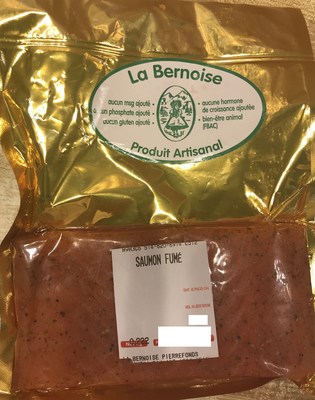
Quebec – Notice not to consume smoked salmon sold by the company La Bernoise boucherie charcuterie inc.

Quebec

The Ministry of Agriculture, Fisheries and Food (MAPAQ), in collaboration with the Food Inspection Division of the City of Montreal and the company La Bernoise Boucherie Charcuterie Inc. located at 3988, boulevard Saint-Charles in Pierrefonds (Montreal), warns the public not to consume the product indicated in the table below, because it has not been packaged in such a way as to ensure its harmlessness.

Product name

Format

Affected lot

“SMOKED SALMON”

Variable

Units sold until May 31, 2022

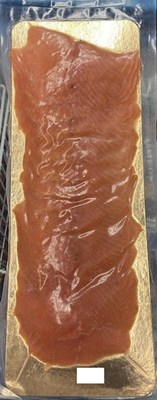
The product that is the subject of this warning was offered for sale until May 31, 2022, only at the establishment mentioned above. It was packaged in a clear plastic wrapper with a gold bottom and offered refrigerated. The product label includes, in addition to its name, the words “La Bernoise” and “Produit Artisanal”.

The operator is voluntarily recalling the product in question. It has agreed with MAPAQ and the Food Inspection Division of the City of Montreal to issue this warning as a precautionary measure. In addition, people who have this product in their possession are advised not to consume it. They must return it to the establishment where they bought it or throw it away. Even if the affected product shows no signs of tampering or suspicious odors, its consumption may represent a health risk. However, no case of disease associated with the consumption of this food has been reported to MAPAQ to date.

Additional information

The Ministry publishes various information documents concerning food safety. Interested persons can consult them in the “Food Consumption” section of the MAPAQ website: www.mapaq.gouv.qc.ca/consommation  . They also have the possibility of registering online by visiting www.mapaq.gouv.qc.ca/rappelsfoods  to receive, by e-mail, the food recall press releases published by the Ministry. Finally, it is possible to follow “MAPAQfoods” on Twitter at the following address: www.twitter.com/MAPAQfoods  .

smoked salmon (CNW Group/Ministry of Agriculture, Fisheries and Food) 

Hazard Classification:  Class 1

Reference Number: 4558

Source

Media relations
Direction des communications
Ministry of Agriculture, Fisheries
and Food
Tel. : 418 380-2100, extension 3512
www.mapaq.gouv.qc.ca 

France – Marbled ham – Listeria monocytogenes

Gov france

Identification information of the recalled product

  • Product category Feed
  • Product subcategory Meats
  • Product brand name Homemade parsley ham
  • Model names or references Marbled ham
  • Identification of products
    Batch
    Date of manufacture 05/19/2022
  • Packaging cut sale
  • Marketing start/end date From 21/05/2022 to 24/06/2022
  • Storage temperature Product to be stored in the refrigerator
  • Geographic area of ​​sale Ain
  • Distributors RIVET butcher

Practical information regarding the recall

  • Reason for recall Presence of Listeria Monocytogenes
  • Risks incurred by the consumer Listeria monocytogenes (causative agent of listeriosis)

Quebec – Notice not to consume smoked fish sold by Euro Victoria European Market

Quebec

The Ministry of Agriculture, Fisheries and Food (MAPAQ), in collaboration with the Food Inspection Division of the City of Montreal and the company Euro Victoria European Market located at 4751, avenue Van Horne in Montreal, warns the population not to consume the products indicated in the table below, because they have not been packaged in such a way as to ensure their harmlessness.

Frozen smoked salmon (CNW Group/Ministry of Agriculture, Fisheries and Food)

Product name

Format

Affected lot

Cold smoked salmon steak

Variable

Units sold until May 31, 2022

Cold smoked sprats

The products that are the subject of this warning were offered for sale until May 31, 2022, only at the establishment mentioned above. They were placed on a Styrofoam tray covered with transparent plastic wrap and offered refrigerated. The label of the products includes, in addition to their name, the mention “Euro Victoria”. People who have these products in their possession are advised not to consume them. They must return them to the establishment where they purchased them or throw them away.

In addition, MAPAQ, in collaboration with the same company, advises the public not to consume the product indicated in the table below if it has not been kept in the freezer at all times since the time of purchase. . In fact, the product label does not include the information necessary for its safe consumption, namely the statement “Keep frozen” which is required.

Product name

Format

Affected lot

“Smoked Atlantic salmon slices”

454g

Units sold until May 31, 2022

The operator is voluntarily recalling the product in question. It has agreed with MAPAQ and the Food Inspection Division of the City of Montreal to issue this warning as a precautionary measure. In addition, people who have the product indicated in the second table in their possession and who have not kept it in the freezer at all times since the time of purchase are advised not to consume it. They must return it to the establishment where they bought it or throw it away. Even if the affected product shows no signs of tampering or suspicious odors, its consumption may represent a health risk. However, no case of disease associated with the consumption of this food has been reported to MAPAQ to date.

USA – Three Giant Eagle Stores Recall Bakery Items with Peanut Butter Due to Potential Salmonella Contamination

FDA

PITTSBURGH – Giant Eagle, Inc. has issued a voluntarily recall of multiple bakery items containing peanut butter sold at three Pennsylvania supermarkets in Ebensburg, Indiana and Northern Cambria due to potential salmonella contamination. Salmonella is an organism which can cause serious and sometimes fatal infections in young children, frail or elderly people, and others with weakened immune systems.

The impacted bakery products were sold in clam shell packaging, have sell by dates through May 28, 2022 and can be identified by the following 11 PLU numbers:

Impacted PLU Numbers
19688 50229
19795 51157
27779 51359
29850 51360
39842 97655
47778

The recalled items were sold in the bakery departments of the three Giant Eagle stores only and most guests who have purchased the impacted product have already been contacted directly. The recalled items were sold in 120 transactions total. There have been no reports of illness associated with this recall to date.

Giant Eagle was made aware of the issue during the retailer’s investigation into the recently announced nationwide Jif brand peanut butter recall from the J.M Smucker Company. The peanut butter included in the recalled bakery items is included in the Jif peanut butter recall.

Guests who have purchased the affected product should dispose of it or return a qualifying receipt to the local Giant Eagle store for a refund. Guests with questions may call Giant Eagle Customer Care at 1-800-553-2324 Monday through Friday 8 a.m. to 8 p.m. EST.

In addition to this public communication regarding this recall, Giant Eagle initiated its consumer recall telephone notification process. The consumer recall process uses purchase data and consumer telephone numbers housed in the Giant Eagle Advantage Card database to alert those households that purchased the affected product and have updated telephone contact information in the database.


Company Contact Information

Consumers:
Giant Eagle Customer Care
 1-800-553-2324

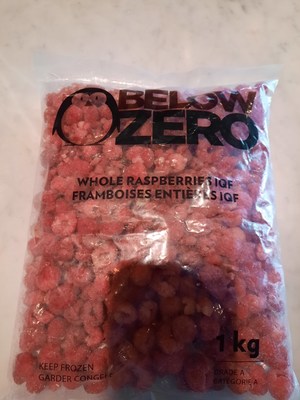
Quebec – Notice not to consume Below Zero brand frozen IQF whole raspberries sold by Segal Grocery

Quebec

IQF Whole Raspberries (CNW Group/Ministry of Agriculture, Fisheries and Food)

QUEBEC CITY , May 31, 2022 /CNW Telbec/ – The Ministry of Agriculture, Fisheries and Food (MAPAQ), in collaboration with the Food Inspection Division of the City of Montreal and the Segal Grocery , warns the public not to consume the product indicated in the table below, because this food may have been contaminated with a norovirus.

This warning stems from a Canadian Food Inspection Agency food recall involving Below Zero brand IQF Whole Raspberries originating from China and distributed to several establishments across Canada .

The product was offered in a frozen state. Its label includes, in addition to its name, the mentions “Below Zero” and “Mantab”.

Establishment

Product name

Format

Affected lot

Segal grocery store

4001, boul. Saint Laurent

Montreal

“IQF Whole Raspberries”

1kg

Lot No. XT21253

PO| : M14475

BB/MA: 2023-SE-09

The company named in the table is voluntarily recalling the product in question. It has agreed with MAPAQ and the Food Inspection Division of the City of Montreal to issue this warning as a precautionary measure. In addition, people who have this product in their possession are advised not to consume it. They must return it to the establishment where they bought it or throw it away.

Even if the product does not show signs of tampering or a suspicious odor, it is likely to be contaminated with norovirus. People exposed to this virus usually show symptoms within 24 to 48 hours of consumption. Common symptoms are nausea, vomiting, diarrhea and abdominal cramps. Muscle pain, fatigue, fever, chills and headache may also occur. Cases of illness have been reported to MAPAQ and could be associated with the consumption of this food.