Category Archives: Food Micro Blog

France -Plain Meat- Salmonella

Gov france

  • Product category Food
  • Product subcategory Meats
  • Product brand name THE MONTLOUISIAN
  • Model names or references Sausage meat 1 kg Sausage meat 3 kg
  • Product identification
    Batch Date
    400123 Use-by date 10/16/2023
  • Packaging Protective atmosphere tray
  • Start/end date of marketing From 03/10/2023 to 03/10/2023
  • Storage temperature Product to keep in the refrigerator
  • Health mark FR 37.156.031 CE
  • Geographical sales area Whole France
  • Distributors Sologne Frais, Leclerc Rueil Malmaison

France – Natural chipolatas – Salmonella

Gov france

  • Product category Food
  • Product subcategory Meats
  • Product brand name THE MONTLOUISIAN
  • Model names or references chipolatas 60g x20
  • Product identification
    Batch Date
    400123 Use-by date 10/18/2023
  • Start/end date of marketing From 03/10/2023 to 03/10/2023
  • Storage temperature Product to keep in the refrigerator
  • Health mark FR 37.156.031 CE
  • Further information Protective atmosphere tray
  • Geographical sales area Whole France
  • Distributors Sologne Frais, Gallais, Leclerc Rueil Malmaison

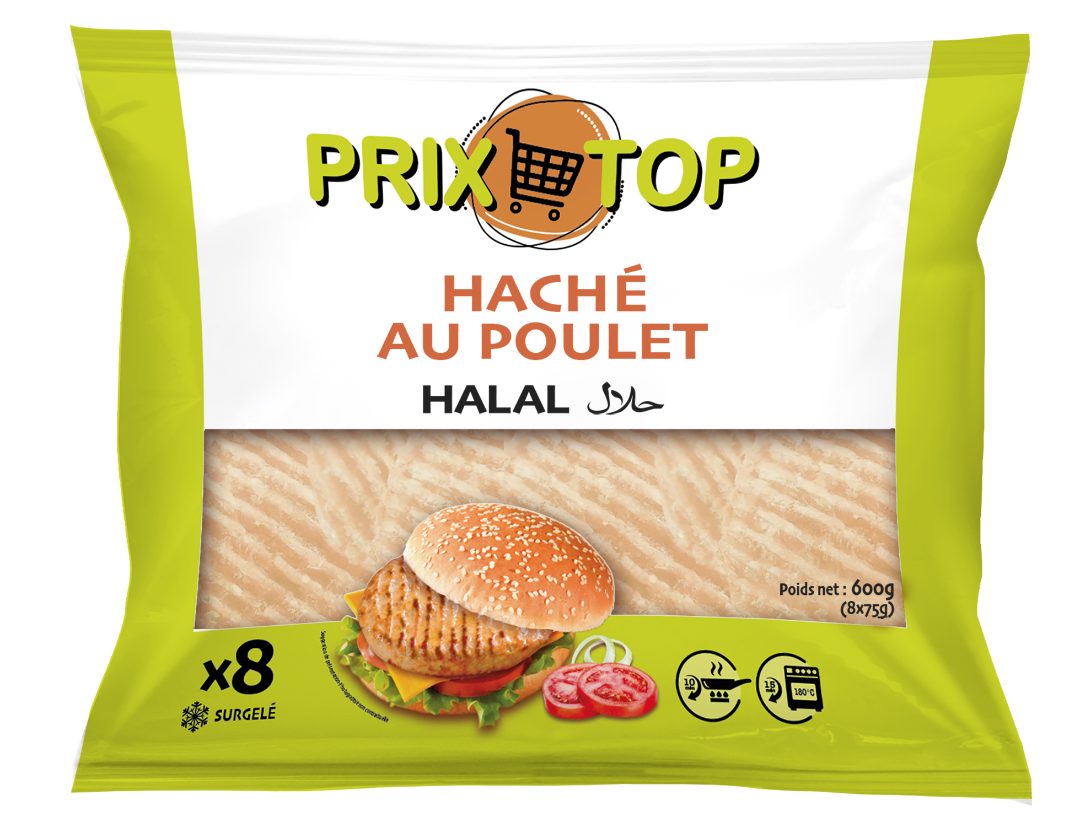
France – CHICKEN MINCE 8*75G – Salmonella

Gov france

  • Product category Food
  • Product subcategory Meats
  • Product brand name TOP PRICE
  • Model names or references Minced chicken price 8*75g top price
  • Product identification
    GTIN Batch Date
    3700141404824 240523 Minimum durability date 11/21/2024
  • Products List List_of_concerned_products.pdfAttachment
  • Packaging Bag
  • Start/end date of marketing From 09/13/2023 to 10/04/2023
  • Storage temperature Product to keep in the freezer
  • Health mark ES 10000684/GE CE
  • Further information frozen product
  • Geographical sales area Departments: BOUCHES-DU-RHONE (13), MEURTHE-ET-MOSELLE (54), OISE (60), SEINE-ET-MARNE (77), ESSONNE (91), SEINE-SAINT-DENIS (93), VAL- OF OISE (95)
  • Distributors Carrefour Traditional network
  • List of points of saleLIST_OF_POINTS_OF_SALES.pdf

Research – New publication about microbiological hazards in fresh fruits and vegetables

FAO

Fresh fruits and vegetables contaminated with foodborne pathogens (bacteria, viruses, protozoa, helminths, etc.) have resulted in numerous outbreaks of foodborne illness, made headlines and caused trade disruptions around the world. To better understand these hazards, and how to prevent and mitigate the risks, FAO and WHO convened a meeting of scientific experts to identify and evaluate commodity-specific interventions used to reduce the risk of microbiological hazards in fresh fruit and vegetable production – from primary production to post-harvest activities, transportation, point of sale and preparation for consumption. A new report is now available and provides guidance, taking into consideration the effectiveness, practicality and suitability of the various approaches used in fruit and vegetable safety.

Prevention and control of microbiological hazards in fresh fruits and vegetables – Part 4: Specific commodities, which is volume 44 in the FAO/WHO Microbiological Risk Assessment Series, is the report of the meeting convened by the Secretariat of the Joint FAO/WHO Expert Meetings on Microbiological Risk Assessment (JEMRA). It addresses four commodity groups:  leafy vegetables and herbs, berries and tropical fruits, melons and tree fruits, and seeded and root vegetables.

This assessment updates and expands previous JEMRA work on the safety of fruits and vegetables and supports work being conducted by the Codex Alimentarius Commission on the development of guidelines for the control of Shiga toxin-producing Escherichia coli (STEC) in leafy vegetables and in sprouts.

Download the report

Germany -Meat of wild game animals should become safer

BFR

European network aims to further reduce health risks

Game meat, including those of red deer, wild boar, or pheasant, is among the foods with the smallest ecological footprint. These animals grow up in the wild, feeding on what na-ture provides, which also means that they can be exposed to various environmental con-taminants. Furthermore, wild animals can serve as carriers of zoonotic pathogens. The Eu-ropean network ‘Safety in the Game Meat Chain’ that will be established over the next four years under the leadership of the German Federal Institute for Risk Assessment (BfR),and promotes the exchange of knowledge regarding the health risks associated with game meat obtained through hunting for consumers. ‘Our goal is to make this valuable animal-derived food as safe as possible both in Europe and worldwide,’ says BfR President Professor Dr.Dr. Andreas Hensel. ‘We aim to minimize both chemical and microbial risks as much as possi-ble.’ The growing network currently includes 29 countries, encompassing not only EU member states but also non-EU countries, including those in the Western Balkans, Turkey, the United Kingdom, the United States, New Zealand, and Australia.

Over a four-year period, the five working groups of the network will focus on hunting and processing, game meat trade networks and the supply chain, as well as various biological and chemical hazards. To accomplish this, research activities from national level will be compiled and evaluated. Stakeholder groups from academia, industry, governmental institutions, and final consumers will receive ongoing updates on the new findings.

A central aim of the network is direct collaboration with stakeholder groups to translate knowledge into actions along the entire production chain, “from forest to fork” . The focus lies not only on undesirable substances from the environment (environmental con-taminants), but also on preventing or reducing the input of heavy metals, especially lead, from hunting ammunition. The biological hazards range from parasites such as Trichinella larvae, which can be transmitted to humans through the consumption of game meat, all the way to bacterial zoonotic agents including Salmonella and verotoxigenic Escherichia coli (VTEC), as well as viruses like hepatitis E (HEV) in wild boars.

Risks of both chemical and microbial origin that may arise during processing and trade of game meat, potentially contaminating the end product, will also be assessed. The goal is to disseminate scientific knowledge gained through the network from various regions and to align long-term food safety standards across borders.

The network also aims to gather insights into different hunting and training practices as well as national legal regulations and standards on meat inspection and hygiene for game meat in each country. The safety standards for cross-border trade in wild products are intended to be enhanced and harmonized. Additionally, the network places emphasis on educating con-sumers about the risks associated with and safe handling of game meat. Ultimately, this can support the consumer’s confidence in game meat products.

‘Safety in the Game Meat Chain’ is founded by the European Cooperation in Science and Technology (COST).

Useful links

SafeGameMeat COST Action (CA22166):
https://www.cost.eu/actions/CA22166/

Further information from the BfR website on game meat (in German)

Finland – Too much Ochratoxin in fruit bars

Epressi

Frugi Moomin apple-blueberry 120 g fruit bar.

The Danish company House of Denmark A/S has announced that it will withdraw three batches of Moomin fruit bars from sale. In one product lot, ochratoxin A has been measured above the amount considered safe. The recall concerns the product Frugi Moomin apple-blueberry 120 g fruit bar and its dates

  • best before 19.04.2024 (batch no. L10931)
  • best before 04/07/2024 (batch no. L18532)
  • best before 01.08.2024 (batch no. L21322)

The items in question have been on sale in the stores of the Tokmanni chain and the K group. According to the announcement, consumers can return the products to the place of purchase, where the price of the product will be refunded. There is  a notice on the matter on Tokmanni’s website.

More information:

  • House of Denmark A/S, Quality Assurance Manager Michael Gøttrup, +45 7581 5122.
  • Tokmanni customer service, tel. 020 33 1415,  kaspalvelu@tokmanni.fi

Customer service is open Mon-Thurs from 10 am to 6 pm and Friday from 12 pm to 5 pm. The price of the call when calling from a landline and mobile phone subscription is 8.4 cents/min (incl. VAT 24%).

The matter is handled at the Food Agency by special expert Mika Varjonen, tel. 050 38 68 416,  firstname.surname@ruokavirasto.fi .

Picture of the product:
(Photo: Tokmanni)

SALMONELLA MODULATES METABOLISM DURING GROWTH UNDER CONDITIONS THAT INDUCE EXPRESSION OF VIRULENCE GENES.

SBGR Web

Salmonella enterica serovar Typhimurium (S. Typhimurium) is a facultative pathogen that uses complex mechanisms to invade and proliferate within mammalian host cells. To investigate possible contributions of metabolic processes to virulence in S. Typhimurium grown under conditions known to induce expression of virulence genes, we used a metabolomics-driven systems biology approach coupled with genome-scale modeling. First, we identified distinct metabolite profiles associated with bacteria grown in either rich or virulence-inducing media and report the most comprehensive coverage of the S. Typhimurium metabolome to date. Second, we applied an omics-informed genome-scale modeling analysis of the functional consequences of adaptive alterations in S. Typhimurium metabolism during growth under our conditions. Modeling efforts highlighted a decreased cellular capability to both produce and utilize intracellular amino acids during stationary phase culture in virulence conditions, despite significant abundance increases for these molecules as observed by our metabolomics measurements. Furthermore, analyses of omics data in the context of the metabolic model indicated rewiring of the metabolic network to support pathways associated with virulence. For example, cellular concentrations of polyamines were perturbed, as well as the predicted capacity for secretion and uptake.

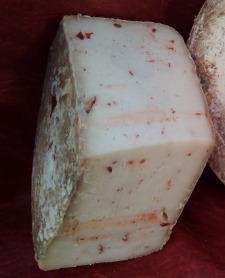
France – Cheese – Tomme d’espelette farm sheep pepper chili – Listeria monocytogenes

Gov france

  • Product category Food
  • Product subcategory Milk and dairy products
  • Product brand name TEAM WEST
  • Model names or references Tomme d’Espelette farm sheep pepper chili batch BP70323 DDM: 02-27-2024
  • Product identification
    GTIN Batch Date
    377000254884 BP70323 Minimum durability date 02/27/2024
  • Packaging CUT CHEESE
  • Start/end date of marketing From 09/27/2023 to 10/09/2023
  • Storage temperature Product to keep in the refrigerator
  • Health mark FR 64.213.100 CE
  • Geographical sales area Whole France
  • Distributors TEAM WEST

Nearly 900 get food poisoning at ‘nagashi somen’ restaurant – Campylobacter

ASAHI

KANAZAWA—Close to 900 people suffered from food poisoning after eating at a “nagashi somen” restaurant in Tsubata, Ishikawa Prefecture.

Nagashi somen is a practice in which customers use chopsticks to try to scoop up thin somen noodles as they flow down a bamboo chute filled with running water.

The Ishikawa prefectural government announced on Oct. 6 that 892 people were certified with food poisoning after dining at the restaurant between Aug. 11 and 17, during the Bon holiday season. While none suffered serious symptoms, 22 were hospitalized.

Many complained of diarrhea and a fever, and 611 were treated at hospitals.

The prefectural government said 1,298 customers submitted complaints, of whom the 892 were certified. They came from 18 prefectures around Japan, including Ishikawa, Toyama, Tokyo, Osaka and Aichi.

Customers who ate the nagashi somen, salt-grilled mountain trout or shaved ice came down with the symptoms, leading the prefectural government to check on the springwater the restaurant used. Officials found campylobacter, a type of bacteria that causes diarrhea, in the water.

The prefectural government ordered the restaurant to suspend operations.

Quebec -Notice not to consume various garlic flower pestos prepared and sold by the company L’ail de vivre – Clostridium botulinum

Quebec

QUEBEC CITY , Oct. , 2023 /CNW/ – The Ministry of Agriculture, Fisheries and Food (MAPAQ), in collaboration with the company L’ail de vivre, located at 866, boulevard de Douglas, in Gaspé, advises the population not to consume the products indicated in the table below, because they have not been prepared and packaged to ensure their safety. In fact, these products could promote the proliferation of the bacteria  Clostridium botulinum . 

Product name

Format

Target lot

“Pestail”

(various varieties)

125ml

And

250ml

Units sold until September 30, 2023

The products that are the subject of this warning were offered for sale until September 30, 2023, and only in public markets in the region. The products were packaged in glass jars with a metal lid and were sold at room temperature or refrigerated. A label with the name of the products was attached to the lid using an elastic band. 

The operator is recalling the products in question. He agreed with MAPAQ to broadcast this warning as a precautionary measure. Additionally, people who have one of these products in their possession are advised not to consume it. They must return it to the establishment where they purchased it or throw it away.

Even if the affected products do not show signs of spoilage or suspicious odor, they could be contaminated with the bacteria Clostridium botulinum . Foods contaminated with the toxin of this bacteria can cause, when ingested, the following symptoms: facial paralysis, unresponsive or fixed pupils, difficulty swallowing, drooping eyelids, vision and speech problems. In severe cases, the disease can cause death.

It should be noted that no cases of illness associated with the consumption of these foods have been reported to MAPAQ to date.

Additional information

The Ministry publishes various information documents concerning food safety. Interested people can consult the FoodThis hyperlink will open in a new window. section  of the Quebec government website. They also have the option of registering online to receive, by email, food recall This hyperlink will open in a new window. releases published by the Ministry. Finally, it is possible to follow “MAPAQaliment” on Twitter at the following address: www.twitter.com/MAPAQalimentThis hyperlink will open in a new window. .

Pestail (CNW Group/Ministry of Agriculture, Fisheries and Food)

Risk classification: class 1
Reference number:  4822

Source:
Media Relations
Communications Directorate
Ministry of Agriculture, Fisheries
and Food
Tel. : 418 380-2100, ext. 3512
www.mapaq.gouv.qc.caThis hyperlink will open in a new window.