RASFF – ochratoxin A (19.9 µg/kg – ppb) in dried figs from Turkey in Germany
RASFF – ochratoxin A (81.4 µg/kg – ppb) in dried currants from Greece, via Germany in Siwtzerland

RASFF – ochratoxin A (19.9 µg/kg – ppb) in dried figs from Turkey in Germany
RASFF – ochratoxin A (81.4 µg/kg – ppb) in dried currants from Greece, via Germany in Siwtzerland
RASFF – shigatoxin-producing Escherichia coli (Stx1-, Stx2+, eae+, O103) in organic raw milk goat’s cheese from Belgium in Belgium
RASFF – shigatoxin-producing Escherichia coli (stx1+ stx2+ eae+ /25g) in soft cheese from Italy in the Netherlands
RASFF – shigatoxin-producing Escherichia coli (stx2a+ and stx2d+ /25g) in goat cheese with raw milk from France in Switzerland
Posted in eae, food contamination, Food Hygiene, Food Inspections, Food Micro Blog, Food Microbiology, Food Microbiology Blog, Food Microbiology Testing, Food Pathogen, Food Poisoning, food recall, Food Safety, Food Safety Alert, Food Testing, Food Toxin, RASFF, STEC, STEC E.coli, STX 1, STX 2, Uncategorized
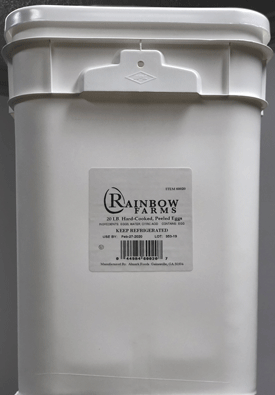
FDA, CDC, and state and local partners investigated an outbreak of Listeria monocytogenes infections linked to hard-boiled eggs produced by Almark Foods’ Gainesville, Georgia facility. Almark Foods announced an initial voluntary recall of hard-boiled and peeled eggs in pails on December 20, 2019, and then on December 23, 2019 expanded the recall to include all hard-boiled eggs produced at the Gainesville, Georgia facility. All recalled products are now past their “best by” dates.
CDC has announced this outbreak is over. FDA’s investigational activities, including an inspection, are complete. At this time, the firm is no longer producing products at this facility.
Recalled products are now past their “best by” dates and should be thrown away.
FDA recommends that food processors, restaurants and retailers who received recalled products use extra vigilance in cleaning and sanitizing any surfaces that may have come in contact with these products, to reduce the risk of cross-contamination.
Posted in FDA, food contamination, food handler, Food Hygiene, Food Illness, Food Inspections, Food Micro Blog, Food Microbiology, Food Microbiology Blog, Food Microbiology Testing, Food Pathogen, food recall, Food Safety, Food Safety Alert, Food Testing, Listeria, Listeria monocytogenes, Uncategorized
Eight ill with one death. As of March 4, 2020, this outbreak appears to be over.
A total of eight people infected with the outbreak strain of Listeria monocytogenes were reported from five states.
Listeria specimens from ill people were collected from April 10, 2017, to December 7, 2019. Ill people ranged in age from less than 1 to 82 years, with a median age of 71. Sixty-two percent of ill people were male. Of seven ill people with information available, five hospitalizations were reported. One death was reported from Texas. One illness was reported in a newborn who was infected with Listeria while the mother was pregnant, but the newborn survived.
Epidemiologic and laboratory evidence indicated that hard-boiled eggs produced at the Almark Foods Gainesville, Georgia, processing facility were the likely source of this outbreak.
Posted in food bourne outbreak, food contamination, food handler, Food Hygiene, Food Illness, Food Inspections, Food Micro Blog, Food Microbiology, Food Microbiology Blog, Food Microbiology Testing, Food Pathogen, food recall, Food Safety, Food Safety Alert, Food Testing, foodborne outbreak, foodbourne outbreak, Listeria, Listeria monocytogenes, Uncategorized
News reports are saying that a Campylobacter outbreak may have occurred at Rediviva restaurant at 118 Wishkah Street in Aberdeen, Washington. The Grays Harbor County Environmental Health Division learned about a person who tested positive for Campylobacter jejuni on February 25, 2020. That person told investigators he or she ate at Rediviva on Valentine’s Day.
Posted in Campylobacter, food bourne outbreak, food contamination, food handler, Food Illness, Food Inspections, Food Micro Blog, Food Microbiology, Food Microbiology Blog, Food Microbiology Testing, Food Pathogen, food recall, Food Safety, Food Safety Alert, Food Testing, foodborne outbreak, foodbourne outbreak, Uncategorized
Ottawa, February 28, 2020 – The food recall warning issued on February 25, 2020 has been updated to include additional distribution and product information. This additional information was identified during the Canadian Food Inspection Agency’s (CFIA) food safety investigation.
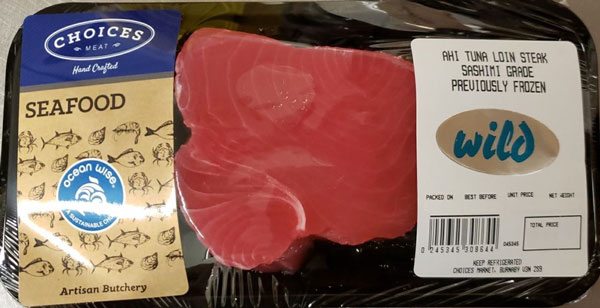
Industry is recalling various tuna products from the marketplace due to elevated levels of histamine. Consumers should not consume the recalled products described below.
| Brand | Product | Size | UPC | Codes | Additional Information |
|---|---|---|---|---|---|
| Choices Markets | Ahi Tuna Loin Steak Sashimi Grade – Previously Frozen | Variable | Starts with 0 245345 | All units sold from October 9, 2019 up to and including October 23, 2019 | Sold at Choices Market, 8683 10th Ave., Burnaby, BC |
| Choices Markets | Ahi Tuna Loin Steak Sashimi Grade – Previously Frozen | Variable | Starts with 0 245345 | All units sold from October 10, 2019 up to and including October 12, 2019 | Sold at Choices Market, 3493 Cambie St., Vancouver, BC |
| Choices Markets | Ahi Tuna Loin Steak Sashimi Grade – Previously Frozen | Variable | Starts with 0 245345 | All units sold from October 26, 2019 up to and including November 9, 2019 | Sold at Choices Market, 1888 West 57th Ave., Vancouver, BC |
| Choices Markets | Ahi Tuna Loin Steak Frozen – Ocean Wise | Variable | Starts with 0 245516 | All units sold from October 9, 2019 up to and including October 23, 2019 | Sold at Choices Market, 8683 – 10th Ave., Burnaby, BC |
| Choices Markets | Ahi Tuna Loin Steak Frozen – Ocean Wise | Variable | Starts with 0 245516 | All units sold from October 10, 2019 up to and including October 12, 2019 | Sold at Choices Market, 3493 Cambie St., Vancouver, BC |
| Choices Markets | Ahi Tuna Loin Steak Frozen – Ocean Wise | Variable | Starts with 0 245516 | All units sold from October 26, 2019 up to and including November 9, 2019 | Sold at Choices Market, 1888 West 57th Ave., Vancouver, BC |
| IGA | Ahi Tuna – Previously Frozen | Variable | Starts with 200840 | All units sold from November 6, 2019 up to and including December 6, 2019 | Sold at IGA, 1940 Kane Rd., Kelowna, BC |
| IGA | Ahi Tuna – Previously Frozen | Variable | Starts with 200840 | All units sold from September 28, 2019 up to and including December 17, 2019 | Sold at IGA, 2286 West Broadway, Vancouver, BC |
| IGA | Ahi Tuna – Previously Frozen | Variable | Starts with 200840 | All units sold from November 26, 2019 up to and including January 13, 2020 | Sold at IGA, 12887 Madeira Park Road, Madeira Park, BC |
| Save on Foods | O/W Ahi Tuna | Variable | Starts with 226248 | All units sold from September 18, 2019 up to and including February 28, 2020 | Sold at Save on Foods locations in AB, BC, MB, SK, and YT |
If you think you became sick from consuming a recalled product, call your doctor.
Check to see if you have the recalled products in your home. Recalled products should be thrown out or returned to the store where they were purchased.
Food contaminated with high levels of histamine may not look or smell spoiled but can still make you sick. Histamines are not destroyed by cooking. High levels of histamine in fish can cause an allergic-type reaction known as scombroid poisoning. Symptoms can include burning throat, diarrhea, dizziness, facial swelling, headache, vomiting and peppery taste in mouth.
This recall was triggered by consumer complaints. The CFIA is conducting a food safety investigation, which may lead to the recall of other products. If other high-risk products are recalled, the CFIA will notify the public through updated Food Recall Warnings.
The CFIA is verifying that industry is removing the recalled products from the marketplace.
There have been no reported reactions associated with the consumption of these products. However, there were reported reactions associated with the products included in the Food Recall Warning on February 25, 2020.
Printer ready version of photos
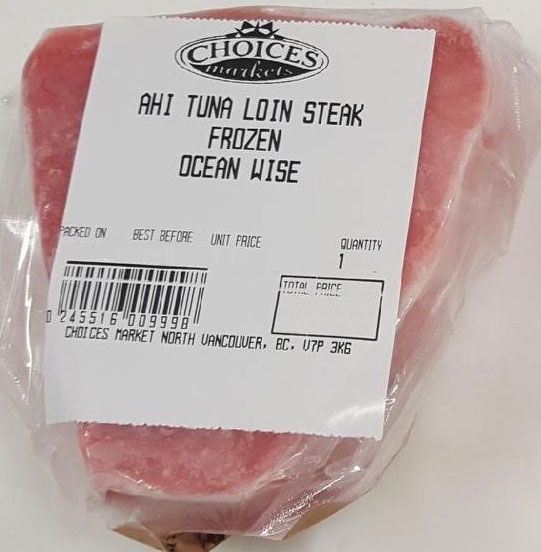

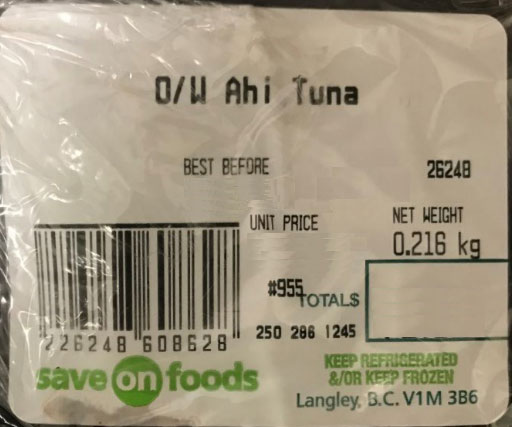
Ottawa, March 1, 2020 – La Mer is recalling certain Les Huîtres Cadoret – La Perle Noire brand #4 oysters from the marketplace due to possible norovirus. Consumers should not consume the recalled product described below.
| Brand | Product | Size | UPC | Codes |
|---|---|---|---|---|
| Les Huîtres Cadoret – La Perle Noire | “Huitres speciales #4 Cadoret Perles Noires 24 CT – France“ | 24 count | 0 209656 067997 | “Emballe le” 13.FE.20 |
| Les Huîtres Cadoret – La Perle Noire | “Huitres speciales #4 Cadoret Perles Noires 12 CT – France“ | 12 count | 0 209656 034996 | “Emballe le” 13.FE.20 |
If you think you became sick from consuming a recalled product, call your doctor.
Check to see if you have the recalled products in your home. Recalled products should be thrown out or returned to the store where they were purchased.
People with norovirus illness usually develop symptoms of gastroenteritis within 24 to 48 hours, but symptoms can start as early as 12 hours after exposure. The illness often begins suddenly. Even after having the illness, you can still become re-infected by norovirus. The main symptoms of norovirus illness are diarrhea, vomiting (children usually experience more vomiting than adults), nausea and stomach cramps. Other symptoms may include low-grade fever, headache, chills, muscle aches and fatigue (a general sense of tiredness). Most people feel better within one or two days, with symptoms resolving on their own, and experience no long-term health effects. As with any illness causing diarrhea or vomiting, people who are ill should drink plenty of liquids to replace lost body fluids and prevent dehydration. In severe cases, patients may need to be hospitalized and given fluids intravenously.
This recall was triggered by a consumer complaint. The Canadian Food Inspection Agency (CFIA) is conducting a food safety investigation, which may lead to the recall of other products. If other high-risk products are recalled, the CFIA will notify the public through updated Food Recall Warnings.
The CFIA is verifying that industry is removing the recalled products from the marketplace.
There have been reported illnesses associated with the consumption of these products.
Printer ready version of photos


Food Service Equipment Journal
According to the FSA, there are an estimated 380,000 cases of norovirus linked to food occur in the UK per year.
A breakdown of the roles of the main transmission pathways in food suggest eating out accounts for an estimated 37% of all foodborne norovirus cases and takeaways at 26%.
Open-headed lettuce on retail sale at 30%, raspberries on retail sale at 4%, and oysters on retail sale at 3% make up the remainder.
The revised foodborne norovirus estimate, combined with better analysis of how many illnesses of unknown cause are also likely to be caused by food, suggest around 2.4 million estimated UK cases of foodborne illness occur each year.
Professor Guy Poppy, chief scientific adviser to the Food Standards Agency, said: “This work gives us a much better idea of the role of food in the spread of all infectious intestinal disease in the UK. However, this does not mean more people are getting unwell, only that we estimate food is responsible for more existing cases than previously thought.
The foodborne spread of hepatitis A virus (HAV) poses a risk for outbreaks, even among developed countries where general rates of HAV are low, according to a new study.
As the global trade of food products continues to grow, the potential for such outbreaks requires new approaches and tools for early disease detection and control (Foodborne Pathog Dis [Epub Dec 12, 2019]. http://doi.org/10.1089/fpd.2019.2648).
The researchers conducted a search of published literature in order to identify HAV foodborne outbreaks that occurred from Jan. 1, 2012, to Dec. 31, 2018. Specifically, the team looked at outbreaks in developed countries, according to International Monetary Fund definitions. The United States, Japan, Germany, France, Italy, the United Kingdom and Canada were included, as were the 15 members of the European Economic Area, and four newly industrialized Asian economies.