Category Archives: Food Illness

USA – Washington, Oklahoma, Arkansas, Virginia and New York linked to mystery E. coli Outbreak

Food Poison Journal

5 states, 16 sick with 1 death. Whole genome sequencing (WGS) shows cases are likely related to same food.  Previous outbreak with same WGS linked to romaine lettuce, ground beef, and recreational water. 

CDC, public health and regulatory officials in several states, the U.S. Food and Drug Administration (FDA), and the U.S. Department of Agriculture’s Food Safety and Inspection Service (USDA-FSIS) are collecting different types of data to identify the food source of a multistate outbreak of E. coli O157:H7 infections.

As of February 1, 2021, a total of 16 people infected with the outbreak strain have been reported from 5 states. This map shows where sick people live.

State and local public health officials are interviewing people to find out what foods they ate in the week before they got sick.

India – Adilabad medicos suffer from food poisoning, hospitalised

Telangana Today

RIMS Director Dr Banoth Balaram said 22 of the 70 students who had lunch developed vomiting, headache and nausea. They were admitted to the institution and their condition was stable.

They were admitted to the institution and their condition was stable. Water contamination could be the cause of the incident, he said, adding that 200 students attended classes on the first day of the reopening of the college.

District Collector Sikta Patnaik visited the institute and inquired about the incident. She instructed the RIMS authorities to take steps to avoid the recurrence of such issues in the future. The water used to cook the food was from a bore-well since there was a leak in the Mission Bhagiratha pipeline, sources said.

Investigation – Foodborne outbreak in British Columbia related to raw milk Gouda-like products, 2018

Gov

Abstract

Background: In 2018, a Shiga toxin-producing Escherichia coli O121 outbreak that affected seven individuals was associated with raw milk Gouda-like cheese produced in British Columbia, Canada.

Objectives: To describe the Ecoli O121 outbreak investigation and recommend greater control measures for raw milk Gouda-like cheese.

Methods: Cases of Ecoli O121 were identified through laboratory testing results and epidemiologic surveillance data. The cases were interviewed on exposures of interest, which were analyzed against Foodbook Report values for British Columbia. Environmental inspection of the dairy plant and the cheese products was conducted to ascertain a source of contamination. Whole genome multi-locus sequence typing (wgMLST) was performed on all positive Ecoli O121 clinical and food isolates at the provincial laboratory.

Results: Four out of the seven cases consumed the same raw milk Gouda-like cheese between August and October 2018. The implicated cheese was aged longer than the required minimum of 60 days, and no production deficiencies were noted. One sample of the implicated cheese tested positive for Ecoli O121. The seven clinical isolates and one cheese isolate matched by wgMLST within 6.5 alleles.

Conclusion: Raw milk Gouda and Gouda-like cheese has been implicated in three previous Shiga toxin-producing E. coli outbreaks in North America. It was recommended product labelling to increase consumer awareness and thermization of milk to decrease the risk of illness associated with raw milk Gouda and Gouda-like cheese.

Introduction

Shiga toxin-producing Escherichia coli (STEC) is a major cause of foodborne illness in North America. STEC infections cause diarrheal illness and may lead to severe complications, such as hemolytic uremic syndrome, and death. The incidence rate of O157 STEC illness has been decreasing, whereas the rate of non-O157 STEC, including O121, has been increasing in many countries, likely due to changes in laboratory methods of detection. Outbreaks of STECO121 have been associated with raw flour, fresh or frozen produce, dairy and beef products 

The risk of STEC due to unpasteurized dairy products has been previously described . Between 2002 and 2013, three Ecoli O157 outbreaks associated with raw milk Gouda cheeses aged for at least 60 days were reported in North America, including one associated with a British Columbia (BC) dairy plant. Following each outbreak, public health professionals recommended strengthening control measures to decrease the risk associated with raw milk Gouda cheeses . None of these changes had been implemented in Canada by 2018.

In November 2018, another STEC outbreak associated with a raw milk Gouda-like cheese occurred in BC (population: 5.1 million).

The objective of this article is to describe the outbreak investigation and findings and reiterate the need for greater control measures related to raw milk Gouda-like cheese.

Hong Kong – Bacillus cereus in Soybean Milk

CFS

Recently, the Centre for Food Safety (CFS) collected a soybean milk sample from a local food shop when following up on a food complaint. The sample was later found containing a bacterium known as Bacillus cereus (B. cereus) in an amount that exceeded the limit in the CFS’ Microbiological Guidelines for Food and was consided unsatisfactory. Soybean milk produced by local retail shops, such as soybean product shops and congee shops, usually has a short shelf life and requires stringent temperature control to maintain its safety. In this article, we will look into how the bacterium finds its way to survive in soybean milk production and how to prevent it.
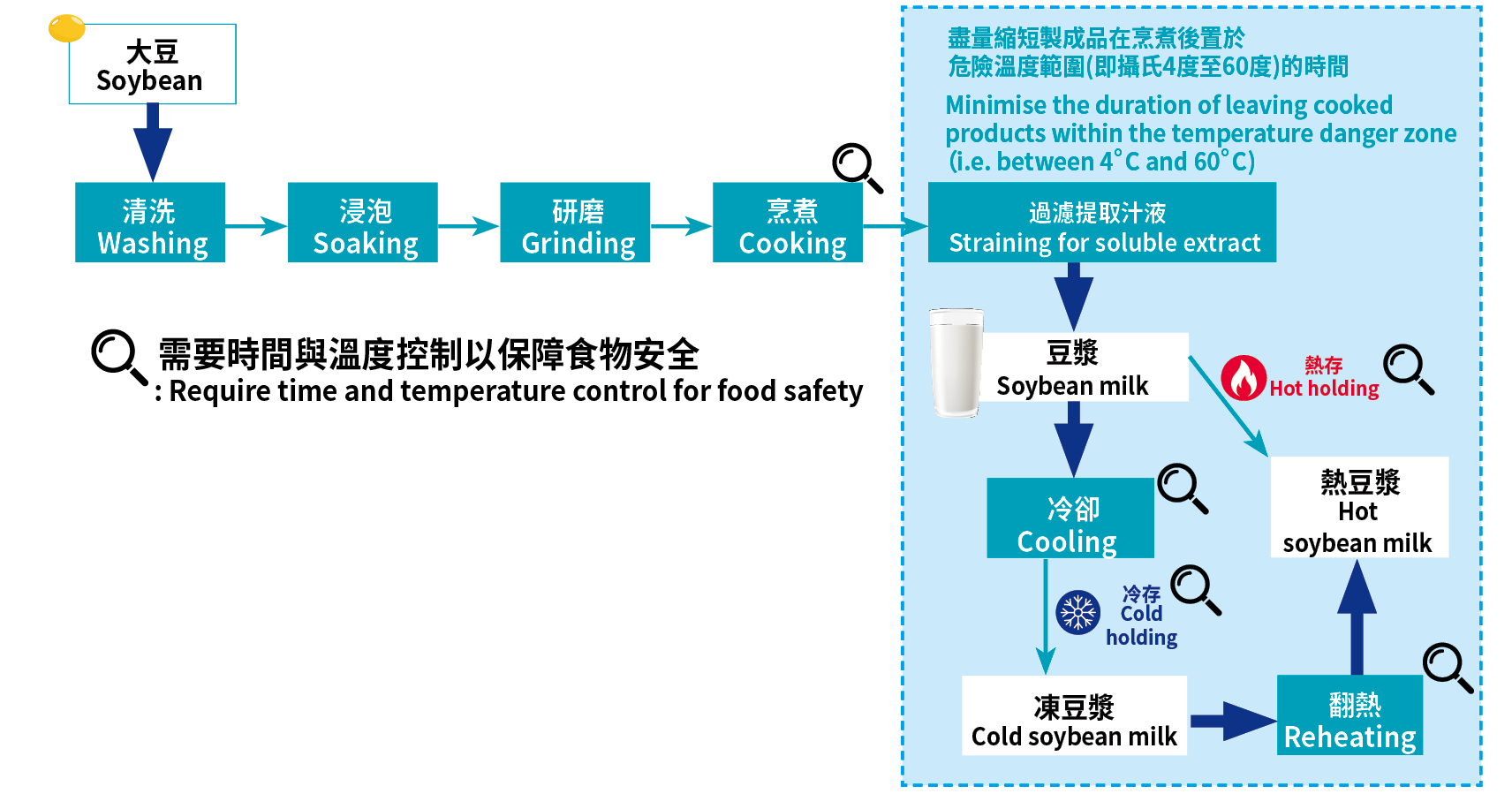
Figure 1 Highlights of processes requiring time and temperature control during production of soybean milk

Bacillus cereus Surviving Heat Treatment

B. cereus is a spore-forming bacterium and is ubiquitous in the environment. It is naturally present in soils, plants, agricultural products, etc. Hence, soybeans used in the production of soybean milk (see Figure 1) may contain B. cereus.

While cooking is effective to kill vegetative cells of B. cereus, its spores are heat-resistant and can only be eliminated by high temperature treatment, e.g. 121°C for 3 minutes. In this regard, the cooking temperature of soybean milk production at retail shops is not sufficient to kill the spores. Instead, the heat of cooking can not only induce the spores to germinate and become vegetative cells, but also create a favourable environment for the cells to grow by eliminating other microorganisms competing for growth. As a result, if the soybean milk is left under ambient condition for a prolonged period of time after cooking, vegetative cells can proliferate into a large number.

The vegetative cells can then produce a heat-resistant emetic (i.e. causes vomiting) toxin.  Even if contaminated soybean milk is reheated subsequently, it can still cause food poisoning that is characterised by causing the victim to vomit shortly after consumption.

Prevention by Time and Temperature Control

Despite the tenacious nature of B. cereus, soybean milk can still be safely produced. To prevent the microbiological hazard, certain production processes require time and temperature control (see Figure 1). First, the soybean slurry from grinding process has to be cooked thoroughly to kill B. cereus vegetative cells and other bacteria.  The heat treatment can also denature soybean enzymes that affect digestion of consumers.

After cooking, it is important to minimise the duration of leaving cooked products within the temperature danger zone, i.e. between 4°C and 60°C, in order to prevent the growth of vegetative cells of B. cereus formed from surviving spores. Cooked soybean slurry is strained through cheese cloth for soluble extract, i.e. soybean milk.  After straining, freshly made soybean milk can be held at above 60°C for hot serving.  As for cold soybean milk, it has to be cooled as quickly as possible, i.e. cooling to 20°C within two hours, and then to 4°C within the next four hours or less. Cooled soybean milk can then be stored at or below 4°C for cold serving. At certain food service businesses, soybean milk in cold holding may be reheated for serving. In that case, it has to be reheated with temperature reaching at least 75°C.

Last but not least, the production environment and equipment have to be kept hygienic to reduce microbiological contamination.  In particular, the equipment used after cooking processes, such as cheese cloth, container and dispenser, has to be cleaned after each use to minimise the building up of B. cereus which may contaminate cooked soybean milk of the next batch.

Key Points to Note

  1. Soybeans can be naturally contaminated with B. cereus. Normal cooking can kill vegetative cells of B. cereus, but not the spores and toxin of it.
  2. If cooked soybean milk is left at ambient temperature for too long, vegetative cells of B. cereus formed from surviving spores can produce toxin.
  3. It is important to minimise the duration of leaving soybean milk at a temperature range between 4°C and 60°C after cooking which favours the growth of B. cereus vegetative cells and toxin production.

Advice to the Trade

  • Avoid over-production as soybean milk has a short shelf life.
  • Speed up the cooling process by, for example, dividing soybean milk into small portions or using water bath or ice bath to cool bottled soybean milk.
  • Minimise the storage time of soybean milk, preferably clearing the stock within one day after production.

Advice to the Public

  • Consume soybean milk produced at retail shops as soon as possible.
  • Refrigerate the soybean milk at 4°C or below if it is not to be consumed immediately.

USA – Outbreak Investigation of E. coli – Leafy Greens (December 2020)

FDA

Total Illnesses: 40
Hospitalizations: 20 (4 Cases HUS)
Deaths: 0

The FDA, along with CDC and state and local partners, investigated a multistate outbreak of E. coli O157:H7 infections in the fall of 2020. The epidemiology and traceback investigation have determined that the outbreak was linked to leafy greens. The epidemiological and traceback investigations were not able to determine a specific type of leafy green linked to illnesses. On 12/22/2020, the CDC announced that this outbreak appears to be over. This outbreak, announced by FDA and CDC on October 28, 2020, was caused by a strain of E. coli that is genetically related to a strain linked to the fall 2019 romaine outbreak.

The FDA completed a traceback investigation of multiple types of leafy greens identified in patient interviews. Although no single ranch was identified as a common source of the leafy greens, FDA and state partners also conducted on-site investigations on farms of interest.

Teams were deployed to dozens of ranches in the region to conduct large scale environmental sampling. Additionally, no Shiga toxin-producing E. coli were found on leafy greens. As part of the field investigation, teams conducted environmental sampling on and around ranches of interest to identify any factors that could have led to contamination. Samples of soil, scat or animal droppings, compost, water, and other environmental sources were collected and analyzed.

Laboratory analysis of samples is now complete. The analysis has confirmed a positive match to the outbreak strain in a sample of cattle feces, which was collected during follow-up investigations on a roadside, uphill from where leafy greens or other food identified in the traceback investigation were grown. While the finding does not provide definitive information on how E. coli may have contaminated product during the growing and harvesting season, it does confirm the presence of a strain of E. coli O157:H7 that causes recurring outbreaks in a more narrowly defined growing region and a potential, continued source of contamination.

At this time, FDA’s investigational activities have concluded. The FDA continues to review the findings from this outbreak and a detailed report will be released in the near future. This report will include recommendations shaped by the investigation findings.

In the meantime, as recommended in our Leafy Greens Action Plan, the FDA continues to recommend growers assess and mitigate risk associated with adjacent and nearby land use practices, particularly as it relates to the presence of livestock, which are a persistent reservoir of E. coli O157:H7 and other STEC.

Recommendation

CDC has declared this outbreak to be over. There is no recommendation for consumers, retailers, or suppliers.

Research – Monitoring online posts by consumers could help improve food safety

Phys Org

An estimated 48 million cases of foodborne illness are contracted in the United States every year, causing about 128,000 hospitalizations and 3,000 deaths, according to the Centers for Disease Control (CDC). In some instances, the source is well known, such as a batch of tainted ground beef that infected 209 people with E. Coli in 2019. But 80 percent of food poisoning cases are of unknown origin, making it impossible to inform consumers of hazardous food items.

David Goldberg, assistant professor of management information systems at San Diego State University, wants to improve the traceability and communication of risky  products. In a new study published by the journal Risk Analysis, his research team proposes a new Food Safety Monitoring System (FSMS) that utilizes consumer comments posted on websites to identify products associated with food-related illnesses.

The researchers utilized an AI technology called text mining to analyze comments and reviews from two websites: Amazon.com, the world’s largest e-commerce retailer, and IWasPoisoned.com, a site where consumers alert others to cases of food poisoning. The database consisted of 11,190 randomly selected Amazon reviews of “grocery and canned food” items purchased between 2000 and 2018, along with 8,596 reviews of food products posted on IWasPoisoned.com. These two datasets allowed the researchers to test the text mining tools before analyzing 4.4 million more Amazon reviews.

UK – An outbreak of human listeriosis associated with frozen sweet corn consumption: Investigations in the UK

Science Direct

The use of Whole genome sequencing (WGS) identified a multi-country outbreak of human listeriosis associated with consumption of frozen sweet corn produced in Hungary. The purpose of this report was to summarise information on the cases occurring in the UK which were part of this outbreak and outline investigations on the presence of Listeria monocytogenes in the affected food chain.

Prior to the international recall of this product in 2018, 12 UK cases of listeriosis were identified as infected by the outbreak strain between 2015 and 18. Epidemiological and microbiological investigations confirmed these cases as belonging to the outbreak. A further case occurred in 2019 and a contaminated frozen pack from one of the implicated batches of sweet corn was recovered from the patient’s domestic freezer.

The outbreak strain was also detected in products from a sandwich manufacturer in 2018 which added frozen sweet corn directly to sandwich fillings. The sandwich manufacturer’s sweet corn was supplied by a distributor in England which obtained frozen products from the Hungarian manufacturer implicated in the outbreak. Within the distributor’s premises, 208 food and environmental samples were taken: L. monocytogenes was detected in 44% of 70 samples of frozen sweet corn and 5% of 79 other foods.

The outbreak strain was detected in the frozen sweet corn, in one other frozen food (mixed vegetables) and in the factory environment. The outbreak strain was also recovered from frozen beans on retail sale in the first four months of 2019. Five other L. monocytogenes strains together with two other Listeria species were detected in samples from the importer’s premises. One of the L. monocytogenes strains in the importer’s factory, which was distinct from the outbreak strain, was also recovered from sweet corn collected from the sandwich manufacturer, sweet corn tested in England in 2013 and 2016 and the blood of two cases of human listeriosis which occurred in England in 2014. This report shows how analysis by WGS provides evidence to understand complex food chains.

This report also highlights risks for transmission of human listeriosis from frozen sweet corn and the potential for misuse of this food as a ready-to-eat product.

Germany – Germany warns of salmon linked to Listeria infections

Food Safety News

A significant proportion of listeriosis cases in Germany are caused by eating smoked or cured salmon products, according to the Robert Koch-Institut (RKI).

A total of 22 cross-federal state outbreaks of listeriosis have evidence pointing to smoked or cured salmon products as the cause of infections. This includes 15 illnesses from 2010 to 2015 and 41 in both 2019 and 2020.

These outbreaks include 236 clinical Listeria monocytogenes isolates and 208 cases of listeriosis could be assigned to these isolates.

Patients were diagnosed between 2010 and 2020. This past year 41 people got sick in 14 of the 22 outbreaks which suggests that the sources of infection persist and outbreaks are ongoing.

Information – Food Safety During Pregnancy

MPI

FW20017: Food Safety During Pregnancy
Most foods and drinks are safe to consume during pregnancy. But there are some products pregnant women should be careful with or avoid. Public Health and Food Safety authorities in most OECD countries provide risk communication material related to food safety during pregnancy. Such a resource is available on the New Zealand Food Safety (NZFS) website.
However, this advice was published in 2007 and was based on information available then. Since that time a range of new foods has been introduced and become popular in the diet of New Zealanders, while there is improved understanding over which foods might be a risk.
NZFS wants to ensure the food safety advice for pregnancy remains current with the latest science and dietary practices for New Zealand.It is important that food safety advice for pregnant women captures all of the foods that could be a risk, however it needs to balance this with ensuring pregnant women can maintain a varied diet and have access to the widest source of nutrition without being overly restrictive.
To achieve this a research project was commissioned to the Institute of Environmental Science and Research Limited (ESR) to provide a scientifically robust background for updating food safety advice for pregnant women. Food safety considerations are focused on Listeria monocytogenes, Toxoplasma gondii, mercury and caffeine, as these four hazards have known specific impacts on the foetus.
Other microbiological and chemical hazards were not targeted as the risks are not pregnancy specific and food safety advice for the general public is also applicable for pregnant women. This report is restricted to food safety issues and does not cover advice on healthy nutrition during pregnancy.Maternal exposure to the microbiological hazards Listeria monocytogenes and Toxoplasma gondii is strongly linked to adverse effects on the foetus. For two other microbiological hazards, Salmonella spp. and Campylobacter spp., associated with adverse outcomes specific to the pregnancy period, the supporting epidemiological evidence is weaker.
The report has examined up-to-date information on these two other hazards and provided safety advice where relevant.The research examined data on complex changes in the maternal immune system that include both down regulation and up regulation of aspects of the immune system. Evidently pregnant women may be more susceptible to some infections than non-pregnant women, but no more susceptible to most types of infections. However, the complications of common infections in pregnant women can be more severe.
The main outcome of the research is an evaluation of evidence for food safety advice during pregnancy. The report included an evaluation of all food groups listed in the current New Zealand Food Safety’s guide to food safety in pregnancy. Consideration was also given to a small number of foods that were not previously evaluated in relation to pregnancy. Additional advice was proposed for these foods. NZFS agrees with the suggestion that advice should

New Zealand Food Safety Food Safety During Pregnancy be included in the guide for sprouts, recommending that these foods are not eaten unless cooked; for dried herbs recommending thorough cooking and a recommendation to not drink unpasteurised fruit juice and cider (non-alcoholic). The report confirmed that in most cases, New Zealand Food Safety’s advice on foods to eat or not eat during pregnancy are consistent with the available scientific evidence.
In a small number of instances, suggestions were made to better align the advice with the current available evidence. NZFS agrees with these suggestions and intends to expand the advice accordingly. Based on the evidence provided NZFS agrees that the current advice related to low acid soft pasteurised cheeses (e.g. Brie, Camembert, blue, ricotta, mozzarella, feta) should be strengthened to recommend that pregnant women do not eat these cheeses unless cooked.The report supports NZFS’s intention to make its advice on a range of commercial pasteurised dairy products with relatively short shelf-life less restrictive. Currently the advice is to dispose products like pasteurised milk or yoghurt after two days of opening.
The reviewed scientific evidence identified that, if that the products are refrigerated in original packaging and care is taken not to contaminate lids when using, it is safe to follow manufacturer’s advice on the package. Suggested modifications will allow pregnant women better planning of their daily diets and will also reduce unnecessary food wastage.
The report has suggested the current advice related to soft serve ice cream be reconsidered. However, NZFS’s opinion is that, given the likelihood of Listeria sloughing into the product through its processing, current advice to avoid this product during pregnancy is adequate. For some foods the scientific evidence is not currently strong enough to support specific food safety advice on these foods, although the available evidence suggests they may represent potentially emerging risk foods for pregnant women. A brief summary of such foods is provided at the end of the report. NZFS will follow up on any new scientific research related to these products.

Switzerland – Early detection for food safety

FFSVO

For sustainable assurance of food safety and the prevention of fraud, the FSVO identifies newly emerging risks to the health of Switzerland’s population. Early detection of this kind allows appropriate action to be taken in real time.

The FSVO compiles the most important food safety information every month 

Monitoring developments in the field of food safety is an essential task of early detection. This is why the FSVO summarises and evaluates the main information in Seismo Info. The publication is sent out by newsletter.

The aim of early detection for food safety is to identify and assess potential risks of food to the health of consumers.

The FSVO distinguishes between different types of risk:

  • Microbiological risks in foodstuffs and food fraud and deception
  • Chemical risks in foodstuffs and commodities
  • Nutrition-related risks

Monitoring system

The detection of newly emerging risks requires vigilant monitoring of societal and ecological changes, technological developments, economic trends and political conditions.

To perform these tasks, the FSVO manages an early detection system for food safety. This system considers information from a variety of sources, as well as the opinion of experts from the federal government, the cantons, industry and universities. The FSVO is also part of an international network that regularly shares information on new risks, assesses these risks and discusses the action to be taken.

Information and communication

The information gathered is compiled in the ADURA database, which can be accessed by federal and cantonal experts and to some extent also by the public.

The FSVO summarises and evaluates the main information every month in Seismo Info. The publication is communicated via the «Food safety and nutrition» newsletter (Subscription in French, German or Italian).

«Briefing letters» are short summaries of issues. They are characterised by in-depth research on a specific topic. Their purpose is to draw attention to hazards or risks that could endanger food safety in the medium to long term.

Anyone can contribute to early detection by submitting information to seismo@blv.admin.ch. Specialists check the information and incorporate it into the ADURA database or Seismo Info as appropriate.