Category Archives: Food Illness

USA Research – Sources and prevalence of Cyclospora cayetanensis in Southeastern US water sources and growing environments

Centre For Produce Safety

Summary

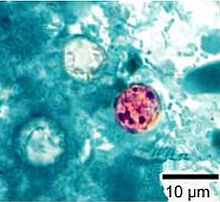
220px-Cyclospora_cayetanensis_stained

In 2018, a domestic-produce associated cyclosporiasis outbreak and the first Cyclospora detection on domestic produce demonstrated the need for a better understanding of Cyclospora prevalence in US produce growing environments. The Southeastern Coastal Plain growing region has several risk factors that warrant the evaluation of Cyclospora prevalence, including a farm worker population from Cyclospora-endemic areas, use of surface water for irrigation, and heavy rainfall that could transport Cyclospora into surface waters. The proposed study will assess Cyclospora prevalence in this region through two Georgia industry partners representing growing practices across the southeastern US. Human sewage samples from municipal wastewater influents and on-farm portable toilets will be tested to assess Cyclospora shedding in the region and on-farm, respectively. Cyclospora prevalence in the agricultural environment will be assessed in irrigation water and on produce (via a proxy measurement). Using newly developed tools, Cyclospora contamination found will be traced through the produce growing process by genetic typing to match detections between samples and by assessing parasite’s maturation state to approximate time since shedding. This study will add to the understanding of Cyclospora contamination in US produce growing environments and provide information about contamination routes to produce within the Southeastern US.

Technical Abstract

The increased frequency of produce-associated cyclosporiasis outbreaks highlights Cyclospora cayetanensis as an important emerging foodborne pathogen. Most produce associated cyclosporiasis outbreaks have implicated produce grown in areas where the disease is endemic. However, the 2018 detection of C. cayetanensis on US-grown produce and a cyclosporiasis outbreak associated with US-grown produce highlights the need for a better understanding of C. cayetanensis prevalence in US
agricultural environments and of the risks of oocyst contamination to domestically grown produce. The aims of the current study are to assess C. cayetanensis prevalence in irrigation water, harvested produce (via spent packing house water as a proxy), on-farm portable toilets, and municipal wastewater influents in the Southeastern Coastal Plain growing region in Georgia. Georgia vegetable growers produce a wide variety of ready-to-eat produce and utilize well water- and surface water-fed irrigation water holding ponds for produce irrigation, similar to other large agricultural regions in the US. Georgia growing regions are also subject to heavy rainfalls, which we have shown contributes to human fecal contamination of irrigation ponds in the region. Additionally, a majority of the farm workers harvesting
produce are from Cyclospora-endemic regions, representing a potential shedding source C. cayetanensis oocysts.

C. cayetanensis prevalence in the agricultural environment will be assessed by analyzing large-volume (50 L) irrigation water samples on eight farms monthly during non-harvesting periods and twice a month during harvest. At most, one additional irrigation water sample will be collected per month following heavy rainfall. The prevalence of C. cayetanensis from harvested produce will be assessed by analyzing large-volume (up to 50 L) of spent rinse and wash water from packing houses as a proxy measurement. Generic Escherichia coli and the human-specific Bacteroides HF183 fecal marker will be assessed to evaluate the overall and human-specific fecal contamination, respectively, in the water samples. Human sewage samples from municipal wastewater influents and on-farm portable toilets will be analyzed to assess the prevalence of C. cayetanensis shedding in the region generally and on the farm environment, respectively. C. cayetanensis detections will be subsequently analyzed to determine the genotype and sporulation state of detected oocysts, in order to estimate oocyst maturation level and compare the genetic relatedness of oocysts detected in various sample matrices. The typing information will allow for C. cayetanensis contamination to be traced through the growing process. The maturation data will allow for an estimate of the time spent in the environment after shedding from the human host and of potential health risks associated with consumption of contaminated produce, as maturation state determines infectivity of the parasite.

Data from this project will aid in the understanding of the domestic prevalence of C. cayetanensis in agricultural environments and provide the information needed to begin answering questions related to domestic C. cayetanensis produce contamination risks and identify best practices for risk reduction. Additionally, the evaluation of the human-specific fecal marker can provide insight into how Georgia vegetable growing practices are potentially preventing environmental and produce contamination.

Research – Food Safety for Expectant Mothers to Prevent Listeria

Food Poisoning News

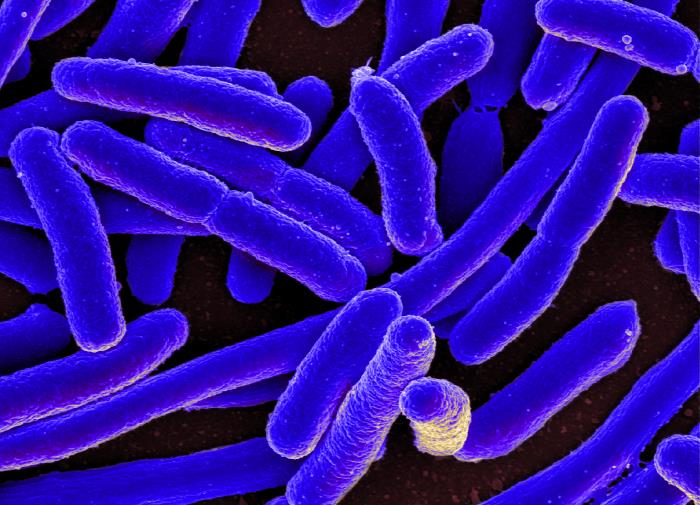
Centers for Disease Control and Prevention (CDC) has shared that pregnant women are approximately 10 times more likely to become infected with listeriosis than other healthy individuals. It is also estimated that 1 out of 6 of all Listeria cases occur in expectant mothers.

Listeria monocytogenes is a dangerous bacterium most often found in pre-prepared refrigerated foods such as dairy, poultry, seafood, meat, and unpasteurized milk or unpasteurized milk products. The symptoms experienced by adults from Listeriosis often include diarrhea or an upset stomach, chills, fever, stiff neck, confusion, and dizziness, and can take a couple days or even weeks to appear. Listeria can also be fatal at times for the mother. Most commonly however, infected pregnant women do not experience symptoms and unknowingly give it to their child. Listeriosis can lead to premature birth, delivery or a low-weight infant, or even death. Babies whom become infected with Listeriosis later are known to develop many serious conditions such as impairments of the brain, heart or kidney, paralysis, seizures, intellectual disability, and blindness. Listeria Monocytogenes can also cause meningitis and blood infections in newborns.

Sweden – Sweden reports increase in Yersinia cases

Outbreak News Today

Yersinia p

The Swedish Public Health Agency, or Folkhälsomyndigheten reports an increase in cases of Yersinia infections since the second week of January, according to a February 3 release.

They say more than twice as many people have contracted Yersinia infection as during the same period in the immediately preceding years.

An increased number of patients has mainly been observed in the regions of Stockholm, Västra Götaland and Halland, which together account for 33 of the total of 48 disease cases reported since 11 January.

India – 40 fall sick due to food poisoning in Metpally

Telangana Today

Jagityal: At least 40 persons took ill after having dinner at a function in Peddapur of Metpally mandal late on Friday night.

Pilli Chinna Mallaiah threw a small party to celebrate construction of his house. The guest were served mutton curry and makka gudalu (maize). At least 40 of the 60 villagers who participated in the function developed symptoms of food poisoning like diarrhea and vomitings later in the night.

Korea – Food poisoning cases fall to record low

Korea Herald

The number of food poisoning cases last year was the lowest ever recorded as the COVID-19 pandemic forced cafeterias to close and increased an emphasis on personal hygiene, data showed Sunday.

According to the Ministry of Food and Drug Safety, the number of reported food poisoning cases reached 178, down 52 percent from five-year average of 343 cases since 2015.

The number of food poisoning patients reached 53 per million, down 40 percent from an average of 133 patients per million from 2015 to 2019. The ministry said both figures for 2020 are the lowest rates ever recorded since data was compiled in 2002.

The ongoing virus pandemic has played a big role in curbing infections, the ministry said, as the number of mass food poisoning outbreaks significantly dropped with closure of mass dining facilities in schools and offices.

Research – Researchers Are Screening Social Media to Help Identify Foodborne Illness

Very Well Health

CDC E.coli

Consumer online posts and content can help identify food safety concerns, and possibly reduce the risk of a foodborne illness, according to new research.

USA – A dozen sick with 1 death from Listeria tainted Deli Meat – no common source found

Food Poison Journal

kswfoodworld

As of January 26, 2021, a total of 12 people infected with the outbreak strain of Listeria monocytogenes were reported from four states. A list of the states and the number of cases in each can be found on the Map of Reported Cases page.

Listeria samples from ill people were collected from August 6, 2020, to October 30, 2020. Ill people ranged in age from 40 to 89 years, with a median age of 81 years, and 83% were female. All 12 people were hospitalized, and one death was reported from Florida.

Epidemiologic evidence showed that deli meat was the likely source of this outbreak.

USA – Multi-state Salmonella outbreak of unknown origin now up to 60 patients

Food Safety News

Traceback efforts continue in a Salmonella Miami outbreak, but few details are available. Federal investigators report that the patient count has increased to 60. The source has not yet been determined.

In its original outbreak notification on Jan. 13 the Food and Drug Administration’s weekly CORE investigation table listed 48 patients. The FDA has not revealed what states are involved in the outbreak. The Centers for Disease Control and Prevention have not released information about the outbreak.

The CORE investigation table indicates that traceback is underway, but it does not provide any other information about what food or foods are part of that effort. The table refers the public to general information pages on Salmonella and the FDA investigation process.

When the outbreak was added to the weekly CORE update an FDA spokesperson told Food Safety News the agency just doesn’t have enough information on the traceback efforts yet.

India – Maha: 11 children hospitalized for suspected food poisoning

Outlook India

Palghar, Feb 3(PTI) Eleven children have been hospitalized for suspected food poisoning in Maharashtra”s Palghar district, a health official said.

District Health Officer Dr Dayanand Suryavanshi said all of them were now stable and out of danger.

The children, in the age group of 5 to 12, reported symptoms such as vomiting and nausea after eating lunch at a wedding at Kirat village on Monday and were shifted to Somta Primary Health Centre.

On Tuesday they were shifted to Rural Hospital at Kasa.

The samples of the food have been sent to a laboratory.

India – 1 dead, 170 hospitalised for suspected food poisoning at Assam CM’s event

Hindustan Times

Health minister Himanta Biswa Sarma, who also attended the event, told journalists on Wednesday that he too had suffered from an upset stomach after consuming food at the event.

Over 170 persons have been hospitalised in a case of suspected food poisoning at an event attended by Assam chief minister Sarbananda Sonowal at Karbi Anglong district on Tuesday.

According to media reports, one youth died on Tuesday night after consuming packed food at the ceremonial launch of the first session of the Diphu Medical College Hospital (DMCH). District officials are yet to confirm the exact cause of the death.