Category Archives: Food Hygiene

RASFF Alert – STEC E.coli – Chilled Vacuum Packed Bovine Meat

RASFF-Logo

RASFF – shigatoxin-producing Escherichia coli in chilled vacuum packed bovine meat from Ireland in Italy

RASFF Alerts – listeria monocytogenes – Fresh Raspberries – Chilled Salmone with Dill

RASFF-Logo

RASFF – Listeria monocytogenes (< 10 CFU/g) in fresh raspberries from Spain in Austria

RASFF -Listeria monocytogenes (< 10 CFU/g) in chilled salmon with dill from France in France

RASFF Alerts – Salmonella – Frozen Duck Legs -MSM Chicken Meat – Sesame Seeds Nigella Seeds – Chicken Wings – Chicken Legs – Chicken Fillets – Chicken Meat

RASFF-Logo

RASFF – Salmonella enterica ser. Typhimurium (presence /25g) in frozen duck legs from Hungary in Croatia

RASFF – Salmonella enterica ser. Infantis (presence /25g) in frozen mechanically separated (MSM) chicken meat from Poland in Bulgaria

RASFF – Salmonella (in 1 out of 5 samples /25g) in organic sesame seeds from India in Slovenia

RASFF – Salmonella enterica ser. Typhimurium (presence /25g) in chilled chicken wings from the Netherlands in France

RASFF – Salmonella enterica ser. Typhimurium (presence /25g) in frozen chicken wings from Poland in France

RASFF– Salmonella enterica ser. Newport (presence /25g) in chicken legs from Poland in the Czech Republic

RASFF – Salmonella (3 out of 5 samples /25g) in chilled chicken fillets and wings from Poland in Poland

RASFF – Salmonella enterica ser. Bareilly (present /25g) in nigella seeds (Nigella sativa) from India in Poland

RASFF – Salmonella (presence /25g) in organic sesame seeds from Ethiopia in the Netherlands

RASFF – Salmonella enterica ser. Enteritidis (in 4 out of 5 samples /25g) in chilled chicken meat from chickens reared in Slovakia and slaughtered in Poland in Poland

RASFF – Salmonella enterica ser. Enteritidis (in 2 out of 5 samples /25g) in chilled chicken meat from chickens reared in Slovakia and slaughtered in Poland in Poland

RASFF – Salmonella enterica ser. Enteritidis (present /25g) and Salmonella enterica ser. Infantis (present /25g) in chilled chicken meat from Poland in Poland

 

RASFF Alert – Foodborne Outbreak – Salmonella – frozen chicken nuggets

RASFF-Logo

RASFF – foodborne outbreak suspected to be caused by Salmonella (presence /25g) in frozen chicken nuggets from Poland in the UK

Research – An integrative review of hygiene practice studies in the food service sector

JFP

This article reviews the recent literature on studies relevant to hygiene practices of food service workers. A total of 32 articles were chosen for evaluation from a systematic search of the published literature from 2014 to 2019. For the assessment of hygiene practices, hand washing as a measurement item and observation as a method were most frequently used. Factors influencing hygiene practices were categorized as internal and external variables. Internal variables were knowledge; psychological factors such as attitude, risk perception, self-efficacy, and optimistic bias; and food handlers’ sociodemographic characteristics such as work experience and exposure to hygiene training. External variables were characteristics of food premises such as the size of the operation, number of people served, and organizational factors such as training. Regarding the recent training literature, attempts to bring in new methodologies and new technologies were found such as multimedia case studies, cognitive word association, behavior-focused training, wearable technology, and simulation games. Among the theories utilized, knowledge, attitude, and practices were applied most frequently to explain hygiene practices. In particular, this review highlights the important fact that internal and external factors that affect hygiene practices should be considered to maintain good hygiene practices.

Research – Research Paper Use of a novel sanitizer to Inactivate Salmonella Typhimurium and spoilage microorganisms during flume washing of diced tomatoes

JFP

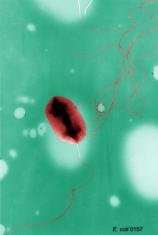
Research-BfR addresses risk of E. coli in flour

Food Safety News#

kswfoodworld E.coli O157

Image CDC


A German risk assessment agency has issued an opinion after STEC was frequently found in flour samples.

Shiga toxin-producing E. coli (STEC) was detected in multiple flour samples (wheat, spelt and rye) from mills during routine food monitoring in Germany in 2018.

The Federal Ministry of Food and Agriculture (BMEL) asked the German Federal Institute for Risk Assessment (BfR) to assess the sources, risk and prevention of STEC in flour.

Fifty STEC-positive samples were detected in 328 wheat, spelt and rye flour samples analyzed in 2018 as part of the Federal Monitoring Plan. A product recall in November 2019 of ready-made dough for short pastry biscuits shows STEC can occur in such a product.

Investigations of flour samples from mills in Germany for STEC have shown between 10 and 21 percent have positive samples. Viable STEC of different serogroups are detectable in flour for more than 50 weeks.


China – Hepatitis A increase in Chinese province linked to seafood

Food Safety News

An increase in hepatitis A infections in a Chinese province earlier this year has been attributed to eating raw or undercooked seafood.

In February 2020, there was a 138 percent increase in hepatitis A infections reported to the National Notifiable Disease Report System (NNDRS) from Liaoning Province compared with February 2019, and more than three quarters of cases in Liaoning were from two coastal cities — Dalian and Dandong. These cities are on the Liaodong Peninsula where seafood is abundant. From November to April, many types of fresh seafood are sold and consumed by residents, and most eat raw seafood.

All cases were sporadic. Through a survey of affected people and a case-control study, researchers found that consuming raw or undercooked seafood, clams, snapping shrimp, and oysters was significantly associated with the increase. Findings were published in China CDC Weekly.

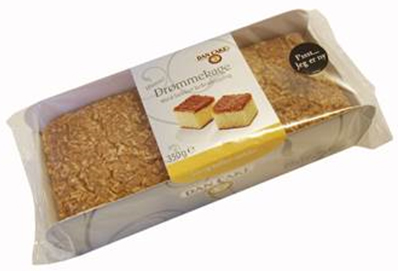
Iceland – Mould in the cake – Drömmekage

MAST

Matvælastofnun draws consumers’ attention to the recall of Drömmekage from Denmark by the company Ásbjörn Ólafsson ehf. imports. The recall is due to the possibility of mold in the cakes before the last day of sale. The company has recalled the cookies, in consultation with the Reykjavík Health Inspectorate.

The recall only applies to the following four batches:

  • Brand: Dan cake
  • Product name: Dream cake with delicious coconut topping
  • Net amount: 350 g
  • Best for dates: 28/8, 2/9, 22/9, 28/9 (2020)
  • Bar code: 5709152018462
  • Manufacturer: Dan Cake A / S, Hjortsvangen 15, 7323 Give, Denmark
  • Importer: Asbjörn Ólafsson ehf, Köllunarklettsvegur 6, 104 Reykjavík
  • Distribution: Stores all over the country

Recall of cake due to the risk of mold

Consumers who own the product in question are asked not to consume it and discard it. Further information on the recall is provided by Ásbjörn Ólafsson ehf. at 820 1146.

Related

Ukraine – Ukraine reports 40 botulism cases in first half of 2020

112 UA

cdc clost spore

Image CDC

The Ukraine Ministry of Health has reported 40 cases of botulism since January, including two fatalities.

Since the beginning of 2020, 40 cases of infection with botulism observed in Ukraine; two cases were lethal. Besides, nine and 13-year-old children were among the diseased, as the Public Health Center reported on Facebook.

“The consumption of the home-made preserves, air-dried, smoked, salted fish and other food products purchased in the unauthorized trading may lead to the infection with botulism,” the center reported.

A 59-year-old man died from botulism in Ukraine. On the eve, a man ate homemade canned pork. It was severe acute disease and the state of the patient deteriorated after serum infusion and three surgeries. A man died on December 30, 2019.