E.COLI producers STEC in Valencay cheese from France in Italy
Shiga toxin-producing Escherichia coli in Camenbert from France in Germany

E.COLI producers STEC in Valencay cheese from France in Italy
Shiga toxin-producing Escherichia coli in Camenbert from France in Germany
Posted in food bourne outbreak, food contamination, food death, food handler, Food Hazard, Food Hygiene, Food Illness, Food Inspections, Food Micro Blog, Food Microbiology, Food Microbiology Blog, Food Microbiology Research, Food Microbiology Testing, Food Pathogen, food recall, Food Safety, Food Safety Alert, Food Testing, foodborne outbreak, foodbourne outbreak, Listeria, Listeria monocytogenes, outbreak, Research
The Famous Anthony’s hepatitis A outbreak has now sickened 50 people and hospitalized 31 as of October 26, 2021, according to news reports. A sick employee worked at that restaurant in mid to late August 2021. The Roanoke City and Alleghany Health Districts reported the increase in cases. This is an increase of 13 patients since the last update two weeks ago.
One of the problems with this viral infection is that people are infectious up to two weeks before they even know they are sick. The virus is very contagious and is easily passed from person-to-person, through contaminated food, and through contact with contaminated surfaces.
Posted in food bourne outbreak, food contamination, food handler, Food Hazard, Food Hygiene, Food Illness, Food Inspections, Food Micro Blog, Food Microbiology, Food Microbiology Blog, Food Microbiology Testing, Food Pathogen, Food Poisoning Death, food recall, Food Safety, Food Safety Alert, Food Virus, foodborne outbreak, foodbourne outbreak, Hepatitis A, outbreak, Virus

Colruyt and OKay recall the “defatted cooked ham (500 g)” from the Boni Selection brand.
During an internal check, the presence of Listeria monocytogenes was observed in the gluten-free cooked defatted ham product (500g) of the Boni Selection brand bearing the expiry date (BBD) 11/11/2021.
In consultation with the AFSCA, Colruyt and OKay have therefore decided to withdraw the product concerned from sale.
Customers who have purchased this product are advised not to consume it and to bring it back to the store, where they will be reimbursed. In the meantime, all stores have removed the affected products from the shelves.
Product Description :
Gluten-free cooked ham (500g) from Boni Selection Best before
date (BBD): 11/11/2021
Sales period: from 10/22/2021 to 10/28/2021 included
Item number: 27244
This product was offered for sale in the Colruyt and OKay stores in Belgium.
For more information , customers can contact Colruyt Group Customer Service on 0800 99 124.
Possible symptoms of Listeria monocytogenes poisoning
Listeria monocytogenes infection can be dangerous for young children, pregnant women (risk of miscarriage), immunocompromised people and the elderly. Possible symptoms of Listeria monocytogenes poisoning include nausea and vomiting, abdominal cramps, diarrhea or constipation, headache and persistent fever (feeling like the flu). These symptoms usually appear 2 to 60 days after taking Listeria monocytogenes.
People who have consumed this product and who present this type of symptoms are advised to consult their doctor, notifying him of this consumption.
Colruyt recalls the following product:
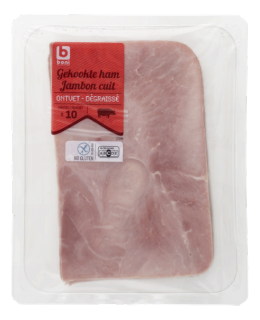
| name | Defatted ham |
| Mark | BONUS |
| Unity | 500 g |
| Use by date (DLC) | 11/11/2021 |
| Sale period | from 25/10/2021 to 28/10/2021 |
Danger: Presence of Listeria monocytogens
Listeria monocytogenes can cause fever, headache, and gastroenteritis. Vulnerable people such as the immunocompromised and the elderly and young children may experience neurological symptoms due to meningitis. Pregnant women should also pay special attention to these symptoms. Gastroenteritis can appear between a few hours and 3 days after consumption, while neurological symptoms can only appear after 3 months. People who have consumed these products and have these symptoms are advised to consult a doctor, notifying him of this consumption.
Sale in Luxembourg by: Colruyt
Information source: Colruyt recall notification
Communicated by: Government Commission for Quality, Fraud and Food Safety .

| GTIN | Lot | Dated |
|---|---|---|
| 20234157 | L 50357 | Recommended consumption date 06/11/2022 |
| GTIN | Lot | Dated |
|---|---|---|
| 2812649000000 | 167 | Use-by date 10/19/2021 |
Brand : Valdarno gastronomy
Denomination : Smoked swordfish carpaccio
Reason for reporting : Recall due to microbiological risk
Publication date : 27 October 2021
Click to access C_17_PubblicazioneRichiami_1546_azione_itemAzione0_files_itemFiles0_fileAzione.pdf
Brand : TERRE DUCALI
Name : STROLGHINO
Reason for reporting : Recall due to microbiological risk
Publication date : 28 October 2021
Click to access C_17_PubblicazioneRichiami_1548_azione_itemAzione0_files_itemFiles0_fileAzione.pdf
Yearly, 23 million foodborne disease illnesses and 5,000 deaths are estimated in the World Health Organization (WHO) European Region, and 41 foodborne Disability Adjusted Life Years (DALYs) per 100,000 population were estimated for the WHO Sub-Region EUR A in 2010 [1]. In Europe, a total of 5,146 foodborne and waterborne outbreaks, including 48,365 cases of illness and 40 deaths were reported to the European Food Safety Authority (EFSA) in 2018 [2]. Vulnerable populations, including elderly patients, immunocompromised patients, children younger than five years old and pregnant women are more susceptible to foodborne infections and are more prone to develop severe courses of disease compared with healthy people [3]. Therefore, healthcare is a setting where foodborne outbreaks (FBO) can cause considerable morbidity and mortality. In 2020, 20.6% of the European Union (EU) population was aged 65 years and older [4]. As the proportion of elderly people is projected to further increase, the share of the vulnerable population as patients in healthcare facilities (HCF) is likely to increase and thereby the risk associated with healthcare-associated foodborne outbreaks (HA-FBO). Personnel (medical and non-medical staff, food handlers etc) of HCF may also be at risk for HA-FBO and be a source of further spread in healthcare settings and elsewhere. This can cause major disruption of services [5].
So far, literature reviews have covered pathogens responsible for HA-FBO, including Salmonella [6], Listeria monocytogenes [7–9] and norovirus [10,11] and focused on microbiological food safety issues in healthcare settings [5,12]. Between 2014 and 2019, a listeriosis outbreak in Germany affected 13 cases who had an inpatient stay in 12 different HCF during the incubation period [13]. In the United Kingdom (UK) in 2019, nine listeriosis cases of which seven died, had consumed sandwiches in seven HCF during the incubation period [14].
We conducted a literature review to describe the causative agents including bacteria, viruses, parasites and fungi, the incriminated food vehicles and other outbreak characteristics of HA-FBO in 37 countries that are members of the Organisation for Economic Cooperation and Development (OECD) [15]. Furthermore, we analysed German surveillance data and data from the EFSA on HA-FBO. The aim of this article is to describe the current status of HA-FBO in order to improve surveillance and provide public health recommendations for prevention.
Posted in Contaminated water, food bourne outbreak, food contamination, food death, food handler, Food Hazard, Food Hygiene, Food Illness, Food Inspections, Food Micro Blog, Food Microbiology, Food Microbiology Blog, Food Microbiology Research, Food Microbiology Testing, Food Pathogen, Food Poisoning, Food Poisoning Death, Food Safety, Food Safety Alert, Food Temperature Abuse, Food Testing, Food Toxin, foodborne disease, Foodborne Illness, foodborne outbreak, foodbourne outbreak, Listeria, Listeria monocytogenes, Norovirus, outbreak, Research, Salmonella, Water, water microbiology, Water Safety


