Category Archives: E.coli

Research – A Microbiological Survey of Minced Beef at Retail in Scotland

FSS

Click to access FSS_Report_Retail_Mince_FINAL.pdf

Ukraine – Dozens sickened after consuming sushi

Outbreak News Today

The Kharkiv Regional Center for Disease Control and Prevention has reported 89 people, including 19 children, have been hospitalized for food poisoning.

Two patients, registered on June 22, are residents of Lugansk, who were on a business trip in the city of Kharkov and ate sushi in the Yakitoria restaurant.

It is noted that according to the results of bacteriological examination of patients, 42 people, incl. two employees of the institution, the culture of the genus Salmonella is highlighted. Pathogenic staphylococcus was found in six workers, pathogenic E. coli was isolated in one, and opportunistic pathogens were isolated in six more.

USA – 2021 E. Coli Outbreak Linked to Pasteurized Yogurt – Update

Washington State DOH

On May 12, 2021, The Washington State Department of Health (DOH) announced a multi-county outbreak of E. coli O157:H7 that began as a Public Health-Seattle & King County investigation involving several children with E. coli. The outbreak is linked to Pure Eire Dairy  yogurt also sold as PCC Community Market brand yogurt.

Update 6/23/21: One new case from Arizona has been identified who was infected with the outbreak strain of E. coli O157:H7. This brings the total number of outbreak-associated cases to 17. All three of the Arizona cases are considered secondary infections.

Update 6/17/21: One new child case has been identified who was infected with the outbreak strain of E. coli O157:H7 and was hospitalized for their illness. This brings the total number of outbreak-associated cases to 16.

The two Arizona cases infected by the outbreak strain of E. coli O157 did not consume PCC or Pure Eire brand yogurt.

  • The first Arizona case is considered a secondary infection. This person was infected after having close contact with a Washington state resident who regularly ate Pure Eire yogurt and developed diarrhea (but was not tested) shortly before traveling to Arizona.
  • The newest Arizona case added on 6/17/2021 is also considered a secondary infection.

 Public health message

  • If you have PCC Community Market brand yogurt or Pure Eire yogurt at home, do not eat it and throw it away.
  • E. coli infections can cause serious complications. Symptoms include diarrhea, stomach cramps and blood in the stool.
  • If you notice symptoms, especially bloody diarrhea, contact your health care provider right away.

Case information

DOH is reporting confirmed cases infected with bacteria that have been genetically linked. Local health jurisdictions may report higher numbers for their counties that include cases still under investigation and may provide additional detail on their cases.

Case information will be updated twice a week, as new information is available.

Last updated 6/23/21 at 7:07 p.m.

Summary

Statewide total

Cases

Confirmed cases – updated 6/23/21

17

Hospitalized – updated 6/17/21

10

Developed hemolytic uremic syndrome (HUS)

4

Died

0

Canada – Notice not to consume ground beef sold by Fouquet Morel inc. – E.coli O157

MAPAQ

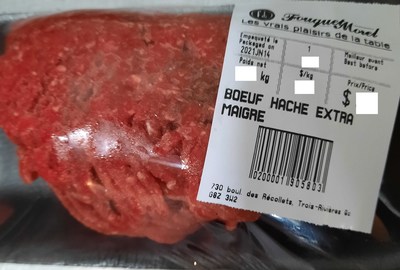
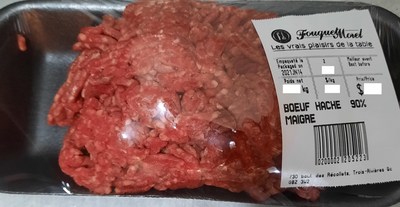
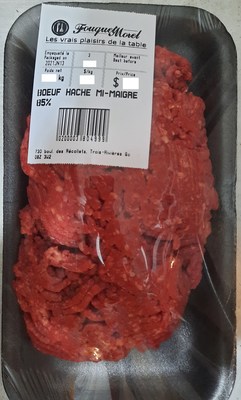
QUEBEC, June 22, 2021 / CNW Telbec / – The Ministry of Agriculture, Fisheries and Food (MAPAQ), in collaboration with Fouquet Morel Inc., located at 730, boulevard des Récollets, in Trois -Rivers, advise the population not to consume the products indicated in the table below, as these foods are likely to contain the bacterium E. coli O157.

Product name

Format

Packing date

Retention deadline

“EXTRA LEAN GROUND BEEF”

Variable


“Emb. :

on 2021JN13

on 2021JN14 “

ND

“90% LEAN GROUND BEEF”

“MID-LEAN GROUND BEEF 85%”

The products that are the subject of this warning were packaged between June 13 and 14 inclusively and were offered for sale only at the establishment mentioned above. They were packaged in trays covered with transparent plastic wrap. They were offered in a refrigerated state. The product label includes, in addition to their name, the words “Fouquet Morel – The real pleasures of the table”.

The operator is voluntarily recalling the products in question. He agreed with MAPAQ to disseminate this warning as a precautionary measure. In addition, people who have any of these products in their possession are advised not to consume it. They must return it to the establishment where they bought it or throw it away.

It should be noted that proper cooking of meat destroys the E. coli O157 bacteria in all cases. Preparing ready-made meals, such as spaghetti sauce, shepherd’s pie, or meat pie, requires a fairly long cooking time and a temperature high enough to destroy the bacteria.

Food contaminated with E. coli O157 may not look or smell spoiled, but eating such foods can cause serious illness or death. They are manifested by diarrhea and abdominal pain, often accompanied by blood in the stool. These symptoms usually appear two to ten days after eating a contaminated food. Nausea, vomiting and sometimes fever can be associated with it. When these symptoms appear, it is strongly recommended to consult a doctor without delay. Most symptoms go away within five to ten days. It should be noted that no case of illness associated with the consumption of these foods

Additional information

The Ministry publishes various information documents concerning food safety. Those interested can consult them in the “Food consumption” section of the MAPAQ website: www.mapaq.gouv.qc.ca/consommation This link will open in a new window. . They also have the option of registering online, by visiting www.mapaq.gouv.qc.ca/rappelsaliments This link will open in a new window. , to receive, by email, the food recall releases published by the Department. Finally, it is possible to follow “MAPAQaliments” on Twitter at the following address: www.twitter.com/MAPAQaliments This link will open in a new window. .

Extra Lean Ground Beef (CNW Group / Ministry of Agriculture, Fisheries and Food) This link will open in a new window.

90% lean ground beef (CNW Group / Ministry of Agriculture, Fisheries and Food) This link will open in a new window.

Medium-lean ground beef (CNW Group / Ministry of Agriculture, Fisheries and Food) This link will open in a new window.

Risk  classification : class 1
Reference number:  4351

Source:
Media relations
Communications
Department Ministry of Agriculture, Fisheries
and Food
Tel. : 418 380-2100, extension 3512
www.mapaq.gouv.qc.ca This link will open in a new window.

CisionView original content to download multimedia: http://www.newswire.ca/en/releases/archive/June2021/22/c5135.html This link will open in a new window.

USA – Yogurt E. coli Outbreak: What is a Secondary Food Poisoning Infection?

Food Poisoning Bulletin

In the Pure Eire yogurt E. coli outbreak that has sickened at least 16 people in Washington and Arizona, some of the patients have contracted secondary food poisoning infections. This term may not be familiar to everyone. So what is this type of infection?

A secondary food poisoning infection occurs when someone gets sick from contact with another person, not by eating contaminated food or drinking contaminated water. Many pathogens can be spread person-to-person, by direct contact and common contact with fomites (surfaces), both through the fecal-oral route.

Research – Escherichia coli Survival on Strawberries and Unpacked Romaine Lettuce Washed Using Contaminated Water

MDPI

A number of foodborne outbreaks have occurred in the past decade, with higher incidences associated with romaine lettuce and strawberries. Contaminated agricultural water has been reported as the source of microbial contamination in most of these outbreaks. Maintaining the adequate and sanitary quality (0 E. coli/100 mL) of agricultural water can be challenging during post-harvest operations such as washing. The study focused on the attachment of generic E. coli (Rifampicin resistant) onto romaine lettuce and strawberries, mimicking the produce wash step. The produce was washed with contaminated water, air-dried, and stored in display units for 7 days. The produce was sampled randomly each day and analyzed for the surviving E. coli count. The results indicated that E. coli can survive in both lettuce and strawberries over extended periods. A survival population of 2.3 log CFU/cm2 (day 8) was observed on lettuce with an initial population of 2.8 log CFU/cm2 (day 0). On strawberries, the population reduced from 3.0 (day 0) to 1.7 log CFU/cm2 (day 7), with an initial E. coli concentration of approx. 6 log CFU/mL in the wash water. Strawberry leaves had a higher attachment of E. coli than the fruit (p < 0.05). In conclusion, romaine lettuce and strawberries washed with contaminated water can cause an outbreak affecting consumers and public health. View Full-Text

Research – Determining bacterial load and water quality of tomato flume tanks in Florida packinghouses

Journal of Food Protection

Monitoring and maintenance of water quality in dump tanks or flume systems is crucial to prevent pathogen cross-contamination during postharvest washing of tomatoes, but there is limited information on how organic matter influences sanitizer efficacy in the water. The main objective of this study was to monitor water quality in flume tanks and evaluate the efficacy of postharvest washing of tomatoes in commercial packinghouses. Flume tank water samples (n=3) were collected on an hourly basis from three packinghouses in Florida and analyzed for pH, total dissolved solids (TDS), free chlorine, chemical oxygen demand (COD), oxidation-reduction potential (ORP), and turbidity. Additionally, three flume water samples were collected and tested for total aerobic plate count (APC), total coliforms (TC), and generic E. coli (EC). Fresh tomatoes (n=3), both before and after washing, were collected and analyzed for the same bacterial counts. Turbidity, COD, and TDS levels in flume water increased over time in all packinghouses. Correlations observed include COD and turbidity (r = 0.631), turbidity and TDS (r = 0.810), and ORP and chlorine (r = 0.660). APC for water samples had an average range of 0.0 to 4.7 log CFU/mL and TC average range of 0.0 to 4.7 log CFU/mL. All water samples were negative for generic E. coli . The average APC for pre-and post-flume tomatoes from the three packinghouses was 6.0 log CFU/tomato and ranged from 2.2 to 7.4 log CFU/tomato. The average TC count was <1.5 and 7.0 log CFU/tomato for pre-and post-wash tomatoes, respectively. There was no significant effect ( P >0.05) of postharvest washing on the microbiological qualities of tomatoes. Water quality in flume tanks deteriorated over time in all packinghouses during a typical operational day of 4-8 h.

Belgium – “Bernister Fleuri” soft raw milk cheese – STEC E.coli

AFSCA

Recall of La Ferme des Grandes Fagnes
Product: “Bernister Fleuri” soft raw milk cheese.
Problem: Possible presence of E.coli STEC.


In agreement with the AFSCA, the Ferme des grandes Fagnes is withdrawing “Bernister Fleuri” cheese (300g) from sale and is recalling it to consumers because of the presence of E.coli STE.

La Ferme des Grandes Fagnes asks its customers not to consume this product and to return it to the point of sale where it was purchased where it will be reimbursed.

Product description

– Product category: Soft raw milk cheese
– Product name: Bernister Fleuri
– Best before date (Best before): 07/08/2021
– Batch number: 211721
– Sales period: from 05/11/2021 to 06/10/2021
– Type of packaging: cellophane
– Weight: 300g

The product was sold through several outlets, including:

Name of point of sale /

Name of the distribution chain

Street + number Postal code Municipality (city)
RAG DISTRIBUTION Carl Jost Street, 46 4621 RETINNE
The Milky Way Chaussée de Namur 40 5170 DEEPVILLE
Butcher LAVAL Albert Counson Street 127 4970 FRANCORCHAMPS
LMBA Maitres Butchers Ardennes Avenue of the Allies 98 4960 MALMEDY
Vitamine cheese dairy (Evrard) Station Street 15 4430 YEARS
Grossemarkt Butgenbach LS Monschauerstrasse 9 4750 BUTGENBACH
DELVITH Rue de Malmedy 21 4760 BULLANGE
Gourmet counter Rue des Deux Eglises 4 4120 NEUPRE
PARENT SIGARD Great street 38                           6700        Arlon                   
LALERO BVBA HAACHTSESTEENWEG 47                     1820        STEENOKKERZEEL          
KAASWERELD VOF Karel Picquelaan 96 9800 DEINZE
SLIGRO FOOD GROUP Wingepark 10 3110 Rotselaar
Butcher Curnel Henri Massenge Street 4970 Stavelot
AD Spa Avenue Reine Astrid 244 4900 Spa
Sweet cuberdon Rue du Têris 56, 4100 Seraing

For any further information , contact:
Fabienne Remacle tel: 0474 280 559

RASFF Alert – E.coli – Lamb Meat

RASFF

Escherichia coli in lamb meat from New Zealand in Italy

Research – Effect of UVC light-emitting diodes on pathogenic bacteria and quality attributes of chicken breast

Journal of Food Protection

This study aimed to investigate the inactivation of foodborne pathogens and the quality characteristics of fresh chicken breasts after Ultraviolet-C light-emitting diode (UVC-LED) treatment. Fresh chicken breasts were separately inoculated with Salmonella Typhimurium, Escherichia coli O157:H7, and Listeria monocytogenes at an initia population of 6.01, 5.80, and 6.22 log 10 CFU/cm 2 , respectively, then were treated by UVC-LED at 1000 to 4000 mJ/cm 2 . UVC-LED irradiation could inactivate the tested bacteria in a dose-dependent manner. After UVC-LED treatment at 4000 mJ/cm 2 , the populations of S . Typhimurium, E . coli O157:H7, and L . monocytogenes on chicken breasts were decreased by 1.90, 2.25, and 2.18 log 10 CFU/cm 2 , respectively. No significant ( P > 0.05) changes were found in the color, pH value, texture properties, and thiobarbituric acid reactive substances (TBARS) values of chicken breasts following the UVC-LED radiation at doses up to 4000 mJ/cm 2 . Overall, this study indicates that UVC-LED is a promising technology to reduce the number of microorganisms while maintaining the physico-chemical characteristics of poultry meat.