The table includes the conclusion of an E. coli O145:H28 outbreak. The FDA reports that 16 people were sickened in the outbreak for which a cause has not been detected.
A new Salmonella outbreak has also been added with little other information.


The table includes the conclusion of an E. coli O145:H28 outbreak. The FDA reports that 16 people were sickened in the outbreak for which a cause has not been detected.
A new Salmonella outbreak has also been added with little other information.
Posted in CORE Investigation Table, E.coli, E.coli O145, FDA, food bourne outbreak, food contamination, food handler, Food Hazard, Food Hygiene, Food Illness, Food Inspections, Food Micro Blog, Food Microbiology, Food Microbiology Blog, Food Microbiology Research, Food Microbiology Testing, Food Pathogen, Food Poisoning, food recall, Food Safety, Food Safety Alert, foodborne outbreak, foodbourne outbreak, outbreak, Salmonella
LA FERME DES VACHES HEUREUSES EURL recalls Les Vaches Heureuses brand Crème épaisse crue / Heavy cream, unpasteurized (25 cl; Use by 18/06/2021)
MAQUOKETA, Iowa — Several Maquoketa children are receiving care at University of Iowa Stead Family Children’s Hospital in Iowa City after developing serious complications from E. coli.
But local health officials have not yet identified the source.
Multiple Maquoketa children developed hemolytic uremic syndrome, prompting the treatment in Iowa City. HUS is a serious complication that can be caused by shiga toxin-producing E. coli, also known as STEC.
The Jackson County Health Department, through Genesis VNA, is working to determine what might have caused the outbreak. Community Health Manager Michele Cullen said Monday that this process involves contact tracing, but a source has not yet been identified.
Posted in E.coli, HUS, STEC, STEC E.coli
Aspic – too high content of Escherichia coli from Austria in Austria and Germany
Elevati valori di E. coli in MITILI/ too high count of E Coli in mussel (Mytilus galloprovincialis) from Italy in France
Presence of E.coli in mussels from Denmark in France, Luxembourg
An E. coli outbreak linked to locally produced organic yogurt is growing, with 15 people now confirmed infected. Eleven of the patients are children.
Washington State health officials report nine of the patients have required hospitalization and four have developed the potentially deadly kidney complication known as hemolytic uremic syndrome (HUS). No deaths have been reported as of the health department’s May 26 update.
“The outbreak is likely linked to PCC Community Market brand yogurt produced by Pure Eire Dairy,” according to the update and information previously reported by state and local officials. The dairy also produces organic yogurt under the Pure Eire brand.
Posted in E.coli, food bourne outbreak, food contamination, Food Hazard, Food Hygiene, Food Illness, Food Inspections, Food Micro Blog, Food Microbiology, Food Microbiology Blog, Food Microbiology Testing, Food Pathogen, Food Poisoning, Food Safety, Food Safety Alert, foodborne outbreak, foodbourne outbreak, microbial contamination, Microbiology, outbreak, STEC, STEC E.coli
Shigatoxin-producing Escherichia coli in lamb meat from New Zealand in Germany

Presence of Escherichia coli
People who hold the product in question are asked not to consume them – and more particularly young children, pregnant women, immunocompromised people and the elderly – and to return them to the point of sale where they were purchased.
People who have consumed it and who present symptoms such as diarrhea, abdominal pain or vomiting should consult their doctor as soon as possible, mentioning this consumption and the possible link with the bacterium Escherichia coli.
In the absence of symptoms within 10 days after consuming the affected products, there is no need to worry and consult a doctor.
The E. coli bacterium is naturally present in the digestive microflora of humans and warm-blooded animals. Some strains of E. coli are pathogenic, and can be responsible in humans for various disorders ranging from mild diarrhea to more serious forms such as hemorrhagic diarrhea or severe kidney damage such as HUS, mainly in young children.
▸ Barcode
3000121311723
▸ Lot
• 20210515
• 20210516
▸ DLC – DDM
between 05/23/2021 and 05/24/2021
▸ Start date / End of marketing
From 05/18/2021 to 05/21/2021
▸ Health mark
FR 44.069.002 CE
▸ Distributors
E. Leclerc Stores
▸ Contact
customer service 0960445769
▸ Source
COOPERATIVE SUPPLY COMPANY – SCAPMAREE LECLERC

Presence of Escherichia coli
People who hold the product in question are asked not to consume them – and more particularly young children, pregnant women, immunocompromised people and the elderly – and to return them to the point of sale where they were purchased.
People who have consumed it and who present symptoms such as diarrhea, abdominal pain or vomiting should consult their doctor as soon as possible, mentioning this consumption and the possible link with the bacterium Escherichia coli.
In the absence of symptoms within 10 days after consuming the affected products, there is no need to worry and consult a doctor.
The E. coli bacterium is naturally present in the digestive microflora of humans and warm-blooded animals. Some strains of E. coli are pathogenic, and can be responsible in humans for various disorders ranging from mild diarrhea to more serious forms such as hemorrhagic diarrhea or severe kidney damage such as HUS, mainly in young children.
▸ Barcode
3663515862999
▸ Lot
• 20210515
• 20210516
▸ DLC – DDM
between 05/23/2021 and 05/24/2021
▸ Start date / End of marketing
From 05/18/2021 to 05/21/2021
▸ Health mark
FR 44.069.002 CE
▸ Distributors
E. Leclerc Stores
▸ Contact
customer service 0960445769
▸ Source
COOPERATIVE SUPPLY COMPANY – SCAPMAREE LECLERC
Posted in Antimicrobials, E.coli, food contamination, Food Hazard, Food Hygiene, Food Inspections, Food Micro Blog, Food Microbiology, Food Microbiology Blog, Food Microbiology Testing, Food Pathogen, Food Poisoning, food recall, Food Safety, Food Safety Alert, Food Testing, Food Toxin, microbial contamination, Microbiology, Oulah
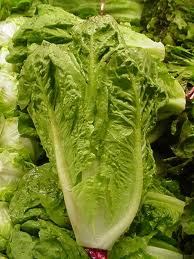
The U.S. Food and Drug Administration is releasing the findings of a sampling assignment that tested raw agricultural commodity romaine lettuce mostly at facilities and on farms in the Salinas, California, and Yuma, Arizona growing regions for the presence of pathogens that have been linked to outbreaks of foodborne illness.
The assignment to detect pathogenic Escherichia coli (specifically, Shiga toxin-producing E. coli or STEC) and Salmonella spp began in November 2019 and ended in December 2020, after a pause in sample collection and testing from March through October 2020 due to the COVID-19 pandemic. The FDA did not detect any pathogens during the assignment.
The agency prioritized sample collection at farms and FDA-registered facilities identified in traceback investigations as suppliers of romaine lettuce possibly linked or linked to outbreaks of foodborne illnesses from 2017 to 2019. The FDA collected and tested 279 samples for both pathogens. Each sample was made up of 10 subsamples, with each subsample consisting of one or more heads or hearts of romaine lettuce and weighing at least 300 grams. This approach – the collection and testing of samples composed of multiple subsamples – increases the probability of detecting pathogens if present, given that microbial hazards may not be uniformly present. Agency field staff collected all samples in their natural form but for the outer leaves having been removed. No fresh-cut lettuce was collected.
Ensuring the microbiological safety of leafy greens continues to be a priority to the FDA. Although no pathogens were detected during this assignment, maintaining surveillance during the growing/harvesting season is helpful to informing the agency’s leafy greens prevention efforts, specifically those outlined in the FDA’s Leafy Greens Action Plan. The FDA originally released the action plan in March 2020 to foster a more urgent and collaborative approach to preventing leafy greens outbreaks caused by STEC. In April 2021, the FDA released an updated version of the plan which reaffirms our commitment to advancing leafy greens safety.
Posted in E.coli, food contamination, Food Hazard, Food Hygiene, Food Illness, Food Inspections, Food Micro Blog, Food Microbiology, Food Microbiology Blog, Food Microbiology Research, Food Microbiology Testing, Food Pathogen, Food Poisoning, food recall, Food Safety, Food Safety Alert, Research, STEC, STEC E.coli, Uncategorized
Edible insects are a novel food in most countries; their popularity is growing because of their high protein/low fat content, ease of cultivation, and small environmental impact. To our knowledge, this is the first report that addresses both microbiological and chemical hazards in edible insects. Samples were collected from retail stores or purchase through e-commerce. A total of 51 samples of dried whole insects or insect powders were tested for generic Escherichia coli ( E. coli ) which serves as an indicator of the overall sanitation conditions throughout the food production chain, and the bacterial pathogen Salmonella species (spp.) Neither Salmonella spp. nor generic E. coli (>100 Colony Forming Units (CFU)/g) were found in any of the samples. 43 samples of crickets (protein bars, powders, flours, whole insects) and 4 samples of silkworm (whole insects) were analyzed for up to 511 pesticides. 39 samples contained residues from one to four pesticides; 34 samples were compliant and 5 samples were non-compliant with Canadian regulations. Seven different pesticide residues were detected with glyphosate and its metabolite, AMPA, being the predominant residues detected. Nineteen of the samples tested for pesticides were also analyzed for arsenic, cadmium, mercury, and lead; there was insufficient material remaining to allow for metals testing. The positive rate for arsenic, cadmium, lead and mercury was 100%, 79%, 58% and 74%, respectively. The detected concentrations ranged from 0.030 mg/kg to 0.34 mg/kg for arsenic, from 0.031 mg/kg to 0.23 mg/kg for cadmium, 0.019 mg/kg to 0.059 mg/kg for lead, and from 0.00094 mg/kg to 0.028 mg/kg for mercury. Based on the lack of detection of microbiological contamination, and the positive rate and levels of pesticides and metals observed in the products, Health Canada determined that all insect products analyzed were safe for human consumption. This is a limited study; CFIA will continue to monitor this novel food.


