Category Archives: E.coli

Research – Presumptive probiotic bacteria from traditionally fermented African food challenge the adhesion of enteroaggregative E. coli

Wiley Online

E.coli

Colonization of intestinal tract with the potential to exclude, displace, and inhibit enteric pathogens is principally dependent on the adhesion ability of probiotics. Therefore, probiotic efficacy is considered to be mainly determined by their adhesion ability. The current study reports the antagonistic effect of four lactic acid bacteria (LAB) on the adhesion profile of four diarrhoeagenic and one non‐diarrhoeagenic enteroaggregative Escherichia coli (EAEC). All the bacterial strains investigated adhered to the Caco‐2 cells. All the LAB tested competitively excluded, displaced, and inhibited at least three (non‐) diarrhoeagenic EAEC strains from adhesion (p < 0.05). In all, Lactobacillus plantarum, FS2 exhibited the strongest adhesion to the Caco‐2 cells, competitive exclusion (CE), displacement, and inhibition against most of the EAEC strains. Additionally, the competence to exclude, displace, and inhibit the EAEC from adhesion depended on both the pathogens and the LAB strains tested; signifying the participation of several mechanisms. Contrary to all the EAEC strains, gastro‐intestinal stress factors such as low pH (2.5) had no effect on the adhesion of the LAB. Unlike the gastro‐intestinal acidic conditions, bile salt conditioning (at pH 6.5) had no effect on the adhesion of both EAEC and LAB. In conclusion, all the LAB tested showed specific anti‐adherence effects including CE, displacement, and inhibition against the selected EAEC. The results indicate that all the LAB, particularly, the L. plantarum, FS2 had a good ability for exerting antagonistic effects against the selected EAEC for the prevention of gastrointestinal infection.
New Zealand – Surti brand Paneer – E.coli

MPI

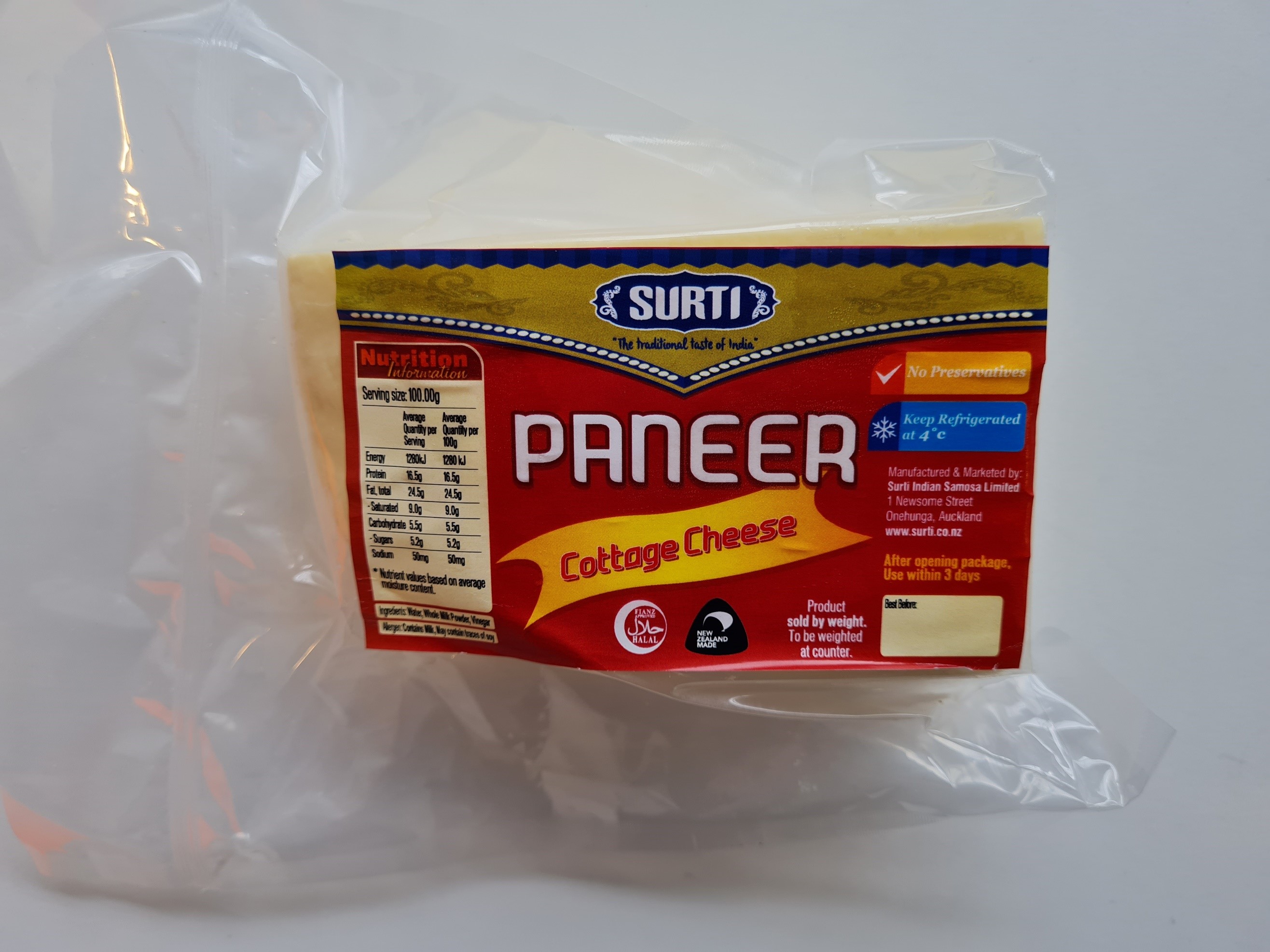
Surti brand Paneer

18 May 2021: Surti Indian Samosa Limited is recalling a specific batch of Surti brand Paneer due to the possible presence of E.coli.

Surti brand Paneer (various weights).
Product identification

Product type

 Cheese

Name of product (size)

 Surti brand Paneer (various weights)

Date marking

Best before 30JUN21

Package size and description

The product is sold in plastic packaging of various weights of approximately 200g to 500g.

Distribution

The product is sold at ethnic retail stores throughout New Zealand.

Auckland

  • Angels Spice and Superette, 284 Blockhouse Bay Road, Avondale, Auckland
  • Arjun Supermarket, 5 Rankin Avenue, New Lynn Auckland
  • ARKH Food and Spices Limited, 1/222 Swanson Road, Auckland
  • Bikanervala, 2 White Swan Road, Mount Roskill, Auckland
  • Bombay Chinese, Queens Court, 368 Queen Street, Auckland
  • Chevalier Produce, 34 Fremlin Place, Avondale, Auckland
  • Continental Halal Meats and Spices, 57G Cavendish Drive, Manukau, Auckland
  • Get Fresh Mangere, 99 Westney Road, Mangere, Auckland
  • Get Fresh Otahuhu, 81 Station Road, Otahuhu, Auckland
  • Jay’s Fresh Mart Auckland, 59 Shirley Road, Papatoetoe, Auckland
  • Kelvin Fruit and Vege Shop Auckland, 8 Mahia Road, Manuwera, Auckland
  • Lotus Supermarket, 43B Cavendish Drive, Manukau, Auckland
  • Lotus Supermarket, 64 Stoddard Road, Mount Roskill, Auckland
  • Madinah Halal Meats, 1/16 Lambie Drive, Auckland
  • Massey Fruit and Vege, 1/2 Triangle Road, Massey, Auckland
  • Namaste Delhi Limited, 89 Great South Road, Epsom, Auckland
  • Om Sai Foods & Spices, 3A/7 Reeves Road, Pakuranga, Auckland
  • Patel Brothers Supermarket, 26 Carr Road, Mount Roskill, Auckland
  • Point Chev Fresh, 1104/D Great North Road, Point Chevalier, Auckland 1
  • Puhinui Superette, 202 Puhinui Road, Papatoetoe, Auckland
  • Raavi Foods And Spices Trading Limited, 421 Richardson Road, Mount Roskill Auckland
  • Saffron Foods Henderson, 214 Universal Drive, Henderson, Auckland
  • Spice Corner, 691 Manukau Road, Royal Oak, Auckland
  • Vege Oasis Mangere, 376 Massey Road, Mangere East, Auckland
  • Volt Convenience Store CBD, 107 Mayoral Drive, Auckland
  • Yogiji’s Food Mart, 7/251 Lincoln Road, Henderson, Auckland
  • Younus Halal Meat and Spices Limited, 1482B Dominion Road, Mount Roskill, Auckland

Christchurch

  • Krazy Price Mart Limited, 429 Tuam Street, Philipstown

Wellington

  • Indian Stores Limited, 218A Riddiford Street, Newtown

Notes

This recall does not affect any other Surti brand products.

Consumer advice

Customers are asked to check the date mark printed on the back of the product packaging.

Affected product should not be consumed unless it is cooked thoroughly (piping hot all the way through). There have been no reports of associated illness. However, if you have consumed any of this product and have any concerns about your health, seek medical advice.

Customers should return the product to their retailer for a full refund or cook thoroughly (piping hot all the way through).

Escherichia coli (E.coli) is a bacterium that normally lives in the intestines of people and other warm-blooded animals. Although most strains of E.coli are harmless, some types can cause serious illness, with severe diarrhoea and stomach cramps.

Who to contact

If you have questions, contact Surti Indian Samosa Limited.

  • Phone: 09 273 4164
  • Address: 1 Newsome Street, Onehunga, Auckland.

USA – Public health officials urge consumers to check for yogurt linked to outbreak – E.coli

Food Safety News

E.coli

Washington State public health officials today announced a likely link between PCC Community Market brand organic yogurt and an E. Coli outbreak that is hitting children hard. The yogurt is produced by Pure Eire Dairy.

“The outbreak now includes 11 confirmed cases, including six children under the age of 10, infected with bacteria that have been genetically linked. Counties with cases include Benton (1), King (8), Snohomish (1) and Walla Walla (1). Seven people have been hospitalized. Three people have developed hemolytic uremic syndrome, a serious complication,” according to a statement this morning from the Washington Department of Health.

Pure Eire Dairy recalled all of its organic PCC yogurt Friday, May 14, after outbreak patients reported eating it before becoming sick. All flavors and best-by dates of the 8-ounce and 16-ounce yogurt sold under the PCC brand has been recalled.

RASFF Alerts – STEC E.coli – Beef Meat – Organic Beef Meat

RASFF

E. Coli STEC (O26) in bovine fresh meat from New Zealand in the Netherlands

RASFF

Shigatoxin-producing Escherichia coli (in 1 out of 5 samples /25g) in organic bovine meat from Spain in Italy

USA – FDA to Implement Sampling Effort for Lettuce Grown in Salinas Valley, California

FDA

The U.S. Food and Drug Administration will be collecting and testing samples of lettuce grown in California’s Salinas Valley from local commercial coolers from May through November 2021. The agency will test the samples for Shiga toxin-producing Escherichia coli (STEC), including E. coli O157:H7, and Salmonella spp. as part of ongoing surveillance efforts following reoccurring outbreaks linked to this region, including most recently in the fall of 2020.

The FDA assignment will direct sampling to be conducted at commercial cooling and cold storage facilities where field heat is removed from harvested lettuce and where product is cold-stored before processing. Sampling may include pre-cooled product (preferred) or post-cooled product. Sample collection at commercial coolers helps the FDA efficiently obtain samples from multiple farms at centralized locations and facilitates prompt traceback and follow-up if contamination is detected.

The agency plans to collect and test a total of approximately 500 post-harvest samples of iceberg, leaf and romaine lettuce. Each sample will consist of 10 subsamples, each made up of one head of lettuce (trimmed, cored and possibly wrapped), or in the case of romaine lettuce, loose leaves or one package of hearts.  FDA laboratories will conduct all testing.

During this sampling assignment, the FDA will take extra precautions to help ensure the safety of agency investigators and firm employees during the COVID-19 pandemic. FDA investigators will preannounce their visits to firms per the Agency’s COVID-19 safety practices. They will be outfitted with personal protective equipment (PPE) and will carry out their work while adhering to local, state and applicable CDC guidance.

Helping to ensure the safety of leafy greens remains a high priority of the FDA. This assignment adds to other work underway in collaboration with stakeholders in the California Central Coast growing region to identify where the recurring strain of pathogenic E. coli is persisting and the likely routes of leafy green contamination with STECs.  This includes continued implementation of actions identified in the recently updated Leafy Greens Action Plan, including a multi-year longitudinal  study to assess the environmental factors impacting the presence of foodborne pathogens in this region. Consistent with the action plan, if the FDA detects a pathogen such as E. coli O157:H7, the agency will conduct a follow-up investigation to identify potential sources and routes of contamination. Such investigations are designed to inform what additional preventive measures may be needed to help prevent outbreaks of foodborne illness.

USA – Fresh, organic produce common source of E. coli O157 infections in 7 children

Food Poison Journal

Public Health is investigating a new cluster of seven children infected with Shiga toxin-producing E. coli (also known as STEC) in King County. All cases are currently under 15 years of age, and three are under 5 years of age. Cases have been reported during April 22–May 1, 2021.

Our investigation is ongoing. We have identified multiple types of fresh produce, mostly organic, in common among the majority of cases but cannot yet rule out other possibilities. We are still uncertain if these cases share the same source of their infection or not. Updates will continue to be posted when more information is available.

Research – In-Plant Validation of Novel On-Site Ozone Generation Technology (Bio-Safe) Compared to Lactic Acid Beef Carcasses and Trim Using Natural Microbiota and Salmonella and E. coli O157:H7 Surrogate Enumeration

MDPI

The purpose of this study was to evaluate the antimicrobial efficacy of an aqueous ozone (Bio-Safe) treatment andtech lactic acid solutions on natural microbiota and E. coli O157:H7 and Salmonella surrogates on beef carcasses and trim in a commercial beef processing plant. For every repetition, 40 carcass and 40 trim swabs (500 cm2) were collected. Samples were taken using EZ-ReachTM swabs, and plated into aerobic plate count (APC), coliform, and E. coli PetrifilmTM for enumeration. In addition, a five-strain cocktail (MP-26) of E. coli surrogates was inoculated onto trim. For every trim surrogate repetition, 30 trim pieces were sampled after attachment and after ozone intervention. Samples were diluted and counts were determined using the TEMPO® system for E. coli enumeration. Ozone and lactic acid interventions significantly reduced (p < 0.003) bacterial counts in carcasses and trim samples. Moreover, lactic acid further reduced APC and coliforms in trim samples compared to ozone intervention (p < 0.009). In the surrogate trials, ozone significantly reduced (p < 0.001) surrogate concentration. Historical data from the plant revealed a reduction (p < 0.001) of presumptive E. coli O157:H7 in trim after a full year of ozone intervention implementation. The novel technology for ozone generation and application as an antimicrobial can become an alternative option that may also act synergistically with existing interventions, minimizing the risk of pathogens such as Salmonella and E. coli O157:H7. View Full-Text

USA – New E. coli outbreak hits children; investigation ongoing with no source yet

Food Safety News

ecoli

At least seven children are sick with E. Coli infections in a new outbreak involving an unknown source. All of the sick children are younger than 14, with three of them younger than five years old, according to an outbreak announcement by King County, WA, health officials.

“Our investigation is ongoing, and we have not identified any foods, restaurants, or other sources in common among all cases. It is not yet known whether these cases share the same source or not,” officials reported in the announcement.

The children became ill between April 22 and May 1. Six of the seven children have been so sick they had to be admitted to hospitals. One of the sick children is confirmed as having developed a life-threatening kidney complication called hemolytic uremic syndrome (HUS) and is recovering. A second child is suspected to have HUS.

hus

RASFF Alert – E.coli – Sea Snail

RASFF

ESCHERICHIA COLI IN LIVE SPINY DYE-MUREX (BOLINUS BRANDARIS) FROM ITALY in Spain

Research – Microbial Growth Study on Pork Loins as Influenced by the Application of Different Antimicrobials

MDPI

The use of antimicrobials in the pork industry is critical in order to ensure food safety and, at the same time, extend shelf life. The objective of the study was to determine the impact of antimicrobials on indicator bacteria on pork loins under long, dark, refrigerated storage conditions. Fresh boneless pork loins (n = 36) were split in five sections and treated with antimicrobials: Water (WAT), Bovibrom 225 ppm (BB225), Bovibrom 500 ppm (BB500), Fit Fresh 3 ppm (FF3), or Washing Solution 750 ppm (WS750). Sections were stored for 1, 14, 28, and 42 days at 2–4 °C. Mesophilic and psychrotrophic aerobic bacteria (APC-M, APC-P), lactic acid bacteria (LAB-M), coliforms, and Escherichia coli were enumerated before intervention, after intervention, and at each storage time. All bacterial enumeration data were converted into log10 for statistical analysis, and the Kruskal–Wallis test was used to find statistical differences (p < 0.05). Initial counts did not differ between treatments, while, after treatment interventions, treatment WS750 did not effectively reduce counts for APC-M, APC-P, and coliforms (p < 0.01). BB500, FF3, and WS750 performed better at inhibiting the growth of indicator bacteria when compared with water until 14 days of dark storage. View Full-Text